
Bangkok Temple Run for Art and Architecture Lovers: Reading the Details at Wat Pho, the Grand Palace, and Golden Mount
A street-smart guide to Bangkok temple architecture—what to notice at Wat Pho, the Grand Palace, and Golden Mount, with routes, etiquette, and insider tips.
We slip out of Villa De Khaosan by Chillax just after the monks’ alms round, the air still cool enough to breathe before Bangkok turns into a wok. Incense rides the breeze from the river, bells tap-tap from a nearby wat, and a fruit cart cracks open a durian that announces itself two sois away. This is the sweet spot to fall for Bangkok temple architecture—when the gold hasn’t started to glare and the city hasn’t fully cranked up the sanuk.
Data Freshness + Verification
- Prices are approximate (THB). Last checked: July 2026.
- For venue facts (name, hours, closures, boat/bus schedules), avoid absolutes; give typical ranges and add "confirm same-day locally."
- When citing any price, include neighborhood and, if known, source type (menu, recent visitor, operator site).
Concrete Planning Details
- Mini Itinerary/Food Crawl (Khao San–Phra Athit area):
- Roti Mataba (Phra Athit Rd): flaky roti and beef mataba; 70–120 THB (Banglamphu; menu). Start here after a temple morning. 0–5 min walk from Phra Athit Pier.
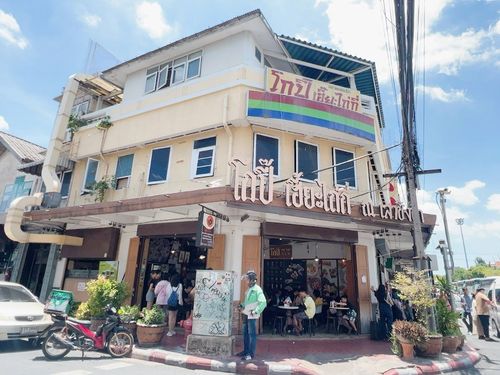
- Kope Hya Tai Kee (Tanao Rd): classic mango sticky rice; 120–180 THB depending on mango (Bowon Niwet; shop sign). 12–15 min walk from Phra Athit along Phra Sumen/Tanao.
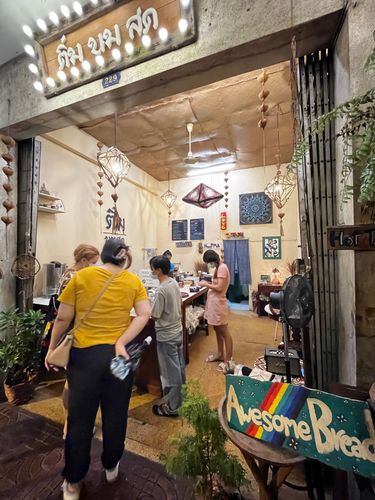
- Mont Nomsod (Dinso Rd): toast with pandan custard + iced milk tea; 40–80 THB (Rattanakosin; menu). 6–8 min walk from Kor Panich via Democracy Monument.
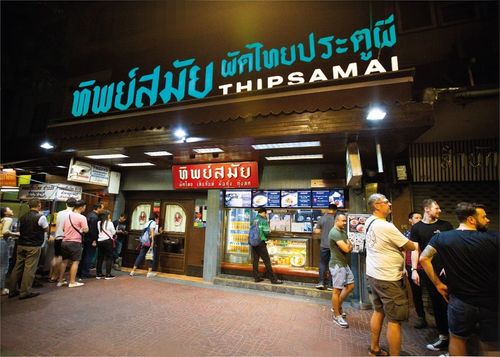
- Thip Samai (Maha Chai Rd): the fiery pad thai icon; 100–220 THB (Samran Rat; menu/existing signage). 10–12 min walk from Mont via Dinso and Maha Chai, or 5–8 min by tuk-tuk.
- Transit times: Khao San/Phra Athit to Tha Tien (for Wat Pho) by Chao Phraya Express orange flag boat: 12–18 min ride, 16–20 THB; first boats typically from ~06:00, last ~19:00–19:30 (confirm same-day). Tuk-tuk between Golden Mount and Democracy Monument: 5–10 min depending on traffic; agree fare first (80–150 THB typical short-hop).
Booking Suggestions (if relevant)
- If you want pool time between temple runs, we usually stay near Soi Rambuttri or Phra Athit for easy boat access and calmer nights than Khao San itself—check availability a few days ahead in peak season (Nov–Feb). For quieter design-forward stays, look around Samsen and Phra Sumen; for river views, places near Maharaj and Tha Tien come with breezes and easy ferry hops.
What Makes Bangkok Temple Architecture Pop
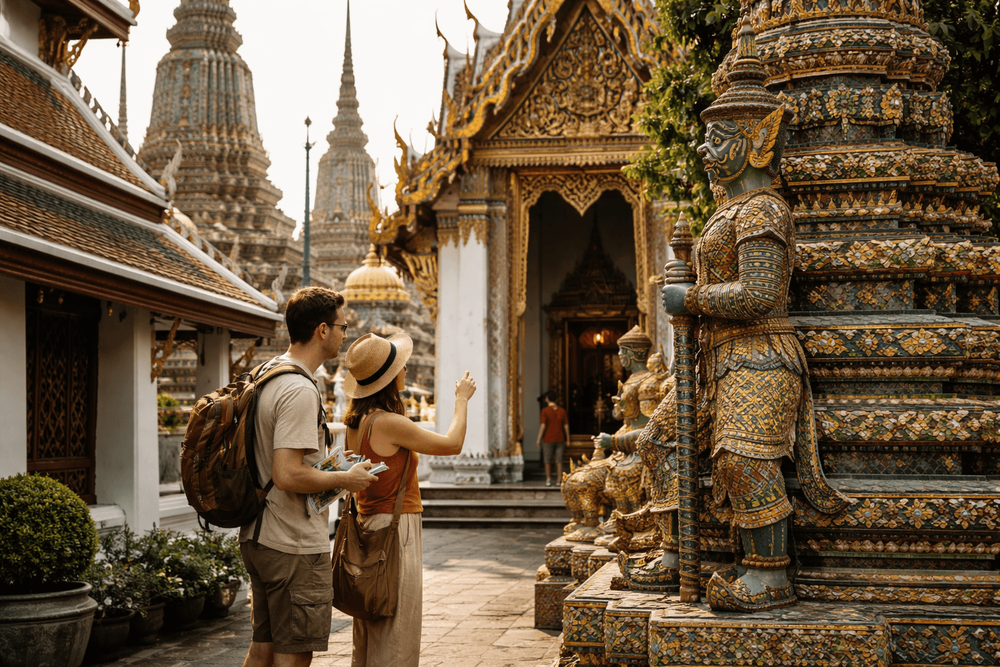
Bangkok temple architecture is maximalist on purpose: a riot of mirrored mosaics, benjarong-tinted tiles, gilded lacquer, and rooflines that kick into the sky like naga tails. Up close, it’s a craft show; from across the khlong, it’s a silhouette game of prangs and chedis. Keep these elements in mind as we wander.
Key design elements you’ll spot everywhere
- Roofs that stack: Most wats layer their roofs in two or three tiers. Look for chofa—the horn-like finials that spear the sky—and bai raka, the serrated "fish-fin" eaves. The more tiers, the higher the status.
- Color that tells a story: Deep red doors, green and orange tiles, mirror inlays that catch brutal Bangkok sun. Gold leaf isn’t subtle because enlightenment isn’t subtle.
- Texture-on-texture: Gilded lacquer panels (lai rod nam), mother-of-pearl inlay on doors and pulpits, Chinese porcelain shards embedded in stucco flowers, and mythic beasts guarding thresholds.
- Orientation and thresholds: Important buildings face east. Mind the raised thresholds—step over, not on. Sema boundary stones around the ubosot (ordination hall) mark sacred space.
Materials that make the shine
- Teak and laterite bones, stucco skin, ceramic and glass mosaics for shimmer.
- Gold leaf (baai thong) applied in thin sheets—watch it blur where fingers touch too often.
- Chinese porcelain: After Ayutthaya fell, Bangkok rebuilt with trade-wide flair; porcelain ballast became blossoms on stupas—see Wat Arun’s cousins of floral tiles echoed at Wat Pho.
Symbolic details worth a slow look
- Naga (serpents) slither along balustrades, guardians of thresholds and water.
- Garuda (Vishnu’s mount) clamps down on nagas on royal seals and rooflines—power under control.
- Kinnari (half-bird, half-woman) and yaksha giants flank gates; they’re bouncers with better tailoring.
- Lotus motifs everywhere: blooming, budding, or seedpod—mind maps of spiritual progress.
Influences Behind the Forms: From Khmer to Rattanakosin
Bangkok didn’t invent its temple vocabulary; it remixed it with city swagger.
- Sukhothai elegance: Bell-shaped chedis and walking Buddhas with soft S-curves. You’ll see echoes in more restrained stupas around the Old City.
- Ayutthaya mass and symmetry: Grand axial layouts, towering prangs, and formal courtyards; Bangkok lifts this sense of ceremony, then adds diamonds.
- Khmer prangs: Tower-like structures inspired by Angkor—think corn-cob profiles with vertical ridges. Best exemplar across the river is Wat Arun’s central prang; in our trio, you’ll read the influence in smaller shrine towers and decorative lintels.
- Lanna and Chinese trade: Roof embellishments and porcelain florals arrive via northern and maritime routes; Bangkok loves a good import.
- Rattanakosin flash: The Bangkok-era style (since 1782) refines Ayutthaya forms with denser ornament, mirror mosaics, and heavy gilding—a court style that announces a capital reborn.
Know Your Temple Buildings and Features
Once we can name the parts, the chaos snaps into focus.
Ubosot (ordination hall)
- The most sacred building, ringed by sema stones. Expect stricter dress and quieter vibes. Interiors glow with murals: cosmology, ships on the Chao Phraya, even mischievous farang tucked into the corners.
Viharn (assembly hall)
- Public-facing prayer hall. Bangkok’s famous Reclining Buddha sits in a gigantic viharn at Wat Pho. Door and window shutters often carry lacquer-gold scenes; check the mother-of-pearl inlays.
Chedi (stupa)
- Reliquary mounds—bell-shaped, Lanka-style, or squared-off towers. Bangkok likes clusters, often color-coded by reign. Walk clockwise if you circumambulate.
Prang
- The Khmer-style tower. You’ll see the full drama at Wat Arun, but look for mini-prangs dotting temple corners and libraries around Rattanakosin.
Cloisters and galleries
- Roofed arcades lined with Buddha images. Cooler air, rhythmic columns, good places to read mural sequences like comic strips from another century.
Roof furniture
- Chofa (finials) and bai raka (eave "teeth"), plus hang hong (naga tails) at the bargeboard tips. They’re not just pretty—they index rank and era.
Guardians and thresholds
- Yaksha giants at the Emerald Buddha’s gates, singha (lions), and demon-headed door panels. If there’s a guardian, there’s a story.
Where to See Bangkok Temple Architecture at Its Best
We’re focusing on a tight, walkable trio from the Khao San/Phra Athit orbit: Wat Pho, the Grand Palace/Wat Phra Kaew, and the Golden Mount. Each reads like a chapter in the city’s post-Ayutthaya comeback.
Wat Pho (Wat Phra Chetuphon)
- What to notice at Wat Pho, the Grand Palace, and Golden Mount The quartet of towering chedi near the main courtyard—each clad in different glazed-ceramic palettes—honor four Chakri kings. Get your nose close to the porcelain blossoms embedded in stucco: ship ballast reborn as orchids and peonies.
- Mural hunt: In the ubosot, murals map the Traiphum (three worlds) and daily life on the river. Doors gleam with lai rod nam. Outside, long cloisters lined with 394 Buddha images offer shadow and repetition that feels meditative even when the tour groups thicken.
- Practical: Entry for foreigners is commonly posted around 200–300 THB (Rattanakosin; recent visitor boards); hours typically 08:00–18:30—confirm same-day. Massage pavilions in the north end are the spiritual home of Thai massage; rates hover around 420–600 THB for 30–60 minutes (on-site menu; check latest).
our photo-forward piece Bangkok Temple Day Photo Guide: Best Angles, Viewpoints, and Shot Ideas at Wat Pho, Grand Palace, and Golden Mount.
The Grand Palace & Wat Phra Kaew (Temple of the Emerald Buddha)
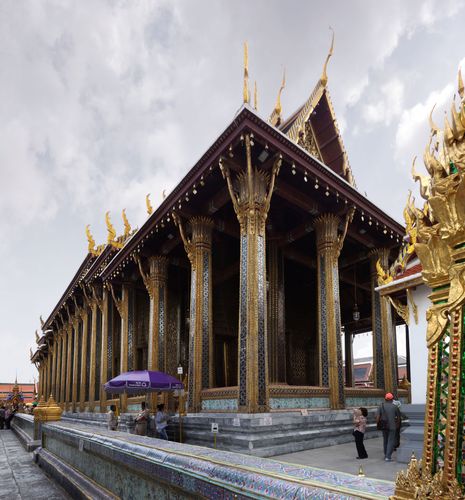
- What to notice: This is Rattanakosin maximalism in parade dress. Mirror mosaics throw sunlight like confetti. The ubosot of the Emerald Buddha sits at the heart—note the green jasper image elevated on a gold tiered throne that changes costumes seasonally. The surrounding galleries carry Ramakien murals in a narrative loop; pick a panel and walk the story clockwise.
- Guardians: The yaksha at the main gate (Na Phra Lan Rd side) are technicolor and towering, modeled after Ramakien characters. Their job is to make you feel very small. It works.
- Craft plunge: Look for gilded garuda gripping naga along pediments, tiny kinnari in filigree, and mother-of-pearl on doors so fine it looks printed. This is also where you’ll clock roof hierarchies: more tiers, more power.
- Practical: Foreign visitor tickets often range 500–600 THB (Na Phra Lan; operator signage), with typical hours 08:30–15:30 and last entry around mid-afternoon—confirm same-day. Dress code is enforced; covered shoulders and knees, no ripped jeans. Beware the classic scam outside claiming "Palace closed today"—it almost never is.
what these places actually teach you beyond the dazzle We dig into meaning in our history lens here: Bangkok Temple Run for History Lovers: What Each Stop at Wat Pho, Grand Palace, and Golden Mount Actually Teaches You.
Golden Mount (Wat Saket)
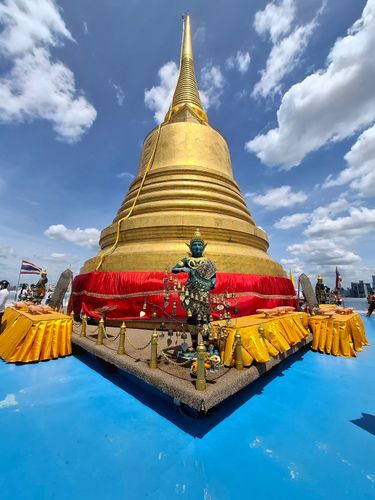
- What to notice: A spiral climb to a hilltop chedi—Bangkok’s rare altitude. The architecture’s simplicity is the point: whitewashed terraces, brass bells you can ring softly, and a gilded stupa that drinks the sunset. Between levels, shrines tuck into grotto-like niches with bodhi trees lifting the shade game.
- Line and curve: From the base, trace the sweep of the ramp as it wraps the mound—Ayutthaya mass turned meditative. On top, the chedi’s form is Sukhothai-simple compared to the palace sparkle, which makes the skyline drama hit harder.
- Practical: Entry commonly around 50–100 THB (Pom Prap Sattru Phai; booth sign). Hours often 08:00–19:00, sometimes later during festivals—confirm same-day. Late afternoon is magic; bring water, the climb is short but humid.
Want a route that ties these together with artsy pit stops? our art-and-architecture run Bangkok Temple Run for Art and Architecture Lovers: What to Notice at Wat Pho, the Grand Palace, and Golden Mount.
If you’ve got extra temple bandwidth
- Wat Arun (across from Tha Tien): central prang in full Khmer regalia, porcelain florals, and riverside breezes.
- Wat Ratchanatdaram (Loha Prasat): a metal spire forest—pure geometry near Democracy Monument.
- Wat Benchamabophit (Marble Temple): Carrara-clad neoclassical-meets-Thai harmony up in Dusit.
- Wat Suthat and the Giant Swing: Ayutthaya gravitas meets Bangkok murals the size of a bus.
How to Read the Details Like a Local
We don’t sprint through wats; we loiter with intent. Here’s how to make the architecture talk.
- Start wide, then zoom: Walk the main axis, clock the massing, then peel off to a corner cloister. Count roof tiers, spot the sema stones, and only then get lost in a door panel.
- Follow the narrative: Murals "read" clockwise. Scenes jump from heaven to river market to demon battles; look for tiny daily-life vignettes—the gossip of history.
- Touch with eyes: Gold leaf and lacquer bruise easily. If you must touch, do it with the breeze from your fan.
- Listen for the sound design: Bell lines, monk chants, and the weirdly soothing clack of tourist sandals—architecture is also acoustics.
- Track light: Bangkok sun is a diva. Early morning at Wat Pho for diffuse light on porcelain; midday inside galleries for cool shade; late afternoon on Golden Mount for skyline silhouettes.
- Mind the body: Shoulders and knees covered, shoes off at thresholds, feet never pointed at Buddha images, step over the raised threshold, not on it. Women shouldn’t hand items directly to monks—place them on a cloth or tray.
If you want a deeper primer on dress and behavior before you go, this is your pregame read: Old City Temple Etiquette Guide: What to Wear, What to Bring, and How to Behave at Bangkok’s Historic Temples.
Getting There from Khao San/Phra Athit (and How to Survive the Heat)
- To Wat Pho: Walk 10–12 minutes to Phra Athit Pier, hop the Chao Phraya Express (orange flag; 16–20 THB; 12–18 minutes to Tha Tien), then it’s a 3–5 minute walk. Or tuk-tuk 10–15 minutes off-peak; agree on 100–150 THB.
- To the Grand Palace/Wat Phra Kaew: From Tha Chang Pier, it’s a 5–8 minute walk to the Na Phra Lan gate. Expect bag checks and lines.
- To Golden Mount: From Democracy Monument it’s a 15–18 minute walk east along Ratchadamnoen Klang to Boriphat, then up to Wat Saket. If the sun bites, flag a tuk-tuk (80–120 THB) or grab a taxi with meter on.
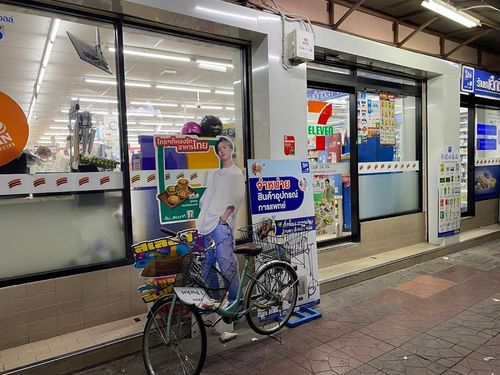
- Heat hacks: Duck into 7-Eleven for the AC blast and a 10 THB wet wipe, refill water where you can, and treat the cloisters like shade stations. A small folding fan is not a farang cliché; it’s survival.
Common Pitfalls (and How We Dodge Them)
- "Palace closed" scam: Anyone on Na Phra Lan Road telling you the palace is shut and offering a tuk-tuk tour is hustling. Smile, say "mai ao, khrap/ka" and keep walking.
- Dress code roulette: Security won’t budge at the Grand Palace. If you’re borderline, vendors nearby rent sarongs (50–200 THB deposit), but fit can be hit-or-miss.
- Photo faux pas: No photos in the Emerald Buddha hall, ever. At other shrines, look for signs; when in doubt, ask.
- Midday melt: Plan your sequence—Wat Pho at opening, Palace mid-morning, long lunch/siesta, Golden Mount for golden hour. Your sweat glands will thank you.
A Note on Meaning: Why the Dazzle Matters
Bangkok’s temples are not just glitter for postcards. They’re political statements (a capital reborn after Ayutthaya), community centers (monks teaching massage at Wat Pho), and cosmic diagrams (Emerald Buddha’s ubosot as Mount Meru’s stand-in). The architecture is a map of power and mercy—a city telling itself it will endure, again.
our culture-forward walkthrough of the same trio Bangkok Temple Run for Culture and History Fans: What to See at Wat Pho, the Grand Palace, and Golden Mount.
We’ll leave you with a move we make whenever the day gets loud: step into a cloister at Wat Pho, press your back to a cool column, and trace the chofa against a Rattanakosin-blue sky. When you’re ready, we’ll chase that with a plate of pad thai on Maha Chai and a slow ferry back up to Phra Athit, bells still ringing somewhere upriver.
Related Hotels & Places
Kope Hya Tai Kee
Cafes
Historic Thai cafe by the Giant Swing.
Mont NomSod
Shops
Bangkok’s cult toast shop on Dinso Road, steps from the Giant Swing. Order thick-cut toast or pillowy steamed bread with warm pandan (sangkaya) custard and an icy fresh milk. Queues build after dinner but move fast. Open daily 1pm–10pm.
Thipsamai Padthai Pratoopee
Restaurants
7-Eleven
Shops
Khao San’s 24/7 reset button: ice‑cold A/C, ham‑cheese toasties, All Café iced lattes, water for 7–14 THB, and late‑night supplies from snacks to sunscreen—right by Rikka Inn.
Wat Phra Chetuphon Wimon Mangkhalaram Rajwaramahawihan
Temples
Wat Phra Kaew
Temples
Bangkok’s holiest temple inside the Grand Palace. Go early (8:30am–3:30pm). Buy the 500 THB ticket at Na Phra Lan Rd gate. Dress code enforced. Marvel at Ramakien murals and the tiny Emerald Buddha whose robes change with the seasons. 10–15 minutes’ walk from Khao San.
Wat Saket Ratchawora Mahawihan
Temples

Villa De Khaosan by Chillax
Hotels
Great care is taken to ensure guests experience comfort through top-notch services and amenities.Remain linked during your visit by utilizing the complimentary internet access available. Prior to your check-in date, you can arrange airport transportation services, guaranteeing a seamless and efficie
More Khao San Road Guides
- Bangkok Temple Run for Art and Architecture Lovers: What to Notice at Wat Pho, the Grand Palace, and Golden Mount
- Bangkok Temple Run Essentials: Tickets, Opening Hours, and Entry Rules for Wat Pho, the Grand Palace, and Golden Mount
- Bangkok Temple Run for History Lovers: What to See in Each Stop at Wat Pho, the Grand Palace, and Golden Mount
- Bangkok Temple Run with Museum Stops: Adding the National Museum to Wat Pho, the Grand Palace, and Golden Mount