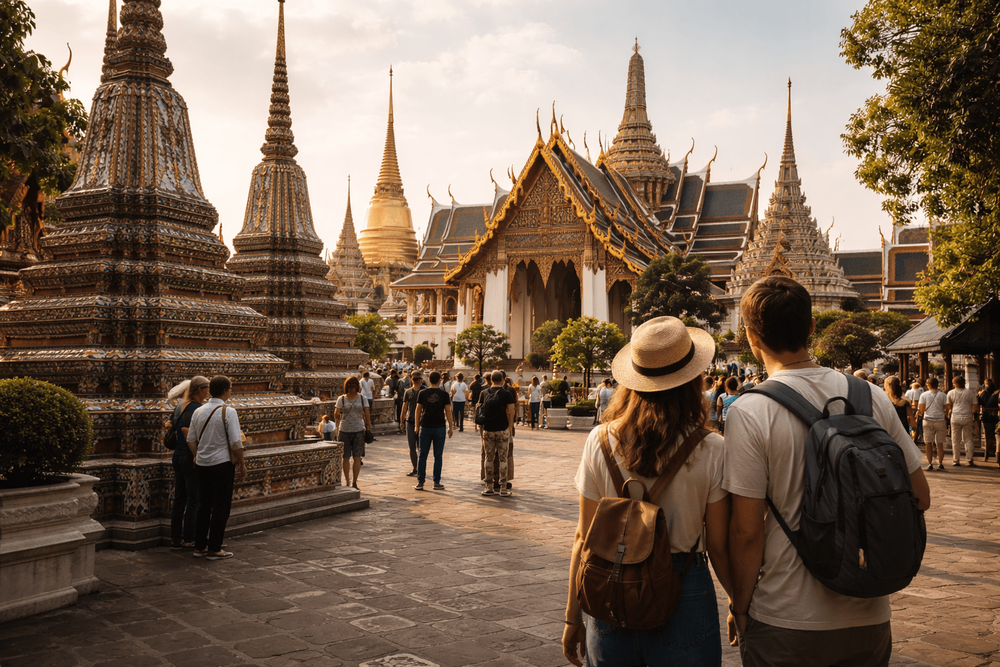
Bangkok Temple Run for Culture and History Fans: What to See at Wat Pho, the Grand Palace, and Golden Mount
We trace Bangkok’s temple culture and history through Wat Pho, the Grand Palace, and Golden Mount—what to notice, how to behave, and how to make it meaningful.
We slip out of Soi Rambuttri just as the wok smoke starts to rise—garlic hitting hot oil, monks padding past with alms bowls, the river breeze teasing the sweat from our necks. This is where Bangkok temple culture history isn’t a museum piece; it’s breakfast, incense, boat horns on the Chao Phraya, and a thousand small rituals stitched into the day. We’re heading for the classics—Wat Pho, the Grand Palace, and the Golden Mount—because the story of this city is written on their walls, spun in gold leaf and soot and foot-polished marble.
Data Freshness + Pricing:
- Prices are approximate and in THB.
- Last checked: July 2026.
- Happy hour and promo details change frequently—confirm locally.
Bangkok Temple Culture History: How the City Shaped Its Sacred Heart
Bangkok didn’t spring from the ground with glittering chedi and giant yaksha guardians. It started as a riverside outpost across from old Thonburi, with khlongs (canals) instead of highways and teak houses on stilts. When the Chakri dynasty founded Rattanakosin in 1782, the monarchy rebuilt power and identity by building temples—cosmic diagrams in brick and stucco—right next to the new royal court. The Grand Palace and Wat Phra Kaew (the Temple of the Emerald Buddha) formed the spiritual and political core, projecting legitimacy and protection over a fledgling capital.
In those early decades, kings didn’t just build. They restored, codified, and taught. Wat Pho—today famous for its colossal Reclining Buddha—was reinvented as Siam’s first public university, with stone inscriptions on medicine, massage, and ethics set into pavilions for anyone to read. If you’ve ever had a Thai massage, you’re feeling the afterglow of policy decisions made two centuries ago.
Urban growth kept folding temples into the city’s bloodstream. As roads replaced some khlongs in the late 19th and early 20th centuries, temple compounds stayed put—anchors amid change. After 1932’s constitutional shift, the monarchy’s role evolved, but the temple network remained the city’s soft-power grid, hosting festivals, schooling children, offering refuge during floods, and keeping time with bells and chanting. Today, a BTS Skytrain might hum above a shrine, and a 7-Eleven might share a wall with a viharn (prayer hall). The mash-up is the point. Bangkok temple culture history isn’t a past tense; it’s coexisting with your iced latte.
What You’ll See (and What It Means): Beliefs and Everyday Practice
Walk into any ubosot (ordination hall) and the air shifts—cool marble, beeswax candle smoke, a murmur of Pali verses. People wai (press palms) to the Buddha image, then to monks or elders. You’ll see:
- Offerings and merit-making (tamboon): Flowers, incense, and candles arranged in triads (Buddha, Dhamma, Sangha). Donation boxes line the walls. Coins dropped into 108 bronze bowls at Wat Pho make a soft rain of sound—each bowl, a step toward good karma.
- Prayer and meditation: Locals kneel on mats, eyes closed, lips barely moving. Some sit cross-legged in side pavilions to escape the selfie scrum. If you want to join, take a quiet spot to the side; shoes off, phone silenced.
- Monk life up close: Morning alms rounds start around dawn. If you offer food, do it respectfully—shoulders and knees covered, hand over items at chest height without physical contact. Women should place items on a cloth or tray rather than directly into a monk’s hands.
- Festival rhythms: On Makha Bucha and Visakha Bucha, we circle chedi with candles (wian thian), a river of light in warm night air. During Songkran, expect gentle water blessings at temple courtyards—less party cannon, more jasmine-scented grace.
Bangkok temple culture history lives in these small gestures. Even the thump of bass from a Khao San bar fades at the temple gate; the city holds its breath, then exhales incense.
The Art of the Sacred: What to Notice in Thai Temple Design
Thai temples are visual encyclopedias. The more you know, the more they whisper.
- Chedi, prang, and mondop: Chedi (stupas) hold relics; prang (Khmer-style towers) nod to cosmic mountains; mondop (square pavilions) protect scriptures and footprints. Each shape is theology in brick.
- Gables and guardians: Look for glittering chofah (bird-like finials) at roof tips and naga (serpent) balustrades along stairs. Yaksha giants at Wat Phra Kaew aren’t just Instagram bait—they’re guardians of the realm from the Ramakien epic.
- Murals as cinema: Ubosot walls are time machines—Buddha’s life on one side, Jataka tales on the other, cityscapes tucked into corners like Easter eggs. At Wat Phra Kaew, the cloister mural cycles through the Ramakien with courtly gossip frozen in paint: palace intrigue, demon armies, forests that look suspiciously like old Siam.
- Buddha images and materials: Seated, reclining, walking—each pose teaches. Mother-of-pearl toes on Wat Pho’s Reclining Buddha shimmer with 108 auspicious signs. Gilding isn’t bling; it’s impermanence handled with love.
- Chinese porcelain and trade: Bangkok’s port history shows up as floral porcelain mosaics at riverside temples like Wat Arun Ratchawararam Ratchawaramahawihan—broken bowls reborn as blossoms.
Once you start spotting these details, every temple visit becomes a scavenger hunt for meaning.
Notable Temples: Where to Feel the City Thinking Out Loud
We’re orbiting the old city—Rattanakosin Island—because it concentrates centuries of story within tuk-tuk range. Here’s where Bangkok temple culture history gets specific.
Wat Pho (Wat Phra Chetuphon)
- Why it matters: The kingdom’s encyclopedia. Home of the 46-meter Reclining Buddha and the birthplace of Thai massage, with stone tablets mapping energy lines that make physiotherapists nod.
- What to look for: The soles of the Reclining Buddha—mother-of-pearl inlay, 108 symbols. In the courtyards, rows of Buddha images in varied styles, each with calm that penetrates the midday heat. Shady pavilions where you can hear the tap-tap of coin bowls.
- Hours and fees: Daily, approx 8:00–18:30; entry approx 200 THB (often includes a small bottle of water). Massage pavilions charge approx 260–420 THB for 30–60 minutes—stretch your calves before you go.
- Insider move: Slip to the back cloisters early. We like to arrive right after opening from Tha Tien pier; the crowds grow by 10:00.
The Grand Palace and Wat Phra Kaew
- Why it matters: The throne room of belief and power. The Emerald Buddha isn’t emerald (it’s jasper), but it’s the palladium of the Thai state—robes changed seasonally by the king, marking the city’s heartbeat.
- What to look for: The Ramakien murals around the cloister; the mosaic skin of the chedi; gilded kinnari (mythic half-bird dancers). Yes, it’s busy—and expensive—but there’s nothing else like it.
- Hours and fees: Daily, approx 8:30–15:30; entry approx 500 THB (includes Wat Phra Kaew). Dress rules are strictly enforced—no shorts above the knee, no sleeveless tops. Ignore anyone outside saying it’s closed; that’s the oldest tuk-tuk scam in the book.
- Insider move: Enter via Tha Chang pier and hit the murals first, when the sun is kinder. We linger at a shaded corner and watch the story pull itself along the walls.
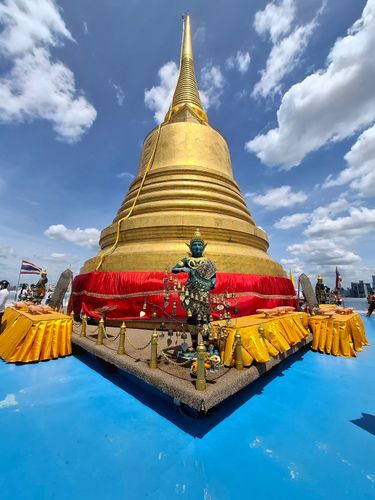
The Golden Mount
- Why it matters: The city’s climbing meditation. A manmade hill stacked with relics and history, the bell corridor singing in the wind. Built, collapsed, rebuilt—like Bangkok itself.
- What to look for: 300 gentle steps, prayer flags snapping, the drum of your heartbeat. From the top: old roofs, new towers, a skyline that somehow harmonizes.
- Hours and fees: Daily, approx 7:00–19:00; entry approx 50–100 THB. It’s a breezy late-afternoon climb, less glare, more gold.
- Insider move: Combine with the canal. The Saen Saep khlong boat drops you at Phan Fa pier—cheap, quick, and very local (approx 10–20 THB). Splash risk: high. Sanuk: higher.
Wat Arun (Temple of Dawn)
- Why it matters: Thonburi across the river—the capital before Bangkok became Bangkok. Its central prang is a porcelain mountain catching sunrise and sunset in equal magic.
- What to look for: Porcelain floral patterns up close; demon statues at the gateway; river wind on your face. Even if you don’t climb, the ferry glide is half the joy.
- Hours and fees: Daily, approx 8:00–18:00; entry approx 100–200 THB. Cross from Tha Tien for approx 5–10 THB by ferry—don’t let anyone sell you a private boat unless you’re in the mood to splurge.
Wat Suthat and the Giant Swing (Sao Chingcha)
- Why it matters: Royal aura without Grand Palace crowds. The Giant Swing out front once hosted a terrifying Brahmin rite; now it’s a selfie frame with a story.
- What to look for: One of Bangkok’s most serene ubosot interiors, plus exquisite murals. In the afternoon, golden light pools on the floor and time slows.
- Hours and fees: Daily, approx 8:30–20:00; entry approx 20–100 THB.
Loha Prasat (Wat Ratchanatdaram)
- Why it matters: A rare multi-tiered metal castle, one of only a few ever built. Geometric calm in a city of curves.
- What to look for: Concentric corridors and meditation cells; rooftop views toward the Golden Mount.
- Hours and fees: Daily, approx 8:00–17:00; donations appreciated (entry sometimes requested, approx 20–40 THB).
Wat Benchamabophit (The Marble Temple)
- Why it matters: European neoclassical flirtations meet Thai roofs—King Chulalongkorn’s modernizing spirit in marble.
- What to look for: Gallery of Buddha images in different styles; morning alms lines that glow in cool light.
- Hours and fees: Daily, approx 8:00–17:00; entry approx 50–100 THB.
Wat Traimit (Golden Buddha)
- Why it matters: A 5.5-ton solid-gold Buddha once hidden under stucco—war-time camouflage turned legend.
- What to look for: The gleam up close is almost shocking. Pop by before or after a Chinatown snack crawl.
- Hours and fees: Daily, approx 8:00–17:00; entry approx 40–100 THB for museum and shrine areas.
Getting There: Boats, Feet, and the Occasional Tuk-Tuk
From Khao San Road and Soi Rambuttri, we’ve got options:
- Chao Phraya Express Boat: Walk to Phra Athit Pier (10–15 minutes, shady trees along Phra Athit Road). Hop the Orange Flag boat for approx 16–32 THB. For the Grand Palace and Wat Phra Kaew, disembark at Tha Chang. For Wat Pho, go to Tha Tien; the pier is steps from the temple gate and the ferry to Wat Arun (approx 5–10 THB).
- Khlong Saen Saep Boat: For the Golden Mount, catch the boat to Phan Fa Leelard pier (end of the line), then it’s a short stroll to the base of the mount. Fare approx 10–20 THB. Expect splashes; locals sit inward for a reason.
- Tuk-tuk and taxis: Short hops are fine—agree the fare first (a nearby ride should be approx 60–120 THB). If a driver proposes a “free temple tour,” we smile and walk. Metered taxis are plentiful; insist on the meter.
- Feet: The old city is compact but hot. We string temples with shady breaks on Phra Athit, iced Thai tea on Dinso Road, and the lifesaving blast of AC when ducking into 7-Eleven.
If you’re staying nearby, budget guesthouses off Soi Rambuttri or along Phra Athit make dawn starts painless. We like to roll out early, catch the monk chants, and beat the heat.
A Culture-First Temple Run: Follow Our Footsteps
- Start at Wat Pho around 8:00. Wander the cloisters, listen to coin bowls, duck into a pavilion for ten minutes of stillness. If you want to try traditional massage, grab a ticket for later the same day (approx 260–420 THB).
- Take the short walk to Tha Tien and ferry to Wat Arun (approx 5–10 THB). Climb partway, trace the porcelain flowers, feel the river wind scrub the sweat.
- Ferry back to Tha Tien and walk or tuk-tuk to the Grand Palace (arrive by 10:30). Prioritize Wat Phra Kaew and the Ramakien murals. Hydrate—bottled water inside costs more (approx 20–40 THB), but your core temperature will thank you.
- Break on Phra Athit Road—noodles, shade, sanity—then either call it or push for late-afternoon Golden Mount. Go up for bells at sunset and the city’s lights flicking on like fireflies.
For deeper art spotting on this circuit, we like to cross-reference with the notes in Bangkok’s architecture-focused guide—worth a read before you go so the details pop when we’re on-site. If you want specifics on tickets, dress code, and pacing, park these tabs too:
- Bangkok Temple Run for Art and Architecture Lovers: What to Notice at Wat Pho, the Grand Palace, and Golden Mount
- Bangkok Temple Run for First-Time Visitors: Tickets, Hours, and Time-Saving Tips for Wat Pho, Grand Palace, and Golden Mount
- Old City Temple Etiquette Guide: What to Wear, What to Bring, and How to Behave at Bangkok’s Historic Temples
- Thailand Packing List for Temple Visits: What to Wear and Carry for Culturally Respectful Travel
Visitor Awareness: Dress, Etiquette, and Being a Good Guest
Temples are living spaces—schools, clinics, community halls—with sacred cores. We show up like we’re entering someone’s home.
- Dress expectations: Cover shoulders and knees. Lightweight pants or a long skirt beat sweating under borrowed sarongs. Avoid sheer fabrics. Hats off indoors. If you’re unsure, carry a light shawl—cheap insurance.
- Shoes off: Leave footwear outside prayer halls. Face them outward; it’s a small courtesy, and you’ll find them faster in the scrum.
- Photography: It’s okay in most areas, but never during active prayers right in front of a Buddha image. No flash on murals—it damages pigments.
- Body language: Don’t point your feet at Buddha images or monks; kneel or sit cross-legged. If you’re tall and stiff, sit side-saddle.
- Sound and space: Keep voices low, phones on silent. If you want to record chanting, step outside first.
- Monks and gender: Don’t touch monks. If you identify as female and need to hand something over, use a tray or place it on a surface.
- Donations: Give what you can—coins in boxes, banknotes in envelopes. Think of it as maintenance for the public commons.
Treating temples as living culture rather than attractions is the difference between harvesting photos and actually being here. That’s the heart of Bangkok temple culture history—shared space, shared care.
Costs at a Glance (Approx.)
- Grand Palace + Wat Phra Kaew: 500 THB
- Wat Pho: 200 THB; massage 260–420 THB
- Golden Mount: 50–100 THB
- Wat Arun: 100–200 THB; river ferry 5–10 THB
- Chao Phraya Express Boat: 16–32 THB
- Tuk-tuk hops near the Old City: 60–120 THB
Weather, Timing, and Sanity-Saving Tips
- Start early or go late: Bangkok’s heat is a character in this story. Mornings reward the faithful; sunsets reward the romantics.
- Hydrate smart: Refill at water dispensers where available; 7-Eleven is our AC chapel—grab a chilled bottle or two (approx 10–20 THB).
- Shade tactics: Temple courtyards can be brutal at noon. Use cloisters and sala pavilions as cool-down checkpoints.
- Scams exist: Anyone outside the Grand Palace who says it’s closed is auditioning for your wallet. Smile, decline, keep walking to the official gate.

We’ll be honest: it can get crowded, hot, and occasionally chaotic. But when the bells at Wat Saket ripple down the city and a monk at Wat Pho smiles like he’s holding a secret, we remember why we keep coming back. Let’s meet by Phra Athit after dusk—noodles, a river breeze, and the old city glowing like a story you can step into again tomorrow.
Related Hotels & Places
Wat Phra Chetuphon Wimon Mangkhalaram Rajwaramahawihan
Temples
The Grand Palace
Attractions
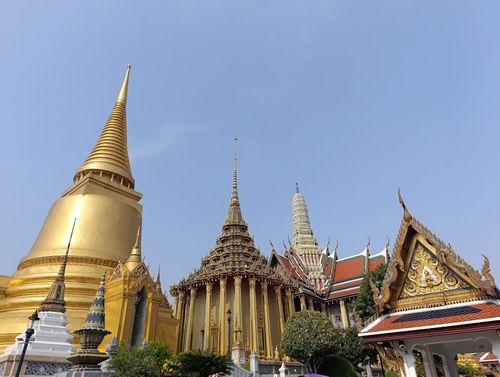
Bangkok’s royal showpiece a short hop from Khao San: glittering Wat Phra Kaew, Ramakien murals, and gold-on-gold rooftops. Go 8:30am to dodge the heat, dress modestly, and boat to Tha Chang for the prettiest arrival.
Wat Phra Kaew
Temples
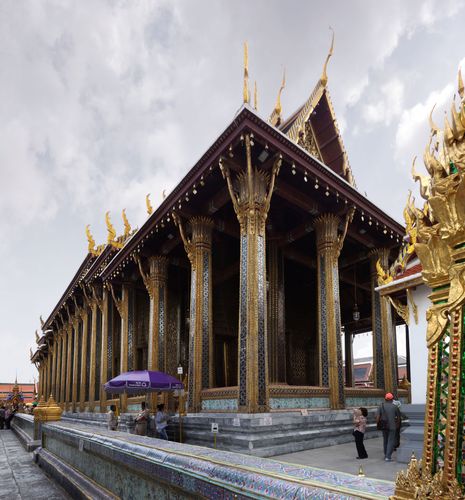
Bangkok’s holiest temple inside the Grand Palace. Go early (8:30am–3:30pm). Buy the 500 THB ticket at Na Phra Lan Rd gate. Dress code enforced. Marvel at Ramakien murals and the tiny Emerald Buddha whose robes change with the seasons. 10–15 minutes’ walk from Khao San.
Wat Saket Ratchawora Mahawihan
Temples
Wat Arun Ratchawararam Ratchawaramahawihan
Temples
Recommended Products
More Khao San Road Guides
- Bangkok Temple Run for History Lovers: What to See in Each Stop at Wat Pho, the Grand Palace, and Golden Mount
- Bangkok Temple Run for Art and Architecture Lovers: Reading the Details at Wat Pho, the Grand Palace, and Golden Mount
- Bangkok Temple Run for History Lovers: What Each Stop at Wat Pho, Grand Palace, and Golden Mount Actually Teaches You
- Bangkok Temple Run for Art and Architecture Lovers: What to Notice at Wat Pho, the Grand Palace, and Golden Mount