Old City Temple Etiquette Guide: What to Wear, What to Bring, and How to Behave at Bangkok’s Historic Temples
Dress right, move quietly, and make merit without missteps. Our Bangkok temple etiquette guide covers clothing, behavior, fees, and insider tips from Khao San.
We duck off Phra Athit Road just as the sun turns the Chao Phraya gold and the air tastes like incense, grilled pork, and river mist. A monk pads past in saffron, the temple cats lift their tails, and a guard gives us the quick once-over: shoulders covered, knees hidden, shoes off. We smile the small sawadee, and we’re in. If you’ve ever wondered how to navigate Bangkok temple etiquette without stepping on toes (or pointing yours at a Buddha), this is the guide we wish we’d had our first week in the Old City.
Data Freshness + Pricing:
- Prices are approximate and in THB.
- Last checked: June 2026.
- Happy hour and promo details change frequently—confirm locally.
Bangkok Temple Etiquette 101: Dress Codes That Actually Matter
We all want the photo in front of Wat Arun Ratchawararam Ratchawaramahawihan’s porcelain prang or Wat Pho’s reclining Buddha—but the fast track to getting waved back to the soi is ignoring the dress code. Here’s what actually counts when it comes to bangkok temple etiquette around clothing.
Cover what needs covering
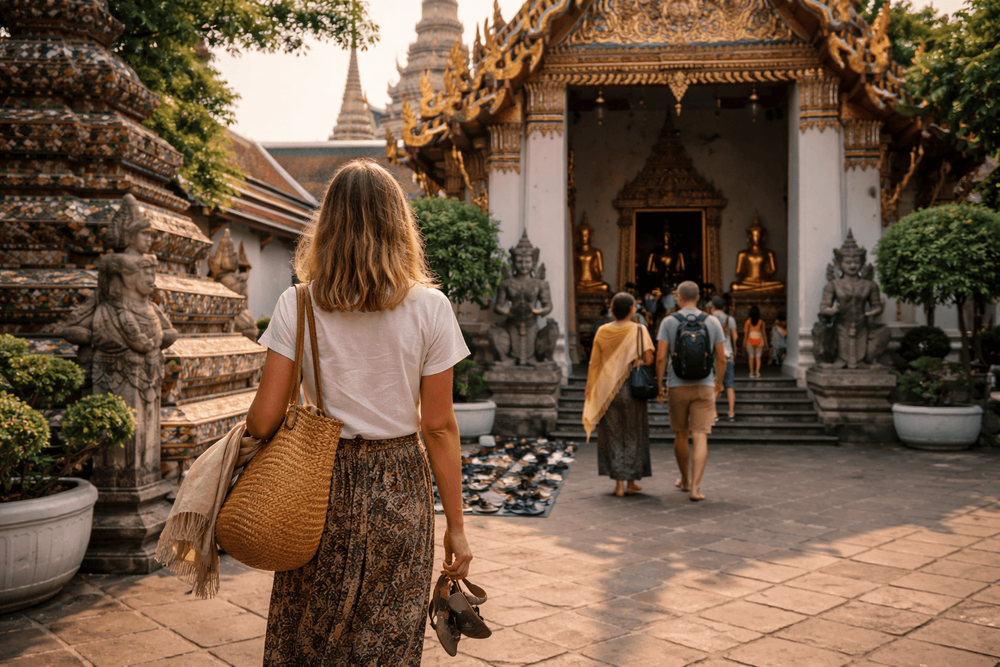
- Shoulders and knees: Covered for all genders. Think T‑shirts with sleeves, linen shirts, midi or maxi skirts, trousers, or loose-fit pants. Tank tops, crop tops, and gym shorts will get you turned around at the big hitters.
- Grand Palace/Wa t Phra Kaew is strict: Scarves aren’t accepted as a “top,” leggings alone often fail, and ripped jeans can be a problem. Pack real sleeves and proper pants or a long skirt. If you need a deep dive on specifics, see our detailed rules in How to Dress for Bangkok Temples: Wat Pho, Grand Palace, and Golden Mount Entry Rules from Khao San Road Road.
- Transparency test: If it goes see-through in bright light, it’s a no. Bring a thin camisole or wear a darker top under light fabrics.
Footwear and the hot-tile shuffle
- Shoes off, often: You’ll remove footwear before stepping into prayer halls (ubosot), sermon halls (viharn), and sometimes museum rooms. Sandals with a back strap are your friend—easy off, easy on. Socks are fine and keep your soles safe from sun-baked tiles.
- Storage: Most halls have a shoe rack or you leave them at the entrance. Don’t block the doorway; slide to the side like a local.
Rentals and quick fixes
- Sarong or wrap rentals: Many major sites have sarong rental or sale near the gate. Expect approx 20–50 THB to rent (plus deposit) or 100–200 THB to buy. It’s better to wear proper clothes from the jump, but this saves the day.
- Umbrellas and hats: Great outside. Remove both inside any sacred building.
For temple-run tickets, what counts as “covered,” and where to buy or borrow the right gear without drama, bookmark the Bangkok Temple Run Ticket and Dress Code Guide: Fees, Passes, and What to Wear for Wat Pho, Grand Palace, and Golden Mount.
Inside the Grounds and Halls: Quiet Moves and Common-Sense Respect
Bangkok’s temples are living places of worship, not museum sets. The vibe is calm—gentle bells, soft chanting, the whirr of a fan—and we match it.
Voices down, phones down
- Volume: Keep it library-level. Whisper if you need to talk. No speakerphone. Ever.
- Phones: Silent mode before you step inside, no calls in halls. Save the TikTok for the courtyard.
Photography: Take the shot, don’t chase it
- Look for the sign: Many halls allow photos but ban flash and tripods. If you see “No Photo,” honor it. Some ubosot and ordination spaces are strictly no-camera zones.
- Don’t block worshippers: If someone is kneeling or lighting incense, wait your turn. We take our wide shots from the back or side.
- Buddha selfies: Snapping with your back inches from a Buddha image is a bad look. Give space, keep it respectful, and don’t climb anything for a better angle.
Feet, heads, and the space between
- Feet are the new middle finger: Never point your soles at a Buddha image or a monk. Sitting on the floor? Tuck legs to the side or sit cross-legged; don’t stretch out toward the altar.
- Head etiquette: The head is the most sacred part of the body—don’t touch anyone’s head (even a cute kid’s) and remove hats indoors.
Food, drink, and smoke
- No eating or gum inside sacred spaces. Sip water quietly outside.
- Smoking and vaping are off-limits on temple grounds. Keep it to the street and away from entrances.
Monks, Buddha Images, and Offerings: How We Interact
A temple morning around Soi Rambuttri or Phra Athit might include alms rounds, prayer, and the soft clink of coin bowls. Here’s how we join in without stepping on custom.
Monks: reverence with clear boundaries
- Wai first: A small wai (palms together at chest, slight bow) is a respectful greeting. Don’t expect a handshake.
- Don’t touch monks: Women must avoid physical contact with monks. If offering something, place it on a tray or nearby surface. Men can hand items directly, but keeping the tray habit is easiest for everyone.
- Seats and space: On buses or benches, give monks extra space. If there’s a reserved row, we leave it.
Buddha images: veneration, not props
- No touching or climbing: Don’t touch statues, murals, or chedis for photos. Resting a camera or bag on a Buddha base is a hard no.
- Tattoos and shirts: Buddha imagery on clothing or skin isn’t illegal, but flaunting it in a cheeky way is disrespectful. We cover Buddha tattoos inside temple grounds.
- Don’t buy Buddha heads: Decapitated Buddha souvenirs are gross and disrespectful—skip them.
Offerings and making merit
- Incense/candles/flowers: Many temples sell small sets for approx 20–40 THB. Light candles first, then incense, place flowers last. Keep smoke wafting away from faces.
- Coin bowls at Wat Pho: Dropping coins into the 108 bowls along the Reclining Buddha’s back wall is classic—expect approx 20 THB for a cup of coins. Walk slowly, don’t sprint the merit.
- Donation boxes: If you’d like to contribute, use official boxes. Don’t tip monks or staff directly unless invited by a sign.
- Animal releases: Avoid paying to “free” caged birds or fish. It’s a cycle of cruelty and not real merit.
First-Timer Pitfalls and Temple-Specific Quirks
We’ve all blown it once—forgot a sleeve, pointed a toe, believed a tuk-tuk fairy tale. Here are the avoidable mistakes you’ll hear farang whisper about on Khao San.
The “Grand Palace is closed” scam
- If someone on Na Phra Lan Road says “Grand Palace closed today, special Buddha instead,” smile and keep walking. The palace is almost always open daily. Official entry is at the main gate only. A fair tuk-tuk within the Old City is approx 60–120 THB, but we usually walk or grab the Chao Phraya Express boat.
Scarves don’t count at the Palace
- We said it twice because it matters. A shawl over a tank top won’t pass. Wear actual sleeves. For nitty gritty entrances, line strategy, and what clothes get you in fast, see Temple Pass Tips for Bangkok: Tickets, Dress Rules, and Queue Strategy for Wat Pho, the Grand Palace, and Golden Mount.
Wat Arun’s prang is steep—and modesty still applies
- The central prang steps are no joke and not always fully open, but even on the terraces, fitted mini-skirts or short shorts aren’t appropriate. Expect approx 100 THB entry, and hold the handrail both ways.
Golden Mount bells and the rooftop breeze
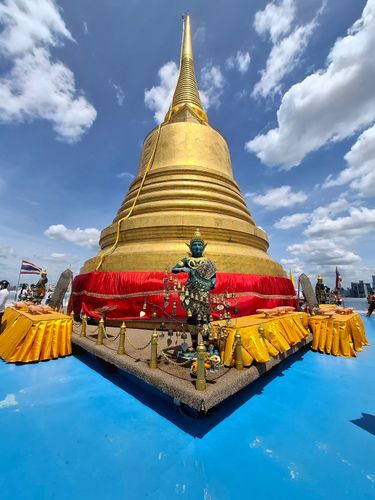
- Ringing a bell for luck? Lovely. Smacking every bell like a drum line? Not so much. Keep it light. Entry is approx 50–100 THB, and the staircase gets hot by late morning—wear those socks.
Photography hot spots with quiet rules
- Wat Pho’s Reclining Buddha hall: No flash, move with the flow, respect the prayer area up front.
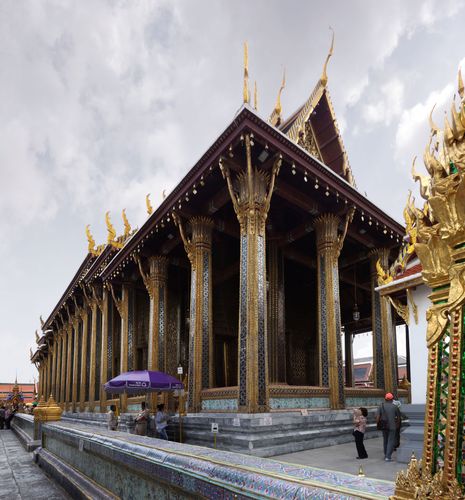
- Grand Palace’s Emerald Buddha (Wat Phra Kaew): Photography is banned inside the ordination hall. The guards mean it.
Tuk-tuk detours and gem “promotions”
- If your tuk-tuk price is “free” or suspiciously low, you’re paying in shop stops. Agree on a point-to-point fare upfront (approx 80–150 THB in the Old City) or use a metered taxi. We prefer the Orange Flag Chao Phraya boat (approx 16–20 THB) from Phra Arthit Pier to Tha Tien/Tha Chang.
Prep and Logistics: Timing, Entry Fees, What to Bring
Bangkok rewards the early birds and the shade-chasers. We plan our temple mornings like we’d plan a street food crawl—precise, hungry, and with a pocket of coins.
Best times and crowd math
- Go early: 8:00–10:00 is perfect for Wat Pho and Wat Arun. The Grand Palace fires up around 8:30; if you’re there at opening, you win.
- Late light: 15:30–17:30 is a sweet window for Wat Arun’s river glow or the Golden Mount view with a breeze. Keep an eye on closing times.
Hours and fees (approx; can vary on holidays and royal events)
- Grand Palace & Wat Phra Kaew: 8:30–15:30; entry approx 500 THB.
- Wat Pho: 8:00–18:30; entry approx 200 THB.
- Wat Arun: 8:00–18:00; entry approx 100 THB.
- Wat Saket Ratchawora Mahawihan: 7:30–19:00; entry approx 50–100 THB.
If you’re stringing together multiple temples from Khao San, our fee breakdowns and time-savers live here: Bangkok Temple Run Ticket and Dress Code Guide: Fees, Passes, and What to Wear for Wat Pho, Grand Palace, and Golden Mount.
Getting there from the Khao San/Phra Athit bubble
- By river: Walk to Phra Arthit Pier, hop the Orange Flag Chao Phraya Express (approx 16–20 THB). Tha Chang for the Grand Palace, Tha Tien for Wat Pho and the ferry across to Wat Arun (cross-river ferry approx 5–10 THB).
- By foot: From Soi Rambuttri to Wat Chana Songkhram Ratchaworamahawihan is five minutes. From there, it’s a steady 25–30 minute walk to the Grand Palace along Na Phra Lan when it’s not blazing hot.
- By khlong boat: To reach Golden Mount, the Saen Saep khlong boat to Phan Fa Leelard Pier drops you near the base; fare is approx 10–15 THB from central piers.
What we always bring (and what we skip)
- Bring:
- Lightweight layer with sleeves, breathable long pants or skirt
- Thin socks for hot tiles
- Water (7‑Eleven bottles are approx 10–20 THB), sunscreen, small packable umbrella
- Tissues/wet wipes, a tiny bag for shoes if you’re worried about mix-ups
- Small bills/coins for offerings and ferries (5–20 THB notes and coins)
- Skip:
- Drones (permits required; temples are a hard no)
- Large tripods (often banned inside)
- Alcohol, revealing outfits, noisy gadgets
For a streamlined packing cheat sheet that goes beyond clothing—think socks, respectful extras, and small comforts—check our guide: What to Pack for Thailand for Temple Etiquette Beyond Clothing: Shoes, Socks, and Respectful Extras.
Where we base ourselves for easy temple days
- We usually crash somewhere tucked off Soi Rambuttri for a quiet night and a five-minute shuffle to Phra Athit Pier at dawn. If you like a slower vibe, the guesthouses along Phra Athit Road put you right on the river breeze. Budget or boutique, staying near the river makes those early temple windows actually happen.
Bowing, Wais, and Little Gestures That Go a Long Way
- Wai basics: Palms together at chest height, small bow. We wai the Buddha image and altar before sitting; we don’t overdo it.
- Sit lower than the altar: When in doubt, kneel or sit cross-legged. Keep feet tucked, toes pointed away from images and people.
- Passing in front: If you must pass in front of someone praying, do it quickly with a small bow of the head.
- “Sanuk” still applies: Temples aren’t gloomy. A calm smile and light spirit—sanuk—fit right in.
Quick-Reference: Do’s and Don’ts for Bangkok Temple Etiquette
- Do wear sleeves and cover knees; avoid see-through clothes
- Do remove hats/sunglasses inside and shoes before sacred rooms
- Do keep voices low and phones silent; no flash
- Do give monks space; women avoid touching monks
- Do keep feet pointed away from images; sit neatly
- Do use donation boxes; skip animal-release “merit”
- Don’t climb or touch statues, altars, or murals
- Don’t accept “Palace closed” lines; use official gates
- Don’t picnic or vape on temple grounds
Know Before You Go
- Cash is king at ticket booths and offering tables; carry small notes.
- Weather is real: Bangkok heat and sudden rain are part of the deal—umbrella and water save the day.
- Holidays shift crowds and hours: Royal ceremonies can close halls without notice—roll with it.
- Keep belongings close but low profile; temples are safe, but crowds are crowds.

Bangkok temple etiquette isn’t about memorizing rules; it’s about moving with respect through someone else’s sacred space. Meet us at dawn at Phra Arthit Pier—orange flag boat thumping, coffee sweating in a plastic cup—and we’ll glide upriver to Wat Pho before the buses, drift across to Wat Arun when the light turns soft, and finish the day catching that river breeze from the Golden Mount steps. This city rewards the ones who show up early, dressed right, and open-hearted.
Related Hotels & Places
Wat Arun Ratchawararam Ratchawaramahawihan
Temples
Wat Phra Kaew
Temples
Bangkok’s holiest temple inside the Grand Palace. Go early (8:30am–3:30pm). Buy the 500 THB ticket at Na Phra Lan Rd gate. Dress code enforced. Marvel at Ramakien murals and the tiny Emerald Buddha whose robes change with the seasons. 10–15 minutes’ walk from Khao San.
Wat Saket Ratchawora Mahawihan
Temples
Khao San Road
Attractions
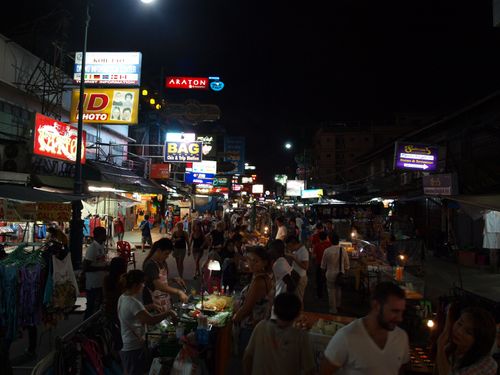
Bangkok’s backpacker carnival: curbside bars, live bands and DJs from 3pm–2am (midnight Sun). Street eats are cheap — pad thai 70–100 THB, mango sticky rice 60–100 THB. Come for wild people-watching; duck into Rambuttri for a calmer beer.
Rambuttri
Markets
Khao San’s calmer cousin: a tree‑shaded lane of VW van cocktail bars, open‑air foot massages, pad thai grills, and easygoing live bands. Best from sunset to 11pm; beers 80–120 THB, cocktails 150–220 THB. One block from the chaos, all the charm.
Wat Chana Songkhram Ratchaworamahawihan
Temples
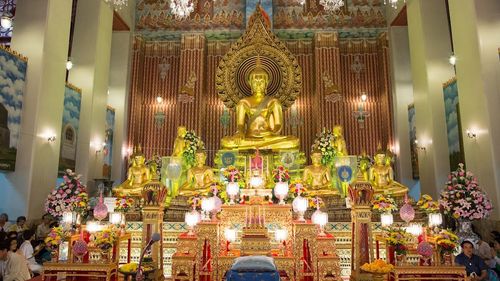
18th-century royal temple just off Khao San on Chakrabongse Rd. Quiet grounds, an ornate viharn and a gilded Buddha make an easy cultural reset between Rambuttri bar hops. Open 7:30am–6pm (Mon till 6:30pm).
Recommended Products
More Khao San Road Guides
- What to Pack for Thailand for Temple and Mosque Visits: Modest Clothing, Covers, and Easy-Remove Shoes
- Bangkok Temple Day Dress Code and Etiquette from Khao San Road: What to Wear, Remove, and Avoid
- What to Pack for Thailand for Temple Visits and Respectful Dress: Clothing Rules and Practical Essentials
- Bangkok Temple Etiquette Guide for Visiting Wat Pho, the Grand Palace, and Golden Mount from Khao San Road