
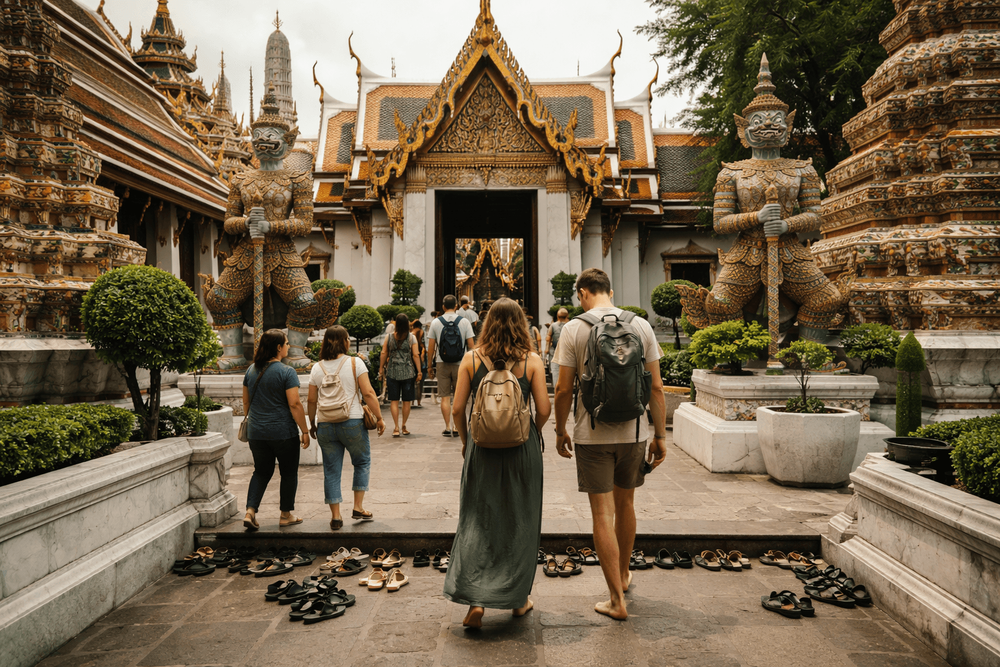
Bangkok Temple Etiquette Guide for Visiting Wat Pho, the Grand Palace, and Golden Mount from Khao San Road
What to wear, how to behave, and the easy mistakes to avoid when visiting Wat Pho, the Grand Palace, and Golden Mount—starting from Khao San Road.
We slip out of a fan room off Rambuttri just as the sky blushes pink, the last thump of bass from a Khao San Road fading into the call of a broom on the pavement. Street carts spark to life—oil hisses, chili stings our nose, a monk pads by in saffron. This is when Bangkok feels like it’s ours, and it’s when we want to get the big three right: Wat Phra Chetuphon Wimon Mangkhalaram Rajwaramahawihan, the The Grand Palace, and the Wat Saket Ratchawora Mahawihan. Consider this your bangkok temple etiquette guide from the backpacker bubble to the sacred heart of the Old City—what to wear, how to move, what not to do, and why it all matters.
Data Freshness + Pricing:
- Prices are approximate and in THB.
- Last checked: June 2026
- Happy hour and promo details change frequently—confirm locally.
Bangkok Temple Etiquette Guide: The Basics You Need Before You Step Inside
Dress code that actually flies at gates
Bangkok doesn’t mess around with temple dress codes—especially the Grand Palace. Security here isn’t guessing; they’ve seen every “but it’s a scarf” hack under the sun.
Wear this and you’re solid:
- Shoulders covered: T-shirts or light cotton tops. No tank tops, halters, or mesh.
- Knees covered: Long pants, loose trousers, or a midi/long skirt. Athletic leggings are fine if opaque.
- No rips, see-through fabric, or slogans/images disrespectful to religion.
- Closed or open-toe shoes both okay, but you must remove them before entering ubosots/viharas. Easy slip-ons are your friend.
- Hats off inside temple buildings.
If you show up underdressed, you’ll be diverted to buy or rent cover-ups. Outside gates you’ll see sarong stalls—convenient but pricey. Expect approx 50–200 THB for rentals or cheap purchases, sometimes plus a deposit. The Grand Palace sometimes offers cover-ups inside for visitors who’ve paid entry, but don’t bank on it during peak crowds.
Practical pro-move: Pack a lightweight shawl and a pair of breathable travel pants. If you want the deep dive on fabrics and backup layers, see our on-the-ground dress breakdown in How to Dress for Bangkok Temples (/articles/bangkok-temple-dress-code-wat-pho-grand-palace-golden-mount).
What about tattoos and piercings?
Tattoos are common in Thailand. Sacred sak yant designs are respected, and Buddha imagery on the lower body can turn heads, but generally you won’t be stopped at the gate for body art or piercings. Just be extra mindful of posture and photography (more on that below).
Footwear and feet
Feet are the lowest, least sacred part of the body in Thai culture. It’s normal to leave shoes in big communal piles; take a quick photo of where you left them and don’t worry—thousands of pairs cycle daily without drama. If you’re squeamish about floors, carry thin socks; just remember you’ll often remove socks too inside the most sacred halls.
For a pack-once, use-everywhere list (socks, scarf, sun gear), we’ve got a tight temple-focused kit here: Thailand Packing List for Temple Visits: What to Wear and Carry for Culturally Respectful Travel (/articles/thailand-temple-packing-list).
Respectful Behavior on Temple Grounds: How We Walk, Talk, and Shoot Photos
Keep it calm and clockwise
Inside compounds, think slow. We move along walkways, avoid cutting across prayer areas, and pass shrines clockwise when there’s a clear circulation. Don’t step on raised thresholds (those little ridges at doorways)—lift your feet cleanly over them.
Voices low, phones lower
It’s Bangkok; tuk-tuks growl and longtails roar on the river. But within temple walls we dial it down. Phone calls can wait. If we must take one, we step out to a courtyard, speak softly, and keep it brief.
Photography without the “oops”
- Always check for “No Photo/No Video” signs. Some Buddha halls allow photos but not flash; some ban photos entirely.
- Never pose touching or leaning on a Buddha image. No climbing plinths or balustrades for a better angle.
- Keep your feet out of frame when seated before a Buddha—tuck legs to one side or kneel with toes behind.
- Drone use is almost always prohibited without prior permission—skip it.
Monks and lay worshippers
- Women should not touch monks or hand items directly to them. If you’re offering something, place it on a tray or have a male companion pass it. Men can interact normally but still with respect.
- Don’t sit or stand higher than a monk during ceremonies if you can avoid it. Give them space; they’re often on tight schedules.
- If someone is praying, don’t cross directly in front of them or block their view of the altar.
The wai—when and how
A wai (palms together, slight bow) is a lovely gesture. Inside temples, we wai briefly to the main Buddha image, then step aside. There’s no need to wai every statue, though you’ll see locals do personal routines—follow along quietly if invited.
For a ticket and timing companion to this etiquette guide, including current entry fees and dress checks at each site, bookmark Bangkok Temple Run Ticket and Dress Code Guide: Fees, Passes, and What to Wear for Wat Pho, Grand Palace, and Golden Mount (/articles/bangkok-temple-tickets-dress-code-guide).
Common Rituals You’ll Encounter—and How to Join In Sanely
Bangkok temples are working religious spaces first, tourist magnets second. Join with humility and you’ll be fine.
Removing shoes and entering halls
- Before main ordination halls (ubosots) and viharas, look for shoe racks or clusters by the steps. Off they go—both shoes and hats.
- Sunglasses off indoors; backpacks worn on front or held low so you don’t swing into anyone.
Making merit (tham bun)
You’ll see donation boxes, lotus flowers, incense, candles, and sometimes gold leaf.
- Incense/candles: Light from communal flames, wave incense gently to dissipate ash, and plant sticks upright in sand trays outside, not inside the hall.
- Lotus and water: At some shrines you can float a lotus bud or dab water lightly on your head. Mind drips; wax and petals make floors slick.
- Gold leaf: At Golden Mount especially, you can press tiny squares onto sacred surfaces in designated spots. They stick best if you press for a few seconds.
- Donations: Approx 20–100 THB is normal. Give quietly; no need to announce amounts.
Sitting and posture inside
- Best options: kneel with feet tucked back, or sit side-saddle with both feet pointing behind you. Cross-legged is okay if you can keep feet from pointing at the Buddha.
- Don’t point feet at monks, altars, or other worshippers. Feet should never rest on railings or ledges.
Blessings and holy water
If a monk offers a quick water blessing, bow slightly, accept a sprinkle, and say khop khun krub/ka (thank you). If you’re not comfortable getting wet, step back politely; no explanation needed.
Mistakes First-Timers Make at the Big Three—and How We Avoid Them
Wat Pho (Temple of the Reclining Buddha)
- Entry: Approx 200–300 THB, usually includes a bottle of water. Opens around 8:00 until early evening.
- The gotcha: Shoes. You’ll get a bag for your footwear inside the Reclining Buddha hall. Tie it shut and keep it close; don’t set it on railings.
- Photo etiquette: The Reclining Buddha’s feet mosaic is stunning. Keep the flow moving, no tripod sprawl in the middle aisle, and watch for “No Flash” signs.
- Massage school: The on-site traditional massage is famous and filling up by late morning. Prices are posted; expect approx 320–700 THB depending on duration. Queue quietly; it’s not a spa-lobby vibe.
Grand Palace & Wat Phra Kaew (Temple of the Emerald Buddha)
- Entry: Expect approx 500–600 THB for foreigners. Hours are strict: roughly 8:30–15:30, last entry mid-afternoon.
- Dress enforcement is intense here. Scarves over bare shoulders usually won’t cut it. Arrive fully covered to breeze past the rental scrum.
- Scams: If anyone outside says “closed today—special holiday,” smile and keep walking to the official gate. Tuk-tuk drivers offering “temple tours” for 20 THB often detour to gem stores. Politely say mai ao, khop khun (no thanks, thank you) and continue.
- Behavior landmines: Inside the Emerald Buddha hall, no photos—period. Outside, keep your phone low and your voice lower; this is the spiritual heart of the country.
Golden Mount (Wat Saket)
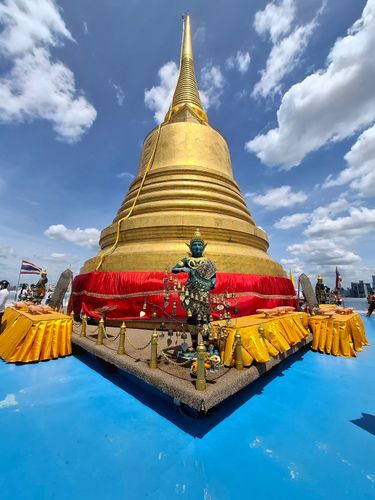
- Entry: Approx 50–100 THB to climb the chedi. Opens early (often around 7:00) and can run into the evening.
- It’s a climb—300-ish gentle steps. Pace yourself, water up, and don’t ring every bell like you’re starting a Muay Thai fight. Locals do ring a few; we do it once, softly.
- At the top: Wind can be fierce. Keep hats secure and sarongs from turning into sails. Avoid standing on platforms meant for offerings.
Why These Rules Matter: The Cultural Logic Under the Sanuk
Bangkok’s temples aren’t museums, even if they feel like open-air galleries. Every rule has roots:
- Sacred hierarchy: The Buddha, monks, elders, teachers—these sit high in the social and spiritual order. Our heads are “high,” feet are “low,” so we never “raise” feet toward the sacred.
- Cleanliness and calm: Shoes pick up the city—soot, khlong splash, fish sauce from a spilled khao man gai. Removing them keeps prayer floors clean and quiet.
- Kreng jai: A Thai idea of considerate restraint. We aim not to burden or embarrass others—hence soft voices, modest clothes, and gentle movement.
- Merit-making: Donating, lighting incense, and small acts of care are ways people bank “good” that ripples through life. We’re guests in that flow—when in doubt, follow the local lead.
This bangkok temple etiquette guide exists so we can share space without stepping on it—literally and figuratively. Ask yourself: will this action distract a worshipper or degrade a sacred image? If the answer’s yes or maybe, we don’t do it.
Know Before You Go from Khao San Road
Best timing
- Start early. Doors at Wat Pho open around 8:00; we roll from Khao San around 7:30 with a 7-Eleven iced americano and a bag of grilled pork skewers. Grand Palace gates get busy by 9:00; hit it first or last.
- Avoid midday heat. From 12:00–15:00, the flagstones radiate. If we must, we cool off under trees on Sanam Luang or duck into the blast-chilled AC at a coffee shop on Phra Athit Road.
For a time-and-route playbook from our neighborhood, see Bangkok Temple Morning Guide from Khao San Road (/articles/bangkok-temple-morning-guide-khao-san-road).
Getting there
- On foot: Khao San to the Grand Palace is a pleasant 15–20 minutes across Sanam Luang. Add 5–10 to reach Wat Pho via Tha Tien. Golden Mount is 25–30 minutes along Ratchadamnoen Klang—watch the sidewalks.
- River boat: From Phra Arthit Pier, hop the Chao Phraya Express (orange flag) to Tha Chang Bangkok for the Grand Palace or Tha Tien for Wat Pho. Approx 16–20 THB. Boats run every few minutes in rush hours.
- Tuk-tuk: Fun, breezy, loud. Agree a price beforehand; short hops around the Old City are usually approx 80–150 THB. If a fare sounds too good (like 20 THB for a “tour”), expect detours to shops.
- Grab/Taxi: Metered taxis are cool if the driver turns the meter on; otherwise, bargain roughly to tuk-tuk ranges. GrabCar/GrabBike quotes are transparent; short rides often fall in the 80–150 THB band depending on heat and surge.
- Khlong boat (for Golden Mount): The Saen Saep canal boat to Phan Fa stop is cheap and quick—approx 10–20 THB—then it’s a short walk to the base.
Money, tickets, and small buys
- Bring small bills and coins for donations (20s and 10s). Some donation points now display QR codes, but signal can be spotty.
- Tickets are cash/card at official windows. Skip any “helpers” outside. At Wat Pho and Golden Mount, prices are posted clearly; at the Grand Palace, look for the main ticket hall inside the compound.
What we carry in our daypack
- Lightweight long pants or wrap, thin socks, scarf.
- Refillable bottle (water refills around the Old City are improving; worst case, 7-Eleven water is approx 10–15 THB).
- Sun gear: hat, sunscreen, small towel—Bangkok humidity doesn’t care how zen you feel.
- Respect kit: hand sanitizer, tissue pack, and a spare bag for shoes.
If you’re a planner, we keep a temple-specific pack checklist here: What to Pack for Thailand for Temple Etiquette Beyond Clothing: Shoes, Socks, and Respectful Extras (/articles/thailand-temple-etiquette-packing-shoes-socks-extras).
Quick Do’s and Don’ts We Swear By
Do
- Do dress to clear the gate in one try—covered shoulders and knees.
- Do move clockwise around main shrines when there’s a cue to do so.
- Do keep feet tucked behind when seated.
- Do step over—not on—thresholds.
- Do donate a little when lighting incense or receiving a blessing.
Don’t
- Don’t touch monks if you’re a woman; don’t block their path.
- Don’t use flash or tripods unless it’s clearly allowed.
- Don’t sit on balustrades, railings, or altar platforms for photos.
- Don’t point your feet at Buddha images—or at people.
- Don’t believe “closed today” signs held by a stranger outside the Grand Palace.
After the Temples: Where We Catch Our Breath
We’re not naming names without an official list, but our move is simple: crash somewhere within a five-minute wander of Soi Rambuttri or Phra Athit so the river’s right there for morning boats and the night market snacks find us. A pool to dunk the temple heat out of our bones? Worth paying a little extra for. Even if you’re roughing it, look for places with strong fans, decent curtains (afternoon naps matter), and quick access to Phra Arthit Pier.
One Last Thought Before We Go Light a Stick of Incense

We’ll keep our voices soft, our shoulders and knees covered, our feet tucked away from the Buddha, and our eyes open. Then we’ll grab a bottle of sugarcane juice on Maharat Road, hop the orange flag from Tha Tien, and be back on Khao San before the sun gets mean—ready to do it all again tomorrow, a little more gracefully than today.
Related Hotels & Places
Rambuttri
Markets
Khao San’s calmer cousin: a tree‑shaded lane of VW van cocktail bars, open‑air foot massages, pad thai grills, and easygoing live bands. Best from sunset to 11pm; beers 80–120 THB, cocktails 150–220 THB. One block from the chaos, all the charm.
Khao San Road
Attractions
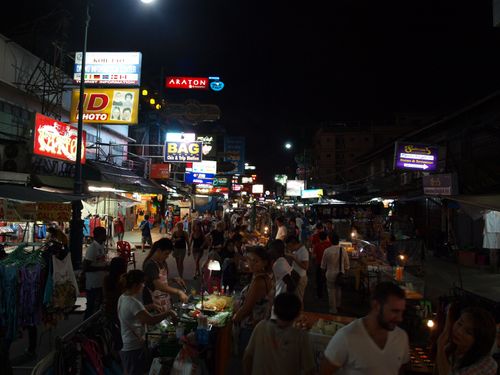
Bangkok’s backpacker carnival: curbside bars, live bands and DJs from 3pm–2am (midnight Sun). Street eats are cheap — pad thai 70–100 THB, mango sticky rice 60–100 THB. Come for wild people-watching; duck into Rambuttri for a calmer beer.
Wat Phra Chetuphon Wimon Mangkhalaram Rajwaramahawihan
Temples
The Grand Palace
Attractions
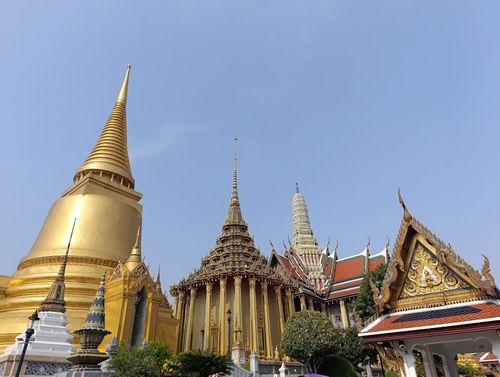
Bangkok’s royal showpiece a short hop from Khao San: glittering Wat Phra Kaew, Ramakien murals, and gold-on-gold rooftops. Go 8:30am to dodge the heat, dress modestly, and boat to Tha Chang for the prettiest arrival.
Wat Saket Ratchawora Mahawihan
Temples
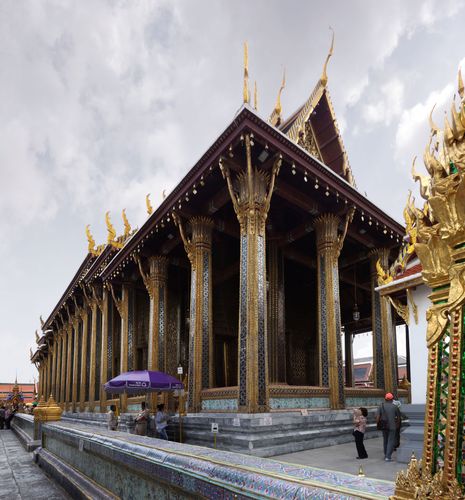
Wat Phra Kaew
Temples
Bangkok’s holiest temple inside the Grand Palace. Go early (8:30am–3:30pm). Buy the 500 THB ticket at Na Phra Lan Rd gate. Dress code enforced. Marvel at Ramakien murals and the tiny Emerald Buddha whose robes change with the seasons. 10–15 minutes’ walk from Khao San.
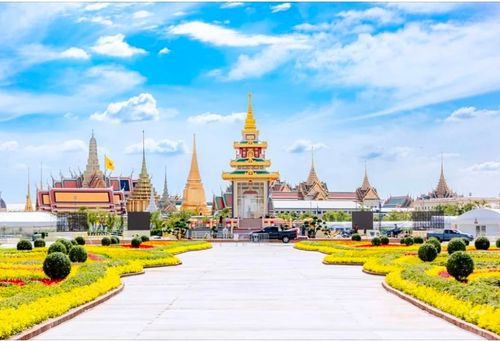
Sanam Luang
Attractions
Bangkok’s royal lawn facing the Grand Palace. Free to wander, ringed by tamarind trees, popular for kite flying (Feb–Apr) and lazy green‑space hangs. A 10‑minute walk from Khao San; come early for soft light and street snacks along Na Phra That Rd.
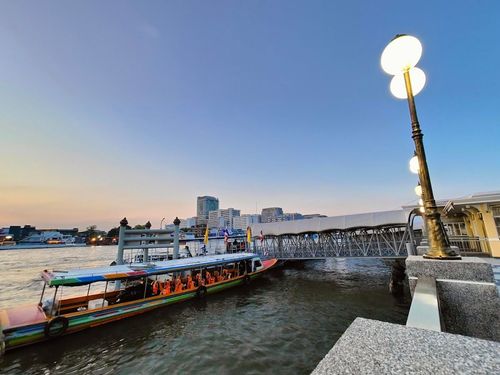
Tha Chang Bangkok
Bars
Bar on Khao San Road.
Recommended Products
More Khao San Road Guides
- How to Dress for Bangkok Temples: Wat Pho, Grand Palace, and Golden Mount Entry Rules from Khao San Road
- Bangkok Temple Day for First-Timers: What to See at Wat Pho, the Grand Palace, and Golden Mount from Khao San Road
- Budget Breakdown for Visiting Wat Pho, the Grand Palace, and Golden Mount from Khao San Road
- Bangkok Temple Run from Khao San Road: Dress Code, Entry Fees, and What to Expect at Wat Pho, the Grand Palace, and Golden Mount