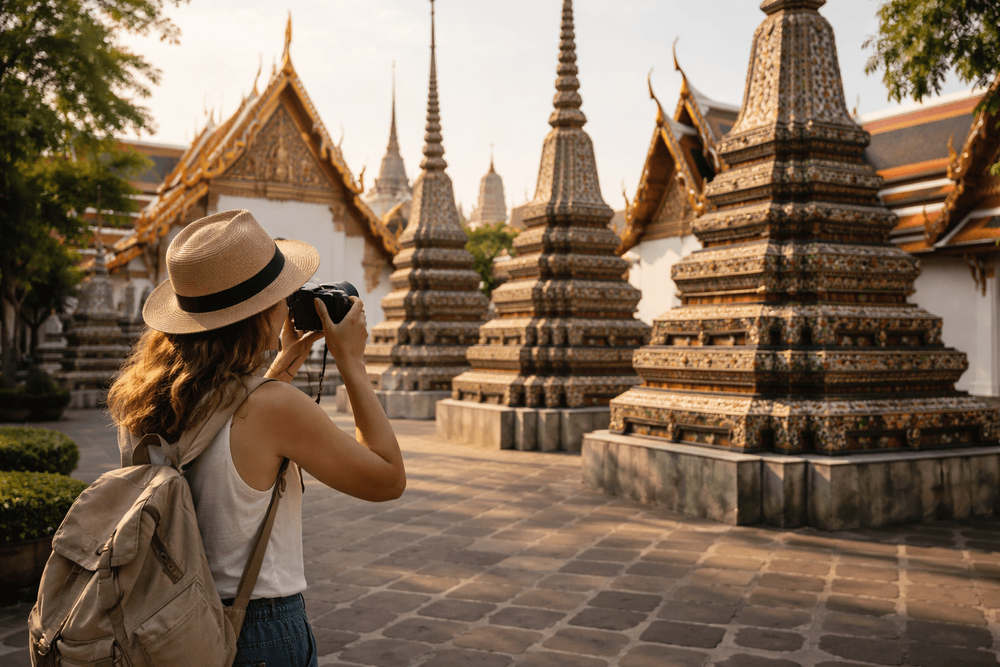
Bangkok Temple Run for Art and Photo Lovers: Best Angles, Quiet Corners, and Framing Tips at Wat Pho, the Grand Palace, and Golden Mount
A photographer’s path through Bangkok’s temples—best angles, quiet corners, respectful shooting, and timing tips for Wat Pho, the Grand Palace, Wat Arun, and Golden Mount.
We slide off the Chao Phraya Express at Tha Tien just as the river breathes out mist and motor-churn. Wat Arun Ratchawararam Ratchawaramahawihan’s porcelain spire glows milk-white across the khlong, a fisherman in a longtail slicing the reflection into zigzags. This is why we love bangkok temple photography: the mix of gold leaf and diesel, incense and river spray, chanting and the thump of distant bass from Khao San Road. We’ll chase clean lines, quiet corners, and the kind of light that makes mosaics sing—without getting shooed by a guard or roasted by the midday sun.
Data Freshness + Pricing:
- Prices are approximate and in THB.
- Last checked: July 2026
- Happy hour and promo details change frequently—confirm locally.
Bangkok Temple Photography: Best Temples and Complexes
Wat Pho (Temple of the Reclining Buddha)
- Why we shoot it: The 46-meter Reclining Buddha is a gold tidal wave in a teak hall, but the real magic for photographers is outside—rows of chedis (stupas) tiled with floral ceramic, symmetry that begs for leading lines, and soft morning light filtering through frangipani.
- Best light & angle: Be at the gate around opening (approx 8:00). Work the perimeter of the Phra Ubosot for reflective marble floors and shadow play. Use a 24–70mm to frame stacked chedis; a 35mm primes the courtyards beautifully.
- Practical notes: Entry approx 200 THB. The main hall with the Reclining Buddha can be packed after 10:00; grab detail shots of mother-of-pearl inlay at the soles between tour waves—no flash.
The Grand Palace & Wat Phra Kaew (Temple of the Emerald Buddha)
- Why we shoot it: It’s maximalist Bangkok—mirror mosaics, gold filigree, yaksha giants guarding gates, and cloister murals from the Ramakien that run like a storyboard.
- Best light & angle: Arrive right at opening (approx 8:30). The Phra Mondop and golden chedis glitter best in low morning sun; use a circular polarizer to tame glare on mirror tiles. For the Ramakien murals, step back with a 50–85mm to flatten perspective and avoid lens glare from the lacquer.
- Practical notes: Entry approx 500–600 THB, dress code strictly enforced (shoulders and knees covered). Expect crowds—compose tight, look up, and find symmetry over people’s heads.
Wat Arun (Temple of Dawn)
- Why we shoot it: A lacework prang tiled with Chinese porcelain that catches sunrise like a prism. From across the river, it’s a classic skyline shot; up close, it’s all texture and guardian statues.
- Best light & angle: Blue hour to sunrise from Tha Tien or the river promenade near Maharaj Pier; sunset backlights the prang from the Wat Arun side looking toward the Grand Palace. Climb the prang terraces (when open) for pattern and perspective. A 16–35mm earns its keep.
- Practical notes: Cross-river ferry approx 5–10 THB. Temple entry approx 100–200 THB. Open roughly 8:00–18:00; verify locally.
Golden Mount (Wat Saket)
- Why we shoot it: A spiral climb through bells and bodhi trees to a 360-degree Old City view. Sunset turns the chedi into a lantern; rainy season clouds give moody drama.
- Best light & angle: Sunset to blue hour. Frame the gold chedi against the pink-orange sky, then pivot to catch the city grid and the Rattanakosin rooftops.
- Practical notes: Entry approx 100 THB. The walkway bells make great foreground texture—listen for the soft gong as a breeze rolls through.
Lesser-Known Stunners
- Wat Ratchabophit: Gilded, patterned cloisters with a riot of colored tiles. Watch for repeating arches and mirror symmetry; mornings are quiet.
- Wat Suthat Thepwararam Ratchaworamahawihan: The viharn’s serene Buddha and aisle of monk statues are a chiaroscuro playground; outside, the Giant Swing frames the sky.
- Wat Ratchanatdaram Worawihan: The metal spires and stacked corridors offer graphic, noir-ish compositions—perfect for leading lines.
- Wat Kalayanamit (Thonburi side): Riverside giant Buddha, less tour-bus chaos, and room to breathe with a 50mm.
Practical Photography Guidance for Temple Visits
Light, Crowds, and Heat
- Go early or late: Golden hour does what Photoshop can’t. Most major sites open around 8:00–8:30 and get slammed by 10:00. Late afternoon (16:30 onward) cools the marble and thins the farang packs.
- Midday strategy: If you’re stuck under the white-hot noon sun, hug shade lines and shoot details—tile, stucco, door guardians. A hat and a tiny microfiber towel are worth their weight in mango sticky rice.
- Hydration hack: We duck into 7-Eleven for the blast of AC and a 12–20 THB water. Your camera will fog going back out—let glass acclimate.
Respectful Behavior and Dress
- Dress code: Shoulders and knees covered. Pack a light sarong or travel trousers; rentals and sarongs near gates run approx 100–200 THB. For deeper etiquette basics—from removing shoes to where to stand—see the Bangkok Temple Etiquette Guide for Visiting Wat Pho, the Grand Palace, and Golden Mount from Khao San Road.
- People and monks: Ask with a smile (and a soft “khor thot na khrap/ka”) before photographing monks or worshippers. No flash in prayer halls; keep the shutter quiet during chanting.
Tripods, Flash, and Drones
- Tripods: Policies vary. Small travel tripods may be fine in open courtyards but can be restricted at busy times or near shrines. Inside ubosots and wiharns, staff often ask you to pack them away. Be ready to handhold at higher ISO.
- Flash: Generally a no-go indoors; it’s distracting and often explicitly banned. Outside, you won’t need it—bounce the Bangkok sun off pale walls instead.
- Drones: Don’t. Palace zones and dense Old City airspace are sensitive; permits are strict and enforcement real.
Gear We Actually Use
- Lenses: 16–35mm (architecture/drama), 24–70mm (coverage king), 50mm or 85mm (portraits and mural compression). Smartphones nail it with ultra-wide—just watch for skew.
- Filters: Circular polarizer for mirror mosaics and glazed tiles; variable ND if you’re smoothing crowds or fountains.
- The little stuff: Spare battery (heat drains charge), lens cloth (incense soot + humidity), and a foldable umbrella for sudden monsoon dumps—also a shade-maker for your lens.
For ticket tiers, passes, and dress code nuances across Wat Pho, the Grand Palace, and Golden Mount, we keep this handy: Bangkok Temple Run Ticket and Dress Code Guide: Fees, Passes, and What to Wear for Wat Pho, Grand Palace, and Golden Mount.
Key Photo Opportunities at Major Sites
Wat Arun: Porcelain, Guardians, and River Geometry
- From Tha Tien Pier: Frame the prang across water at sunrise; ferries add motion blur if you drag the shutter to 1/10–1/4s with ND.
- Up close: Porcelain floral reliefs become abstract patterns. Shoot tight at f/2.8–f/4 to separate detail from busy backgrounds. The demon guardians (yaksha) pop with a low angle.
- Riverside candids: Fishermen, saffron robes fluttering in river wind, temple cats sunning on steps—your candid gold.
Wat Pho: Chedi City and Whispering Halls
- Courtyard symmetry: Stand centered between two chedis and shoot straight down the axis—watch verticals and correct keystoning later.
- Reclining Buddha details: Mother-of-pearl soles, reflections in the polished columns, and the row of offering bowls—shoot the rhythm at f/2–f/2.8.
- Massage school: Hands at work, herbal compress steam rising—ask before shooting, keep it discreet.
Grand Palace & Wat Phra Kaew: Mirrors and Murals
- Yaksha gatekeepers: Frame a low, heroic angle with sky negative space; a polarizer deepens blues.
- Ramakien cloisters: Hunt vignettes—Hanuman battles, palace interiors—compose with repeating columns as a natural frame.
- Phra Mondop sparkle: Backlight the gilt and mirrors, exposing for highlights to keep the gold from blowing out. Bracket if needed.
Golden Mount: Bells, Bodhi, and Skyline
- Spiral ascent: Bells and prayer flags make foreground lines leading to the chedi. Pause at niches where light spills onto stucco.
- Rooftop sweep: Shoot a stitched panorama at 35–50mm for minimal distortion; or go ultra-wide at blue hour and embrace the starburst streetlights.
- Festival week: During the temple fair (around Loy Krathong), the lantern-lit grounds and Ferris wheel vibe are candy for night shooters—expect crowds and go early.
Techniques Worth Packing in Your Back Pocket
Details First, Then the Postcard Shot
- Start tight: Tiles, naga heads, lacquered doors, lotus buds at offering tables. These details tell the story while you wait for the big scene to clear.
- Then go wide: Once the coach tour moves on, step into the middle and snag your clean, wide establishing shot.
Reflections Everywhere
- Rain puddles, polished marble, even a vendor’s stainless cart can mirror a chedi. Drop the camera near ground level for mirror symmetry. A microfiber towel to dry a spot buys you an instant mirror.
Symmetry and Repetition
- Bangkok temples are a geometry lesson: cloister columns, window grills, lion guardians. Center your frame, square your shoulders, and breathe—tiny shifts break the spell.
Frames Within Frames
- Doorways, gate arches, and balustrades create natural vignettes. At Wat Suthat and Wat Ratchabophit, step back and let the architecture cradle your subject.
Candid Street-Life Moments
- The edges are alive: amulet markets near Tha Chang, incense smoke drifting across Phra Athit Road, tuk-tuks idling along Soi Rambuttri. Keep your camera low and your profile gentle. Ask with a smile, tip a few coins into a donation box when you linger.
Seasonal and Time-of-Day Considerations
Sunrise and Sunset
- Sunrise: Wat Arun’s namesake hour across the river is textbook. The soft pink light kisses porcelain and the river turns to mercury. We often pre-scout from the Tha Tien side, coffee in hand.
- Sunset: Golden Mount for skyline silhouettes; Grand Palace spires from Sanam Luang; Wat Arun’s prang against a blood-orange sky from the river promenade.
Blue Hour Magic
- The half-hour after sunset is temple neon without the neon. Marble cools to silver, and gold chedis glow. Tripod rules may nix long exposures inside grounds, so brace on a railing or use a bean bag.
Rainy Season Drama (roughly May–October)
- Cloud ceilings, puddle mirrors, and saturated colors. Pack a dry bag and lens cloths. We shoot until the sky breaks, duck into 7-Eleven for that blessed AC, then hit the streets when steam rises off the tiles.
Festivals and Holy Days
- Candlelit processions (Makha Bucha, Visakha Bucha) are ethereal—soft chanting, circling candles, reflections in pooled wax. Observe, keep distance, no flash. Crowds can be intense; arrive an hour early to stake an unobtrusive spot.
- Loy Krathong: Riverside temples shimmer with floating offerings; watch for wind and wake when you compose reflections.
For temple art cues that will sharpen your eye—what motifs mean, which details to chase—bookmark this: Bangkok Temple Run for Art and Architecture Lovers: What to Notice at Wat Pho, the Grand Palace, and Golden Mount.
Getting There (from Khao San/Old City)
- By foot: Wat Pho, the Grand Palace/Wat Phra Kaew, and Golden Mount are all walkable if you don’t mind the heat—think 10–25 minutes between each, with iced tea breaks.
- Chao Phraya Express Boat: Hop the Orange Flag (approx 16–20 THB) at Phra Arthit Pier to Tha Chang (for Grand Palace) or Tha Tien (for Wat Pho/Wat Arun). It’s fast, breezy, and photogenic.
- Cross-river ferry: Tha Tien to Wat Arun is approx 5–10 THB. Keep your camera ready for river life—barges, monks, fishermen.
- Tuk-tuk/taxis: Short hops around Rattanakosin run roughly 80–150 THB if you negotiate. Beware the classic “Grand Palace is closed today” line—smile, decline, keep walking. For route sequencing that saves your feet and your patience, this run helps: Bangkok Temple Run: Wat Pho, Grand Palace, and Golden Mount from Khao San Road.
Where We Crash Between Shoots
We like to base near Soi Rambuttri or Phra Athit Road—quiet enough for sleep, close enough for dawn ferries. Look for a guesthouse with a pool to beat the 2 PM heat, and a rooftop or balcony for blue-hour timelapses. If you’re out late on Khao San, stash your batteries charging and your lenses in a dry cabinet (or a sealed bag with silica packets) to fight that swampy Bangkok humidity.
Know Before You Go
- Opening hours shift: Expect approx 8:00–18:00 for most temples, with the Grand Palace closing earlier (around 15:30). Verify day-of.
- Cash and small change: Entry gates and ferries run smoother with exact change. Street iced tea: approx 20–30 THB; sugar levels can stun an elephant—ask for “wan noi” (less sweet).
- Footwear: You’ll be in and out of shoes all day. Slip-ons save time; tuck them to the side, never on thresholds.
- Security and bags: Larger camera bags may be inspected; smile, open zips, glide on.
If you want a deeper dive on how to behave inside temple grounds—what to wear, where to sit, what not to touch—read: Old City Temple Etiquette Guide: What to Wear, What to Bring, and How to Behave at Bangkok’s Historic Temples.
Our Favorite Mini-Route for a One-Day Photo Binge
- Dawn: Tha Tien riverfront for Wat Arun across-water shots.
- 8:00–9:30: Wat Pho courtyards before they heat up.
- 9:45–11:30: Grand Palace/Wat Phra Kaew for mirrors and murals; bail before the midday inferno.
- Siesta: Pool nap, iced coffee on Phra Athit, quick lens clean.
- 16:30–18:30: Golden Mount sunset and blue-hour skyline.
- Nightcap: Rambuttri noodles, edit on the balcony, the city humming under your feet.
We’ll be the ones at the ferry with coffee and a grin, chasing the first pink glint off Wat Arun. Bring your eye, leave the rush, and let bangkok temple photography unfold one bell chime at a time.
Related Hotels & Places
Wat Arun Ratchawararam Ratchawaramahawihan
Temples
Khao San Road
Attractions
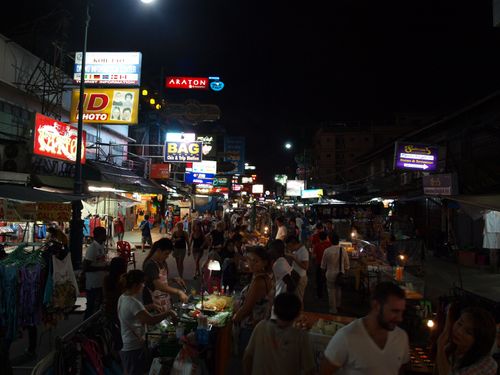
Bangkok’s backpacker carnival: curbside bars, live bands and DJs from 3pm–2am (midnight Sun). Street eats are cheap — pad thai 70–100 THB, mango sticky rice 60–100 THB. Come for wild people-watching; duck into Rambuttri for a calmer beer.
The Grand Palace
Attractions
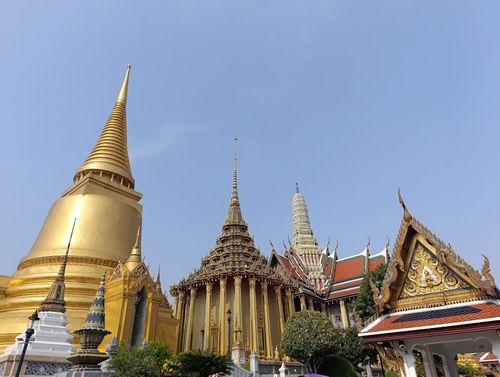
Bangkok’s royal showpiece a short hop from Khao San: glittering Wat Phra Kaew, Ramakien murals, and gold-on-gold rooftops. Go 8:30am to dodge the heat, dress modestly, and boat to Tha Chang for the prettiest arrival.
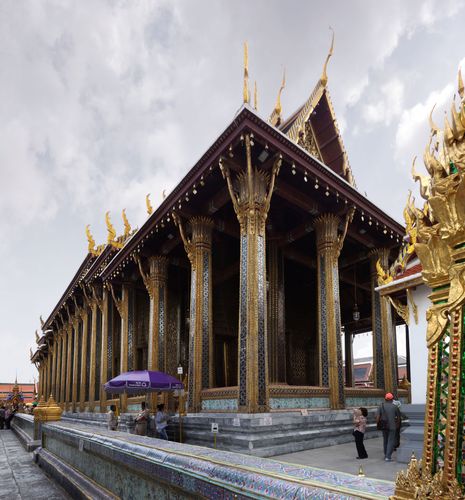
Wat Phra Kaew
Temples
Bangkok’s holiest temple inside the Grand Palace. Go early (8:30am–3:30pm). Buy the 500 THB ticket at Na Phra Lan Rd gate. Dress code enforced. Marvel at Ramakien murals and the tiny Emerald Buddha whose robes change with the seasons. 10–15 minutes’ walk from Khao San.
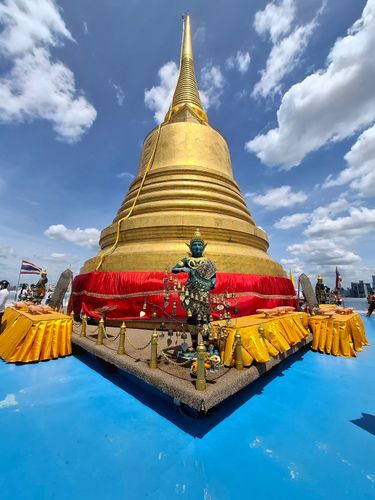
Wat Saket Ratchawora Mahawihan
Temples
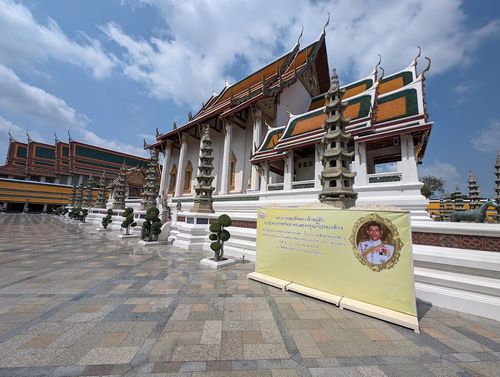
Wat Suthat Thepwararam Ratchaworamahawihan
Temples
Serene counterpart to the Giant Swing: a soaring hall, Sukhothai‑era 8 m bronze Buddha, and some of Bangkok’s finest murals. An easy 15‑minute walk from Khao San; open daily till 8pm for golden‑hour visits.
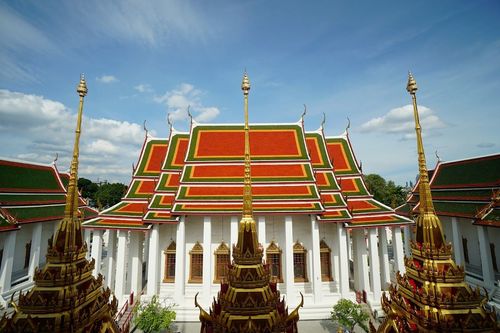
Wat Ratchanatdaram Worawihan
Temples
Bangkok’s Loha Prasat “metal castle” steals the scene—37 spires, serene courtyards, and golden-hour light. An easy 15‑minute walk from Khao San, open daily 8am–5pm. Come early for quiet, or late for the best photos.
7-Eleven
Shops
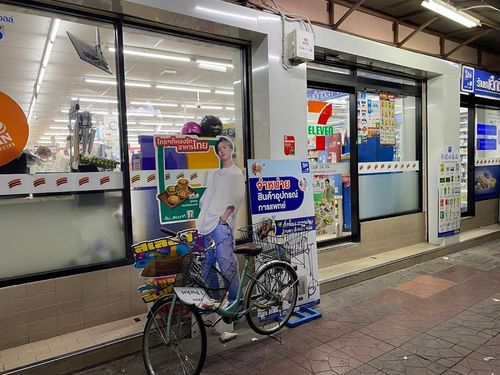
Khao San’s 24/7 reset button: ice‑cold A/C, ham‑cheese toasties, All Café iced lattes, water for 7–14 THB, and late‑night supplies from snacks to sunscreen—right by Rikka Inn.
Rambuttri
Markets
Khao San’s calmer cousin: a tree‑shaded lane of VW van cocktail bars, open‑air foot massages, pad thai grills, and easygoing live bands. Best from sunset to 11pm; beers 80–120 THB, cocktails 150–220 THB. One block from the chaos, all the charm.
More Khao San Road Guides
- Bangkok Temple Run for Photographers: Best Light, Angles, and Low-Crowd Shots at Wat Pho, the Grand Palace, and Golden Mount
- Bangkok Temple Run for Art and Architecture Lovers: Reading the Details at Wat Pho, the Grand Palace, and Golden Mount
- Bangkok Temple Run for Photographers: Best Light, Angles, and Viewpoints at Wat Pho, the Grand Palace, and Golden Mount
- Bangkok Temple Run with a River Ferry: The Most Scenic Route to Wat Pho, the Grand Palace, and Golden Mount from Khao San Road