Bangkok Temple Run for History Lovers: What to See in Each Stop at Wat Pho, the Grand Palace, and Golden Mount
Walk Bangkok’s temple run like a historian: what to notice at Wat Pho, the Grand Palace, and Golden Mount, with route tips, hours, dress, and food stops.
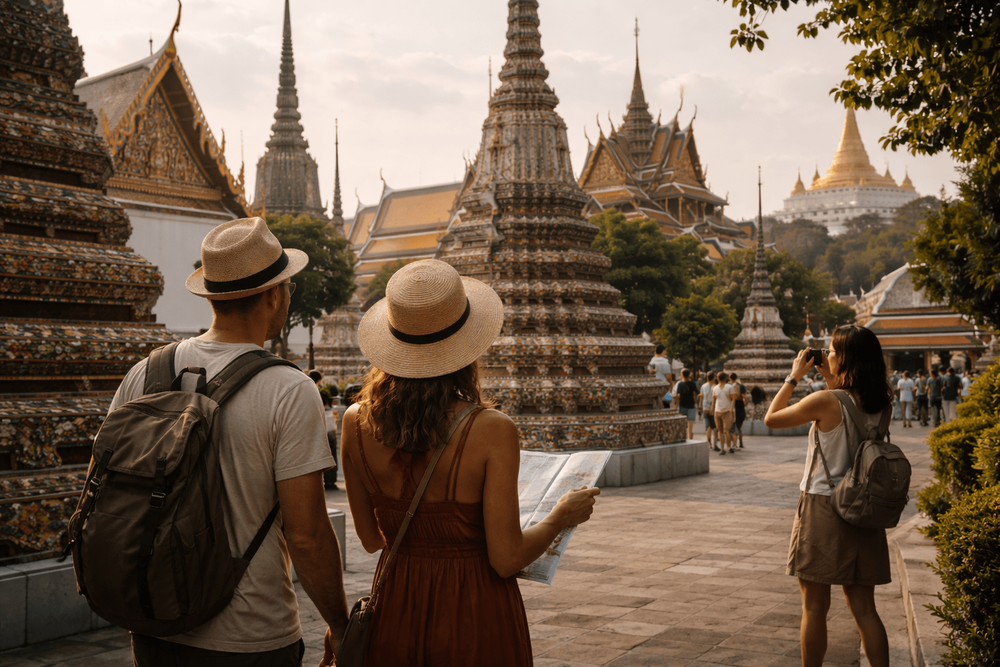
We slip out of Soi Rambuttri just as the monks move like saffron shadows and the tuk-tuks cough awake. Incense rides the morning air, and the bass from last night’s Khao San Road bar is finally asleep. If you’re planning the bangkok temple run, history lovers will feel right at home here in Rattanakosin — the Old City — where every gilded roof and cracked mural tells a chapter of Bangkok’s story.
Data Freshness + Verification
- Prices are approximate (THB). Last checked: July 2026.
- For venue facts (name, hours, closures, boat/bus schedules), avoid absolutes; give typical ranges and add "confirm same-day locally."
- When citing any price, include neighborhood and, if known, source type (menu, recent visitor, operator site).
Concrete Planning Details
- Mini-itinerary/food crawl near Khao San–Phra Athit (walkable):
- Breakfast roti at Roti Mataba on Phra Athit (8–10 min walk from Khao San; usually mornings–late evening; 60–120 THB, Banglamphu, menu).
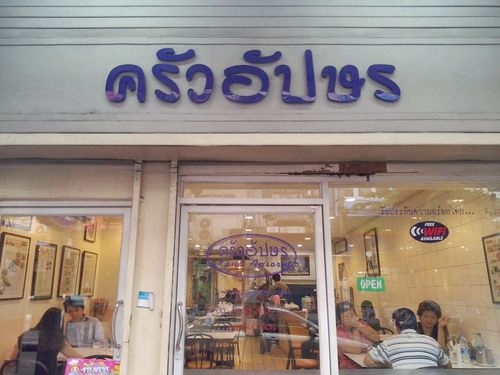
- Classic lunch at Krua Apsorn @Dinso on Dinso Road (15–20 min walk from Phra Athit or 5–10 min tuk-tuk; typical lunch hours; 120–300 THB per dish, Rattanakosin, menu).
- Old-school scoop at Nattaporn Ice Cream on Dinso (2 min from Krua Apsorn; 25–40 THB, Rattanakosin, menu/visitor notes).
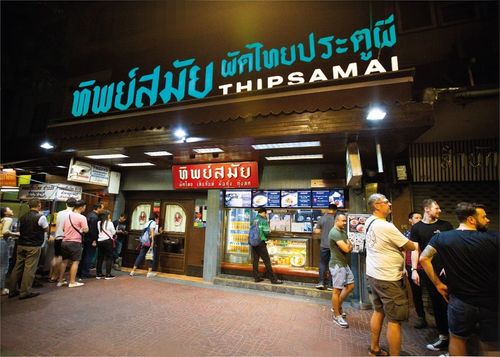
- Pad Thai at Thipsamai Padthai Pratoopee after Wat Saket Ratchawora Mahawihan (20–25 min walk from Dinso or 10 min tuk-tuk; queues from 5 pm; 90–200 THB, Old City, menu).
- Transit times:
- Khao San to Phra Athit Pier: 8–10 min walk.
- Phra Athit Pier to Tha Tien (Wat Pho) via Chao Phraya Express orange-flag boat: ~10–15 min ride; boats usually from around 6:00 to early evening (~19:00), frequency 5–15 min; confirm same-day.
- Grand Palace to Golden Mount: ~25–30 min walk or 10–15 min tuk-tuk depending on traffic.
Booking Suggestions (if relevant)
- If you want deep context at the Grand Palace/Wat Phra Kaew, consider hiring a licensed guide at the gate or arranging a small-group tour through your hotel a day before; ask for history-focused narrations and skip the gem shops.
- Staying near Phra Athit or Soi Rambuttri makes sunrise starts easy and midday breaks painless; check availability a couple of days out in high season.
Why these temples matter to Bangkok’s story
Bangkok didn’t just happen; it was built with intention after Ayutthaya fell, when the Chakri kings forged a new capital on the Chao Phraya’s khlong-laced banks. Wat Pho, the Grand Palace with Wat Phra Kaew, and the Golden Mount at Wat Saket are the spine of that story — royal legitimacy in stone and stucco, Buddhist devotion in gold leaf and lacquer, and a city expanding from a fortified island into the metropolis we’re sweating through today.
- Wat Pho is older than Bangkok itself, rebuilt grandly under Rama I. It became the kingdom’s first public university of sorts, with knowledge literally carved into stone.
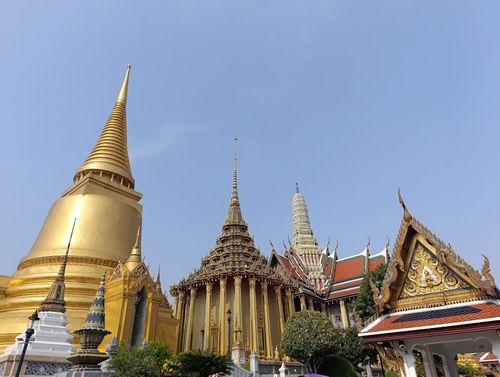
- The Grand Palace/Wat Phra Kaew complex is Bangkok’s beating ceremonial heart — seat of the Chakri dynasty and guardian of the Emerald Buddha, a national palladium.
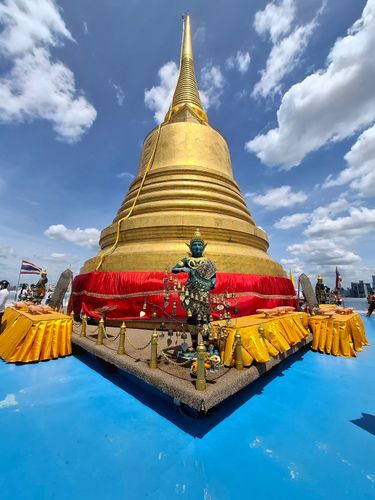
- Wat Saket’s Golden Mount is resilience in brick. The chedi that once collapsed became a man-made hill to elevate a relic — and to give us the best history-soaked panorama in town.
If you crave narratives over checklists, the bangkok temple run for history lovers is more than a loop; it’s a timeline you can walk.
The Bangkok temple run for history lovers: our ideal route
We start from Banglamphu (Khao San/Soi Rambuttri). Early light, cooler air, fewer tour buses. First: Wat Pho. Then the Grand Palace/Wat Phra Kaew before the worst of the heat. We save Golden Mount for the late afternoon when shadows flatter the city.
- Typical opening times and costs (confirm same-day locally):
- Wat Pho (Rattanakosin): usually ~08:00–18:30; entry ~200 THB including a small water.
- Grand Palace & Wat Phra Kaew (Na Phra Lan Rd): usually ~08:30–15:30; entry ~500 THB for foreigners.
- Golden Mount at Wat Saket (Boriphat Rd): usually ~07:00–19:00; entry ~100 THB.
- Dress: shoulders and knees covered; no ripped shorts, no see-through. Carry a light scarf or sarong; some gates rent cover-ups.
- Transit notes:
- Walk or boat to Wat Pho: from Phra Athit Pier, hop the Chao Phraya Express to Tha Tien and cross the short pier alley into Wat Pho.
- Walk to Grand Palace via Tha Tien/Tha Chang market lanes or take a short tuk-tuk if the sun feels spicy.
- From Sanam Luang, a tuk-tuk to Golden Mount is ~10–15 minutes depending on traffic; agree on price first (we aim for 80–120 THB for short hops, time of day dependent).
For a pure logistics breakdown, see route and timing tips in our practical pieces: Bangkok Temple Run for First-Time Visitors: Tickets, Dress Code, and Time-Saving Tips from Khao San Road and Bangkok Temple Run for First-Timers: Best Order, Transit, and Time-Saving Tips from Khao San Road.
Wat Pho: inscriptions, chedis, and Bangkok’s classroom walls
We slip through the gate and the city hushes a notch. The Reclining Buddha glows like a sunrise — 46 meters of gold leaf, toes inlaid with mother-of-pearl mandalas. It’s theatrical, yes, but history lovers, look left and right: the walls are lined with murals that compress cosmology into color. Try spotting scenes of the Three Worlds (Traiphum) and the attendants fanning the Lord as he passes into parinirvana.
What to notice:
- Stone inscriptions: Scattered around the cloisters and pavilions, these engraved tablets codify knowledge — medicine, massage, ethics, even poetry — commissioned under Rama III. They’re recognized by UNESCO’s Memory of the World program. Read a few; you’ll see diagrams of pressure points and folk wisdom carved in a precise script.
- The four grand chedis: Each is dedicated to a king (Rama I–IV), with glazed-tile petals and Chinese porcelain blossoms. The trade with China wasn’t just silks and tea; it left a floral mosaic on Bangkok’s very skin.
- Phra Ubosot and Phra Rabiang cloisters: Walk the colonnades around lines of Buddhas in varying mudras (hand gestures). Note the repeated Rattanakosin style — serene faces, fiery halos, and lacquer-paint plinths.
- Massage pavilions: This is the cradle of traditional Thai massage instruction. If we have time, we’ll book a short session — not just for sore calves but as living heritage.
Practical tip: The Reclining Buddha hall gets busy by 9:30. Hit it first, then breathe in the quieter courtyards. Carry socks — floors can scorch by late morning.
culture-forward overview Bangkok Temple Run for Culture and History Fans: What to See at Wat Pho, the Grand Palace, and Golden Mount.
Grand Palace & Wat Phra Kaew: statecraft in stucco and jade
It’s a short, sensory blast from Tha Tien to the palace: sizzling woks, river brine, the sweet rot of durian at a cart. We pass under yaksha guardians — those towering, candy-colored giants — into a precinct where everything tries to be more brilliant than the sun.
What to notice in Wat Phra Kaew:
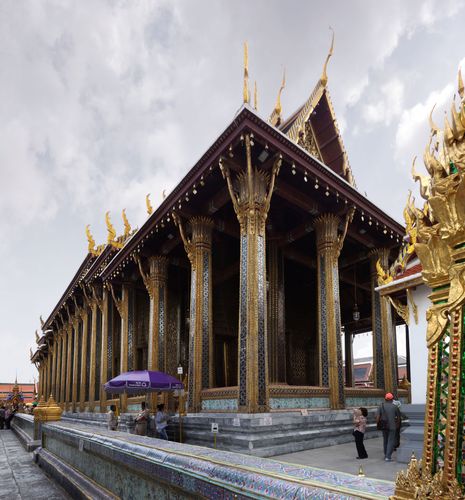
- The Emerald Buddha (actually green stone, likely jade or jasper): small, potent, and high atop a throne. Three times a year, the King (or a representative) changes its seasonal robes — a ritual of sovereignty and benediction. Even at a distance, you feel the choreography of power and faith.
- Ramakien murals along the cloister: A kilometer of narrative painting, panel after panel of battles, exiles, and monkey armies. Look for tiny gold-leaf highlights catching the light — they’re a map of technique as much as story.
- Prangs and mondops: Khmer-style spires and a scripture library dressed in mirrored tiles, reflecting Bangkok’s early Rattanakosin synthesis of imported motifs and local devotion.
What to notice in the Outer Court and around Chakri Maha Prasat:
- Chakri Maha Prasat Hall: an Italo-Thai hybrid from the late 19th century, with neo-Renaissance lower floors and a Siamese multi-tiered roof — King Rama V’s cosmopolitan modernity literally stacked on tradition. State receptions happened here; the façade itself is a policy statement.
- Dusit Maha Prasat: a classic example of a Thai throne hall with perfect proportions. Check the finials (chofah) — stylized garuda-bird beaks reaching into sky.
Practical tip: Scammers love Sanam Luang. If anyone says “Palace closed,” smile, walk on. Buy tickets only at the official gate. Shoulders and knees covered; avoid wraparounds that are too sheer. Photos are fine outside sacred halls, never inside the Emerald Buddha chapel.
Golden Mount at Wat Saket: a hill born of failure
We cut through old shop-houses, past tiffin tins and incense smoke, and the Golden Mount rises like a gilded anthill. The original attempt at a massive chedi collapsed on soft ground during Rama III’s reign. Rather than quit, they stabilized the mound with layers of laterite and brick, turning disaster into this man-made hill.
What to notice on the climb:
- Bells, gongs, and the city’s soundtrack: ring one if you like — a blessing in bronze.
- Vultures’ alley memory: Wat Saket once served as a cremation ground during disease outbreaks in the 19th century. Look for discreet interpretive plaques and small shrines that allude to those years.
- The chedi at the summit: it enshrines a relic from Sri Lanka, a tidy symbol of Theravada ties across the Bay of Bengal. Step around clockwise with locals.
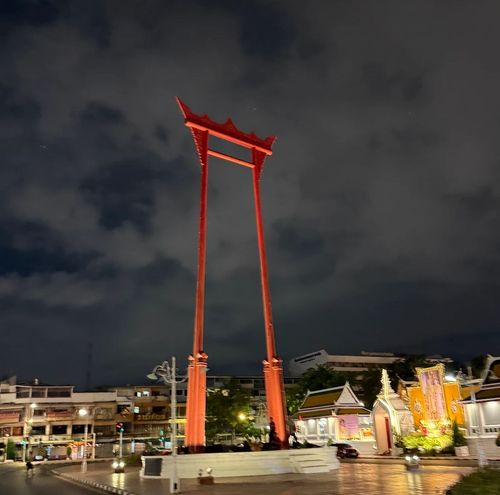
Time your ascent for late afternoon. From the balustrade, we read the city like a palimpsest — the Loha Prasat’s iron peaks at Wat Ratchanatdaram Worawihan, the The Giant Swing near Wat Suthat Thepwararam Ratchaworamahawihan, the green rectangle of Sanam Luang. On Loy Krathong, a red cloth girdles the mount and the fair spills sanuk across the grounds.
How to read a Thai temple like a historian
Bangkok’s temples are libraries you walk through. A few cues to tune your eyes:
- Rooflines: Count the tiers — more tiers suggest higher status. Chofah (bird beaks), bai raka (toothed eaves), and hang hong (swan tails) are a grammar of rank and reverence.
- Guardians and thresholds: Yaksha giants, lion-dogs, and nagas guard liminal spaces. They’re not just decoration; they signal transitions from profane to sacred.
- Murals: Watch how stories flow panel-to-panel. Early Rattanakosin palettes skew vivid but controlled; gold leaf punctuates divinity, blues and greens map heavens and forests.
- Inscriptions and sema stones: At Wat Pho, read knowledge on stone. At ordination halls, note boundary stones (bai sema) marking sacred ground — a legal as much as spiritual boundary.
- Chinese porcelain flowers: A signature of the era’s trade wealth, those blossoming chedis and gables are repurposed cargo ceramics.
- Buddha images: Postures matter — Reclining at Wat Pho signals the Buddha’s passing; Emerald Buddha’s tiny scale underscores mystery over might.
Practical context: location clusters, heat, etiquette
You’re in Rattanakosin, the historic island framed by the Chao Phraya and old khlongs. The trio sits in an easy triangle: Wat Pho by Tha Tien market and ferry, the Palace a few hundred meters upriver, Golden Mount inland toward Pom Mahakan.
- Opening hours: typically morning to late afternoon/early evening. Major rituals and royal events can close areas with little warning — confirm same-day locally.
- Tickets: cash and card are usually accepted at Wat Pho and the Palace; have small bills for Golden Mount and donations.
- Behavior: shoes off at sacred halls, feet never pointed at images or monks, quiet voices, no climbing on balustrades for photos. A soft "sawadee" and a wai go far.
- Weather + breaks: Bangkok cooks by noon. Duck into 7-Eleven for an AC blast and electrolyte drinks. Aim for shaded cloisters and keep a light umbrella for sun or sudden rain.
- Scams: Ignore unsolicited advice around Sanam Luang and Tha Chang. If a tuk-tuk ride seems too cheap, it’s a shop circuit. Agree on fares beforehand or request the meter in a taxi.
first-timer primer Bangkok Temple Run for First-Time Visitors: Tickets, Dress Code, and Time-Saving Tips from Khao San Road.
Building a meaningful day route through the Old City
Here’s how we weave story and stamina into one day:
Morning
- Start near Khao San/Soi Rambuttri so we can roll out just after sunrise. We like small guesthouses here — easy breakfasts, easy naps later.
- Boat to Wat Pho via Phra Athit–Tha Tien. Spend 60–90 minutes: Reclining Buddha, inscriptions, chedis.
Late morning
- Walk or short tuk-tuk to the Grand Palace. Budget 2 hours if you want to actually read a few Ramakien panels and linger in the Outer Court.
- Lunch nearby: market eats at Tha Chang or a sit-down at a Dinso Road classic before or after the Palace. Hydrate like you mean it.
Afternoon
- Swing by the Amulet Market at Tha Phra Chan for a quick browse — it’s folk religion and social history in miniature.
- Tuk-tuk to Golden Mount. Climb in the soft light, ring a bell, watch the Old City glow.
- National Museum Bangkok off Na Phra That Road for context on art periods; closed some Mondays/Tuesdays — confirm same-day.
- Wat Suthat and the Giant Swing for a royal wihan with elegant murals and a dose of Brahmanic ritual heritage.
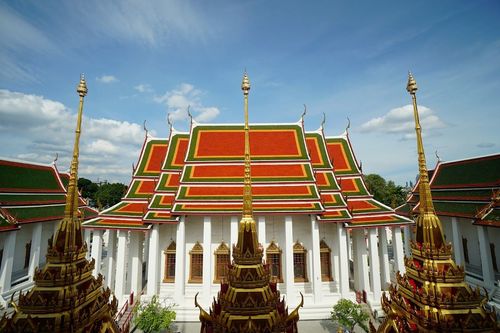
- Loha Prasat (Wat Ratchanatdaram) — the iron spires are a rare architectural species.
For travelers who prefer a guide to stitch the stories together and keep you ahead of crowds, we’ve laid out when hiring one really pays off: Bangkok Temple Run with a Guide: When a Tour Makes Wat Pho, the Grand Palace, and Golden Mount Easier from Khao San Road.
Where we base ourselves for an easy temple day
We usually crash within a 10-minute walk of Phra Athit or Soi Rambuttri — riverside breezes, calm soi energy, and a straight shot to the boat. If you’re more pool-than-pier, look in the Old City for courtyards that catch afternoon shade. Ask about early breakfasts (from 6:00) so you can be at Wat Pho as the doors open. In high season and on Thai holidays, check availability a few days out; proximity beats glamour when your plan lives and dies by a cool midday nap.
A few last insider nudges
- Bring thin socks for hot floors, a foldable fan, and 20–40 THB in coins for small shrine donations.
- If a monk offers a bracelet, accept respectfully; keep it on in the complex, remove later if you wish.
- Photograph restorations: if you see scaffolding, that’s living heritage — a chance to glimpse techniques. Look for tiny stencil work and gold-leaf presses.
- Evening return: After Golden Mount, follow Boriphat to Maha Chai for Thipsamai, then drift back to Banglamphu under strings of fairy lights. The day ends where it began, but now the roofs and murals tell you their names.
Bangkok rewards repeat listens. Next time, we’ll swap order, catch a Ramakien panel we missed, and ride the river at dusk when the palace turns molten. The bangkok temple run history lovers do best is the one they walk slowly — ears open, shoes off, heart steady.
Related Hotels & Places
Khao San Road
Attractions
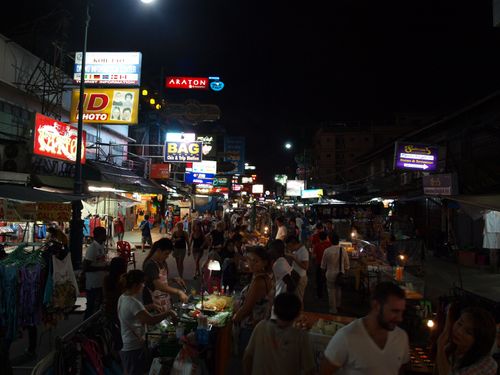
Bangkok’s backpacker carnival: curbside bars, live bands and DJs from 3pm–2am (midnight Sun). Street eats are cheap — pad thai 70–100 THB, mango sticky rice 60–100 THB. Come for wild people-watching; duck into Rambuttri for a calmer beer.
Krua Apsorn @Dinso
Restaurants
Popular Thai restaurant on Dinso Road.
Thipsamai Padthai Pratoopee
Restaurants
The Grand Palace
Attractions
Bangkok’s royal showpiece a short hop from Khao San: glittering Wat Phra Kaew, Ramakien murals, and gold-on-gold rooftops. Go 8:30am to dodge the heat, dress modestly, and boat to Tha Chang for the prettiest arrival.
Wat Phra Kaew
Temples
Bangkok’s holiest temple inside the Grand Palace. Go early (8:30am–3:30pm). Buy the 500 THB ticket at Na Phra Lan Rd gate. Dress code enforced. Marvel at Ramakien murals and the tiny Emerald Buddha whose robes change with the seasons. 10–15 minutes’ walk from Khao San.
Wat Saket Ratchawora Mahawihan
Temples
The Giant Swing
Attractions
Bangkok’s scarlet Giant Swing towers outside Wat Suthat—free to visit, open all day, and best at sunset. Pair it with the temple across the street, then graze Dinso Road’s street food. A quick tuk‑tuk or 20‑minute walk from Khao San.
Wat Suthat Thepwararam Ratchaworamahawihan
Temples
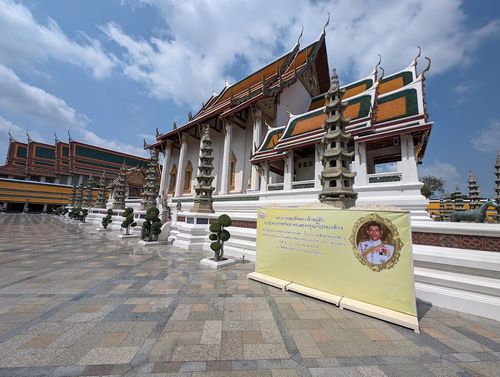
Serene counterpart to the Giant Swing: a soaring hall, Sukhothai‑era 8 m bronze Buddha, and some of Bangkok’s finest murals. An easy 15‑minute walk from Khao San; open daily till 8pm for golden‑hour visits.
Wat Ratchanatdaram Worawihan
Temples
Bangkok’s Loha Prasat “metal castle” steals the scene—37 spires, serene courtyards, and golden-hour light. An easy 15‑minute walk from Khao San, open daily 8am–5pm. Come early for quiet, or late for the best photos.
Sanam Luang
Attractions
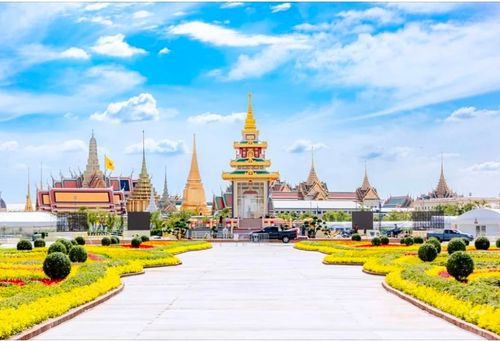
Bangkok’s royal lawn facing the Grand Palace. Free to wander, ringed by tamarind trees, popular for kite flying (Feb–Apr) and lazy green‑space hangs. A 10‑minute walk from Khao San; come early for soft light and street snacks along Na Phra That Rd.
Amulet Market
Markets
National Museum Bangkok
Attractions
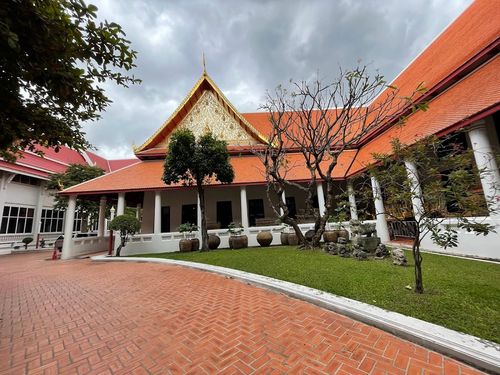
Thailand’s story in one stop: royal funeral chariots, the Buddhaisawan Chapel’s murals and Phra Buddha Sihing, plus halls of khon masks and musical instruments. 10‑minute walk from Khao San. Open Wed–Sun, 8:30am–4pm.
More Khao San Road Guides
- Bangkok Temple Run for History Lovers: What Each Stop at Wat Pho, Grand Palace, and Golden Mount Actually Teaches You
- Bangkok Temple Run for Culture and History Fans: What to See at Wat Pho, the Grand Palace, and Golden Mount
- Bangkok Temple Run for Art and Architecture Lovers: Reading the Details at Wat Pho, the Grand Palace, and Golden Mount
- Bangkok Temple Run for Beginners: What First-Timers Should Expect at Wat Pho, the Grand Palace, and Golden Mount from Khao San Road