Bangkok Temple Run for History Lovers: What Each Stop at Wat Pho, Grand Palace, and Golden Mount Actually Teaches You
Decode Wat Pho, the Grand Palace, and Golden Mount with a history-first walk from Khao San. Art, rituals, prices, routes, and a Phra Athit food crawl inside.
We slip out from under the banyans beside Phra Athit Road just as the city exhales—incense from a morning shrine hangs sweet over the khlong, tuk-tuks cough awake near Rambuttri, and the sun starts working on our backs like a slow griddle. This is our Bangkok temple history guide, the way we actually walk it: not just snapping a Reclining Buddha selfie, but decoding what these stones say about kings, wars, faith, and how the city learned to be itself.
Data Freshness + Verification
- Prices are approximate (THB). Last checked: July 2026.
- For venue facts (name, hours, closures, boat/bus schedules), avoid absolutes; give typical ranges and add "confirm same-day locally."
- When citing any price, include neighborhood and, if known, source type (menu, recent visitor, operator site).
Concrete Planning Details
- Mini Khao San/Phra Athit food crawl (3–4 stops):
- Roti Mataba (Phra Athit Rd) – flakey roti and beef or banana mataba; 5–7 min walk from Khao San; open late morning to night; mains ~80–140 THB (Old City; menu).
- Krua Apsorn (Dinso Rd, near Democracy Monument) – crab omelette and stir-fried flowers; 12–15 min walk from Phra Sumen Fort; dishes ~120–280 THB (Old City; menu/visitor reports).
- Nattaporn Ice Cream (Sam Sen Soi 1) – coconut milk ice cream, palm sugar syrup; 8–10 min walk from Dinso; scoops ~25–40 THB (Old City; menu board).
- Pad Thai Thip Samai (Maha Chai Rd) – orange glow pad thai over charcoal; 15–20 min walk or 5–8 min tuk-tuk from Khao San; plates ~120–200 THB (Old City; menu/visitor reports).
- Transit reality check: Orange-flag Chao Phraya Express runs roughly 6:00–19:00; Phra Arthit Pier (N13) to Tha Chang (N9) ~10–15 min. Tuk-tuks around Old City are fast but haggle first; 60–150 THB for short hops is typical. Buses rattle; boats breathe.
Booking Suggestions (if relevant)
- Staying near Soi Rambuttri or along Phra Athit puts us on the doorstep of every temple in this guide. Check availability a day ahead in high season; riverside rooms go first. For deeper context, consider a small-group Old City walking tour; book a spot the night before and confirm meeting point on Phra Athit or Sanam Luang.
The Bangkok Temple History Guide: From Ayutthaya Embers to the Rattanakosin Glow
Bangkok didn’t spring from the Chao Phraya foamy and finished; it’s a phoenix job. When Ayutthaya fell in the 1760s, what survived wasn’t just refugees and recipes—it was a blueprint for power. General Taksin briefly set up the capital in Thonburi on the west bank, then the Chakri dynasty moved the seat across the river to what we now call Rattanakosin Island in 1782, ringed with moats and khlongs. The City Pillar Shrine went down first—spirit before stone—then came the Grand Palace and Wat Phra Kaew to anchor the monarchy’s legitimacy.
Ayutthaya’s influence didn’t vanish. You see it in the bell-shaped chedis and in the cosmology murals mapping Mount Meru across ordination halls. Khmer-style prang silhouettes lingered too, reminders of older empires absorbed and reimagined. What Rattanakosin added was polish and policy: chinoiserie porcelain mosaics, royal-backed education at Wat Pho, and a ritual calendar that knits crown and sangha so tightly a robe change on the Emerald Buddha can feel like a weather report for the kingdom.
Royal Foundations: Wat Pho, the Grand Palace, and the Golden Mount
Wat Pho: Bangkok’s First University in Temple Clothes
We duck in from Tha Tien market—the smell of grilled squid and the sweet rot of durian—into a complex that hums with memory. Wat Pho predates Bangkok as a modest monastery from the Ayutthaya period, then got rebuilt and expanded under Rama I and Rama III. The giant Reclining Buddha, with its mother-of-pearl soles whorled like galaxies, isn’t a flex so much as a thesis: nirvana is close enough to touch.
Here’s the historical kicker: the marble-and-stone inscriptions dotted around the cloisters. Anatomical diagrams, massage points, recipes, even moral fables—funded and curated by kings so temple courtyards doubled as classrooms. UNESCO later tagged these inscriptions in its Memory of the World programme; long before travel blogs, this was the city’s open-source project. The famous massage school isn’t a tourist bolt-on; it’s the living descendant of that educational push. When we hear the rhythmic “tok-tok” of wooden sticks from a massage course, we’re listening to Rattanakosin pedagogy in session.
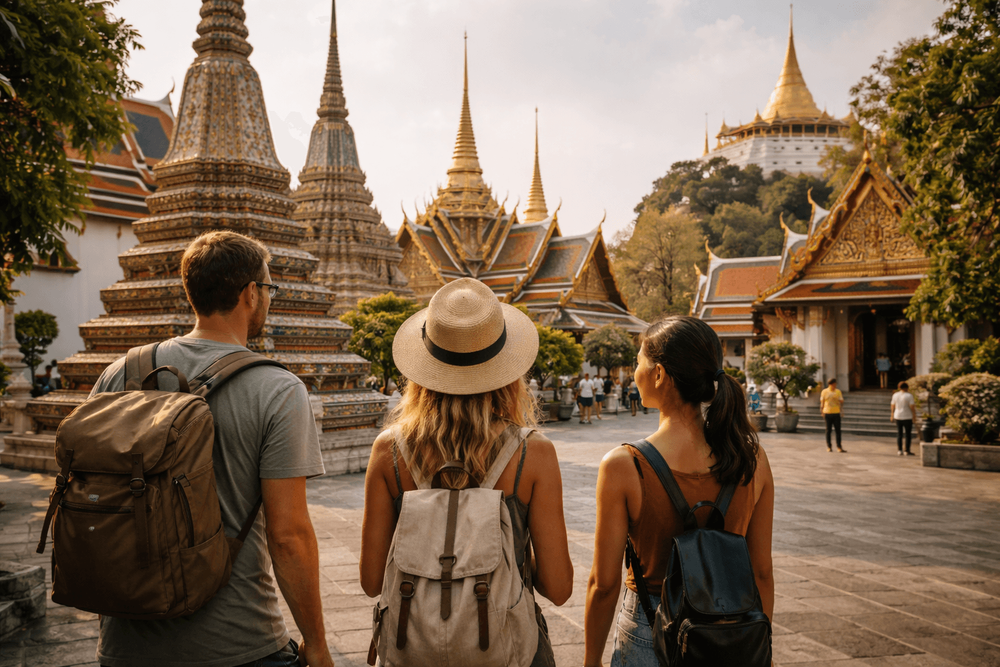
Architecturally, Wat Pho’s forest of chedis reads like a family tree. The four towering stupas sheathed in colored tiles are dedicated to early Chakri kings, a mosaic of dynasty and devotion. The ubosot (ordination hall) shelters a serene Buddha image, and the cloisters stack rows upon rows of gilded Buddhas—Ayutthaya grace with Bangkok shine.
The Grand Palace and Wat Phra Kaew: Statecraft in Gold Leaf
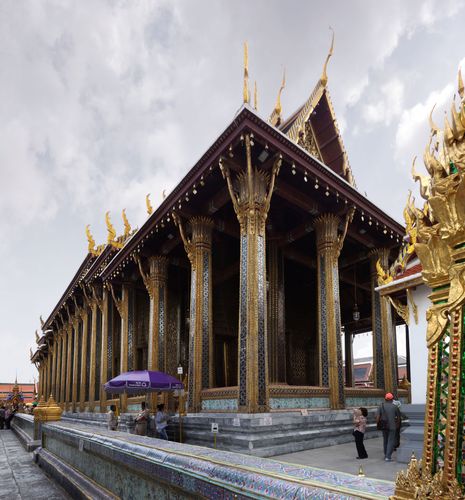
Walk north along Maharat Road and the heat presses harder; we slip past vendors selling amulet strings and step into the most choreographed square kilometer in Thailand. The Grand Palace isn’t a single building but a city of spires, courts, and chambers, stitched together since the late 18th century. Wat Phra Kaew sits inside like the kingdom’s heart.
History here is a power move in three acts. First, the transfer of the Emerald Buddha—actually carved from a deep green stone, often called jade or jasper—from northern Thai kingdoms through Laos, then into Siamese hands in the late 18th century. Enshrining it in the new capital sanctified the Chakri dynasty. Second, the architecture: no resident monks in Wat Phra Kaew, because it functions as a royal chapel. Every glittering surface—mirror mosaics, lacquered doors, guardian yaksha giants at the gate—says this is state ritual territory. Third, the living ritual: the king (or a royal representative) changes the Emerald Buddha’s robe to mark hot, rainy, and cool seasons. It’s subtle theater with national stakes; we feel the hush when attendants sweep the ubosot and bells shuffle the air.
The Ramakien murals lining the cloister are a graphic novel of sovereignty, adapted from the Indian Ramayana but pointedly Thai. Hanuman flips through clouds, demons tumble, and palaces burn; standing here, sweat prickling, we sense how myth underwrites policy.
Wat Saket and the Golden Mount: The City’s Memory Hill
South and east of Khao San, a white spiral rises like a whipped meringue. Wat Saket dates to Ayutthaya days but found its post-fall identity in the Rattanakosin era, when attempts to stack a massive chedi on soft ground collapsed. The fix was both humble and brilliant: reinforce the mound slowly into an artificial hill—the Golden Mount—and cap it with a gleaming stupa. The hill became a reliquary and a watchpost; during the 19th century, rumors of relics from Sri Lanka arriving here by royal patronage wrapped the site in cosmopolitan sanctity.
Climb the 300-or-so steps and the city unfolds—Rama IV Road slicing east, the Loha Prasat’s metal spires poking up like a hedgehog. The bells and gongs you’re invited to ring weren’t made for Instagram; they’re folk acoustics, sending merit out over the moat. Historically, Wat Saket’s grounds also handled cremations during epidemics; if Bangkok has a collective memory, a lot of it is buried in this hill.
What the Stones Are Saying: How to Read Thai Temple Architecture and Art
Understanding a few features turns a wander into a lesson plan:
Ubosot vs. Viharn: The ubosot (ordination hall) is where monks take vows; look for sema boundary stones around it like a dotted halo. The viharn is a sermon or assembly hall; bigger flows of laypeople come and go here. In Wat Pho, the ubosot is jewel-box precise; in Wat Phra Kaew, it’s pure theater—seasonal robes and chandeliers of devotion.
Chedi/Stupa: Bell-shaped in the Ayutthaya style (think Wat Pho’s clusters) vs. elongated or tiered variations in later Rattanakosin. These hold relics or scriptures, anchoring the precinct in the Buddha’s story and, by echo, royal lineage.
Prang: Khmer-style towers—stout, corn-cob silhouettes—lingered from older Siamese aesthetics. You’ll spot refined examples at nearby Wat Arun across the river, built up during the Thonburi-Rattanakosin hinge. Even when you don’t see a prang here, its memory shapes the skyline.
Murals: In the Grand Palace cloister, the Ramakien plays out nationhood; in ubosots across the city you’ll find Jataka tales (past lives of the Buddha). Faces and fashions shift with each era—Ayutthaya elegance to early Bangkok brightness. Keep an eye out for scenes of everyday life tucked in the corners: market gossip, a drunken farang, a cat stealing a fish.
Buddha Images: Ayutthaya’s Buddhas show soft flame-like hair curls and gentle ovals; early Rattanakosin sometimes sharpens the line and adds gleam. The Emerald Buddha is tiny up close; the reverence comes from its itinerary and the throne it rides.
Ornament: Benjarong porcelain inlays and mirror mosaics on columns are late-18th–19th-century flex—trade routes made visible. At Wat Pho, broken Chinese porcelain plates get reborn as floral garlands climbing chedis, a thrift-chic born of river trade.
Living History: Rituals, Culture, and the City Today
Bangkok’s temple history isn’t a museum cordoned off; it elbows into daily life.
Merit and Markets: Morning alms rounds (tak bat) thread side sois off Phra Athit and Samsen. The offering bowls you see for sale near amulet markets aren’t kitsch; they’re the supply chain of devotion.
Monks and Milestones: Temporary ordination—young men entering the monkhood for a few weeks—still marks family life. Watch the proud chaos of a procession on Tanao Road, drums and smiles and a mother wiping tears with the back of her hand.
Royal Calendar: The Emerald Buddha’s robe changes tie palace ritual to the seasons; radio and TV broadcast it, and your taxi driver will mention it between traffic curses.
Fairs and Fervor: Wat Saket’s temple fair during Loy Krathong season turns the Golden Mount into a carnival of candlelight and cotton candy. It’s raucous sanuk wrapped around centuries of merit-making.
Body Knowledge: Getting a massage at Wat Pho is not “after sightseeing”; it’s stepping into a lineage of public education the court funded. The sizzle of a wok in nearby Tha Tien is history too—Chinese-Thai trade riffs that fed the palace kitchens and the rest of us.
Walking It Together: A Context-First Route You Can Actually Do
If we’re starting near Khao San/Phra Athit, here’s how we walk the lessons into our legs.
Stop 1: Grand Palace & Wat Phra Kaew (Arrive 8:30–9:00). We boat from Phra Arthit Pier (N13) to Tha Chang (N9) in roughly 10–15 minutes—river breeze as AC, 16–20 THB (Old City; operator board). We give ourselves 2–2.5 hours: cloister murals first, Emerald Buddha next, then a slow lap to clock how royal and religious architecture braid together. Typical entry around 500 THB (Rattanakosin; operator site/recent visitors), but confirm same-day locally due to occasional changes and royal closures.
Stop 2: Wat Pho (Late morning). Walk 10–15 minutes via Tha Tien market, or hop a tuk-tuk for 60–100 THB. We budget 90 minutes to wander the chedis and inscriptions, then pay respects to the Reclining Buddha near the end. Entry has ranged ~200–300 THB (Tha Tien/Old City; on-site board). If the heat is savage, duck into 7‑Eleven for an electrolyte hit; embrace the blast of AC like a temple in its own right.
Lunch Reset: Cross to Tha Tien’s grilled seafood stalls or aim back toward Dinso Road for Krua Apsorn’s royal-recipes-without-the-palace-prices.
Stop 3: Wat Saket & the Golden Mount (Late afternoon to sunset). From Wat Pho, it’s a 20–25 minute walk through the historic shophouses of Bamrung Muang, or a short tuk-tuk. Entry often ~100 THB (Wat Saket/Old City; on-site board). We climb as the city glows, bells jangling merit into the dusk.
Want a more logistics-forward game plan? We’ve laid out timesavers and dress code basics in our first-timers’ route; skim it, then come back here for the why behind the what. See: Bangkok Temple Run for First-Time Visitors: Tickets, Dress Code, and Time-Saving Tips from Khao San Road.
Know Before You Go (History Edition)
Hours and Closures: The Grand Palace typically closes earlier than other temples (think mid-afternoon) and can shut for royal ceremonies. Wat Pho and Wat Saket usually run into early evening. Always confirm same-day locally—guards and boat captains know the latest.
Dress and Decorum: Shoulders and knees covered, shoes off in ubosots and viharns, and voices turned down. If you want a full breakdown, read our etiquette deep-dive before you lace up: Old City Temple Etiquette Guide: What to Wear, What to Bring, and How to Behave at Bangkok’s Historic Temples.
Scams and Sanity: If a smiling stranger says “Grand Palace closed, come with me,” we smile back and keep walking. Official ticket windows are inside. Tuk-tuks are great for short hops; agree a fare up front and skip “special gem shops.” The heat is not a metaphor—carry water, not bravado.
When to Read What: A quick primer on Ayutthaya and Rattanakosin before you go pays off. At the site, use murals as your syllabus; back home, nerd out further with our art-and-architecture lens: Bangkok Temple Run for Art and Architecture Lovers: What to Notice at Wat Pho, the Grand Palace, and Golden Mount.
Add a Museum: If your brain wants artifacts to match the murals, wedge the National Museum Bangkok between Grand Palace and Wat Pho; it’s a 10–15 minute stroll from Sanam Luang. We’ve mapped a neat combo day here: Bangkok Temple Run with Museum Stops: Adding the National Museum to Wat Pho, the Grand Palace, and Golden Mount.
Why These Three Temples Explain Bangkok
Founding Myth to Operating Manual: Wat Phra Kaew nails legitimacy (sacred object, royal ritual). Wat Pho turns that power outward (public knowledge). Wat Saket keeps the ledger of merit and mortality (relics above, cremations below, a city of cycles in between).
Ayutthaya Threads Intact: Look at Wat Pho’s Buddhas—their features soften back toward Ayutthaya elegance—then at the Grand Palace gleam; the line between them is the Rattanakosin project: carry over the holy, add state polish.
Everyday Spillover: Monks on alms rounds across Samsen, vendors tying red strings on your wrist with a murmured "s̄wạs̄dī"—this is not separate from those murals. The Ramakien’s demons look a lot like today’s troubles; Hanuman still flips.
Getting There and Getting It
From Khao San/Phra Athit: Chao Phraya Express to Tha Chang (N9) for the Grand Palace/Ferry to Tha Tien (N8) for Wat Pho; Phra Arthit Pier is your friend. Boats run roughly 6:00–19:00; confirm flag colors and last departures locally. Tuk-tuks bridge everything else.
Typical Costs (Last checked July 2026; confirm same-day): Grand Palace ~500 THB (Rattanakosin; operator site/visitor reports). Wat Pho ~200–300 THB (Tha Tien; on-site board). Wat Saket ~100 THB (Old City; on-site board). Orange-flag boat rides ~16–20 THB per hop (river; operator board). Modest donations at shrines are normal—20 THB notes go a long way.
Pacing: Two big sites before lunch, one in the afternoon, and a massage break when your calves beg for mercy. If rain hits, the cloisters are perfect history shelters.
Where to crash between temples? We aim for guesthouses along Soi Rambuttri or quiet riverside stays on Phra Athit—easy dawn starts, soft landings after sunset. Check availability ahead in peak months (Nov–Feb), and if a place mentions rooftop river views without the rooftop prices, we pounce.
If you want to swap logistics for deeper storytelling on the ground, book a spot on a small-group history walk that starts near Sanam Luang. Ask for routes that actually step inside the Ramakien cloister and pause at Wat Pho’s inscriptions; confirm departure times the same morning.

We’ll be out there with you—sweat on our backs, bells in our ears, and a pocketful of small bills for incense and ice cream—because in Bangkok, history isn’t behind glass. It’s tiled into chedis, murmured in Pali, and served on a banana-leaf plate after dark. Meet us at Phra Sumen Fort at 8:15; we’ll catch the river breeze and let the city teach.
Related Hotels & Places
Rambuttri
Markets
Khao San’s calmer cousin: a tree‑shaded lane of VW van cocktail bars, open‑air foot massages, pad thai grills, and easygoing live bands. Best from sunset to 11pm; beers 80–120 THB, cocktails 150–220 THB. One block from the chaos, all the charm.
Wat Phra Kaew
Temples
Bangkok’s holiest temple inside the Grand Palace. Go early (8:30am–3:30pm). Buy the 500 THB ticket at Na Phra Lan Rd gate. Dress code enforced. Marvel at Ramakien murals and the tiny Emerald Buddha whose robes change with the seasons. 10–15 minutes’ walk from Khao San.
Phra Sumen Fort
Attractions
1783 riverfront fort on Phra Athit with white battlements, park breezes, and killer sunset views over Rama VIII Bridge. Free entry; best from 5–7pm before the gates close at 9pm.
Sanam Luang
Attractions
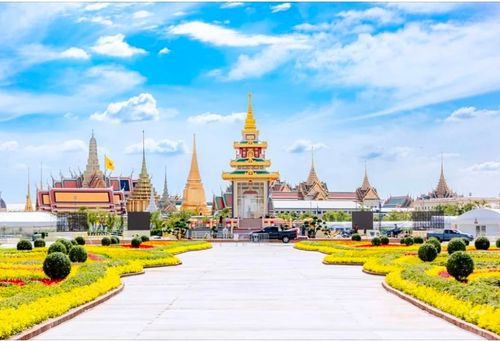
Bangkok’s royal lawn facing the Grand Palace. Free to wander, ringed by tamarind trees, popular for kite flying (Feb–Apr) and lazy green‑space hangs. A 10‑minute walk from Khao San; come early for soft light and street snacks along Na Phra That Rd.
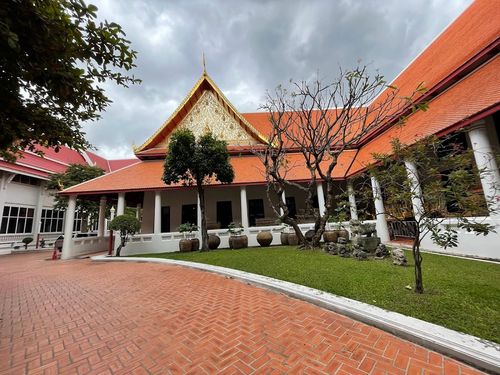
National Museum Bangkok
Attractions
Thailand’s story in one stop: royal funeral chariots, the Buddhaisawan Chapel’s murals and Phra Buddha Sihing, plus halls of khon masks and musical instruments. 10‑minute walk from Khao San. Open Wed–Sun, 8:30am–4pm.
Recommended Products
More Khao San Road Guides
- Bangkok Temple Run for History Lovers: What to See in Each Stop at Wat Pho, the Grand Palace, and Golden Mount
- Bangkok Temple Run for Culture and History Fans: What to See at Wat Pho, the Grand Palace, and Golden Mount
- Bangkok Temple Run for Art and Architecture Lovers: Reading the Details at Wat Pho, the Grand Palace, and Golden Mount
- Bangkok Temple Run with Museum Stops: Adding the National Museum to Wat Pho, the Grand Palace, and Golden Mount