Bangkok Temple Run with Museum Stops: Adding the National Museum to Wat Pho, the Grand Palace, and Golden Mount
A one-day Old City plan linking Wat Pho, the Grand Palace, the National Museum, and Golden Mount—timings, fees, dress code, river moves, and insider eats.
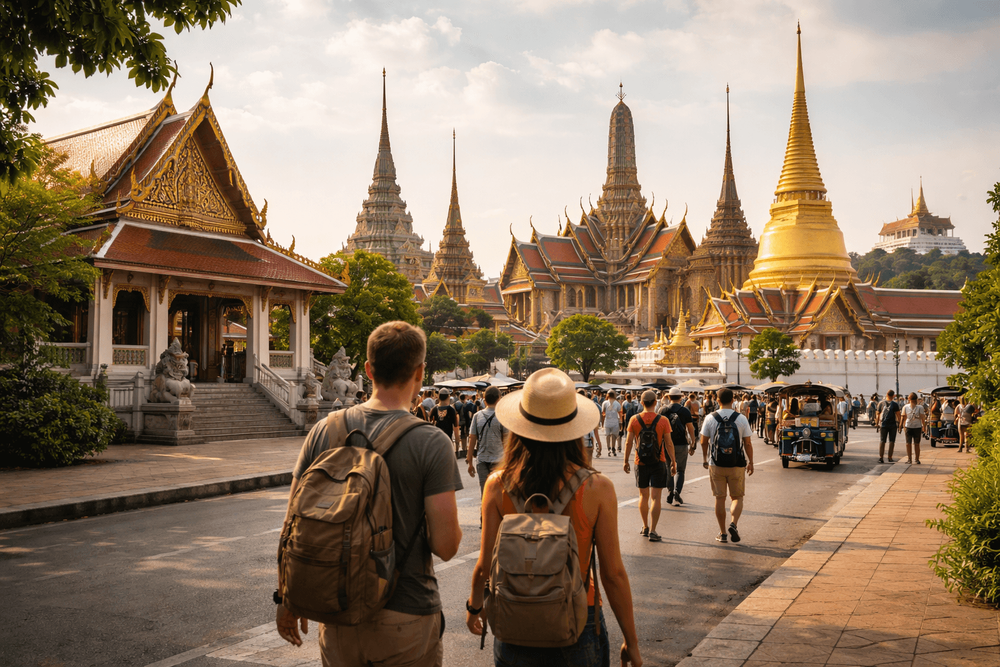
We slip out of Khao San Road just after sunrise, the air still cool enough to smell the jasmine garlands by the spirit house and the sweet rot of a durian cart rolling past. Monks in saffron drift along Phra Athit Road collecting alms, and we’re already plotting our bangkok temple museum route: temples first to beat the heat, museum in the air-con midday, then a sunset climb up the Golden Mount.
Data Freshness + Pricing:
- Prices are approximate and in THB.
- Last checked: July 2026.
- Happy hour and promo details change frequently—confirm locally.
Why these four stops earn a full day
We’re zeroing in on the Old City (Rattanakosin), where the river breeze still cuts through the sois and the big hitters cluster within tuk-tuk distance. These are the anchors of a day that feels both royal and real.
The Grand Palace & Wat Phra Kaew (Temple of the Emerald Buddha)
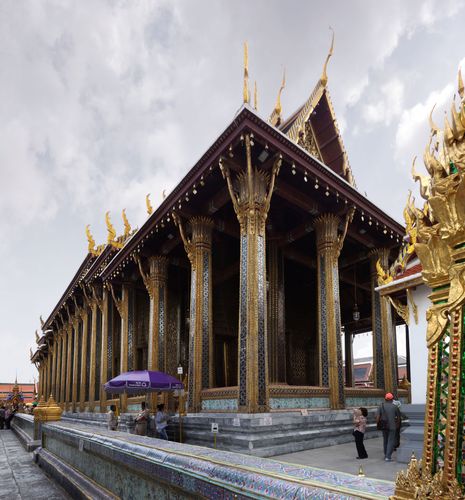
This is Bangkok turned up to 11: mirror mosaics flashing like fish scales, demon guardians glaring down, and that first thump of bass from the crowd at the gate. Inside the Grand Palace complex sits Wat Phra Kaew, home to the revered Emerald Buddha, a small jade figure dressed in seasonal royal robes. We come for the Ramakien murals curling around the cloister and the gold-on-gold-on-gold that announces the Chakri dynasty’s power. It’s busy, it’s blinding, it’s the one your friends ask about.
- Why it’s worth it: Royal history, staggering craftsmanship, the country’s most sacred Buddha image.
- Time: 1.5–2 hours if you actually look at the details.
Wat Pho (Temple of the Reclining Buddha)
Across the road and down past the amulet market, Wat Pho drops the tempo. The Reclining Buddha is massive and almost cozy, toes inlaid with mother-of-pearl that look like constellations. Step outside to the chedi forest—four towering stupas painted in candy-glaze tiles. Wat Pho is also the birthplace of Thai massage; students still practice in a breezy pavilion where we’ll happily surrender our shoulders.
- Why it’s worth it: The iconic Reclining Buddha, sublime chedis, and a legit traditional massage school.
- Time: 1–1.5 hours (plus 30–60 minutes if you get a massage).
National Museum Bangkok
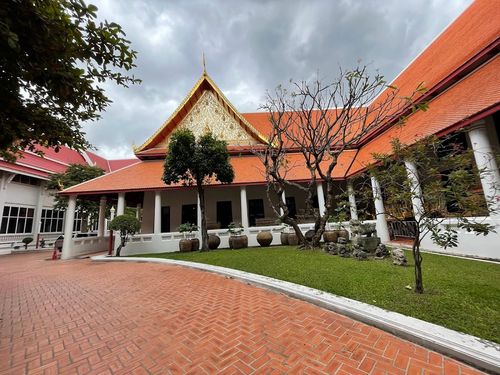
Five minutes from Khao San on foot, this is our cool, quiet ace card. Housed in a former royal palace, the National Museum strings together Thailand’s story: Dvaravati stone Buddhas, Sukhothai bronzes you’ll recognize from textbook silhouettes, Ayutthaya royal barges, and Lanna lacquer so black it drinks the light. After the sun smacks you around at the temples, walking into this AC-chilled warren of galleries feels like diving into a khlong. For deeper planning and highlights, we lean on this focused guide: National Museum Bangkok: Visitor Guide & Top Exhibits.
- Why it’s worth it: Context, air-con, and pieces that make the temples click into place.
- Time: 1.5–2 hours.
Golden Mount (Wat Saket)
A whitewashed chedi perched above the old city, with a winding stair shaded by banyans and buckets of holy water for a cheeky splash. Bells ring. The city unfolds—temple roofs, the river gleam, and the modern skyline way off like another country. Golden Mount is our sunset move: sanuk with a view.
- Why it’s worth it: Best-value panorama in town and a meditative climb to reset after the crowds.
- Time: 45–60 minutes.
Planning your bangkok temple museum route
We’re starting and ending near Khao San/Soi Rambuttri—easy street food, cheap massages, and a short stumble home. If you prefer a pure temple day without museums, bookmark our route playbook here: Bangkok Temple Trail from Khao San Road: Best Route, Transit, and Timing. For today, we’re blending both.
Best order (heat, crowds, and opening hours)
- 7:30–8:00: Coffee and a quick breakfast near Phra Athit Road (toasties from 7‑Eleven or jok from a street cart). Beat the sun.
- 8:30: Grand Palace & Wat Phra Kaew. It’s busiest late morning; getting in first keeps it humane.
- 10:30: Wat Pho. Reclining Buddha, chedis, then reward yourself with a traditional massage (approx. 300–600 THB depending on duration).
- 12:30: Lunch by Tha Tien Market (grilled river prawns or a bowl of boat noodles that bites back). Hydrate.
- 13:30–15:00: National Museum Bangkok. AC, context, and a second wind.
- 16:30–18:00: Golden Mount for golden hour. Ring a bell for luck; let the breeze lift your shirt.
If your museum day falls on a Monday or Tuesday (when the National Museum is typically closed), flip in some extra Old Town stops (Loha Prasat at Wat Ratchanatdaram, the Giant Swing at Sao Chingcha) and keep the rest of the route.
How it connects on the ground
- Khao San/Soi Rambuttri to Grand Palace: 15–20 minutes on foot via Phra Athit and the riverside park, or a quick tuk-tuk (approx. 80–120 THB). The Orange Flag Chao Phraya Express boat from Phra Arthit Pier to Tha Chang (N9) is also handy (approx. 16–20 THB).
- Grand Palace to Wat Pho: 10–12 minutes on foot. Follow the crowds; ignore “closed” whispers.
- Wat Pho to National Museum: We like the river hop—ferry to Tha Tien/Tha Chang, then Orange Flag to Phra Arthit, 8–10 minutes walk to the museum—or grab a tuk-tuk (approx. 100–150 THB).
- National Museum to Golden Mount: Tuk-tuk (approx. 120–180 THB) or a 25–30 minute stroll through Banglamphu’s back sois.
For a faster, breezier day, consider doing the temple legs by three-wheeler. We’ve mapped a nimble option here: Bangkok Temple Run by Tuk-Tuk: A Fast Khao San Road Route to Wat Pho, the Grand Palace, and Golden Mount.
How much time you really need
- Minimalist blitz: 6–7 hours if you move with purpose and lunch on the go.
- Sweet spot: 9–10 hours with breaks, a massage, and sunset on the Mount.
- Add-ons: Wat Arun across the river from Wat Pho is tempting—save it for another morning unless you’re sprinting.
Culture, history, and what to notice
Grand Palace & Wat Phra Kaew
This is the ceremonial heart of the nation. The Chakri kings anchored their legitimacy here when Bangkok became the capital in 1782. In Wat Phra Kaew’s ubosot (ordination hall), the Emerald Buddha sits high on a multi-tiered throne, robed for the hot, rainy, and cool seasons by the King himself. Outside, the Ramakien murals (Thailand’s spin on the Ramayana) run like a comic epic—demons, monkey generals, palaces aflame. We trace the scenes like we’re reading a graphic novel, following gold leaf that flares in the sun. Architecturally, the blend is pure Rattanakosin: Ayutthaya roots with Bangkok flash—prangs, spires, and tiled roofs tight as dragon scales.
Wat Pho
Wat Pho is older than the city, renovated into splendor by early Chakri kings. The Reclining Buddha is 46 meters of serene swagger—Buddha at the moment of entering parinirvana. We always circle to the soles: 108 auspicious symbols in mother-of-pearl that map the path to enlightenment. Beyond the main hall, the four towering chedis honor the first four Chakri kings; each is a mosaic fever dream of floral tiles. Don’t skip the pavilion inscriptions—UNESCO-listed stone tablets that once taught medicine and massage; you’ll still hear the snap-crackle-pop of elbows in the massage school next door.
National Museum Bangkok
Set inside the former Wang Na (Front Palace), the museum tells the long story: Dvaravati stuccos soft as eroded shells; Sukhothai bronzes with flame-like ushnishas; Ayutthaya Buddhas, heavier in robe and presence; Lanna lacquer and carving from the north. We linger by royal chariots and a gallery of weaponry that makes palace ceremonies feel immediate. One room might explain a lotus-hand mudra; the next might hold a votive tablet you can mentally place back into a chedi niche you just walked past at Wat Pho.
Golden Mount (Wat Saket)
Wat Saket’s chedi rode the city’s growing pains. An early attempt at a massive stupa collapsed into a brick hill during Rama III’s era; later kings stabilized and capped it, creating the gleaming mount we climb today. Prayer flags flap, small bells chime, and there’s a cool hush at the top where relics are said to be enshrined. It’s both pilgrimage and playground: kids race the final steps; aunties pour water over little Buddhas for merit.
If you’re chasing architectural details across the day, keep this deep-dive handy: Bangkok Temple Run for Art and Architecture Lovers: What to Notice at Wat Pho, the Grand Palace, and Golden Mount.
Visitor essentials: dress, etiquette, hours, and fees
- Dress code: Shoulders and knees covered for all genders at temples and the Grand Palace. No ripped shorts, crop tops, or see-through fabrics. If you forget, shawls and sarongs are often available nearby (approx. 100–200 THB), but don’t count on it.
- Footwear: Slip-ons rule—expect to remove shoes at temple halls. Socks help when the tiles fry.
- Etiquette: Keep voices low, never point your feet at a Buddha, and avoid selfie sprawl in worship spaces. Wai (palms together) if you’re greeted by staff or monks; sit or kneel when others do.
- Scams: Classic line around the Grand Palace—“closed today, come to a gem shop.” Ignore it. The palace almost never closes unexpectedly.
- Hydration: Freeze a water bottle overnight or buy cold ones all day (approx. 10–20 THB). 7‑Eleven is your oasis of blast-chill AC and electrolyte drinks.
Opening hours and approx. fees (THB):
- Grand Palace & Wat Phra Kaew: 8:30–15:30 daily; admission approx. 500–600 THB.
- Wat Pho: 8:00–18:30; admission approx. 200–300 THB. Massage on-site approx. 300–600 THB.
- National Museum Bangkok: Typically Wed–Sun 9:00–16:00; closed Mon–Tue; admission approx. 200–300 THB.
- Golden Mount (Wat Saket): 7:00–19:00 (later during festivals); admission approx. 50–100 THB.
Transport costs (one-way):
- Orange Flag Chao Phraya Express boat: approx. 16–20 THB.
- Cross-river ferry (Tha Tien ↔ Wat Arun side): approx. 5–10 THB.
- Tuk-tuk within Old City hops: approx. 80–180 THB. Always agree on price first.
- Grab/Taxi across Rattanakosin: approx. 100–200 THB depending on traffic.
Food, ferries, and Old Town add-ons
- Breakfast near Khao San/Phra Athit: Soy milk and patongko (Thai dough sticks) from street carts, or a quick khao khai jiao (omelet rice) that crackles out of a wok.
- Between Grand Palace and Wat Pho: Detour to the amulet market at Tha Prachan—tiny stalls, incense smoke, and aunties peering at pendants with magnifying glasses.
- Lunch around Tha Tien: Grilled squid lacquered in chili-lime, tom yum that fogs your glasses, or a plate of pad kra pao that’ll have you chasing extra basil. Expect approx. 60–150 THB for street-side plates; seafood runs higher (approx. 180–350 THB).
- Coffee & cool-down near Phra Athit: Duck into a cafe with concrete floors and ceiling fans; iced o-liang (Thai coffee) is rocket fuel (approx. 40–80 THB).
- Golden Mount snack: Coconut ice cream from a cart at the base (approx. 30–60 THB) before the climb.
- Nightcap back on Soi Rambuttri: Live acoustic guitar competes with the sizzle of moo ping skewers. If the day still has legs, Khao San’s thump is a block away.
If you decide temples only is your jam next time, here’s a streamlined play-by-play we often follow: Bangkok Temple Trail from Khao San Road: Best Route, Transit, and Timing. And for a speed run between stops, the tuk-tuk plan above keeps the wind in your face.
Getting there and getting around
- From Sukhumvit/Silom to the Old City: Take the BTS to Saphan Taksin (S6) and hop the Orange Flag boat up to Tha Chang (N9) or Phra Arthit (N13) (combined boat fares approx. 16–20 THB). It’s sanuk and traffic-proof.
- From Khao San/Soi Rambuttri: Most legs are walkable. When the heat hits, flag a tuk-tuk; quote a fair price with a smile and a sawadee before you hop in.
- When to go: Cool, dry months (Nov–Feb) are a breeze. Hot season (Mar–May) can be brutal—front-load the day and use the museum as your midday bunker. Rainy season (Jun–Oct) often means clear mornings and theatrical afternoon showers—pack a light poncho (approx. 20–40 THB at 7‑Eleven).
A sample full-day schedule you can actually follow
- 07:30 Grab breakfast on Phra Athit; stock water.
- 08:30 Grand Palace & Wat Phra Kaew.
- 10:30 Walk to Wat Pho; visit the Reclining Buddha and chedis.
- 11:30 Thai massage at Wat Pho (optional; approx. 300–600 THB).
- 12:30 Lunch at Tha Tien Market (approx. 80–250 THB per plate).
- 13:30 Ferry/boat/tuk-tuk to National Museum; cool down and explore.
- 15:15 Coffee/fruit shake break (approx. 40–90 THB).
- 16:15 Tuk-tuk to Golden Mount; climb in the late light.
- 18:00 Sunset bells, city view; drift back toward Banglamphu for dinner.
Where to base yourself for this route
We like staying near Banglamphu—Soi Rambuttri and Phra Athit put you within walking distance of the National Museum and a quick hop to the river. Riverside stays along the Chao Phraya are great if you’re leaning on the Orange Flag boat, while any Khao San-adjacent guesthouse keeps your pad thai and mango sticky rice cravings on speed dial. If you’re more of a late-night farang-bar crawler, Khao San Road puts the thump right outside your window; just pack earplugs.
Final tip before we set off
Set your alarm, pack a light scarf, and keep small bills in your pocket for ferries and street snacks. We’ll meet you by the Chao Phraya—first boat wake slapping the pier—then glide from gold spires to cool galleries to a bell-laced summit. See you at Golden Mount for sunset; we’ll save you a spot along the rail.
Related Hotels & Places
Khao San Road
Attractions
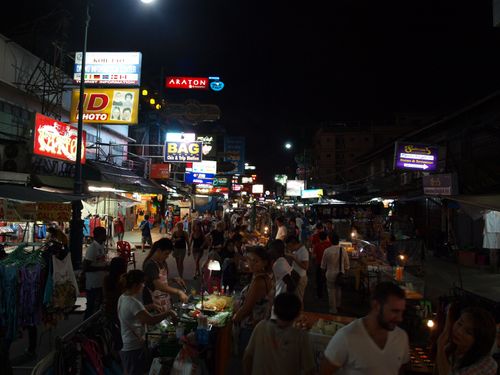
Bangkok’s backpacker carnival: curbside bars, live bands and DJs from 3pm–2am (midnight Sun). Street eats are cheap — pad thai 70–100 THB, mango sticky rice 60–100 THB. Come for wild people-watching; duck into Rambuttri for a calmer beer.
The Grand Palace
Attractions
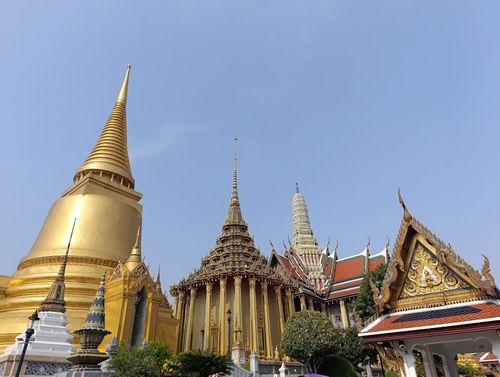
Bangkok’s royal showpiece a short hop from Khao San: glittering Wat Phra Kaew, Ramakien murals, and gold-on-gold rooftops. Go 8:30am to dodge the heat, dress modestly, and boat to Tha Chang for the prettiest arrival.
Wat Phra Kaew
Temples
Bangkok’s holiest temple inside the Grand Palace. Go early (8:30am–3:30pm). Buy the 500 THB ticket at Na Phra Lan Rd gate. Dress code enforced. Marvel at Ramakien murals and the tiny Emerald Buddha whose robes change with the seasons. 10–15 minutes’ walk from Khao San.
National Museum Bangkok
Attractions
Thailand’s story in one stop: royal funeral chariots, the Buddhaisawan Chapel’s murals and Phra Buddha Sihing, plus halls of khon masks and musical instruments. 10‑minute walk from Khao San. Open Wed–Sun, 8:30am–4pm.
More Khao San Road Guides
- Bangkok Temple Run with Museum and Culture Add-Ons: Pairing the Grand Palace Area with Nearby Heritage Stops from Khao San Road
- Bangkok Temple Run with Museum and Market Add-Ons Near Wat Pho, the Grand Palace, and Golden Mount
- Bangkok Temple Run on a Tight Schedule: A Half-Day Visit to Wat Pho, the Grand Palace, and Golden Mount from Khao San Road
- Bangkok Temple Run for History Lovers: What to See in Each Stop at Wat Pho, the Grand Palace, and Golden Mount