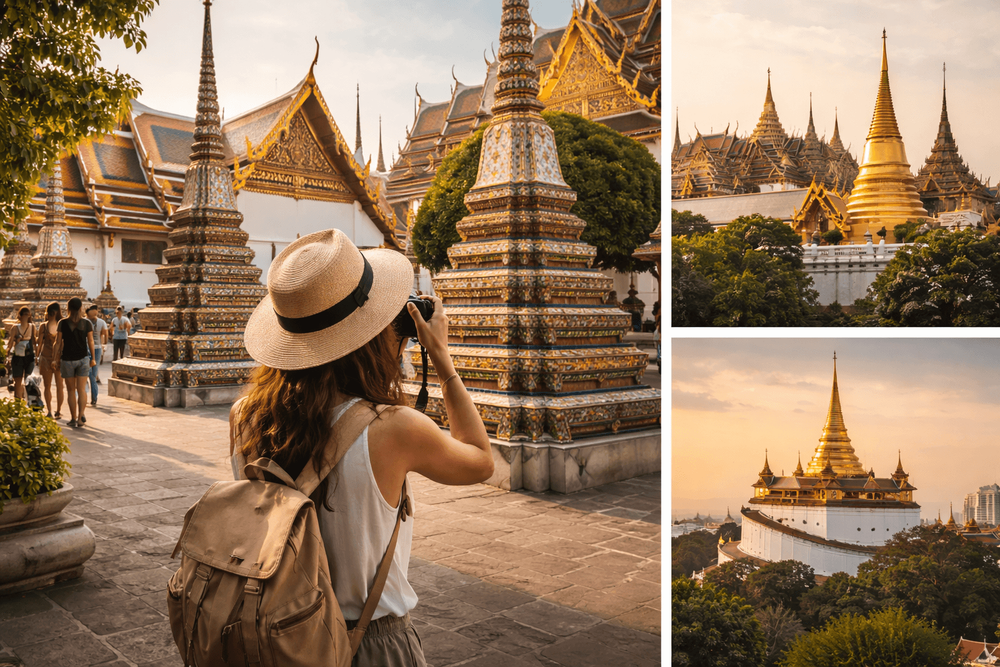
Bangkok Temple Day Photo Guide: Best Angles, Viewpoints, and Shot Ideas at Wat Pho, Grand Palace, and Golden Mount
Hit Wat Pho, the Grand Palace, and Golden Mount with pro angles, best light, respectful photo tips, and a one-day route from Khao San—gear, prices, and hacks inside.
We step out onto Soi Rambuttri just as the sky lightens from taro purple to mango lassi. Monks in saffron glide past like quiet fire, the street cats are still stretching, and the air smells like last night’s grilled pork and the first batch of morning jasmine. This is where Bangkok temple photo guide—boots on the ground, camera in hand, sweat towel ready, and an eye toward the river where the light gets soft before the sun turns mean.
Data Freshness + Pricing:
- Prices are approximate and in THB.
- Last checked: July 2026.
- Happy hour and promo details change frequently—confirm locally.
The Best Bangkok Temples for Photography
Bangkok is a buffet of gold leaf, mirror mosaics, yaksha giants, and serene Buddhas. We’ll focus on the big three within easy reach of Khao San Road—Wat Pho, the Grand Palace (Wat Phra Kaew), and Golden Mount (Wat Saket)—plus a couple of bonus stops to round out your set.
Wat Pho (Temple of the Reclining Buddha)
- What to shoot: The 46-meter Reclining Buddha’s feet with mother-of-pearl inlay are the money shot, but the real magic is outside—rows of porcelain-tiled stupas (chedi), teak doorways with floral carvings, and quiet cloisters where saffron robes flutter on washing lines. Look for reflections in the polished marble and water basins. The traditional massage school offers candid hands-at-work details (ask before shooting close).
- Angles we love: Frame a single chedi against the sky with a low, wide angle (16–24mm) so the porcelain pops. Use doorways as natural frames for monks crossing courtyards. For the Reclining Buddha, go for the feet—tight vertical crop, no flash, ISO bumped gently to keep detail.
- Light and crowds: Moderate crowds early; heavy after 10:00. The eastern courtyards get delicious side light 8:00–9:30.
- Practical: Ticket approx 200 THB. Shoulders and knees covered. No flash inside the main hall; photography rules vary by room—watch posted signs.
Grand Palace & Wat Phra Kaew (Temple of the Emerald Buddha)
- What to shoot: The motherlode of detail—mirror-mosaic walls, gold prasats, yaksha demon guardians, and those tiny Ramakien murals that tell entire epics if you follow the panels. The Emerald Buddha itself sits inside the ubosot where photography is not allowed—respect the rule and enjoy with your eyes. Outside, it’s visual overload in the best way.
- Angles we love: Tight shots of mirrored tiles with diagonal lines. Low-angle portraits of the yaksha against a cloud bank. Reflections in window glass for layered compositions. Telephoto (70–200mm) compressions of spires for a dense skyline of chedi.
- Light and crowds: Go right at opening to beat tour groups. The complex faces east; soft morning light kisses the murals and glass tiles. By 10:30, everything’s bright—and hot.
- Practical: Ticket approx 500–600 THB for foreigners and includes entry to the Queen Sirikit Museum of Textiles. Dress code is strict—covered shoulders, covered knees, no ripped jeans. Sarongs/shawls are available around the gate for approx 100–200 THB deposit. Beware the classic “it’s closed today” tuk-tuk scam—walk straight to the main gate by Sanam Luang.
Golden Mount (Wat Saket)
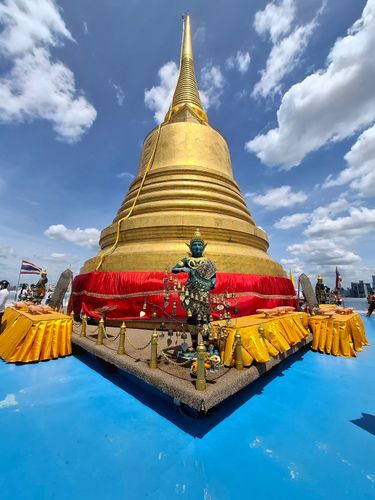
- What to shoot: The spiral staircase with prayer bells and banyan roots is a character all its own. At the top, you get a 360-degree sweep of the Old City: rusty rooftops, the golden chedi glowing, and Bangkok’s new towers hazy in the distance. It’s the only place on this run where you’ll snag a true skyline.
- Angles we love: Shoot through hanging bells as foreground bokeh at golden hour. At the summit, place the chedi off-center and let the city fall away in thirds. On rainy days, puddle reflections on the terrace are a gift.
- Light and crowds: Sunrise and sunset win here. Midday is a squint. Early morning is usually quiet; late afternoon draws the sunset crowd.
- Practical: Ticket approx 50–100 THB. Modest dress recommended. Tripods are usually fine outdoors if you’re not blocking the path.
Bonus Frames: Wat Arun and the River
- Wat Arun across from Tha Tien pier is porcelain candy at sunset. From the river walkway by Tha Tien, you can frame long-tail boats streaking past its spires. If you cross over (ferry approx 5–10 THB), the temple grounds offer symmetrical stairs and floral tiles that photograph like Delftware under soft light.
When to Go: Light, Crowds, and Seasonality
Bangkok’s light can be fierce by 10:00, and the heat is its own character—an uninvited extra in every shot. We play it like this:
- Dawn start: Golden Mount at first light. Cool air, deep color, and room to breathe.
- Morning window: Grand Palace right at opening; work through the mirror mosaics and murals while the light is still slanted. Expect to be done by 10:30–11:00 before it turns into a white-box studio.
- Midday break: Hydrate, lunch, maybe an air-con reset on Phra Athit Road or in a 7-Eleven (we all do it; the AC blast is part of the sanuk).
- Late afternoon: Wat Pho for warm light skimming across the chedi and doorways. If you still have gas, ferry to Wat Arun for sunset silhouettes.
Seasonal notes:
- Cool season (Nov–Feb): Best combo of tolerable heat and crisp skies. Morning haze can add softness; afternoons can be scorchers.
- Hot season (Mar–May): Brutally bright and sweaty. Use deep shade, doorways, and courtyards for contrast. Carry electrolytes; shirts will get soaked.
- Rainy season (May–Oct): Moody clouds, storm light, and rain-reflection magic. Bring a light poncho and microfiber cloth. Sudden downpours can clear crowds—five minutes after the rain, shots feel cinematic.
- Air quality: PM2.5 spikes happen some weeks Jan–Mar. Haze can flatten contrast; lean into silhouettes and color blocks.
If you want a step-by-step sunrise game plan with exact viewpoints, our favorite morning run is here: Bangkok Temple Run for Photographers: Best Morning Light, Viewpoints, and Photo Stops.
Bangkok Temple Photo Guide: Practical Tips, Rules, and Respect
A temple is a living place of worship, not a backdrop—treat it like you’re a guest in someone’s home and your photos will get better.
- Dress code: Cover shoulders and knees. Light pants or a long skirt beat jeans in the heat. Grand Palace is the strictest. For the full lowdown on what flies and what doesn’t, see our Bangkok Temple Run Ticket and Dress Code Guide.
- Foot etiquette: Shoes off before stepping onto temple interiors. Don’t step on the threshold—lift your foot over; it’s considered sacred.
- Body language: Never point your feet at a Buddha image; sit with legs tucked to the side. Keep your voice low, avoid blocking worshippers, and give monks space.
- Photography rules: No flash inside sacred halls. The Emerald Buddha hall forbids photography altogether—guards will remind you. Wat Pho’s Reclining Buddha allows photos without flash. When in doubt, follow the sign; if there isn’t one, a quiet “Okay to photo?” to a guard with a smile goes far.
- Tripods and gear: Small tripods or clamps can be fine in courtyards; staff may nix full-size tripods during busy hours. Monopods draw less attention. Drones are a no-go without CAAT registration, insurance, and explicit permission from the temple—assume it’s not allowed and the fines are real. Gimbals and handheld rigs usually pass if you’re not obstructing.
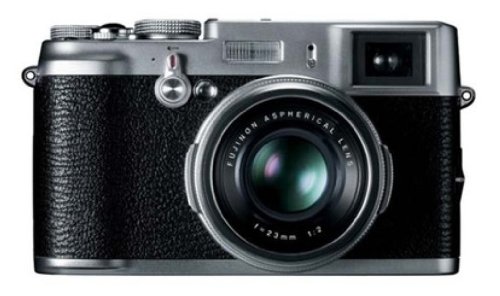
- Lenses: Wide (16–24mm) for architecture, a nifty-fifty (50mm) for people and details, tele (70–200mm) for compressing spires and isolating faces on murals.
- Filters: Circular polarizer to tame glare on marble and saturate sky; ND only if you’re doing long exposures from public walkways or the riverfront.
- Phone shooters: Tap-to-focus on the gold, drop exposure a notch to save highlights, and use Portrait mode sparingly—it can smudge fine details on murals.
- Heat logistics: Two liters of water per person for a full morning. Street bottles are approx 10–20 THB; inside complexes you’ll pay approx 30–40 THB. Electrolyte sachets are cheap insurance.
- Scams and gotchas: Around the Grand Palace, ignore anyone saying “closed” or trying to redirect you to a gem shop in a tuk-tuk. Buy tickets only at official counters.
For temple manners with photos in mind, this is a handy refresher: Old City Temple Etiquette Guide: What to Wear, What to Bring, and How to Behave at Bangkok’s Historic Temples.
Shot Ideas and Themes to Build a Story
We like to shoot a temple day as if it’s a short film with acts and cutaways. Here’s the shot list we chase:
- Establishing wides: Courtyard panoramas at Wat Pho with repeating chedi; the Grand Palace’s spires layered with a long lens; Golden Mount’s terrace with the city stretching behind.
- Doorway frames: Carved teak or lacquer doors make perfect frames. Wait for a monk or worshipper to pass for scale.
- Reflections: Marble floors after a brief rain, window glass at the Grand Palace, puddles on Golden Mount’s terrace, and water basins around Wat Pho.
- Details, details: Mother-of-pearl feet of the Reclining Buddha, mirror mosaics in oblique light, gilded Garuda figures that repeat into infinity.
- Hands at work: Offerings being arranged, incense sticks lit, a vendor at Tha Tien folding lotus petals—ask permission with a smile and a “ขอถ่ายรูปได้ไหมครับ/คะ?” (May I take a photo?).
- Silhouettes: Wat Arun at sunset from the Tha Tien riverfront; bells on Golden Mount against a sherbet sky.
- Motion blur: Longtail boats streaking by the Grand Palace walls along the khlongs; pray flags and ribbons fluttering in temple breeze. A 1/15–1/30s pan can be magic.
- Texture studies: Cracked stucco, patinaed bronze, stacked alms bowls that hum when tapped.
- People with context: A monk reading under a frangipani; vendors along Maharat Road with chedi peeking over rooftops. Always shoot respectfully—portraits are better after a short chat.
- Night sparkle: If you stay late by the river, Wat Arun lights up like spun sugar. From the walkway near Tha Tien, a small travel tripod and ISO 200–400 will keep it clean.
A One-Day Temple Photography Route (With Options)
Here’s how we’d shoot it if we have one full day and want a tight set without sprinting ourselves into heatstroke.
- 05:30–07:30 Golden Mount sunrise: Taxi or walk from Khao San (20–30 minutes on foot if the air is kind; Grab/tuk-tuk approx 80–150 THB depending on traffic and bargaining). Work the bell-lined stairs on the way up. At the summit, shoot east first for warm city light; then circle for layers of rooftops.
- 08:00–10:30 Grand Palace: Head down Ratchadamnoen to Sanam Luang and enter via the main gate. Ticket approx 500–600 THB. Hit the mirror mosaics and yaksha guardians before tour groups thicken.
- 10:45–12:00 Coffee/AC break on Phra Athit or Soi Rambuttri: Recharge batteries, back up photos, hydrate. Street lunch—boat noodles or pad krapow—should be approx 60–120 THB.
- 13:30–15:30 Wat Pho: Work the quiet cloisters and chedi details. The Reclining Buddha hall is more manageable after lunch but still busy; go for details and patience.
- 16:00–18:30 Wat Arun option: Ferry from Tha Tien (approx 5–10 THB), or stay on the Wat Pho side for river silhouettes. Golden hour is forgiving—great for portraits and textures. After sunset, you’ll have deep blues and golds.
If you’re new to Bangkok’s temple logistics and want ticket, timing, and dress code tips in one place, park this guide on your phone: Bangkok Temple Run for First-Time Visitors: Tickets, Dress Code, and Time-Saving Tips from Khao San Road.
Getting There and Around
- From Khao San/Soi Rambuttri: Walkable to Grand Palace and Wat Pho (20–30 minutes), or hop a tuk-tuk (approx 80–150 THB). Always agree on fare first.
- Chao Phraya Express Boat: From Phra Arthit Pier to Tha Chang (for Grand Palace) or Tha Tien (for Wat Pho/Wat Arun). Fares approx 16–20 THB. Boats are fast, breezy, and photogenic.
- Buses: Old-school but useful—routes 15 and 47 serve the Old City and Sathorn. Tickets approx 8–20 THB depending on bus type.
- Grab/Taxi: Air-con relief, variable traffic. Short hops in the Old City usually under 120–180 THB unless gridlock says otherwise.
Where to Base Yourself (Photographer Priorities)
We usually crash close to Phra Athit Road or Soi Rambuttri—walkable to sunrise on Golden Mount and sunset by the river, with late-night noodles as backup. Prioritize a place with decent shade or a small pool for the midday reset; your gear (and skin) will thank you. If you’re more skyline than stupas, base closer to the river piers for easy Chao Phraya jumps at dawn and dusk.
Budgeting Your Temple Day
- Entry fees: Grand Palace approx 500–600 THB; Wat Pho approx 200 THB; Golden Mount approx 50–100 THB; Wat Arun grounds approx 50–100 THB; ferry approx 5–10 THB each way.
- Water/snacks: 10–40 THB per bottle/snack depending on location. Coconut ice cream near Wat Pho usually approx 40–60 THB; worth it.
- Transport: Boat rides 16–20 THB; short taxis/tuk-tuks 80–180 THB.
- Extras: Sarong rental/deposit near Grand Palace approx 100–200 THB; portable fan from 7-Eleven approx 120–180 THB if you’re fancy.
Safety, Comfort, and Common Sense
- Keep bags zipped and sling them cross-body in crowds. Bangkok’s pretty safe, but busy temple gates bring pickpockets.
- Sunscreen, hat, and a compact towel. The sweat is real. So is the sunburn.
- Back up your photos during lunch—cloud or a tiny SSD. Power banks save days.
- Be a good neighbor: If you’re setting up a tripod in a quiet corner, use it like you were never there. A wai and a grin go a long way.
Save This Bangkok Temple Photo Guide—and Go Make It Yours
Bangkok will throw you a hundred mini-stories before noon: a bell that sings when brushed by wind, a yaksha’s mirrored armor catching a sunbeam, a monk’s sandals left neatly by a threshold. Pocket the route, bend it to your light, and when you’re ready to trade lenses for a cold Leo, we’ll be on Phra Athit watching longtails carve silver lines into the river. See you on the Golden Mount steps at dawn—we’ll bring the iced coffee.
Related Hotels & Places
Khao San Road
Attractions
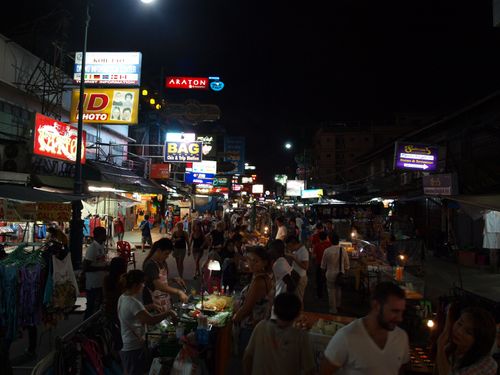
Bangkok’s backpacker carnival: curbside bars, live bands and DJs from 3pm–2am (midnight Sun). Street eats are cheap — pad thai 70–100 THB, mango sticky rice 60–100 THB. Come for wild people-watching; duck into Rambuttri for a calmer beer.
Wat Phra Kaew
Temples
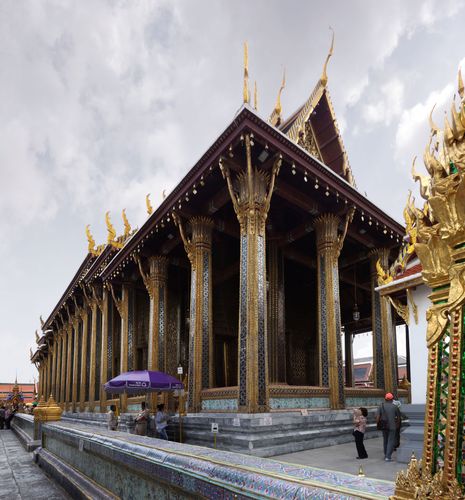
Bangkok’s holiest temple inside the Grand Palace. Go early (8:30am–3:30pm). Buy the 500 THB ticket at Na Phra Lan Rd gate. Dress code enforced. Marvel at Ramakien murals and the tiny Emerald Buddha whose robes change with the seasons. 10–15 minutes’ walk from Khao San.
The Grand Palace
Attractions
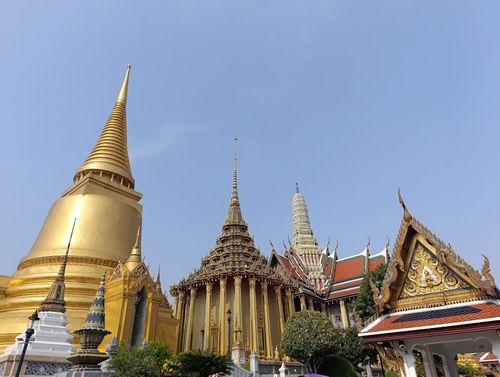
Bangkok’s royal showpiece a short hop from Khao San: glittering Wat Phra Kaew, Ramakien murals, and gold-on-gold rooftops. Go 8:30am to dodge the heat, dress modestly, and boat to Tha Chang for the prettiest arrival.
Wat Saket Ratchawora Mahawihan
Temples
Wat Arun Ratchawararam Ratchawaramahawihan
Temples
Sanam Luang
Attractions
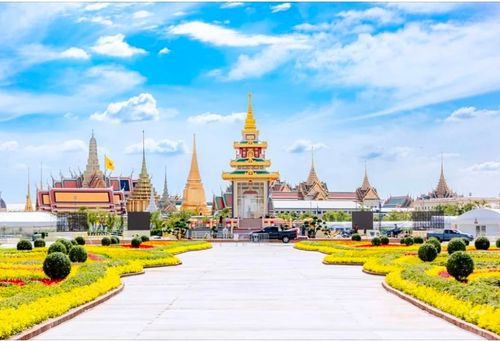
Bangkok’s royal lawn facing the Grand Palace. Free to wander, ringed by tamarind trees, popular for kite flying (Feb–Apr) and lazy green‑space hangs. A 10‑minute walk from Khao San; come early for soft light and street snacks along Na Phra That Rd.
Recommended Products
More Khao San Road Guides
- Bangkok Temple Run for Photographers: Best Light, Angles, and Viewpoints at Wat Pho, the Grand Palace, and Golden Mount
- Best Photo Spots at Wat Pho, the Grand Palace, and Golden Mount for a Temple Day from Khao San Road
- Bangkok Temple Run for Photographers: The Best Light, Viewpoints, and Shot Order for Wat Pho, the Grand Palace, and Golden Mount
- Bangkok Temple Run for Photographers: Best Morning Light, Viewpoints, and Photo Stops at Wat Pho, the Grand Palace, and Golden Mount