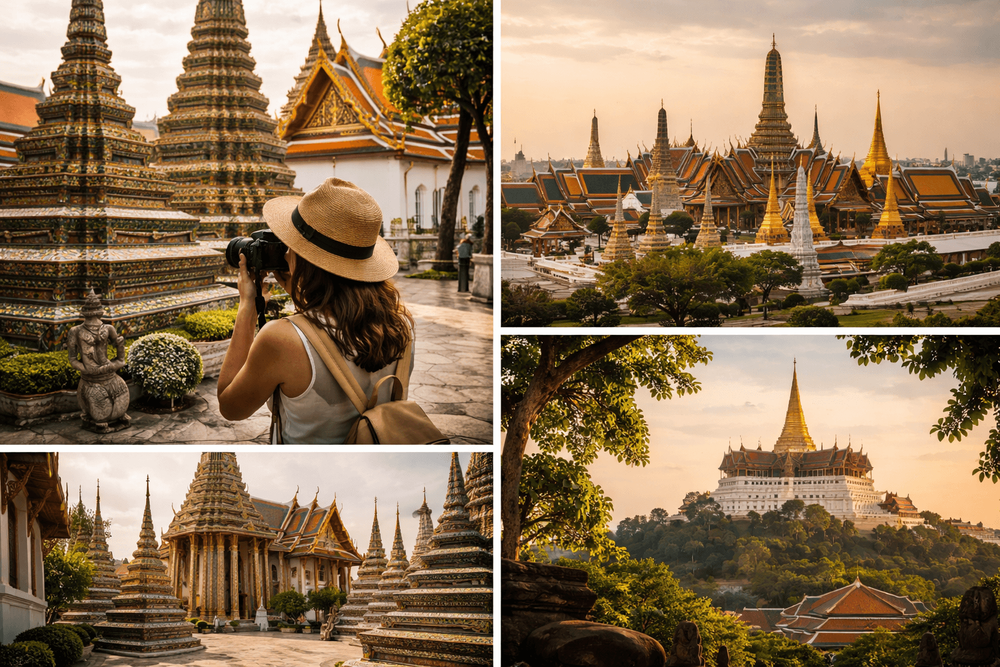
Best Photo Spots at Wat Pho, the Grand Palace, and Golden Mount for a Temple Day from Khao San Road
Angles, timing, and insider tips to nail Wat Pho, Grand Palace, and Golden Mount photos—plus a Khao San-friendly route, dress code, and respectful shooting.
We step out from Soi Rambuttri with cameras still foggy from last night’s air-con and into the steam-bath morning. Tuk-tuks growl past Sanam Luang, monks in saffron move like quiet flames, and we can already picture the frames: glossy chedis at Wat Pho, gold-on-gold drama at the Grand Palace, and that 360-degree Old City skyline from Golden Mount. If you’re chasing Wat Pho Grand Palace Golden Mount photos, this is our playbook—angles, timing, and the sanuk way to do it without melting or getting scammed.
Data Freshness + Pricing:
- Prices are approximate and in THB.
- Last checked: July 2026.
- Happy hour and promo details change frequently—confirm locally.
Why this trio makes Bangkok’s most photogenic temple day
Bangkok has bigger skylines and shinier malls, but the Old City still hits us hardest: the glaze of porcelain at Wat Pho, the yaksha giants and mirrored mosaics at Wat Phra Kaew in the Grand Palace, the wind-swept bells and citywide views atop Golden Mount (Wat Saket). They’re close enough to stitch into one route from Khao San Road, yet each gives a different visual mood. We’ll thread them together for a single day that balances light, crowds, and those keeper shots you came for.
Tip: If you want a deeper shot list and angle ideas beyond this story, our photo-forward companion is here: Bangkok Temple Day Photo Guide: Best Angles, Viewpoints, and Shot Ideas at Wat Pho, Grand Palace, and Golden Mount.
Where to capture the best Wat Pho Grand Palace Golden Mount photos
We’ll go place by place with exact corners, the right lenses, and when to be there.
Wat Pho (Temple of the Reclining Buddha)
You’ll smell incense and frangipani before the tickets. Once inside, it’s a maze of glazed chedis, pranglets, and cloisters that catch light like a disco ball.
Best exterior angles
- Doorway frames: Step back from the ubosot (ordination hall) doorways and shoot through the lacquered frames for a layered look—columns, guardians, and chedi tips stacked with shallow depth of field.
- Phra Chedi Rai cluster: The four giant, color-coded chedis near the center are perfect for ultra-wide shots that exaggerate their height. Crouch low so the tiled base leads your eye upward.
- Cloister Buddhas: The long galleries lined with seated Buddhas glow at golden hour; shoot a diagonal along the row for repeating patterns. Keep it respectful—no touching, no climbing on thresholds.
- Rain-day reflections: After a shower in rainy season (May–Oct), hunt for puddles in the stone courtyards. Flip your phone and go low for mirror shots of spires.
Inside the Reclining Buddha hall
- Go ultra-wide (phone’s 0.5x or a 14–24mm). The Buddha’s face is wedged close to the pillars, so you’ll want every millimeter.
- Feet details: The mother-of-pearl soles are insanely intricate and easier to frame than the face. A 35–50mm equivalent works here.
- No flash, move slow, and accept the crowd rhythm. There are lulls between tour groups—wait 90 seconds and the frame can empty like magic.
Light and timing
- Early (8:00–9:30) for softer light on porcelain tiles; late afternoon (16:00–18:00) for warm glow on chedi reliefs.
- Midday heat shimmers, but overcast sky makes the colors pop without harsh shadows.
Practical photo notes
- Tripods: Staff may ask you to stow tripods in busy areas; a mini tripod or brace against a column is safer. Drones are a hard no.
- Dress code: Cover shoulders and knees to avoid being turned away from indoor chapels.
- Entry: approx 200–300 THB. Hours: roughly 8:00–18:30 (last entry around 18:00).
The Grand Palace & Wat Phra Kaew (Temple of the Emerald Buddha)
This is Bangkok on maximum sparkle. Expect crowds and reflections that will fry your histogram—in a good way if you plan for it.
Best exterior angles
- Upper Terrace trio: Frame Phra Si Ratana Chedi (gold stupa), Phra Mondop (green-gold library), and the miniature Angkor Wat in one sweep. An ultra-wide captures the drama; a 50mm lets you isolate mirror mosaics.
- Yaksha guardians at the gates: Shoot low with a wide lens to make the demon giants loom over passing farang and locals alike.
- Cloister murals: The Ramakien murals along the cloister pop under soft light. Try side-lighting at mid-morning for texture in the gold leaf. Keep people in frame for scale.
- Roofline layers: From the Outer Court walkways, stack layered gables and chofah (roof finials) against a cloud-rich sky. A polarizer helps manage glare.
Photo restrictions and etiquette
- Inside the Emerald Buddha ordination hall: photography is not permitted. Full stop. Outside, shoot freely but keep the centerline clear for worshippers.
- Tripods: Generally discouraged due to crowd flow. Monopods sometimes pass, but be ready to put it away.
Light and timing
- Be at the gate for opening (around 8:30) and beeline to the Upper Terrace before the tour wave. The gold stupa is fire under first light.
- Overcast? Even better for color and skin tones. After rain, the granite and tiles give clean reflections—watch your footing.
Practical details
- Dress code is strictly enforced: no shorts above the knee, no sleeveless, no ripped or see-through. Rentals/scarves outside run approx 50–200 THB deposit.
- Entry: approx 500 THB. Hours: ticketing roughly 8:30–15:30; grounds clear by late afternoon.
- Scam alert: Anyone outside saying “Palace closed” is running the classic tuk-tuk detour routine. Walk straight to the official gate.
Golden Mount (Wat Saket)
A spiral climb, the soft clang of bells in the breeze, and a rooftop view that earns your sweat. This is your sunset play.
Best angles
- Bell stairway: Use the curve of the handrail as a leading line, bells blurred with a low shutter (1/15–1/30s; brace on the wall). Ask before lingering if monks are passing.
- Cityscape from the top: Frame Loha Prasat to the west, Rama VIII Bridge to the northwest, and the low-rise maze of Rattanakosin all around. Shoot one set at sunset, then hang for blue hour.
- Chedi close-ups: Golden cloth rippling in the wind looks great at 85mm or portrait mode. Include fluttering prayer flags for motion.
Light and timing
- Sunset/blue hour is king. On hazy days, morning light can be cleaner, with shadows raking across the Old City rooftops.
- Space at the top is tight. Get there 45–60 minutes before sunset to claim an edge.
Practical details
- Entry: approx 50–100 THB. Hours: commonly 7:00–19:00, with last entry earlier on quiet days and later during festivals.
- Tripods: Often discouraged at the summit for safety/crowd flow. A mini tabletop or clamp is better; keep it discreet. Drones are not allowed.
- Festival note: During Loy Krathong (usually Nov), Golden Mount hosts a fair with lanterns and food stalls. Magical, but wall-to-wall people—arrive early and keep gear minimal.
Know before you go: light, crowds, tickets, dress
The light
- Cool season (Nov–Feb): crisp skies, lower humidity—your best bet for punchy color.
- Hot season (Mar–May): harsh midday sun; plan for early/late. Haze can flatten skies—compose tight on textures and gold.
- Rainy season (May–Oct): dramatic clouds and post-shower reflections. Carry a plastic cover for your camera; lenses fog when you step out of AC.
Crowds and rhythm
- Tour buses stack 9:30–14:00 at the Grand Palace and spill into Wat Pho. Golden Mount packs up around sunset on weekends.
- Work the edges: back courtyards at Wat Pho, cloister corners at the Palace, and the wind-bell terraces at Wat Saket.
Dress code and comfort
- Shoulders and knees covered for temple interiors (and strictly at the Palace). Light linen pants beat jeans in this heat.
- Footwear: Easy-on sandals help with shoe-off areas. Bring socks if hot stones are roasting your soles.
- Hydration: 7-Eleven on Phra Athit or near Sanam Luang—water 10–20 THB approx; grab electrolyte packets too.
Tickets and cash
- Carry small bills. ATMs along Khao San/Phra Athit charge foreign card fees.
- Some ticket windows accept cards, but networks can hiccup—have cash backup.
Getting there from Khao San Road
You’re in the perfect base camp. Everything is close, but Bangkok traffic can still eat an hour if you call a car at the wrong time.
On foot
- Grand Palace: 20–25 minutes from Khao San via Sanam Luang. Early morning is pleasant; pack sunblock and a hat.
- Wat Pho: 30–35 minutes if you loop via Tha Tien market—worth it for river scenes.
- Golden Mount: 25–30 minutes along Ratchadamnoen Klang, then cut in toward Wat Saket.
By boat (our favorite on hot days)
- From Phra Athit Pier, take the Chao Phraya Express south: to Tha Chang Bangkok for the Grand Palace or Tha Tien for Wat Pho. Fare approx 16–20 THB. Boats run every 10–15 minutes.
Tuk-tuk or motorbike taxi
- Tuk-tuk from Khao San to the Grand Palace or Wat Pho: negotiate 80–150 THB approx depending on traffic and your smile. Motorbike taxi 40–80 THB.
Grab/bolt-style ride-hailing
- Handy in the heat, but Old City jams are real. Expect 100–180 THB approx Khao San to Wat Pho/Palace in daytime.
For route nuance and timing from Khao San, we break down ideal sequencing here: How to See Wat Pho, the Grand Palace, and Golden Mount in the Right Order from Khao San Road. If you prefer a loop you can actually enjoy on foot, check: Wat Pho to Golden Mount: The Best Temple-Loop Walking Route from Khao San Road. There’s also a scenic Palace-to-Mount version if you’d rather start at the gold: Grand Palace to Golden Mount on Foot: A Scenic Old Town Temple Walk from Khao San Road.
A one-day, photo-first route we actually use
- 7:30–8:15 — Coffee on Phra Athit, gear check, and a bottle of water in the bag. Clouds look friendly? We go.
- 8:30–10:15 — Grand Palace first. Hit the Upper Terrace while it’s still mellow. Keep the Emerald Buddha hall respectful—no photos inside. Catch details on the way out.
- 10:30–12:00 — Walk or boat to Wat Pho. Work the cloisters, door frames, and the Reclining Buddha feet. If it’s blazing, duck into 7-Eleven for the blessed AC blast.
- 12:00–15:30 — Lunch and recharge near Maha Rat Road or back on Soi Rambuttri (pad thai 60–120 THB approx; grilled pork skewers 10–20 THB each). Siesta is strategy, not laziness.
- 16:30–19:00 — Golden Mount for sunset into blue hour. Bells, flags, skyline. Pack patience and a microfiber cloth for the humidity.
By the time the thump of Khao San’s bass wakes back up, you’ll have a card full of keepers.
Respectful temple photography: what flies and what doesn’t
- Ask permission before pointing a lens at monks; never interrupt ceremony or meditation.
- No photos inside the Emerald Buddha hall; other ubosot/viharn interiors may allow photos without flash—look for signs.
- Don’t climb on chedis, rails, or Buddha bases for a “better angle.” It’s disrespectful and you’ll be told off.
- Keep shoulders and knees covered, remove hats in chapels, and step over—never on—door thresholds.
- Lower the camera if people are praying. The shot can wait.
Where to base yourself near Khao San (photographer’s priorities)
We usually stay within a 5–10 minute stroll of Soi Rambuttri or Phra Athit Road so sunrise starts are painless and late returns are safe and lit. Prioritize:
- A quiet courtyard or riverside aspect so you can actually sleep before dawn alarms.
- A pool for a mid-afternoon cool-down—worth its weight in gold leaf on hot-season days.
- Early breakfast (or at least coffee) from 6:00 so you can beat the first tour groups. If you prefer local feel, look near Phra Athit for leafy sois and easier boat access; for nightlife convenience, a block off Khao San keeps the bass at bay but the noodles close.
Gear and phone settings that help here
- Lenses: Ultra-wide (14–24mm) for tight courtyards and giant Buddhas; a standard zoom (24–70mm) for details and portraits.
- Filters: A circular polarizer manages glare on gold and glazed tiles; skip heavy ND unless you’re set on motion blur.
- Phone tips: Use the ultra-wide, tap-to-expose for highlights on gold surfaces, and toggle HDR when you’ve got dark murals and bright sky.
- Wipe often: Sweat and AC fog will smear your glass. A tiny microfiber beats your T-shirt every time.
Common snags (and how we dodge them)
- The “closed” scam at the Palace: smile, ignore, keep walking to the official gate.
- Tripod confiscation risk: bring a mini or go handheld; stabilize on railings and columns.
- Midday meltdown: siesta or museum break. Drink water, not just iced coffee.
- Overcooked skies: compose tight on textures, doorways, and mirrored mosaics; wait for a cloud bank.
When the bells fade on Golden Mount and the river breeze picks up along Phra Athit, we usually grab grilled chicken skewers and review shots under fairy lights. If you miss a frame, the Old City will hand you another tomorrow—same sois, different light. And that’s the Bangkok we keep coming back for.
Related Hotels & Places
The Grand Palace
Attractions
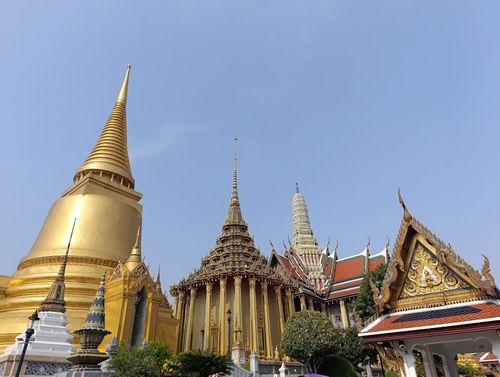
Bangkok’s royal showpiece a short hop from Khao San: glittering Wat Phra Kaew, Ramakien murals, and gold-on-gold rooftops. Go 8:30am to dodge the heat, dress modestly, and boat to Tha Chang for the prettiest arrival.
Wat Phra Kaew
Temples
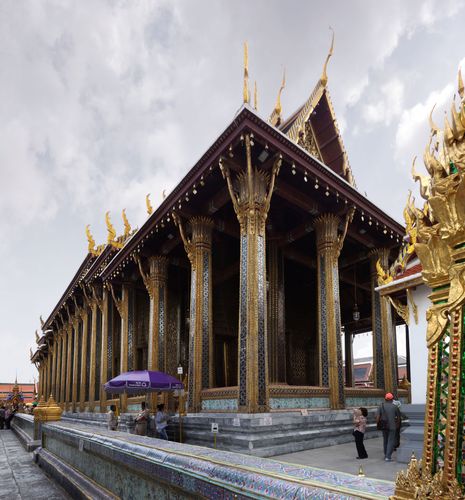
Bangkok’s holiest temple inside the Grand Palace. Go early (8:30am–3:30pm). Buy the 500 THB ticket at Na Phra Lan Rd gate. Dress code enforced. Marvel at Ramakien murals and the tiny Emerald Buddha whose robes change with the seasons. 10–15 minutes’ walk from Khao San.
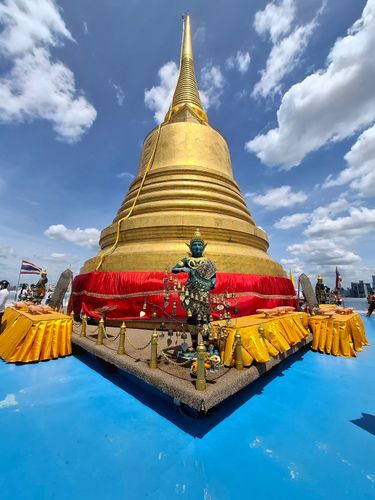
Wat Saket Ratchawora Mahawihan
Temples
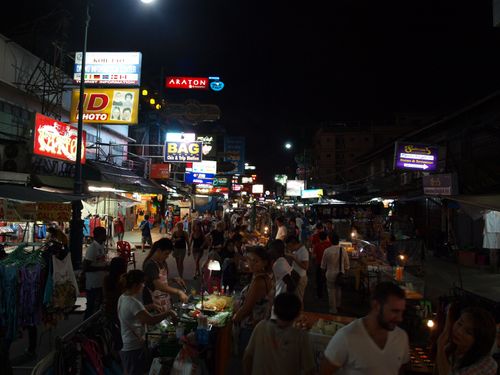
Khao San Road
Attractions
Bangkok’s backpacker carnival: curbside bars, live bands and DJs from 3pm–2am (midnight Sun). Street eats are cheap — pad thai 70–100 THB, mango sticky rice 60–100 THB. Come for wild people-watching; duck into Rambuttri for a calmer beer.
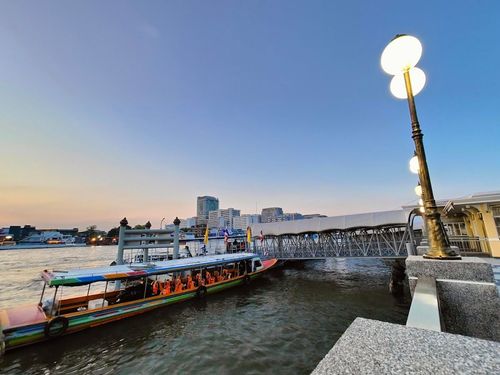
Tha Chang Bangkok
Bars
Bar on Khao San Road.
More Khao San Road Guides
- Wat Pho, Grand Palace, and Golden Mount Photo Stops: Where to Shoot the Best Temple Views from Khao San Road
- Temple Photo Tips for Wat Pho, the Grand Palace, and Golden Mount from Khao San Road
- Bangkok Temple Run with the Best Photo Stops: Wat Pho, Grand Palace, and Golden Mount from Khao San Road
- Bangkok Temple Day Photo Guide: Best Angles, Viewpoints, and Shot Ideas at Wat Pho, Grand Palace, and Golden Mount