Bangkok Street Food for First-Time Visitors: How to Order, Pay, and Avoid Common Mistakes
Eat Bangkok like a local: what to order, where to go near Khao San & the river, how to spot clean stalls, prices, phrases, and etiquette for first-timers.
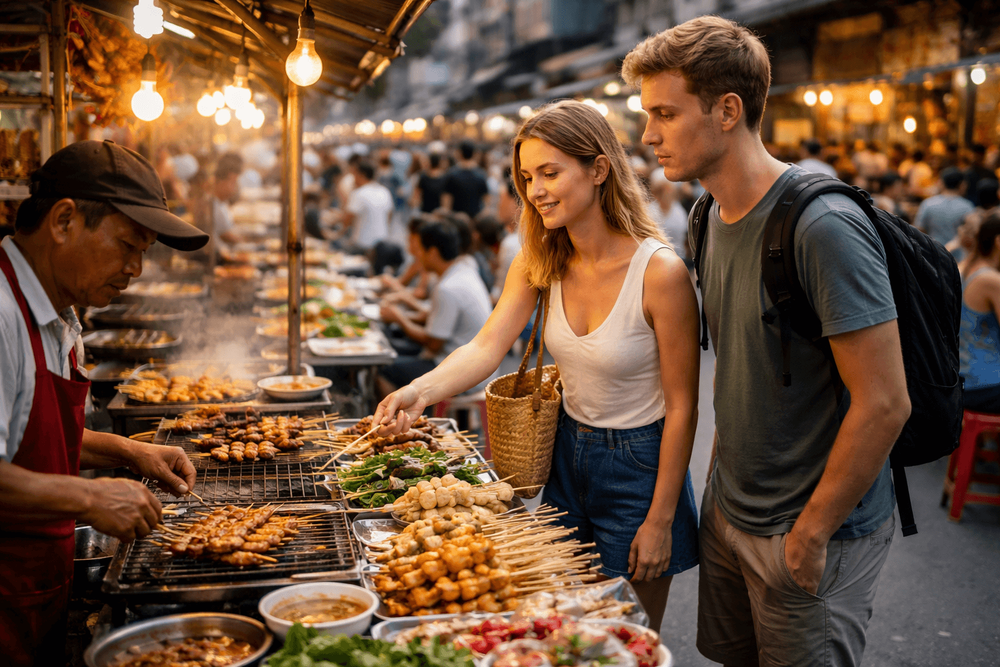
We’re shoulder to shoulder on Soi Rambuttri, the air fat with garlic and chili, a wok screaming as the cook flips pad krapao in a comet of flame. The thump of bass from a Khao San Road bar leaks down the soi, someone shouts “khai dao!” for a fried egg, and a fan rattles above our plastic table. This is Bangkok street food for tourists in its most glorious, chaotic form—and we’re here to eat like locals without getting fleeced, frazzled, or flattened by the heat.
Here’s how we do it: what to order, where to go near the main sights, how to spot clean and busy stalls, and exactly how to order and pay
What Bangkok Street Food Feels Like for First-Timers
Bangkok can be a sensory ambush. The sizzle of a wok competes with the sweet rot of durian, charcoal smoke perfumes the air, and ice clinks into plastic cups of cha yen (Thai iced tea). Expect quick meals, shared tables, and very little ceremony—sanuk (fun) over formal. Stalls are specialized: one cart does moo ping (pork skewers) all day, another only khao man gai (Hainanese chicken rice) until the birds run out.
Flavors are loud but balanced—spicy (prik), sour (manao/lime), salty (nam pla/fish sauce), sweet (nam tan/sugar), and funky (pla ra/fermented fish or shrimp paste). You customize heat with the four-table caddy: dried chili, fresh chili in vinegar, sugar, and fish sauce. If you’re here for bangkok street food for tourists, know this: your bowl is a starting point; the caddy is your canvas.
Common dining habits:
- Breakfast: rice porridge (jok), soy milk with Chinese donuts (patongo), grilled pork skewers with sticky rice.
- Lunch: noodles, khao man gai, stir-fries over rice; office crowds swarm 11:30–13:30.
- Dinner to late night: the big show—Yaowarat Chinatown Heritage Center, Sukhumvit side sois, Soi Rambuttri, Talat Phlu grills, Samyan Mitrtown near National Stadium.
Typical prices: 40–80 baht for most one-plate dishes, 15–30 baht per small bowl of boat noodles (you’ll eat two or three), 10–20 baht for moo ping, 60–120 baht for seafood skewers. Cold drinks 20–40 baht.
Bangkok Street Food for Tourists: Where to Start
We’ll orbit the main sightseeing zones so you can pair bites with temples, canals (khlongs), and river views.
Khao San Road, Soi Rambuttri, and Phra Athit
- When: Late afternoon to late night. Rambuttri warms up by sunset; Khao San thumps until 2–3 AM.
- Why: Easy menus, English-friendly stalls, and quick wins—pad thai, mango sticky rice, banana roti, grilled skewers. Yes, some tourist markup, but the scene is electric. Dive one street over to Phra Athit Road for quieter cafes and Isan grills.
- Insider move: Start on Rambuttri for moo ping and som tam (papaya salad), then grab a bowl of tom yum noodles from a corner cart and finish with coconut ice cream served in a husk.
The Grand Palace, Wat Pho, and Tha Tien Market
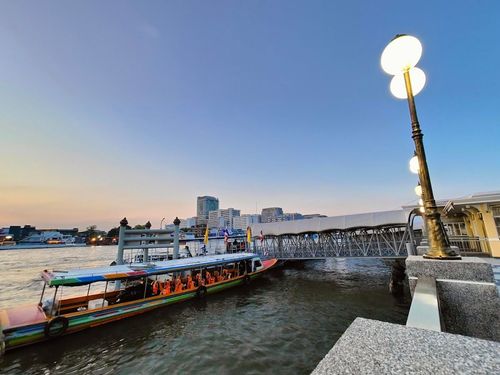
- Getting there: Chao Phraya Express Boat to Tha Chang Bangkok or Tha Tien pier.
- Eats: Morning markets sell grilled river prawns, fish cakes, and khanom krok (coconut custard cups) fresh off the griddle. Lunch stalls around Sanam Luang pivot to khao moo daeng (red pork over rice) and curries.
- Tip: For more riverside picks, see Bangkok bites near big sights: Bangkok Street Food at Tourist Landmarks: What to Eat Near the Grand Palace, Wat Pho, and Along the River.
Chinatown Bangkok (Yaowarat) (Chinatown)
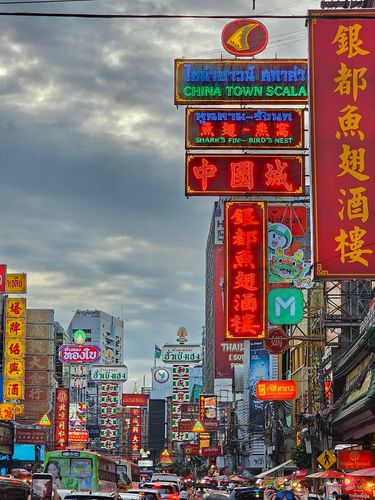
- When: 5 PM onward; the neon ignites and the sidewalks become a buffet.
- Eats: Peppery kuay jap (rolled rice noodles with crispy pork), oyster omelets, dim sum, grilled squid, fresh pomegranate juice. Lines move fast. If it isn’t sizzling or steaming, we skip it here.
- Access: MRT Wat Mangkon drops you right in the thick of it.
Victory Monument and Boat Noodles
- Claim to fame: Tiny bowls of aromatic, slightly ferrous kuay teow reua (boat noodles). Order 3–5—don’t be shy.
- When: Lunch to late afternoon. Some shops shut by 5 PM as broth sells out.
- How: Point to the bowl, flash fingers for how many, say “moo” (pork) or “neua” (beef), and choose “sen lek” (thin rice noodles) or “sen yai” (wide). Add “khai” for egg if offered.
Silom and Convent Lunchtime Scene
- When: 11 AM–2 PM weekdays, office-hour mayhem.
- Eats: Stir-fries, curries, fried chicken, som tam made to order. Prices are honest and turnover is sky-high—great for the hygiene-conscious.
Sukhumvit Soi 38 and Banthat Thong
- Sukhumvit 38: A handful of stalwarts remain; it’s more curated now but still delivers classic pad thai, khao man gai, and late-night noodles.
- Banthat Thong (near National Stadium): Student-favorite street of snacks—grilled pork neck, suki haeng (dry sukiyaki), Thai desserts. Evenings are prime.
Thonburi Side Streets (Talat Phlu, Wongwian Yai)
- Why go: Charcoal-grilled seafood, pork belly, and old-school sweets without central Bangkok prices. Come dinner-time.
How to Choose Safe, Clean, and Busy Stalls
We trust our gut and a few rules:
- Follow the line: High turnover means fresh oil and ingredients. A queue of aunties and office workers is our north star.
- Watch the heat: Dishes cooked to order over ripping-hot woks are safest. Soup bubbling? Great. Lukewarm trays? We pass.
- Look at hands and boards: If the cook handles raw chicken and money with the same hand, we keep walking. Separate boards for meat and veg earn points.
- Check the oil: Light-gold oil and a clean wok rim beat black, gummy vats.
- Ice is usually safe: Factory-made cube ice is standard; we avoid shaved ice from unknown sources.
- Water: We stick to bottled water (10–20 baht) or sealed drinks.
- Early bird or peak hours: We eat at peak times for freshest turnover.
If you want a deeper primer on spotting gems and paying fair prices Bangkok Street Food for First-Time Visitors: What to Order, How to Spot the Best Stalls, and What a Fair Price Looks Like.
Allergies or dietary needs? Carry key phrases on your phone and read this dedicated guide: Bangkok Street Food for Travelers with Allergies: What to Order, What to Avoid, and How to Ask for Changes.
Must-Try Dishes, Drinks, and Desserts (Plus Veggie & Halal Options)
We can’t eat everything in one night, but we can try.
Savory Essentials
- Pad krapao: Holy basil stir-fry. Say “moo” (pork) or “gai” (chicken), “pet nit noi” (a little spicy), and add “khai dao” (fried egg). 50–80 baht.
- Som tam: Papaya salad. “Som tam thai” is the classic, “som tam poo pla ra” is funkier with crab and fermented fish. 40–70 baht.
- Moo ping + khao niao: Charcoal-grilled pork skewers with sticky rice. 10–20 baht per stick.
- Khao man gai: Poached chicken over rice with gingery sauce and broth. 45–70 baht.
- Boat noodles: Beef or pork with herbs and a whisper of bitterness from blood or soy—tiny bowls designed for stacking. 15–30 baht each.
- Pad thai: Ignore haters; a good one is great. Look for orange from tamarind, not ketchup. 50–90 baht.
- Guay teow tom yum: Noodles in spicy-sour broth with lime, ground peanuts, and chili. 50–80 baht.
- Gai yang + nam jim jaew: Northeastern grilled chicken with smoky, tangy dipping sauce. 60–120 baht (portion-dependent).
- Sai krok Isan: Fermented sausage, sour-savory snap, often served with ginger and chilis. 20–30 baht.
- Khao kha moo: Braised pork leg over rice with pickled greens and egg. 50–80 baht.
Veggie and Jay (Vegan-ish) Options
- Look for yellow-on-red “เจ” signs—jay stalls avoid meat, seafood, dairy, eggs, and pungent aromatics.
- Easy orders: “Pad pak jay” (veggie stir-fry), “pad see ew jay” (soy-sauce noodles), “khao pad pak jay” (veg fried rice), “tofu krapao” (holy basil tofu).
- Key phrases: “gin jay” (I eat jay), “mai sai nam pla” (no fish sauce), “mai sai hoi” (no shellfish), “mai sai khai” (no egg).
Halal-Friendly Notes
- Neighborhoods: Around Haroon Mosque (Charoen Krung), Banglamphu side streets, and parts of Pratunam have halal carts with biryani, beef noodles, and roti.
- Ask for “halal” or look for the Arabic/Thai sign. Grilled chicken, beef satay, and roti with curry are common.
Sweets and Drinks
- Mango sticky rice: Best in season (Mar–Jun), but always beloved. 60–120 baht.
- Khanom krok: Coconut-rice cups, crisp-edged and custardy. 20–40 baht per set.
- Tub tim krob: Ruby water chestnuts with coconut milk and shaved ice—Bangkok’s heat antidote. 40–60 baht.
- Roti: Paper-thin griddled bread with banana, egg, and condensed milk. 30–60 baht.
- Drinks: Cha yen (Thai iced tea), oliang (iced coffee), nam manao (limeade), fresh pomegranate or orange juice near tourist strips. 20–60 baht.
If you’re budgeting bites by the day, this is handy: Bangkok Street Food by Budget: What to Eat for 50, 100, and 200 Baht.
How to Order, Pay, and Not Look Lost
Ordering at a stall is part theater, part traffic management. Here’s our script.
Step 1: Approach and Signal
- Eye contact + a small nod gets you in the queue. There’s rarely a neat line—just organized chaos. We stand near the wok and say the dish name when the cook glances up.
- If there’s a ticket or number system, grab it; otherwise, hover politely.
Step 2: Order Like a Local (Useful Phrases)
- “Ao…” (I’ll take…) + dish. Example: “Ao pad krapao moo, pet nit noi, sai khai dao.”
- Noodle choices: “sen lek” (thin rice), “sen yai” (wide rice), “ba mee” (egg noodles).
- Spice: “mai ped” (not spicy), “pet nit noi” (a little spicy), “pet mak mak” (very spicy).
- Protein: “moo” (pork), “gai” (chicken), “neua” (beef), “pla” (fish), “tao hu” (tofu).
- Add-ons: “sai khai” (add egg), “mai sai…” (don’t add…).
- Takeaway vs dine-in: “Ao klap baan” (take away) or point to a table and say “gin tee nee” (eat here).
Step 3: Sit or Stand and Wait
- If there are seats, we grab a plastic stool and share a table. Condiments are self-serve. Don’t be shy about doctoring your bowl.
Step 4: Pay the Right Way
- Most stalls are pay-after-you-eat. Keep small bills (20s and 50s). If prices aren’t displayed, we confirm before ordering: “Tao rai?” (How much?).
- QR PromptPay is common for locals, but many tourists can’t use it without a Thai account. Cash is king; a few modern markets also take cards but expect a minimum.
- Tipping isn’t required; rounding up 5–10 baht is a nice thank-you.
Common Ordering Pitfalls (and Fixes)
- Over-ordering: Stalls scale small; share one, reorder fast.
- Chasing “no spice”: “Mai ped” helps, but some dishes are inherently hot (som tam, tom yum). Order “pet nit noi,” taste, then adjust with the caddy.
- Assuming every pad thai is equal: Watch for freshly soaked noodles and tamarind in the wok—skip the ketchup-ranch specials.
- Ice panic: Factory ice is standard. If the cup looks sketchy, ask for a bottled drink instead.
- Tuk-tuk detours: If a driver insists on a “best pad thai” far from where you asked, it’s a commission run. We bail politely.
Know Before You Go
- Heat strategy: Late afternoon or after dark is friendliest. We duck into a 7-Eleven for an AC blast between stalls.
- Peak times: Breakfast 6–10 AM, lunch 11–2, dinner 6–10. Arrive near peak for freshest turnover—but expect queues.
- Cash and ATMs: ATMs charge foreign cards a fixed fee; we withdraw once and carry change. Keep a coin purse.
- Seating: Sharing tables is normal. Offer space and a smile—“sawadee” goes a long way.
- Waste: Return bowls and trays; look for a bin. Street crews work hard—don’t make it harder.
- Bathrooms: Use mall or temple facilities before your crawl; most stalls don’t have restrooms.
A Sample Night Around Banglamphu (Doable From Khao San)
- 6:00 PM — Moo ping on Soi Rambuttri, two sticks and a sticky rice to prime the engine.
- 6:20 PM — Tom yum noodles at a corner cart; we ask for “sen lek, pet nit noi.”
- 7:00 PM — Hop to Phra Athit Road for grilled chicken and nam jim jaew; split a plate.
- 7:45 PM — Som tam from a cart that pounds papaya to order. We watch—no pre-mixed bowls.
- 8:15 PM — Mango sticky rice for dessert, then a slow meander past the river. If we still have room: coconut ice cream in a husk.
How This Differs From a Restaurant Meal (And Why It’s Better Tonight)
- Speed: Food hits the wok when you order; it’s in your hands a minute later.
- Specialization: One-dish masters dial in flavor over decades.
- Price: Dinner for two under 200–300 baht is normal.
- Atmosphere: Neon, scooters, sizzling metal, and the low roar of Bangkok—this is the city’s soundtrack.
If you want a bird’s-eye of the whole scene, bookmark this deep dive: Bangkok Street Food: Best Dishes, Where to Eat & Traveler Tips.
Where to Base Yourself for Easy Street-Food Walks
If we’re here to graze, we stay within walking distance of action—around Soi Rambuttri/Phra Athit for temple-and-street-food days, or near an MRT/BTS stop like Wat Mangkon (Chinatown), National Stadium (Banthat Thong), or Saphan Taksin (river boat). Pools are a bonus for post-chili cool-downs, but we value location first: a five-minute stroll to skewers beats a fancy lobby every time.
The Spirit of It All
Bangkok rewards curiosity. We follow the clatter of ladles, the smell of lime and fish sauce, the auntie who moves like a metronome over her wok. We fumble phrases, we smile, we try again. If we keep it hot, fresh, and busy—and carry small bills—we’ll eat like champs. That’s bangkok street food for tourists done right.
Tell us where you want to roam next—Yaowarat’s neon sheen or a khlong-side grill in Thonburi—and we’ll point the way to the stall that nails it every single time.
Related Hotels & Places
Khao San Road
Attractions
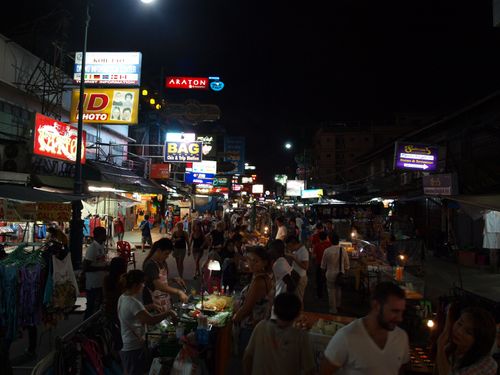
Bangkok’s backpacker carnival: curbside bars, live bands and DJs from 3pm–2am (midnight Sun). Street eats are cheap — pad thai 70–100 THB, mango sticky rice 60–100 THB. Come for wild people-watching; duck into Rambuttri for a calmer beer.
The Grand Palace
Attractions
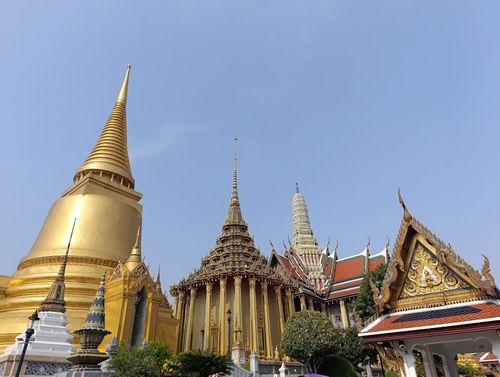
Bangkok’s royal showpiece a short hop from Khao San: glittering Wat Phra Kaew, Ramakien murals, and gold-on-gold rooftops. Go 8:30am to dodge the heat, dress modestly, and boat to Tha Chang for the prettiest arrival.
Yaowarat Chinatown Heritage Center
Attractions
Inside Wat Traimit by Chinatown Gate, this tidy museum charts Yaowarat’s Chinese roots with bilingual displays, period photos and short films. Open Tue–Sun 8:30am–4:30pm; closed Mon. Pair it with the Golden Buddha upstairs.
Samyan Mitrtown
Shops
Bangkok’s go-to 24/7 mall: free Samyan Co‑op co‑working, late‑night cafés and a supermarket, House Samyan indie cinema, and a roof terrace — all linked to MRT Sam Yan via the Instagram‑famous glass tunnel.
Chinatown Bangkok (Yaowarat)
Attractions
Neon, woks, and queues: Yaowarat is Bangkok’s street‑food strip. Start at Wat Mangkon MRT, graze T&K Seafood and Nai Ek’s peppery guay jub, snag toasted buns, and finish with mango sago at Sweet Time. Best 6pm–late; ~10‑minute taxi from Khao San.
Tha Chang Bangkok
Bars
Bar on Khao San Road.
More Khao San Road Guides
- Bangkok Street Food for First-Time Visitors: A Practical Guide to Ordering, Hygiene, and Must-Try Classics
- How to Order Bangkok Street Food: Thai Phrases, Spice Levels, and Stall Etiquette for Khao San Road First-Timers
- Bangkok Street Food Guide for First-Timers: What to Order, How to Spot the Best Stalls, and What It Costs
- Bangkok Street Food Guide for First-Time Visitors: What to Order, How to Order, and How to Eat Safely Around Khao San Road