How to Order Street Food in Bangkok: Thai Phrases, Stall Etiquette, and Easy Customizations
Master the Bangkok street food order with Thai phrases, stall etiquette, and smart customizations—plus a Khao San–Phra Athit mini food crawl.
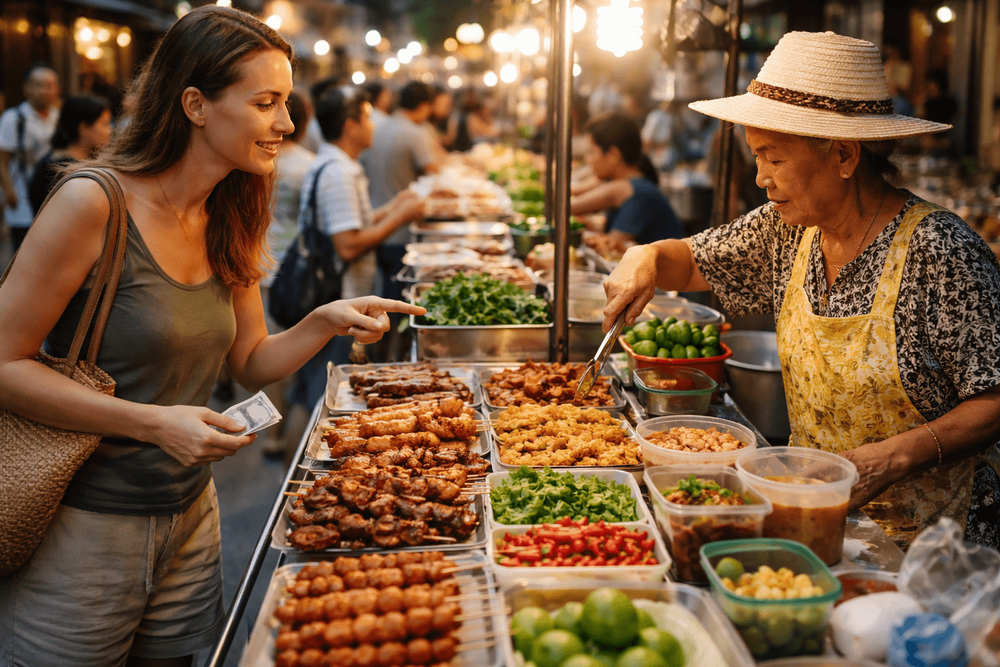
We’re shoulder-to-shoulder on Soi Rambuttri, the wok screams, chilies bite the air, and a fan creaks like it’s seen too many hot seasons. The cook glances up, ladle poised. This is the moment: the Bangkok street food order. We smile, point, drop a few Thai words, and the whole dance—sizzle, toss, plate—happens like we’ve done this together all our lives.
Data Freshness + Verification
- Prices are approximate (THB). Last checked: July 2026.
- For venue facts (name, hours, closures, boat/bus schedules), avoid absolutes; give typical ranges and add “confirm same-day locally.”
- When citing any price, include neighborhood and, if known, source type (menu, recent visitor, operator site).
Concrete Planning Details
- Mini food crawl near Khao San Road/Phra Athit (early evening, light walk):
- Roti Mataba (Phra Athit Road) — flaky roti and yellow curry. Walk 5–7 minutes from Phra Athit Pier. Typical hours late morning to late evening; confirm same-day. Budget 60–120 THB per plate (menu pricing, Phra Athit).
- Tom Yum Goong Banglamphu (Soi Kraisi off Tanao) — punchy tom yum with river prawns. 10–12 minutes on foot from Roti Mataba. Expect 120–200 THB (menu pricing, Banglamphu); queues after 7 pm.
- Kor Panich (Tanao Road) — classic mango sticky rice since the 1930s. 4–6 minutes from Soi Kraisi. Often open daytime to early evening; confirm same-day. 80–150 THB (menu pricing, Old Town).
- Thipsamai (Maha Chai Road) — charcoal-fired pad thai. 15–18 minutes from Tanao; tuk-tuk is 5–8 minutes if you’re done walking. Lines after 6:30 pm; 90–200 THB depending on toppings (menu pricing, Old Town).
- Transit notes: From Sathorn/Central Pier, take the Chao Phraya Express Boat (Orange Flag) to Phra Athit Pier; typical first departures around 6:00 and last around 19:00–19:30; confirm same-day at the pier. Tuk-tuks in Old Town are fast for short hops (60–120 THB for 1–2 km is common; agree price first). City buses run along Phra Athit and Ratchadamnoen; expect 15–30 minutes depending on traffic.
Booking Suggestions (if relevant)
- If you’re basing near Khao San or Soi Rambuttri, check availability for a guesthouse with decent AC and a quiet-back soi room—your future, sweat-soaked self will be grateful after a chili-heavy night.
- Prefer the river breeze? Consider spots along Phra Athit Road; being steps from the pier makes late-evening snack runs and day-boat trips sanuk and simple.
Bangkok street food order: the phrases and tactics
We don’t need perfect tones to eat well. A few Thai words plus confident pointing gets us fed, fast.
Core ordering phrases
- “Ao … krap/ka” = I’ll have … (krap for men, ka for women)
- “Khor … krap/ka” = Please may I have …
- “Mai phet” = Not spicy
- “Phet nit noi” = A little spicy
- “Phet mak” = Very spicy
- “Mai sai …” = Don’t add … (e.g., “mai sai namtaan” = no sugar; “mai sai tua lisong” = no peanuts; “mai sai nam pla” = no fish sauce; “mai sai pong churot” = no MSG)
- “Sai …” = Add … (e.g., “sai khai dao” = add fried egg)
- “Lek / tamadaa / piset” = Small / regular / large portion
- “Kin tee nee” or polite “thaan tee nee” = Eat here
- “Glap baan” or “sai thung” = Takeaway (to go / put in a bag)
- “Tao rai?” = How much?
Numbers help: neung (1), song (2), sam (3), see (4), haa (5). “Song jaan” is two plates; “sam khuu” is three skewers.
Noodle specifics (the secret handshake)
- Noodle type: “sen yai” (wide rice), “sen lek” (thin rice), “ba mee” (egg noodle)
- Soup or dry: “naam” (with broth) or “haeng” (dry)
- Season later at the table with the four-friends caddy: sugar, chili flakes, fish sauce, vinegar with chilies
Rice dish upgrades
- Add a fried egg: “khai dao” (usually +10–15 THB in Banglamphu; menu pricing)
- Extra basil, veg, or rice: “piset” (extra)
- Less sweet for stir-fries: “wan nit noi”
We keep it simple: we point, say “ao krapao moo, phet nit noi, khai dao—kin tee nee,” smile, and let the wok sing.
What to expect at Bangkok street food stalls
Bangkok’s street food rhythm changes by soi and hour, but some patterns hold from Phra Athit to Yaowarat.
Menus you’ll see
- Photo boards and laminated menus: great for pointing. Prices usually clear. In Banglamphu, pad thai carts hover around 50–80 THB; grilled pork skewers (moo ping) 10–20 THB each (menu/board pricing, Khao San area).
- Handwritten boards or just a shouted list: ask “mi arai bang?” (what do you have?) and listen for house specials.
- One-dish masters: boat noodles, khao man gai (Hainanese chicken rice), or som tam carts do only a few things—perfect for beginners.
How prep and queues work
- Queue loosely: Stand where others hover. If there’s a number system, take one. Otherwise, catch the cook’s eye with a friendly “ao … krap/ka.”
- Pay style: Often after you eat (rice and noodle shops), sometimes upfront (grill skewers, drinks). If in doubt: “jaai ngern yang ngai?” (how do I pay?)
- Takeaway vs. eat-in: If you say “sai thung,” expect your food in a bag with a rubber band and a plastic spoon. “Thaan tee nee” gets you a metal plate or melamine bowl and a wobbly stool. Keep an eye on your table number if the shop uses them.
Prices and portions (reality check)
- Banglamphu/Phra Athit: 50–120 THB for staples; seafood and prawns more like 120–220 THB (menu/board pricing, Old Town stalls).
- Chinatown/Yaowarat at night: 80–250 THB depending on seafood demand (menu boards, visitor reports).
- Office districts (Silom/Sathorn lunch hours): 60–100 THB for rice plates; soup noodles 60–90 THB (menu boards).
For budgeting by appetite, we like the ranges outlined in Bangkok’s price-savvy piece here: Bangkok Street Food by Budget: What to Eat for 50, 100, and 200 Baht.
Dishes you can order with confidence (and how to tweak them)
Let’s build your starter roster. If the wok is flaming and the line is local, we’re in.
Pad kra pao (stir-fried holy basil)
- Order: “krapao moo” (pork) or “krapao gai” (chicken) over rice.
- Customize: “phet nit noi” for light heat; “mai sai namtaan” for less sweetness; “khai dao” for the crunchy fried egg.
- Flavor: Garlicky, peppery, basil-bright. Expect 60–90 THB in Banglamphu (menu pricing).
Khao man gai (Hainanese chicken rice)
- Order: “khao man gai”—they’ll ask “thuk ruu tod?” (boiled or fried). “Thuk” is classic.
- Customize: Ask for extra rice “khao piset” or extra chicken “gai piset.”
- Sauce is gingery-sweet with chili. 60–80 THB around Old Town (menu/board pricing).
Som tam (green papaya salad)
- Base order: “som tam thai” (peanuts, dried shrimp, lime). For bolder: “som tam pla ra” (fermented fish; strong!)
- Customize: Spice and sweetness—“mai phet,” “phet nit noi,” or “wan nit noi.” Can say “mai sai tua lisong” (no peanuts).
- Watch the mortar-and-pestle show. 50–80 THB (menu pricing, streetside carts in Phra Athit area).
Kuay teow (Thai noodles)
- Pick noodle and broth: “sen lek naam moo” (thin rice noodles in soup with pork) or “ba mee haeng gai” (dry egg noodles with chicken).
- At the table: Adjust with the condiment caddy to taste.
- Boat noodles (“kuay teow reua”) are tiny bowls; locals order 2–4. 20–40 THB per bowl near Banglamphu (menu boards, Old Town); confirm current prices.
Pad thai
- “Pad thai kung” (shrimp) or “pad thai gai” (chicken). Add “mai wan” if you dislike sweet.
- Charcoal-fired versions near Maha Chai Road are smoky, slightly sweet, tamarind-forward. 90–200 THB at popular shops (menu pricing, Old Town).
Moo ping + khao niao (grilled pork skewers + sticky rice)
- Point and say numbers: “song khuu moo ping, khao niao neung” (two skewers, one sticky rice).
- Saucy, slightly sweet, charred at the edges. 10–20 THB per skewer; sticky rice 10–15 THB (board pricing, Banglamphu).
Tom yum goong (hot-sour prawn soup)
- Choose heat level; request “mai sai nam taan” if you prefer tart over sweet.
- Expect bright lime, galangal, lemongrass, and chili. 120–200 THB depending on prawns (menu pricing, Old Town seafood spots).
Mango sticky rice (khao niew mamuang)
- Ripe mango, salted coconut cream, warm sticky rice. Ask “nam kati noy” for less sauce.
- 80–150 THB depending on mango season and portion (menu pricing, Tanao/Old Town).
For more phrase help beyond this crash course, bookmark this breakdown: How to Order Street Food in Bangkok: Thai Menu Words, Queue Etiquette, and Stall-Side Customs and this phrase-focused guide: Bangkok Street Food Ordering Guide: Thai Phrases, Spice Levels, and Customization Tips.
Etiquette and practical tips that keep things smooth
Bangkok rewards good energy. We keep it light, patient, and clear.
Queue like a local
- Shadow the pan, don’t block the wok. If there’s a line, stake a spot and inch forward.
- Make eye contact, give your order in one go. If you’re not ready, let the next person go—saves face and time.
Pay without awkwardness
- Small bills win. Most stalls take cash; prompt-pay QR shows up more often now, but don’t count on it. Ask: “QR dai mai?”
- If there’s no bill, the vendor will tally verbally or handwrite a slip. Repeat the total back—“song roi ha sip, chai mai?”—to confirm.
Share space, bus your bowls
- Tables are communal. Scoot up, offer a nod—“sawadee”—and make room.
- When done, stack plates neatly near the cart. A small tip in the jar (5–20 THB) for great service is appreciated but not mandatory.
Confirm customizations simply
- State exceptions up front: “ao krapao moo, mai sai namtaan, phet nit noi, khai dao.” Short, then smile.
- If something seems off, kindly clarify: “mai ao pet mak—phet nit noi, dai mai?” Most vendors will adjust if possible.
For more nuance on customs (like when to seat yourself, how to pay, and where to stash that skewer stick), skim this primer: Bangkok Street Food Etiquette: How to Order, Pay, Sit, and Eat Like a Local.
Safety and dietary considerations when ordering
Bangkok street food is fast, fresh, and wildly good—but we still use our senses.
Freshness checks
- High turnover beats glossy signage. We follow the crowds and the sizzling pans.
- Hot, cooked-to-order dishes are safest. If you’re eyeing pre-cooked trays, ask when they were made: “tam muea rai?” and prefer items kept steaming.
- Ice and drinks: Sealed bottles are safest. For cha yen (Thai iced tea), we go where the queue is deep and ice delivery looks clean.
Allergies and ingredient gotchas
- Fish sauce (nam pla), oyster sauce, and shrimp paste (kapi) thread through many dishes—even veg-looking ones. Say “mai sai nam pla/nam man hoy/kapi.”
- Peanuts pop up in som tam thai and satay sauce; say “mai sai tua lisong.” Add “phae tua” if you have a peanut allergy.
- MSG (pong churot): “mai sai pong churot” if you’re sensitive.
- Cross-contact is hard to avoid at tiny carts. If your allergy is severe, choose made-to-order stalls with clean pans, or opt for simple grilled items and fruit you peel yourself.
For deeper dietary tactics, especially if you’ve got allergies, keep this on hand: Bangkok Street Food for Travelers with Allergies: What to Order, What to Avoid, and How to Ask for Changes.
Vegetarian, vegan (jay), and halal notes
- “Jay” means vegan-style: no meat, fish sauce, eggs, dairy, or strong alliums by some interpretations. Look for yellow-red “เจ” signs around Old Town; daytime vendors near temples often cook jay-friendly.
- “Mangsawirat” (vegetarian) may still include egg and dairy; you can add “mai sai nam pla” to avoid fish sauce.
- Halal options exist in pockets of Old Town and around mosques; look for the halal crescent. Grilled chicken and roti carts along Phra Athit and Chakrabongse show up in the evenings; confirm hours same-day.
Getting around Khao San and Phra Athit for street food
- Chao Phraya Express Boat to Phra Athit Pier drops us within a mango’s toss of Soi Rambuttri and Phra Athit Road. Boats typically stop running around early evening (Orange Flag ~19:00–19:30 last runs; confirm at the pier).
- From Democracy Monument or Giant Swing, it’s a 10–20 minute walk into Banglamphu’s food grid: Tanao Road, Soi Kraisi, and Dinso Road hum with carts by sunset.
- Night moves: Tuk-tuks handle short hops (agree 60–120 THB upfront for 1–2 km), and the blast of AC at a 7-Eleven is your best mid-crawl cooldown.
A few final pro moves
- Order small, order often. Two half-portions beat one regret.
- Keep napkins and sanitizer in your daypack; street chili waits for no one.
- Snap a quick photo of the stall sign or corner—it’s easier to find again tomorrow when that craving returns.

When the wok hits that tamarind-sugar-lime sweet spot and the basil pops against the night air, we know we’ve nailed the Bangkok street food order. Tomorrow, we’ll chase boat noodles by the khlong and finish with mango and sticky rice under the fairy lights of Phra Athit—meet you at the pier just before dusk.
Related Hotels & Places
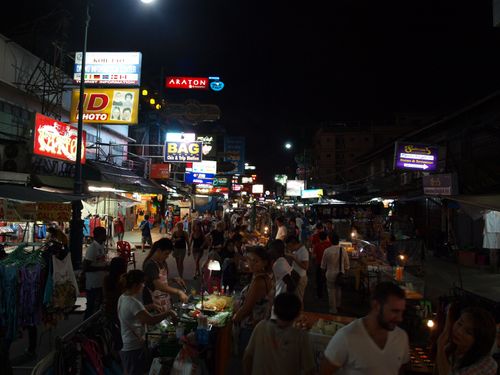
Khao San Road
Attractions
Bangkok’s backpacker carnival: curbside bars, live bands and DJs from 3pm–2am (midnight Sun). Street eats are cheap — pad thai 70–100 THB, mango sticky rice 60–100 THB. Come for wild people-watching; duck into Rambuttri for a calmer beer.
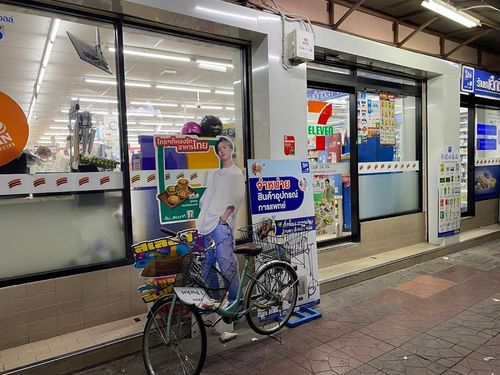
7-Eleven
Shops
Khao San’s 24/7 reset button: ice‑cold A/C, ham‑cheese toasties, All Café iced lattes, water for 7–14 THB, and late‑night supplies from snacks to sunscreen—right by Rikka Inn.
Recommended Products
More Khao San Road Guides
- How to Order Street Food in Bangkok: Thai Menu Words, Queue Etiquette, and Stall-Side Customs
- How to Order Bangkok Street Food Like a Local: Thai Phrases, Toppings, and Stall Etiquette
- How to Order Street Food in Bangkok: Menu Signs, Spicy Levels, Pay Methods, and Stall Etiquette
- Bangkok Street Food Ordering Guide: Thai Phrases, Spice Levels, and Customization Tips