How to Order Street Food in Bangkok: Menu Signs, Spicy Levels, Pay Methods, and Stall Etiquette
Order street food in Bangkok with confidence: read signs, set spice levels, pay right, and eat like a local—without overpaying or missing the best stalls.
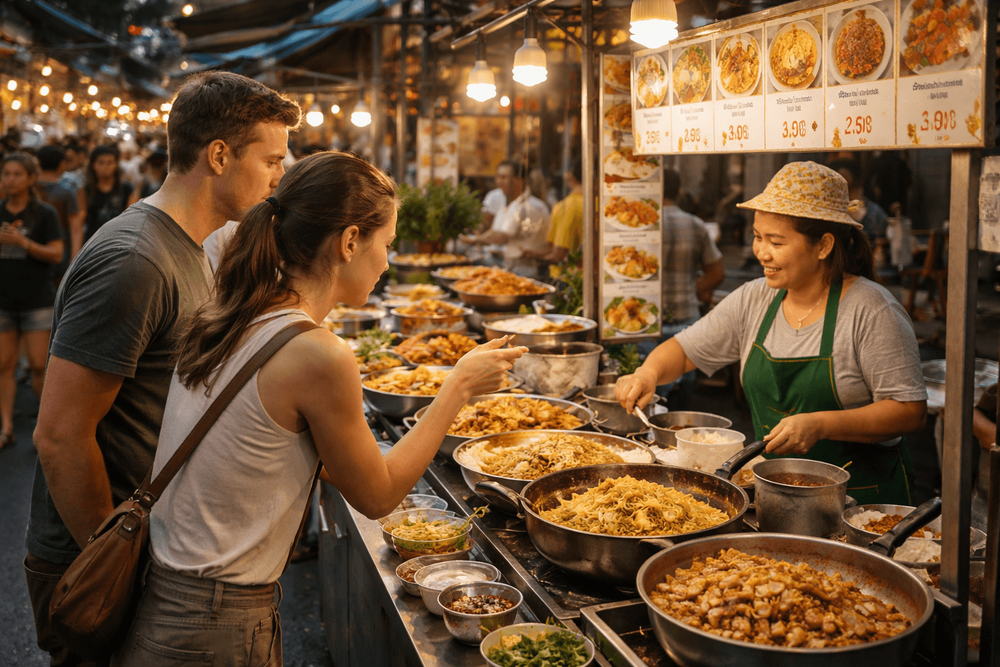
The wok flares and we flinch, laughing, as garlic and chili punch the air on Soi Rambuttri. Plastic stools scrape, ice clinks into metal cups, and a vendor barks orders over the hiss of oil. This is where we learn to order street food in Bangkok—quick eyes, quicker decisions, and a few Thai phrases that unlock the good stuff. If you’ve ever wondered how to order street food Bangkok style without freezing up at a handwritten signboard, stick with us. We’ll read the menus, choose spice levels, pay like locals, and glide through the chaos with a full belly and a grin.
How to Order Street Food in Bangkok (Without Panic)
Street food here moves fast. Cooks are focused, lines coil around carts, and everyone else seems to know exactly what to say. Our job is simple:
- Decide your base (rice or noodles), your protein, and your spice level.
- Order clearly, then step aside to let the next person order.
- Pay when your food arrives (most stalls), or before (some vendors will point to a money box).
If we blank, we point, smile, and say “Ow an-nee krap/ka” (I’ll take this, male/female). Bangkok rewards bold pointing.
Reading Menu Signs
Most stalls use a few simple formats:
- The one-dish board: A short list—pad kra pao, pad see ew, khao pad—each with a price. The vendor expects you to choose a protein: moo (pork), gai (chicken), nua (beef), goong (shrimp), pla (fish), or talay (seafood). Prices usually show as Arabic numerals (e.g., 50, 60). If you see Thai numerals, look for “๕๐” = 50.
- The noodle constellation: Photos or a list of noodle types (sen yai = wide rice noodles, sen lek = thin rice noodles, sen mee = vermicelli, ba mee = egg noodles), then a broth or dry style (naam = with soup, haeng = dry), then your protein and toppings.
- The som tam station: Mortars thud while papaya flies. You choose a style—tam thai (sweet-sour with peanuts), tam pu pla ra (fermented crab/fish funk for the bravest), or tart and clean versions. We’ll talk spice shortly.
- The grill altar: Glowing coals with skewers of moo ping (pork), gai yang (chicken), sai krok Isan (fermented sausage), liver, and mystery bits. Prices are per skewer; grab what you want, pay, and nibble while you wander.
Tip: If we can’t decipher, we glance at other plates and say, “Ow meuan nan krap/ka” (I’ll have the same as that). No shame in copycatting.
Portion Sizes and Customization
- Rice plates (khao + dish): Usually come as a single plate, 50–80 baht in local areas, 80–120 near tourist hubs like Khaosan Bar Ayutthaya Road. Add a fried egg (kai dao) for +10–15 baht. “Sai kai dao, krap/ka.”
- Noodle bowls: Street-sized—think modest. Boat noodles can be tiny on purpose (20–30 baht a bowl), so we order two or three.
- Stir-fries: You can ask for more veg (phak yuar) or less oil (nam man noy). It’s polite to keep requests simple and quick.
Spice Levels: Say Your Heat Exactly How You Like It
Chili is optional, contrary to rumor. These phrases save the day:
- Not spicy: “Mai phet.”
- A little spicy: “Phet nit noi.”
- Spicy: “Phet.”
- Very spicy: “Phet mak.”
- No chili at all: “Mai sai prik.”
For common needs:
- No fish sauce: “Mai sai nam pla.”
- No MSG: “Mai sai pong chu-rot.”
- No coriander/cilantro: “Mai sai pak chi.”
Remember, vendors want you happy. If we ask nicely and smile, they’ll usually adjust.
Handy Thai Phrases That Actually Work
- Hello: “Sawadee krap/ka.”
- I’d like…: “Ow… krap/ka.”
- How much?: “Tao rai?”
- Can pay by QR?: “QR dai mai?” (Some stalls accept PromptPay QR.)
- Thank you: “Khop khun krap/ka.”
- Delicious!: “Aroi mak!”
- Bill, please (at seated shophouses): “Gep tang krap/ka.”
Pro tip: If the cook asks a string of questions, they’re likely confirming protein, spice, egg, and eat-here-or-takeaway (kin tee nee vs. sai klong for takeaway). Just nod, point, and drop in a “chai” (yes) or “mai” (no) as needed.
What to Eat First
We’ll keep it focused—these dishes are your street-corner greatest hits.
Noodles
- Pad Thai: Fried rice noodles with tofu, egg, beansprouts, and optional shrimp. Expect 60–120 baht depending on area. Season it yourself with the table quartet: chili flakes, sugar, fish sauce, vinegar.
- Pad See Ew: Wide noodles wok-fried in dark soy with Chinese broccoli and egg. Rich, smoky, kid-friendly.
- Boat Noodles (Kuay Tiao Reua): Dark, fragrant broth bowls near Victory Monument and along certain khlongs (canal areas). Portions are tiny by design—sanuk to stack empty bowls.
- Yen Ta Fo: Pink-tinted sweet-sour soup with fish balls, morning glory, and fried tofu skin—odd color, great payoff.
Rice Plates
- Pad Kra Pao: Holy basil stir-fry with minced pork or chicken over rice, fried egg on top. Ask for “mai phet” if you’re spice-shy.
- Khao Man Gai: Poached chicken on oily rice, ginger-garlic soy sauce, with a mild broth. Comfort in 1 plate.
- Khao Moo Daeng/Moo Krob: Red pork or crispy pork on rice with a sweet gravy and half an egg. The crackle sells it.
Som Tam and the Grill
- Som Tam Thai: Balanced green papaya salad, sweet-sour. 50–80 baht.
- Som Tam Pu Pla Ra: Funky fermented notes; approach with curiosity and a bottle of water.
- Moo Ping & Gai Yang: Pork and chicken skewers lacquered in sweet smoke; 10–20 baht per stick, more for larger cuts.
- Sai Krok Isan: Juicy, slightly sour sausage—best with fresh cabbage and chilies.
Snacks and Sweets
- Khanom Krok: Coconut custard cups—hot, creamy centers. 20–40 baht per tray.
- Roti: Crispy-chewy griddle bread with banana and condensed milk, especially around Khaosan Palace Hotel. 40–80 baht.
- Mango Sticky Rice: Seasonal mango, salty-sweet coconut, pliant rice. Ask for “nam kati noy” if you like less coconut sauce.
If you want a deeper dive by craving—noodles, grills, curries—bookmark our focused picks in Bangkok’s scene here: Bangkok Street Food for Specific Cravings: Best Places for Noodles, Grilled Meat, Seafood, and Curries.
Choosing a Safe, Busy, Trustworthy Stall (Khao San Road and Beyond)
We love Khao San’s thump and theater, but the real magic often hides a soi or two away—think Phra Athit Road’s calmer curve by the river or the leafy lanes off Soi Rambuttri. Wherever we roam, we use the same checks:
- Turnover is king: Fast-moving pots mean fresher food. If skewers disappear quickly and woks never stop, we’re in.
- One-trick pros: A stall that does one dish well tends to nail it every time.
- Heat and holding: Look for food kept hot (bubbling soups, warm trays) or cooked to order. Avoid limp, room-temp seafood lounging too long.
- Water and hands: Do they handle raw and cooked items with separate tools? Is there a basin for rinsing, or prepped veg under cover? Street cleanliness varies, but simple systems signal care.
- Locals in line: Office workers at lunch or aunties with shopping bags? That’s the endorsement we want.
- Price boards visible: If prices are posted, less room for guessing. In touristy strips like Khao San, we confirm before ordering.
For night owls chasing neon and variety, our overview of late-open clusters is handy: Bangkok Street Food Night Market Guide: Best Stalls, Hours, and What to Order.
Prices, Payment, and Not Getting Overcharged
Cash rules, small bills win. Here’s what we actually spend on the street today:
- Everyday plates (stir-fries, rice + topping): 50–80 baht in local neighborhoods; 80–120 baht in tourist zones.
- Noodle bowls: 40–80 baht; boat noodles 20–30 baht each.
- Skewers: 10–25 baht per stick; larger grilled items 40–80 baht.
- Som tam: 50–80 baht; add salted egg or crab +10–20 baht.
- Drinks: Water 10–20 baht from a cart, 7-Eleven iced drinks 25–40 baht; street Thai tea/coffee 25–50 baht.
- Mango sticky rice: 60–120 baht (mango prices swing by season).
Payment:
- Cash: Always accepted. Keep 20s and 50s; breaking 1,000 baht at a street cart can earn you an eye-roll.
- PromptPay QR: Increasingly common with younger vendors and shophouses. Ask “QR dai mai?” Some stalls have a printed code near the till. International cards generally won’t work directly—if you can’t scan with a Thai wallet, carry cash.
- Cards: Rare at true street carts; more likely at semi-permanent shophouses.
Tipping:
- Not expected. Round up a few baht for great service or when you’re handed extra goodies. Smiles go just as far.
If you’re plotting a daily food budget, we’ve broken it down here: Bangkok Street Food by Budget: What to Eat for 50, 100, and 200 Baht.
Street Food Etiquette: Eat Like We Live Here
- Queue with your eyes: There’s often no rope; stand where the last person is and edge forward. If you’re waiting for takeaway, mention “sai klong” (to go) when you order.
- Share tables: If seats are scarce, we ask “wang mai?” (is this free?) and plop down politely. It’s communal by default.
- Condiments are customization, not a dare: Taste first, then adjust. That four-jar set (chili flakes, sugar, fish sauce, pickled chili vinegar) isn’t a badge of honor; it’s your toolkit.
- Utensil etiquette: Spoon is king; fork shovels into the spoon. Chopsticks for noodles, not rice plates. Don’t stab chopsticks upright into rice—that’s a funeral symbol.
- Clear space: At carts, we bus our bowls to the wash station if the owner smiles and nods. At shophouses, leave it; they’ll collect.
- Keep it quick: Peak hours are a blur. Order decisively, linger happily later.
For more unwritten rules—from peak hours to paying at the right moment—bookmark this primer: How to Eat Bangkok Street Food Like a Local: Stall Etiquette, Payment, and Peak Hours.
Hygiene Cues and When to Walk Away
Bangkok isn’t a sterile city, and that’s part of the charm. We’re realistic and a bit picky:
- Hot and fresh beats tidy but tepid.
- Watch the water used for bowls at noodle boats—most dip in boiling water before serving. Good sign.
- Covered ingredients and tongs signal care.
- If flies swarm a papaya mound or seafood naps in the sun, we skip it.
- Our kit: hand gel, tissues (napkins can be rationed), and a small pack of wet wipes.
Timing helps. We eat som tam and grill at peak turnover (early lunch 11:30–13:30; dinner 18:00–21:00). We save curry pots and slow braises for queues we trust.
Dietary Considerations: Veg, Halal, Gluten-Free
Thailand can be wonderfully accommodating if we speak the right language to the right stalls:
- Vegetarian: Say “mang-sawirat.” Many dishes can be “mai sai neua sat” (no meat) with tofu added.
- Vegan-ish (Buddhist vegan): “Jay.” During the Vegetarian Festival you’ll see bright yellow “เจ” flags—goldmine for plant-based eaters.
- Halal: Look for green Halal signs or stick to fish/chicken at mixed stalls. Southern Thai stalls often understand Halal needs.
- Gluten concerns: Most soy sauces contain wheat; ask for “mai sai si-ew” (no soy sauce) and mind fried items cross-cooked in shared oil.
- Allergy language: “Phom/Chan pae …” (I’m allergic to …). Not everyone will adjust complex dishes quickly at rush hour; noodle shops and som tam carts are more flexible.
If you have strict requirements, we’ve mapped practical options and ordering tricks here: Bangkok Street Food for Dietary Restrictions: Vegetarian, Vegan, Halal, and Gluten-Free Options.
Where to Practice: Streets We Love
- Around Khao San + Soi Rambuttri: Late-night roti, pad thai theatrics, and grills galore. For calmer vibes, drift to Phra Athit Road; the breeze off the Chao Phraya can resurrect the appetite after the afternoon’s heat.
- Tanao Road and Sam Sen Sois: More local, fewer touts, better prices. We watch what office workers order, then follow suit.
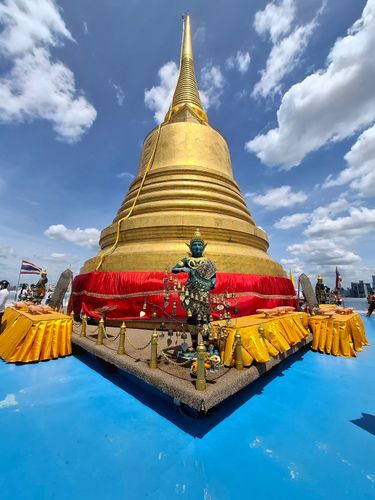
- Golden Mount area (Wat Saket Ratchawora Mahawihan): Before climbing the steps, we grab boat noodles or a cold nam manao (lime soda). After the descent, we’ve earned mango sticky rice.
We ride the Chao Phraya Express boat when we can—hop off at Phra Arthit pier and walk inland. Cheaper than a tuk-tuk and much more scenic than a cab in gridlock.
Know Before You Go
- Cash: Carry 200–400 baht in small notes for a roam. ATMs and 7-Eleven are everywhere, but fees add up.
- Heat: Bangkok eats outside. Early lunch or late dinner beats the broiler hours. Duck into 7-Eleven for an AC blast and a 14-baht water if you’re melting.
- Lines: Popular stalls sell out. If the cook shrugs and says “mot laew” (finished), pivot and find the next sizzling wok.
- BYO: Tissues, hand gel, and a reusable tote for takeaway boxes. Bonus points for collapsible chopsticks or a spoon.
- Trash: Bins appear and disappear; pocket scraps until we spot one. Vendors appreciate it.
Paying Like We Belong, Without Overpaying
- Confirm price before custom requests (extra seafood, add-ons, giant prawns). A quick “Tao rai?” avoids drama.
- If a tourist strip quotes far higher than the posted board, we smile, decline, and wander 50 meters—Bangkok rewards patience with better bowls.
- Avoid the surprise “table fee” by eating at the stall’s own stools rather than parking at a rival’s tables. If in doubt, ask “Nang tee nee dai mai?” (Can we sit here?)
If you want a compact rundown for travel days and quick bites between buses and boats, stash this in your tabs: Bangkok Grab-and-Go Street Food Guide for Transit Days: Snacks, Packable Meals, and Quick Bites.
Lonely Planet Bangkok City Map
Final Bite: Our Move Tonight
Here’s the play we love: we wander from Khao San toward Phra Athit at dusk, let the river breeze reset the thermostat, then pounce on the first pad kra pao that smells like holy basil and smoke. “Phet nit noi, sai kai dao,” we say, and wait for the sizzle. If dessert calls, it’s khanom krok eaten standing on a quiet soi while scooters purr past and someone’s stereo leaks luk thung into the khlong air. We’ll meet you there—bring small bills and an appetite.
Related Hotels & Places
Khaosan Bar Ayutthaya
Bars
Khao San Road
Attractions
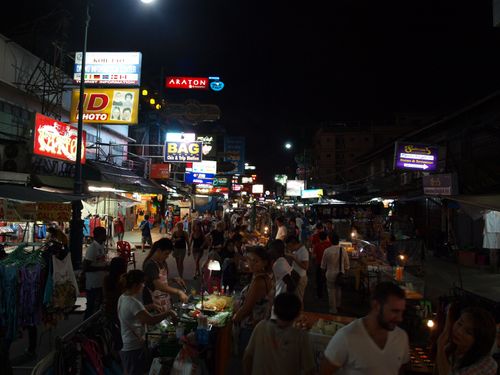
Bangkok’s backpacker carnival: curbside bars, live bands and DJs from 3pm–2am (midnight Sun). Street eats are cheap — pad thai 70–100 THB, mango sticky rice 60–100 THB. Come for wild people-watching; duck into Rambuttri for a calmer beer.
Khaosan Palace Hotel
Hotels
Khaosan Palace Hotel provides flawless service and all the necessary facilities for visitors. Stay connected with your associates, as complimentary Wi-Fi is available during your entire visit. The hotel offers reception amenities including concierge service, luggage storage and safety deposit boxes
Wat Saket Ratchawora Mahawihan
Temples
Recommended Products
More Khao San Road Guides
- How to Order Street Food in Bangkok: Thai Phrases, Stall Etiquette, and Easy Customizations
- How to Order Street Food in Bangkok: Thai Menu Words, Queue Etiquette, and Stall-Side Customs
- How to Order Bangkok Street Food: Thai Phrases, Spice Levels, and Stall Etiquette for Khao San Road First-Timers
- How to Order Bangkok Street Food Like a Local: Thai Phrases, Toppings, and Stall Etiquette