Bangkok Street Food for Dietary Restrictions: Vegetarian, Vegan, Halal, and Gluten-Free Options
Eat street food in Bangkok with dietary restrictions—vegan, vegetarian, halal, gluten- and dairy-free—using local phrases, smart swaps, and insider stall picks.
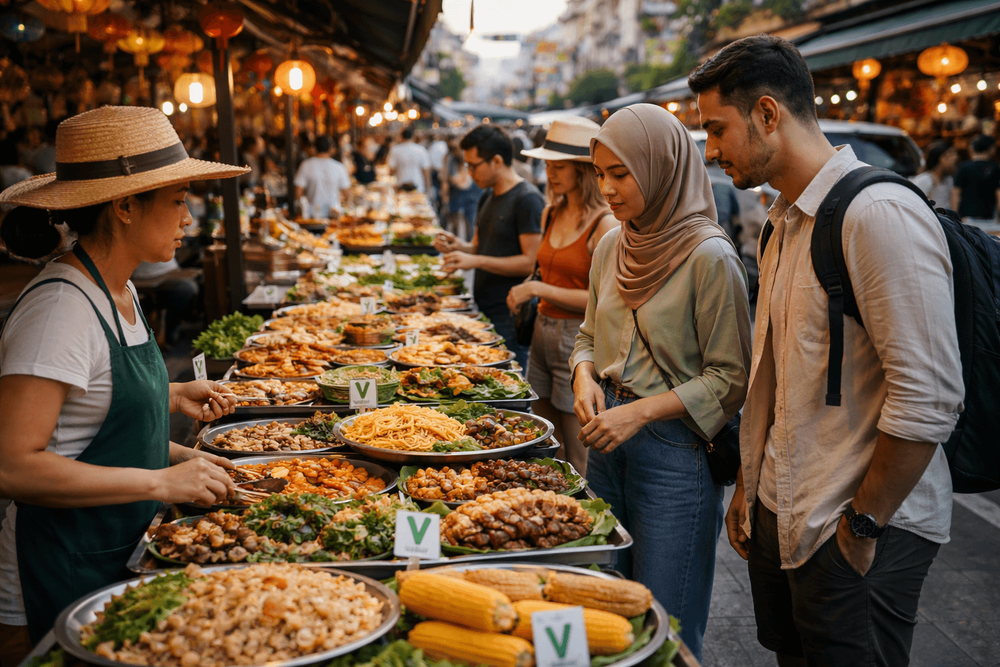
We’re shoulder-to-shoulder on Rambuttri, where the wok hits full scream and the night air smells like lime, charcoal, and a whiff of durian from the next cart. This is where Bangkok shines—and where Bangkok street food dietary restrictions can feel like a boss level. Don’t worry. We’ve learned how to eat happily here whether you’re vegan, halal, gluten-free, dairy-free, egg-free, or nut-free. We’ll order smart, point with confidence, and still chase that perfect bowl of boat noodles (or a worthy substitute).
Data Freshness + Pricing:
- Prices are approximate and in THB.
- Last checked: June 2026.
- Happy hour and promo details change frequently—confirm locally.
Bangkok Street Food Dietary Restrictions: The Big Picture
Bangkok is generous. There’s always a stall a few steps away ready to toss noodles, pound papaya, or grill meat over mangrove charcoal. But Thai cooking leans on a few stealthy flavor bombs—fish sauce, oyster sauce, shrimp paste, and meat broths—that can trip up even seasoned farang. The good news: most vendors are game to tweak if we ask early, smile, and keep it simple.
Quick reality check:
- Cross-contamination happens. Woks are reused, ladles jump pots, cutting boards see it all. We can reduce risk by choosing stalls that cook to order, asking for a cleaned pan, and watching the setup.
- “Vegetarian” in Thailand often includes fish sauce unless we explicitly say otherwise. “Vegan” is best expressed as “jay” (เจ), a familiar concept.
- Halal is widely available around mosques and in Thai-Muslim neighborhoods; look for the green crescent logo and the word ฮาลาล.
- Gluten-free isn’t widely understood; we’ll avoid sauces with wheat and stick to rice and rice noodles, checking each seasoning.
If you want a dish-by-dish shortlist focused on Khao San Road and nearby, bookmark this deep dive too: Bangkok Street Food for Diets: Vegetarian, Halal, and Gluten-Free Options.
Hidden Ingredients To Watch (And What To Say Instead)
Thai flavor comes from balance—salty, sour, sweet, spicy, umami—and the usual suspects sneak in everywhere. Here’s what to spot and how to steer.
Fish sauce (น้ำปลา nam pla)
- Where it hides: Stir-fries, dressings (som tam), soups, marinades.
- If avoiding: Ask for salt (เกลือ klua) or extra lime (มะนาว manao) instead.
- Phrase: “ไม่ใส่น้ำปลา (mai sai nam pla).”
Oyster sauce (น้ำมันหอย nam man hoi)
- Where it hides: Stir-fries like pad see ew and morning glory.
- If avoiding: Ask to season with soy (if allowed for you) or just salt and stock.
- Phrase: “ไม่ใส่น้ำมันหอย (mai sai nam man hoi).”
Shrimp paste (กะปิ kapi)
- Where it hides: Curry pastes, chili pastes, some som tam styles, fried rice.
- If avoiding: Choose stalls that pound som tam fresh; request no kapi.
- Phrase: “ไม่ใส่กะปิ (mai sai kapi).”
Meat broths and lard
- Where they hide: Noodle soups (broth is often pork or chicken), fried rice (some use lard).
- Workarounds: Ask for vegetable stock (น้ำซุปผัก nam soup phak) or water-based cooking. Many will oblige if they’re not slammed.
Soy sauce (ซีอิ๊ว si ew) and dark soy (ซีอิ๊วดำ si ew dam)
- Where they hide: Almost every stir-fry; many brands contain wheat.
- Gluten-free diners: Request no soy sauce at all and season with salt/lime/chili. If the vendor has fish sauce and you consume it, it’s usually wheat-free (confirm brand if celiac-sensitive).
- Phrase: “ไม่ใส่ซีอิ๊ว (mai sai si ew).”
Eggs, dairy, and peanuts
- Eggs: Common in pad thai, fried rice, and omelets. “ไม่ใส่ไข่ (mai sai khai).”
- Dairy: Not common in mains; watch Thai tea/coffee and roti. “ไม่ใส่นม (mai sai nom), ไม่ใส่เนย (mai sai noei).”
- Peanuts: Pad thai, some som tam, sauces. “ไม่ใส่ถั่วลิสง (mai sai tua-lisong).”
MSG (ผงชูรส pong chu rot)
- If you’re sensitive: “ไม่ใส่ผงชูรส (mai sai pong chu rot).” Many cooks will nod and adjust.
How To Communicate Your Diet In Thai (Simple, Useful Phrases)
We don’t have to be fluent—clear phrases, a smile, and pointing work wonders. Keep these in your phone notes, or ask your guesthouse on Soi Rambuttri to write a card in Thai for you.
- I’m vegetarian: “ฉัน/ผม กินมังสวิรัติ (chan/pom gin mangsawirat).”
- I’m vegan (jay): “ฉัน/ผม กินเจ (chan/pom gin jay).” This implies no animal products and often no garlic/onion; vendors know the concept.
- Is this halal?: “ร้านนี้ฮาลาลไหม (ran ni halal mai)?”
- I’m allergic to wheat/gluten: “ฉัน/ผม แพ้ข้าวสาลี/กลูเตน (chan/pom pae khao-salee/gluten).”
- Does this have fish sauce/oyster sauce/shrimp paste?: “อันนี้มีน้ำปลา/น้ำมันหอย/กะปิ ไหม (an ni mii nam pla/nam man hoi/kapi mai)?”
- Please don’t add…: “ช่วยทำแบบไม่ใส่… (chuai tam baep mai sai …).”
- No egg/milk/peanuts/soy sauce: “ไม่ใส่ไข่/นม/ถั่วลิสง/ซีอิ๊ว (mai sai khai/nom/tua-lisong/si ew).”
- Please wash the pan/wok first: “ช่วยล้างกระทะก่อน ได้ไหม (chuai laang kratha korn dai mai).”
Bonus move: Point to the condiments and say what you want: “เกลือ (klua salt), มะนาว (manao lime), พริก (prik chili), น้ำตาล (nam tan sugar).” It helps the cook rebalance flavors.
For ordering flow, local manners help. If you’re new to queueing, paying, and seating, skim our quick primer: Bangkok Street Food Etiquette: How to Order, Pay, Sit, and Eat Like a Local.
What To Eat By Diet (And What To Confirm)
We’ll keep it real, dish by dish, with quick checks before we tuck in. Prices below are approx. THB; Khao San/Banglamphu tends to be a bit higher than neighborhood markets.
Vegan / Jay (เจ)
Look for yellow-red เจ flags; many spots cook jay-friendly food year-round.
- Pad thai jay (no egg, tofu-heavy): Ask “mai sai nam pla/nam man hoi/hooi kung haeng (dried shrimp).” Expect 70–120 THB (approx.).
- Som tam made vegan: “Som tam mai sai nam pla, mai sai kapi, mai sai kung haeng.” Ask for extra lime/salt. 50–90 THB (approx.).
- Stir-fried morning glory (pad pak boong): “mai sai nam man hoi/si ew.” Ask for salt + chili. 60–100 THB (approx.).
- Mushroom or tofu stir-fries with basil/chili: Request vegan seasoning. 70–120 THB (approx.).
- Curries are tricky: Many pastes contain shrimp paste. If you find a jay stall, you’re golden; otherwise, skip.
- Desserts: Mango sticky rice (khao nieo mamuang) uses coconut milk—confirm no condensed milk drizzle. 80–150 THB (approx.). Coconut ice cream often dairy-free; ask “mai sai nom.” 30–60 THB (approx.).
If you’re staying near Khao San, we’ve mapped more veg-friendly picks here: Bangkok Street Food for Vegetarians and Vegans: What to Order Near Khao San Road.
Vegetarian (มังสวิรัติ)
Vegetarian is common but default seasonings may include fish sauce.
- Khao pad pak (vegetable fried rice): “mai sai nam pla/nam man hoi.” Add egg if you like. 60–100 THB (approx.).
- Pad see ew with tofu: Risky because of soy + oyster sauce; ask to skip both and use salt. 70–120 THB (approx.).
- Tom yum hed (mushroom tom yum): Ask for vegetable stock. 70–120 THB (approx.).
- Fresh spring rolls (por pia sod) if you find them; check the dip for fish sauce. 50–80 THB (approx.).
Halal
Bangkok’s Thai-Muslim food is a joy once you know where to look.
- Khao mok gai/neua (Thai biryani, chicken or beef): Fragrant rice, halal by default at Muslim-run stalls. 70–120 THB (approx.).
- Roti + curry (beef or chicken): Ask about butter/ghee if avoiding dairy. 30–60 THB per roti; curries 60–120 THB (approx.).
- Grilled chicken (gai yang) and beef satay: Confirm halal sourcing; look for the green logo. 15–30 THB per stick (approx.).
- Noodle soups: Many are pork-based; seek chicken/beef broth at Muslim stalls and confirm halal. 60–100 THB (approx.).
Where to hunt: around Haroon Mosque off Charoen Krung, Sukhumvit Soi 3 (Nana), and the Pratunam area (Phetchaburi Soi 7). Near the river, follow the crescent-and-star signs and headscarf-run kitchens.
Gluten-Free
Stick to rice and rice noodles; avoid soy/oyster sauces unless you confirm a wheat-free brand.
- Som tam without fish/soy sauces as required; season with lime/salt/chili. 50–90 THB (approx.).
- Grilled skewers (moo ping, gai yang)—check marinade for soy/oyster sauce; many are fish-sauce/sugar based. 15–25 THB per stick (approx.).
- Plain jasmine or sticky rice (khao suay/khao nieo) with grilled meats or stir-fried veg seasoned with salt/lime. Rice 10–20 THB (approx.).
- Rice-noodle soups (sen lek/sen yai/kanom jeen): Confirm broth and ask “mai sai si ew/nam man hoi.” 60–100 THB (approx.).
- Mango sticky rice and grilled bananas (kluay ping) are usually safe. 20–40 THB (bananas), 80–150 THB (mango sticky rice) (approx.).
Dairy-Free
Most savory Thai food is naturally dairy-free; pitfalls are drinks and roti.
- Thai tea/coffee: Ask “mai sai nom” or request with coconut milk if offered. 25–50 THB (approx.).
- Avoid roti (often butter/ghee) unless a stall can use oil. Confirm “mai sai noei.”
- Coconut-based curries over rice: Confirm no condensed/evaporated milk added (rare in mains). 70–120 THB (approx.).
Egg-Free
- Tell them “mai sai khai.” Skip oyster omelet (hoi tod), fried rice unless made without egg, and standard pad thai unless cooked egg-free.
- Rice-noodle soups and stir-fried veg without egg are easy wins. 60–110 THB (approx.).
Nut-Free
- Flag “mai sai tua-lisong.” Watch pad thai, some som tam (tam thai) and sauces.
- Massaman curry contains peanuts—avoid unless confirmed nut-free (uncommon). 70–120 THB (approx.).
- Satay sauces are peanut-based; skip the dip and squeeze lime + chili salt instead.
Where We Actually Eat (Neighborhood Intel)
We love Khao San’s chaos, but the sanuk really starts when we wander a few sois over.
- Soi Rambuttri and Phra Athit Road: Gentler vibe, plenty of made-to-order stalls. We’ll point at the wok, ask for “mai sai nam pla,” and watch them cook from scratch. The Chao Phraya breeze helps with the heat.
- River Bar - Ayutthaya (across the river from Tha Phra Athit): A lunchtime carnival of snacks; brilliant for fresh fruit, grilled meats, and made-to-order som tam. Ferries run constantly; expect crowds and glorious noise. Bring small bills.
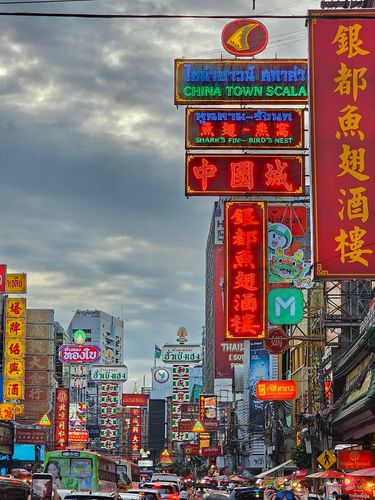
- Chinatown (Yaowarat): Nighttime goldmine but heavy on seafood, oyster sauce, and cross-contamination. We target fresh-fruit carts, chestnut roasters, grilled corn, and som tam stands that pound to order. Keep the phrases ready.
- Or Tor Kor Market (MRT Kamphaeng Phet): Clean, pricier, and ingredient-focused. Great spot to quiz vendors about sauces and pastes without the rush.
- Sukhumvit Soi 3 (Nana) and Phetchaburi Soi 7 (Pratunam): Halal clusters with biryani, roti, and grilled chicken.
If you’re staying riverside near Phra Athit, the ferry hop to Wang Lang becomes your lunch routine. Crash somewhere with decent AC—trust us, that post-market blast of cold air feels like rebirth—and keep a handwritten Thai ingredient card by the door.
Know Before You Go
- Timing: Day markets like Wang Lang hum from late morning to mid-afternoon; Khao San/Rambuttri picks up at dinner and rolls late. Chinatown pops after sunset.
- Budget: Most one-plate dishes run 60–120 THB (approx.) around Banglamphu; upscale markets like Or Tor Kor skew higher. If you want to plan a food crawl by cash, this helps: Bangkok Street Food by Budget: What to Eat for 50, 100, and 200 Baht.
- Hydration: 7-Eleven is your lifeline—grab bottled water and bask in the AC blast between stalls.
- Heat and hygiene: Choose busy vendors with high turnover and hot pans. Our full checklist is here: Bangkok Street Food Safety Guide: How to Choose Clean, Fresh Stalls Like a Local.
- Cash and cues: Keep small notes; watch how locals order, then mimic.
- Back-pocket plan: If a stall looks uncertain, thank them—“khop khun”—and pivot. There’s always another wok.
Getting There (Khao San And Beyond)
- To Rambuttri/Phra Athit: Chao Phraya Express Boat to Phra Arthit Pier (N13); walk 5–10 minutes to the food action. Tuk-tuks will offer “special” routes—decline politely unless you’re in the mood for a spin.
- To Wang Lang Market: Cross-river ferry from Phra Arthit or Tha Chang; fares are cheap (approx. 5–15 THB). Follow the crowd and the smell of frying shallots.
- To Chinatown (Yaowarat): MRT to Wat Mangkon Kamalawat (Wat Leng Noei Yi); you’ll surface right into the neon. Bring patience and napkins.
- To Or Tor Kor: MRT to Kamphaeng Phet; the market sits opposite Chatuchak. Cleaner stalls, clear labeling, and a calmer pace.
Smart Habits That Make It Easy
- Ask first, then order. Say your restriction before the dish name: “Gin jay… pad thai, mai sai nam pla.”
- Watch the setup. Separate cutting boards, a fresh oil bottle, and a clean pan are green flags.
- Simplify the dish. The fewer sauces, the fewer surprise ingredients.
- Confirm at the finish. A quick “mai sai nam pla chai mai?” while they plate can save the day.
- Carry a Thai card. Handwritten by a local or printed from your phone—vendors appreciate clarity.
- Be flexible. If it feels iffy, skip it and grab grilled chicken, fruit, or sticky rice to keep you going.
We’ll be back out tonight, drifting from Phra Athit’s river breeze to a mortar-and-pestle rhythm on a quiet soi. We’ll ask, point, taste, and nod—and when the cook nails it, we’ll be those people going back for seconds.
Related Hotels & Places
Khao San Road
Attractions
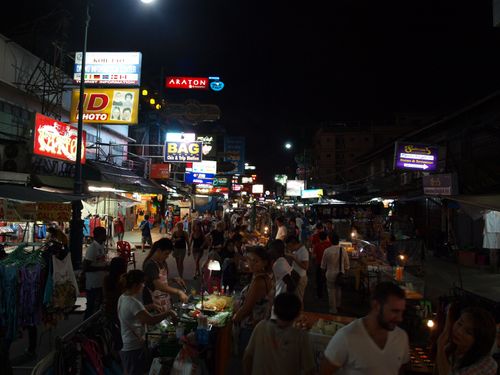
Bangkok’s backpacker carnival: curbside bars, live bands and DJs from 3pm–2am (midnight Sun). Street eats are cheap — pad thai 70–100 THB, mango sticky rice 60–100 THB. Come for wild people-watching; duck into Rambuttri for a calmer beer.
Rambuttri
Markets
Khao San’s calmer cousin: a tree‑shaded lane of VW van cocktail bars, open‑air foot massages, pad thai grills, and easygoing live bands. Best from sunset to 11pm; beers 80–120 THB, cocktails 150–220 THB. One block from the chaos, all the charm.
River Bar - Ayutthaya
Bars
THE COFFEE CLUB - Koh Phi Phi
Cafes
Wat Mangkon Kamalawat (Wat Leng Noei Yi)
Temples
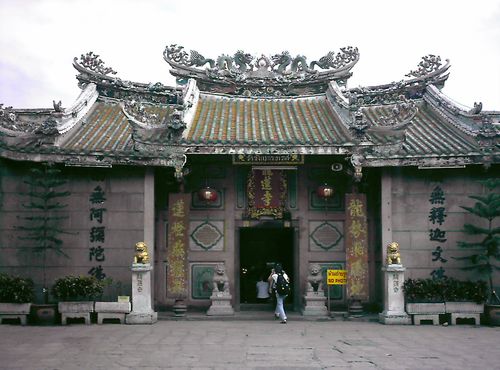
Chinatown’s grand Chinese Buddhist temple—smoky incense, red lanterns, and gilded altars. Free entry, donations welcome. Best early morning; electric during Lunar New Year and the Vegetarian Festival. Steps from MRT Wat Mangkon, 8am–5pm daily.
Chinatown Bangkok (Yaowarat)
Attractions
Neon, woks, and queues: Yaowarat is Bangkok’s street‑food strip. Start at Wat Mangkon MRT, graze T&K Seafood and Nai Ek’s peppery guay jub, snag toasted buns, and finish with mango sago at Sweet Time. Best 6pm–late; ~10‑minute taxi from Khao San.
More Khao San Road Guides
- Bangkok Street Food for Diets: Vegetarian, Halal, and Gluten-Free Options
- Bangkok Street Food by Diet: Halal, Gluten-Free, and Dairy-Free Options Near Khao San Road
- Bangkok Street Food for Dietary Needs: Vegetarian, Vegan, Gluten-Free, and No-Pork Tips
- Bangkok Street Food for Gluten-Free Eaters: Safe Dishes, Common Risks, and Order Phrases