
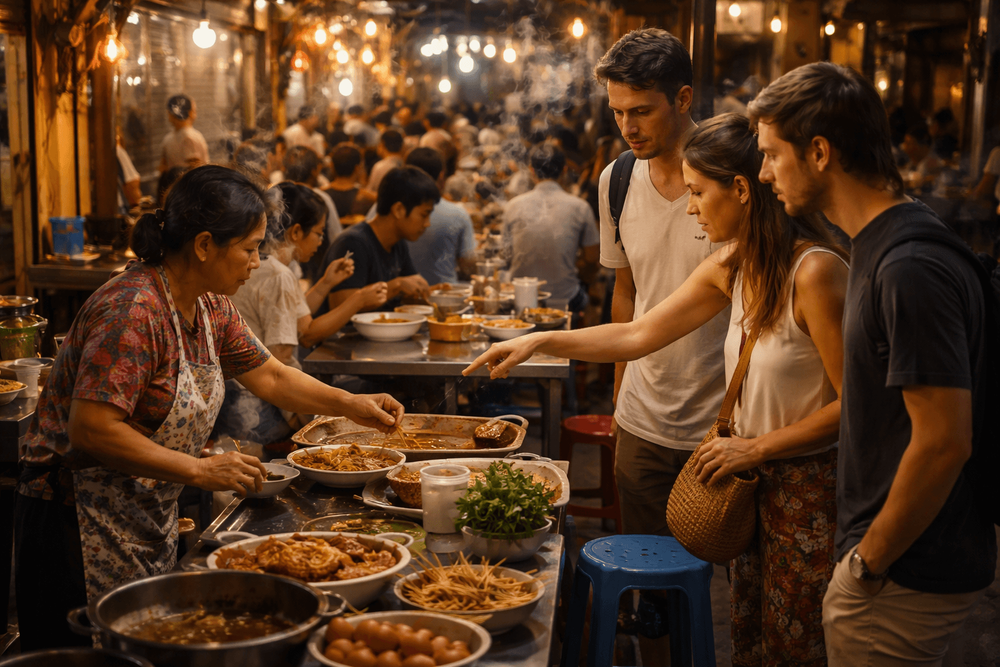
Bangkok Street Food Etiquette: How to Order, Pay, Sit, and Eat Like a Local
Order fast, sit smart, pay right: our Bangkok street food etiquette guide shows how to eat like a local—politely, safely, and with maximum sanuk.
We’re shoulder-to-shoulder on Yaowarat Chinatown Heritage Center, the grills are hissing, and someone behind us is chanting moo ping, moo ping, moo ping like a prayer. A wok roars; fish sauce hits hot metal and perfumes the night with that funky-sweet thunder Bangkok does best. This is where bangkok street food etiquette matters—not because anyone’s uptight, but because when you know the dance, the city feeds you faster, cheaper, and with more smiles than a 7-Eleven freezer on a steamy afternoon.
Bangkok Street Food Etiquette: The Basics
Think of a stall like a tiny, efficient spaceship. There’s a pilot (the cook), a copilot (who plates and takes cash), and an orbit of hungry farang and locals. Our job? Keep the orbit moving.
- Scan the setup first. If there’s a loose queue, join it. If it’s a cluster, catch the vendor’s eye and be ready with your order—don’t dither in front of the wok.
- Order quickly, then step aside. Point and say, “ao nee,” which means “I’ll take this one,” or name the dish. After ordering, slide left or right so the next person can approach.
- Don’t hover over the wok. Heat, oil, and elbows fly. Give the cook space and the rhythm stays smooth.
- If there’s a separate seating area, secure a seat with a tissue packet or water bottle, then return to the stall to order—or ask, “kin tee nee dai mai?” (Can we eat here?).
- Share tables without fuss. Smile, nod, and squeeze in. Bangkok isn’t shy; it’s efficient.
Prices are almost always posted, and they’re non-negotiable. Street dishes run 40–80 baht; seafood or specialty bowls may be more. Haggling over a 10-baht egg won’t make you friends.
How to Order Like We’ve Been Here Before
We’ll be honest: ordering is a tiny performance. Nail your line, hit your mark, and everything hums.
- State the dish, size, and spice: “kuay tiao moo tom yum, phet nit noi” (tom yum pork noodles, a little spicy). If you want no spice: “mai phet.”
- For rice toppings: “khao kra pao moo, kai dao” (holy basil pork on rice, add a fried egg). The crisp egg is never a mistake.
- Point for clarity. If there’s a display of curries, just “ao nee” with a point does the trick.
- Takeaway vs. eat-in: say “ao glap baan” for to-go, or gesture to the tables and say “kin tee nee.”
- If there’s a number system, take a ticket. If not, the vendor will remember your face and shirt color with Jedi powers. Trust the process.
When your order is ready, you’ll hear your dish style or a wave in your direction. No one’s precious about names here—just food.
Seating, Sharing Space, and Leftovers
Street seats range from tiny plastic stools framed by potted plants to a metal table under a buzzing neon sign. The rules:
- Claiming a seat: a napkin packet = “taken.” If in doubt, ask, “yoo mai?” (Is someone sitting here?).
- Share tables generously. Keep your bag between your feet, not in the aisle. Feet are considered low and a bit taboo—don’t prop them on stools.
- Condiment etiquette: that caddy with chili flakes, sugar, fish sauce, and vinegar isn’t decoration. Season to taste, then return spoons and tongs back to their containers, not your bowl.
- Chopsticks vs. spoon/fork: Noodles get chopsticks and a soup spoon. Rice dishes? Spoon in right hand, fork in left to push. Don’t stick chopsticks upright in rice—that’s for funerals.
- Leftovers: many stalls are happy to bag your unfinished food. Say “khor sai tuung” (please put in a bag) and hand over the bowl. If there’s no bin visible, return plates, skewers, and shells to the vendor or staff—they’ll love you for it.
Payment and Tipping Without Awkwardness
Most vendors prefer you pay when your food arrives or right after you finish. If you’re not sure, just ask with a smile and a “gep dtang dai mai?” (Can I pay now?).
- Cash is still king. Bring small bills (20s, 50s, 100s) and coins. Hand cash with your right hand; a light left-hand touch on your forearm reads extra polite without the formality of a wai.
- QR payments: look for a blue or white PromptPay QR by the register. Ask “mee QR mai?” (Do you have QR?). Not every stall has it yet, but it’s growing.
- Tipping: not expected. Rounding up 5–10 baht is a small kindness, and dropping coins into a tip tub—if present—is nice. Keep the big tipping energy for sit-down restaurants.
Hygiene, Food Safety, and Cultural Do’s and Don’ts
Bangkok’s street food is famously fresh because turnover is fast. Still, we play it street-smart. For a deeper dive on picking clean stalls, our full guide is here: Bangkok Street Food Safety Guide: How to Choose Clean, Fresh Stalls Like a Local.
- Look for heat and traffic. A hot wok and a short wait beat a lonely vat of lukewarm curry.
- Watch water use. If they rinse plates with running water or replace plastic liners often, you’re golden. Communal chopsticks or utensils should be stored tips-down.
- Bring tissues and hand sanitizer. Napkins are tiny and rare. A pocket pack saves you from chili-fish-sauce fingerprints.
- Ice is normal. Those big metal coolers churn out safe, delivered ice. If you’re nervous, order bottled drinks.
- Allergies: Say “phom/chan pae …” (I’m allergic to …) plus the ingredient. For shellfish: “kung” (shrimp), “hoi” (shellfish), “pla” (fish), “talay” (seafood). If it’s serious, consider skipping busy rushes when miscommunication risks go up.
- Cultural cues: don’t touch anyone’s head (even a cute kid), don’t point your feet at monks, and keep PDA mild around family-run stalls.
Phrases and Gestures That Open Doors (and Woks)
No one expects perfect Thai, but a few words flip the switch from tourist to temporary regular.
- Greetings: “sawadee krub/ka” (hello). You don’t need to wai to vendors; a smile and nod are perfect.
- Please/thank you: “khor na krub/ka” (please/excuse me), “khob khun krub/ka” (thank you).
- Ordering: “ao …” (I’ll take …), “ao nee” (this one), “mai phet” (not spicy), “phet nit noi” (a little spicy).
- Money talk: “tao rai?” (how much?), “gep dtang dai mai?” (bill, please?), “mee QR mai?” (do you take QR?).
- Seating: “kin tee nee dai mai?” (can we eat here?), “yoo mai?” (is this seat taken?).
- Takeaway: “ao glap baan” (to go), “khor sai tuung” (put it in a bag, please).
Deliver these with a grin and a nod. Bangkok runs on sanuk—fun in the doing—and your effort counts.
Public Market Manners: Moving, Browsing, Buying
In the tight lanes of Wang Lang, Or Tor Kor, or along Soi Soi Sukhumvit 50 hostel, flow matters.
- Keep the aisle clear. Step up to the stall to order, then step back to let traffic pass—especially in narrow khlong-side markets.
- Photo politely. Vendors are proud of their craft, not props. Ask with a smile, or shoot from the side if they’re mid-flambé.
- Sample with intention. If a vendor offers a bite, great—don’t treat it like a buffet. Buy or thank them and move on.
- Outside drinks: Most stalls are chill if you bring a bottle of water or a Thai tea from next door. Just don’t spread a picnic at a vendor’s table without ordering from them.
- Noise and music: The thump from a Khao San Road bar is part of the soundtrack, but keep your own speaker in your bag.
Eating Respectfully After Dark
Night is when Bangkok purrs. Chinatown lights up, Victory Monument’s noodle boats keep scooping, and the grills on Phra Athit Road perfume the river breeze. If you’re plotting a nocturnal feast, peek at Bangkok Night Street Food Guide for what opens when the sun ducks out.
- Late-night tempo: Stalls get slammed after 9 pm. Be decisive. If a vendor waves you to sit, sit; they’ll find you when the bowl’s ready.
- Booze rules: Some markets don’t allow alcohol at the tables; others are BYO with a side-eye. If unsure, ask. 7-Eleven sells beer, but crack it where it’s welcome.
- Keep bills small. Vendors may be cash-light near closing.
Know Before You Go
- Time of day shapes the menu. Morning means jok (rice porridge), grilled pork skewers, and soy milk; lunch is curries and rice; nights bring the grills and noodles. Early birds can graze with our Bangkok Morning Street Food Guide: Best Breakfast Stalls, Markets & Early Eats.
- Getting around: The Chao Phraya Express boat drops us near Phra Athit for riverside snacks; the MRT gets us to Wat Mangkon Kamalawat (Wat Leng Noei Yi) for Chinatown; BTS to Victory Monument for noodle boats. Tuk-tuks are fun for short hops—agree on a price first and skip “special tours.”
- Heat strategy: Eat early or late, seek shade, and chase stalls with fans. The blast of AC from a 7-Eleven is a legit pit stop.
- Cash commonsense: ATMs love to spit 1,000s; vendors don’t love to break them. Change down at a convenience store before you hit the stalls.
Supporting Vendors Without Being That Person
Bangkok runs on small family businesses. A few thoughtful moves go a long way.
- Don’t bargain on food. Those prices are already local. Smile, pay, enjoy.
- Clean as you go. Stack plates, keep skewers tidy, and wipe spills if there’s a rag on the table.
- Be mindful with dietary requests. “Mai phet” is common; asking for heavy substitutions at a slammed stall slows the line. If you’ve got complex needs, choose a quieter time or a sit-down shophouse.
- Respect halal and vegetarian signs. Don’t plop your grilled pork down at a halal stall’s table.
- Skip the stall-shaming. If a dish isn’t your thing, move on. Someone else will love it—and probably be sitting two stools over.
Extra Tips to Blend In
- Carry a reusable tote. Those styrofoam clamshells multiply fast; a tote reduces the stack and keeps sauces upright.
- Learn the condiment code: sugar for balance, fish sauce for salt, dried chili for heat, vinegar with chilies for zing. Taste first; season second.
- Slurping noodles? Go for it. It’s normal—and keeps your lips from becoming chili napalm.
- Garbage goes in the “thung khaa yaa” (trash bin). If you don’t see one, hand your trash to the stall after eating.
- Monks and elders get priority seating. If a seat opens and you’re both eyeing it, offer it with a smile. Good karma tastes like extra pork crackling.
When Things Get Confusing
Bangkok’s chaos is choreographed, but we all miss a step. If the vendor forgets you, catch their eye and gently repeat your dish, or point to your order slip if you snagged a number. If your bowl arrives wrong and you can handle it, roll with it; if not, a soft “mai chai, khao/nee” (not this/that) plus a smile keeps everyone cool.
If food safety nerves kick in—especially on your first night—pick stalls with constant turnover and a short menu. When in doubt, we follow our own checklist from the Bangkok Street Food: Best Dishes, Where to Eat & Traveler Tips and the dedicated Bangkok Street Food Safety Guide: How to Choose Clean, Fresh Stalls Like a Local.
Blending Into Different Neighborhoods
- Khao San & Soi Rambuttri: Tourist-heavy but still tasty. Expect laminated menus and slightly higher prices. Etiquette is relaxed; staff speak solid English. Move aside quickly after ordering so the backpacker conga line can keep flowing.
- Phra Athit Road: Quieter, river-breezy, with shophouse stalls that appreciate patient ordering and exact change.
- Yaowarat (Chinatown): Fastest woks in town. Queue discipline is real—don’t cut, don’t camp a table before ordering unless the staff waves you in.
- Victory Monument: Noodle-boat central. You’ll often pay bowl-by-bowl as they stack on your table. Signal you’re done by asking “gep dtang” and counting bowls together.
A Word on Weather, Crowds, and Patience
Bangkok gives us the heat, the crowds, and the sizzle—and that’s the point. If it’s sweltering, pivot to soup-free dishes or grilled skewers. If a line is long, it’s probably worth it—but snack on a mango sticky rice or a bag of fried chicken skins while you wait. This city rewards curiosity and kindness.
Final Bite
Bangkok street food etiquette isn’t a rulebook; it’s a rhythm. Step forward, order with confidence, slide aside, share a table, and pay with a grin. Do that, and doors open: the vendor tosses an extra handful of basil, the auntie hands over a perfect soft-boiled egg, the guy at the next stool tips you off to the best boat noodles by Victory Monument. Stick with us—we’ll chase the next late-night wok together.
Related Hotels & Places
Yaowarat Chinatown Heritage Center
Attractions
Inside Wat Traimit by Chinatown Gate, this tidy museum charts Yaowarat’s Chinese roots with bilingual displays, period photos and short films. Open Tue–Sun 8:30am–4:30pm; closed Mon. Pair it with the Golden Buddha upstairs.
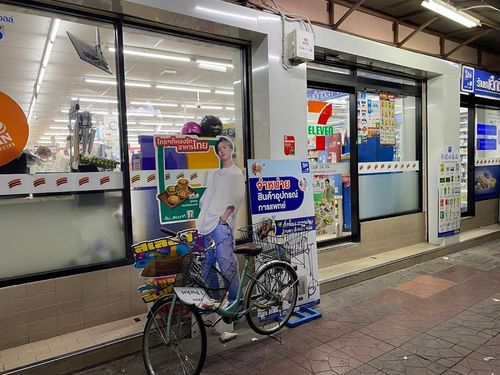
7-Eleven
Shops
Khao San’s 24/7 reset button: ice‑cold A/C, ham‑cheese toasties, All Café iced lattes, water for 7–14 THB, and late‑night supplies from snacks to sunscreen—right by Rikka Inn.
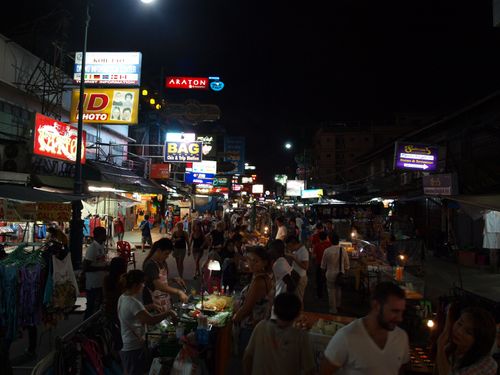
Khao San Road
Attractions
Bangkok’s backpacker carnival: curbside bars, live bands and DJs from 3pm–2am (midnight Sun). Street eats are cheap — pad thai 70–100 THB, mango sticky rice 60–100 THB. Come for wild people-watching; duck into Rambuttri for a calmer beer.
Sukhumvit 50 hostel
Hotels
A 2-star hotel in Bangkok.
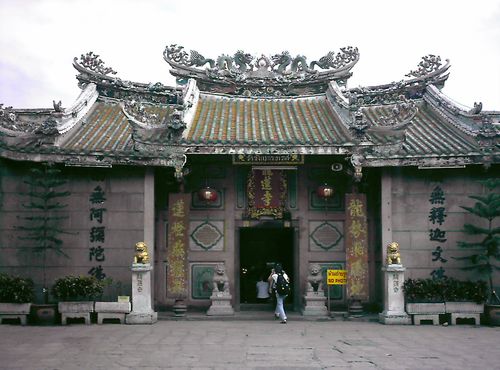
Wat Mangkon Kamalawat (Wat Leng Noei Yi)
Temples
Chinatown’s grand Chinese Buddhist temple—smoky incense, red lanterns, and gilded altars. Free entry, donations welcome. Best early morning; electric during Lunar New Year and the Vegetarian Festival. Steps from MRT Wat Mangkon, 8am–5pm daily.
The Bar Talk
Bars
Low-lit cocktail bar in Khao Takiab where the playlist stays soft and the drinks do the talking. Classics or off‑menu mixes on request, ฿180–280. Open 5pm–midnight Tue–Sun; closed Mon.
More Khao San Road Guides
- How to Eat Bangkok Street Food Like a Local: Stall Etiquette, Payment, and Peak Hours
- Bangkok Street Food for First-Time Visitors: How to Order, Pay, and Eat Safely
- How to Order Bangkok Street Food Like a Local: Thai Phrases, Toppings, and Stall Etiquette
- How to Order Street Food in Bangkok: Thai Menu Words, Queue Etiquette, and Stall-Side Customs