

Best Bangkok Street Food Markets Beyond Khao San Road: Where to Eat Like a Local
Eat like a local at Bangkok’s best street food markets—Chinatown to Jodd Fairs, Wang Lang to Or Tor Kor—with tips on what to eat, prices, hours, and how to go.
We hit the pavement just as the sky turns guava-pink and the first woks flare. The air is a collage: garlic in hot oil, charcoal smoke, fish sauce funk, and the sweet rot of durian sneaking out from a cart. This is where Bangkok sings—in its street food markets. If you want to eat like a local, skip the laminated menus and follow the sizzle. In this guide to bangkok street food markets, we’re hopping neighborhoods—river piers, MRT stations, and vintage train yards—to show you where to eat well without the tourist markup.
What Bangkok street food markets are—and why they matter
Bangkok runs on talat (markets). They’re the city’s circulatory system: morning wet markets piled high with herbs and writhing shrimp; lunchtime alleys serving quick bowls to office workers; neon night markets where students, aunties, and late-shift taxi drivers graze until midnight. A market is more than a place to eat—it’s where Bangkok gossips, bargains, and breathes. It’s sanuk (fun) and functional.
- Time of day shapes the menu. Mornings mean soy milk, pa tong go (dough sticks), and khao man gai (chicken rice). Afternoons are for noodles and curries. Nights bring skewers, seafood, and desserts.
- Prices are democratic. Expect 40–80 baht for noodles or rice, 10–20 baht per grilled moo ping (pork skewer), 60–120 baht for seafood snacks. Tourist-heavy strips can creep higher; local markets stay friendly.
- The cast never stops changing. Stalls move, reinvent, disappear, and pop up again one soi over. That’s half the fun.
If you want a primer on staple dishes and how to order like you’ve done this before, our companion overview has you covered: Bangkok Street Food: Best Dishes, Where to Eat & Traveler Tips.
The best Bangkok street food markets beyond Khao San Road
We love Khao San for people-watching and a late-night pad thai sprint, but most of the city’s flavor lives beyond that backpacker bubble. Here’s where we actually eat.
Yaowarat Chinatown Heritage Center (Chinatown) Night Market — the after-dark icon
When the neon dragons flicker on along Yaowarat Road, the wok smoke thickens and we start to prowl. You’ll find charcoal-grilled seafood, peppery guay jub (rolled rice noodle soup), sticky-sweet khanom bueang (crisp crepes), and pomegranate juice that stains your fingers ruby.
- Hours: Roughly 6 pm–midnight; Fridays and weekends are shoulder-to-shoulder.
- Getting there: MRT Wat Mangkon is your pressure-release valve; pop up and follow the crowd.
- What to order: Oyster omelette (hoy tod), roast duck over rice, black pepper stir-fries, bird’s nest if you’re feeling fancy.
Planning a dedicated crawl? We broke down the best lanes and queues here: Where to Eat Street Food in Yaowarat: Bangkok’s Chinatown Night Market Guide.
Jodd Fairs (Rama 9) — curated, buzzy, easy to love
This is the slicker evolution of the old Ratchada “train market”: fairy lights, live music corners, and row after row of photogenic eats. Yes, there’s a ring light per table, but the food hits—lava omelettes, crispy pork belly bites, wagyu-on-rice, mango sticky rice done right.
- Hours: Daily, late afternoon till around 11 pm.
- Getting there: MRT Phra Ram 9, then a short walk behind Central Marina Outlet—just follow the snack skewers.
- What to order: Leng saap (volcanic pork spine soup) to share, grilled squid, Thai milk tea soft serve if it’s sweltering.
Talad Rot Fai Srinagarindra — vintage vibes, big flavors
Further out but worth the BTS + taxi hop, this “train market” sprawls with retro antiques and proper street eats. It’s where we graze on Isan salads, charcoal chicken, and Thai-Japanese mashups between rummaging through vinyl.
- Hours: Typically Thu–Sun, evenings to late.
- Getting there: BTS Udom Suk, then a short cab or Grab—tell the driver “Talad Rot Fai Srinagarindra.”
- What to order: Gai yang (grilled chicken) with som tam and sticky rice; coconut ice cream in a coconut shell.
Or Tor Kor Market — premium produce, perfect plates
Opposite Chatuchak, this clean, organized market is where Bangkok’s best fruit and curry pastes line up like jewelry. It’s not the cheapest, but the quality is chef-grade.
- Hours: Daily, morning to late afternoon (go before 4 pm for full selection).
- Getting there: MRT Kamphaeng Phet, Exit 3 drops you inside.
- What to order: Hor mok (steamed curry custard), khao klook kapi (shrimp paste rice), grilled river prawns, and the sweetest durian when it’s in season.
Wang Lang Market — riverside snacking with soul
Across the Chao Phraya from the Grand Palace, Wang Lang is a labyrinth of snack lanes feeding students and hospital staff. The soundtrack is oil bubbling and longtail boats revving.
- Hours: Daytime to early evening; best on weekdays.
- Getting there: Hop the Chao Phraya Express to Wang Lang (Prannok) Pier; it’s steps from the action.
- What to order: Fried chicken dusted with herbs, khanom krok (coconut cups), moo ping, and banana roti for dessert.
Talat Phlu — Thonburi’s old-school comfort food
A neighborhood market with heritage sweets and grills that make us linger. If you like it local and low-key, this is your dinner.
- Hours: Late afternoon to night.
- Getting there: BTS Talat Phlu, then walk or take a short songthaew; food lines the streets near the old railway.
- What to order: Kuay teow khua gai (wok-tossed chicken noodles), Chinese-Thai desserts wrapped in banana leaf, pork satay with crunchy pickles.
Pratunam & Phetchaburi Soi 19 — breakfast to lunch fuel
In the shadow of fashion malls, you’ll find stellar office-worker food. Lines move fast, and the turnover keeps everything fresh.
Hours: Early morning through lunch; stalls wind down mid-afternoon.
Getting there: BTS Chit Lom or Ratchathewi, or Airport Rail Link Ratchaprarop.
What to order: Khao man gai (chicken rice), boat noodles in tiny bowls, Thai iced coffee (o-liang) to survive the heat.
Victory Monument Boat Noodles — the slurp zone
Not a “market” by stalls but an ecosystem of noodle shops clustered around the canal. We’re here for tiny bowls stacked high—order four, then five more.
- Hours: Late morning to late afternoon.
- Getting there: BTS Victory Monument; follow Soi 3 toward the canal.
- What to order: Guay tiew ruea (boat noodles) with pork or beef, thickened with blood for depth; chicharrón-like pork rinds on top.
Bang Rak & Charoen Krung — Bangkok’s delicious heritage strip
This is where Thai-Chinese classics, Muslim roti, and roast-duck institutions share the same pavement.
- Hours: All day; many street spots peak lunch and early evening.
- Getting there: BTS Saphan Taksin; walk up Charoen Krung or hop the orange flag boat to Central Pier.
- What to order: Roti mataba (stuffed roti), roast duck, peppery Thai-Chinese stir-fries, pandan desserts.
Huai Khwang Night Market — late-night local energy
When other places dim, Huai Khwang hums. Under bright LEDs, trays of seafood, Isan grills, and dessert carts keep the neighborhood fed.
- Hours: Evening to late night.
- Getting there: MRT Huai Khwang puts you in the thick of it.
- What to order: Larb moo (herbed minced pork salad), grilled tilapia in salt crust, nam tok, and fresh sugarcane juice.
Khlong Toei Market — Bangkok unfiltered
Raw, real, and not for the squeamish, Khlong Toei is the city’s biggest fresh market. Among the butchers and baskets of chilies, you’ll find bowls and plates that slap.
- Hours: Early morning is prime; many cooked stalls wrap by midday.
- Getting there: MRT Queen Sirikit National Convention Centre; it’s a short walk.
- What to order: Stir-fried morning glory, crispy pork with basil, grilled seafood; grab fruit for later.
Signature dishes, snacks, and drinks to hunt down
Let’s build your hit list for bangkok street food markets. Mix these across neighborhoods and times of day.
- Moo ping + khao neow: Caramel-edged pork skewers over charcoal, sticky rice as your napkin. 10–20 baht a stick.
- Som tam: Papaya shredded to confetti with lime, fish sauce, and chilies. Ask for “phet nit noi” (a little spicy) if you’re new.
- Guay tiew: Noodle soups from clear broth to tom yum. Customize with herbs, chili flakes, vinegar.
- Pad kra pao: Holy basil stir-fry, ideally pork or crispy pork, fried egg bleeding sunshine on top.
- Hoy tod: Oyster omelette, crunchy-chewy with a chili dip that wakes you up.
- Khao man gai: Poached chicken, rice cooked in broth, with ginger-garlic sauce that could start wars.
- Sai krok Isan: Fermented pork sausages, snappy and sour, with cabbage and chilies.
- Khanom bueang: Crispy crepes with sweet coconut cream or savory shrimp.
- Khanom krok: Coconut-rice custard cups, hot from the cast-iron pan.
- Mango sticky rice: Ubiquitous for a reason; best when mango is in-season (roughly Feb–June).
- Drinks: Cha yen (Thai iced tea), cha manao (lemon tea), nam manao (lime soda), fresh coconut, or chrysanthemum tea. Beer? Singha or Leo, plastic cup, no judgment.
If you’re timeline-driven eaters, plan your day with this handy breakdown: Bangkok Street Food by Time of Day: Breakfast, Lunch, Dinner and Late-Night Eats.
Know before you go: practical tips that actually help
We’ve sweated, queued, and learned a few things so you don’t have to.
- Peak hours and crowds: 11:30 am–1:30 pm for office lunch zones; 6–9 pm at night markets; Chinatown surges Friday–Sunday. Go early to snag seats or graze while you queue.
- Hygiene without paranoia: Follow the line, watch turnover, look for hot food cooked to order. If you need a checklist, bookmark our Bangkok Street Food Safety Guide: How to Choose Clean, Fresh Stalls Like a Local.
- Prices and payment: Most plates 40–120 baht; seafood and specialty items cost more. Cash is king, but more vendors accept QR PromptPay—still carry small bills and coins.
- Ordering: Point, smile, and use keywords: “moo” (pork), “gai” (chicken), “neua” (beef), “talay” (seafood). Spice levels: “mai phet” (not spicy), “phet nit noi” (a little), “phet mak” (very). Allergies? Say “mai sai” (don’t add) then the ingredient.
- Seating: Markets are fluid. Sit where there’s space; staff will spot you. Return plates to the tray tower when you stand.
- Transport: BTS/MRT gets you near most markets. For river spots, the Chao Phraya Express boat beats traffic and comes with a breeze. Tuk-tuks are fun but agree on a price first.
- Heat and rain: Bangkok is a sauna. Dress light, hydrate, and duck into 7-Eleven for that blessed AC between stalls. In rainy season, pick markets with canopies or food courts (Or Tor Kor, parts of Jodd Fairs).
- Etiquette: Queue, don’t block the wok, don’t haggle over 10 baht, and toss trash in bins. A quick “khop khun krub/ka” (thank you) goes far.
Accommodation note: If we’re doing a Chinatown-heavy week, we book something walkable to MRT Wat Mangkon so we can roll home post-yao (late night). For night markets like Jodd Fairs, staying along the MRT Blue Line makes life simple. Near the river? Base yourself by a pier and let the boat be your Uber.
How to choose your market by vibe, location, and appetite
Bangkok’s markets are flavors with personalities. Pick your match.
- For neon nights and easy logistics: Jodd Fairs (Rama 9). Instagram-friendly, broad menus, simple MRT access. Great for groups and first-timers.
- For heritage and hardcore eats: Yaowarat and Bang Rak/Charoen Krung. You want old recipes, big flavors, and a crash course in Thai-Chinese Bangkok.
- For daytime grazing: Wang Lang (riverside snacking), Or Tor Kor (premium, spotless), Pratunam (fast, cheap classics), Victory Monument (boat noodles—stack those bowls).
- For local neighborhood feels: Talat Phlu’s Thonburi streets or Huai Khwang’s late-night sprawl—less polished, more character.
- For treasure-hunt nights: Talad Rot Fai Srinagarindra with vintage shopping + Isan grills under the bulbs.
Questions to ask yourself before you hop the BTS:
- How far do we want to ride? If you’ve got limited time, pick markets on the BTS/MRT spine—Yaowarat (MRT), Jodd Fairs (MRT), Bang Rak (BTS + boat).
- Do we care about seating? Or Tor Kor and Jodd Fairs have more organized seating; Chinatown is curb-and-stool living.
- Are we seafood people? Chinatown and Jodd Fairs win for variety; Khlong Toei slays on freshness if you don’t mind the chaos.
- Traveling with kids or elders? Aim for earlier hours and markets with clearer walkways and bathrooms (Or Tor Kor, Jodd Fairs). Sidewalk mazes like Yaowarat can be thrilling but intense.
- Budget mood? You’ll eat well anywhere, but neighborhood markets (Talat Phlu, Huai Khwang, Pratunam) stretch baht best.
If we’re planning a multi-market week, we like to split nights: one classic (Yaowarat), one curated (Jodd Fairs), and one neighborhood hang (Talat Phlu or Huai Khwang). Daytime, we anchor with Or Tor Kor, then ride the boat to Wang Lang for snacks and a breezy walk along the river.
Getting there: quick routes for the greatest hits
- Yaowarat (Chinatown): MRT Wat Mangkon; exit to Yaowarat Rd.
- Jodd Fairs (Rama 9): MRT Phra Ram 9; follow signs behind Central Rama 9.
- Talad Rot Fai Srinagarindra: BTS Udom Suk + short taxi.
- Or Tor Kor: MRT Kamphaeng Phet, Exit 3.
- Wang Lang Market: Chao Phraya Express to Wang Lang/Prannok Pier.
- Talat Phlu: BTS Talat Phlu; short walk to the food zone by the old rail.
- Pratunam/Phetchaburi Soi 19: BTS Chit Lom or Ratchathewi; walk toward Phetchaburi.
- Victory Monument Boat Noodles: BTS Victory Monument; head toward the canal via Soi 3.
- Bang Rak/Charoen Krung: BTS Saphan Taksin; stroll up Charoen Krung or boat to Central Pier.
- Huai Khwang Night Market: MRT Huai Khwang.
- Khlong Toei Market: MRT Queen Sirikit National Convention Centre.
When you’re mapping the night, keep one eye on the sky and one on the clock. If it’s pouring, pivot to covered markets; if it’s Friday 7 pm in Chinatown, embrace the crush and snack while you shuffle.
We’ll be the ones posted by a sizzling wok, plastic stool rocking on a crooked sidewalk, slurping something steamy with a cold cha manao in hand. See you out there—meet us at the brightest cart and we’ll order round two.
Related Hotels & Places
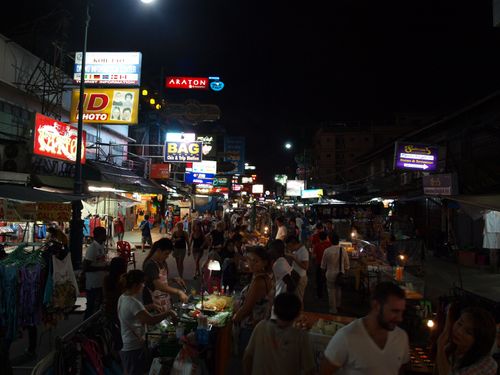
Khao San Road
Attractions
Bangkok’s backpacker carnival: curbside bars, live bands and DJs from 3pm–2am (midnight Sun). Street eats are cheap — pad thai 70–100 THB, mango sticky rice 60–100 THB. Come for wild people-watching; duck into Rambuttri for a calmer beer.
Yaowarat Chinatown Heritage Center
Attractions
Inside Wat Traimit by Chinatown Gate, this tidy museum charts Yaowarat’s Chinese roots with bilingual displays, period photos and short films. Open Tue–Sun 8:30am–4:30pm; closed Mon. Pair it with the Golden Buddha upstairs.
Khao San Road Night Market
Markets
Khao San’s nightly street market fires up from 3pm and peaks 7pm–midnight: pad thai and roti carts, fruit shakes, bargain tees and “elephant pants,” foot massages, tattoos, and those infamous cocktail buckets—all packed into one neon‑loud strip.
Central Marina Outlet
Shops
Outlet deals in North Pattaya: Nike Clearance, Adidas Factory Outlet, Puma, SuperSports, Mango and Thai labels like NaraYa. Cool A/C, easy eats, Big C inside, and a night market outside. Open daily 11am–10pm by Dolphin Circle on Pattaya Second Road.
More Khao San Road Guides
- Bangkok Night Markets for Street Food: Best Places Near Khao San Road and Across the City
- Best Street Food Markets Near Khao San Road: Where to Go for the Biggest Variety
- Bangkok Street Food for First-Time Visitors: What to Order, How to Eat, and Where to Go Beyond Khao San Road
- Bangkok Street Food at Night Markets vs Roadside Stalls: Where to Go for the Best Eat-Your-Way-Back-to-Your-Hostel Night