Bangkok Street Food for First-Time Visitors: What to Order, How to Eat, and Where to Go Beyond Khao San Road
A first-timer’s guide to Bangkok street food: what to order, how to spot clean stalls, prices, spice levels, and the best areas beyond Khao San.
We’re standing under the neon glow of Yaowarat Chinatown Heritage Center as a wok spits sparks into the night. The air is a beguiling mash‑up of sizzling garlic, sweet rot from a durian cart, and the smoky perfume of charcoal. A tuk‑tuk coughs past, and somewhere back toward Bang Lamphu Market the thump of a Khao San Road bar keeps time. This is Bangkok street food for first timers: messy, joyful, loud, and absolutely essential.
Bangkok street food for first timers: what it really feels like
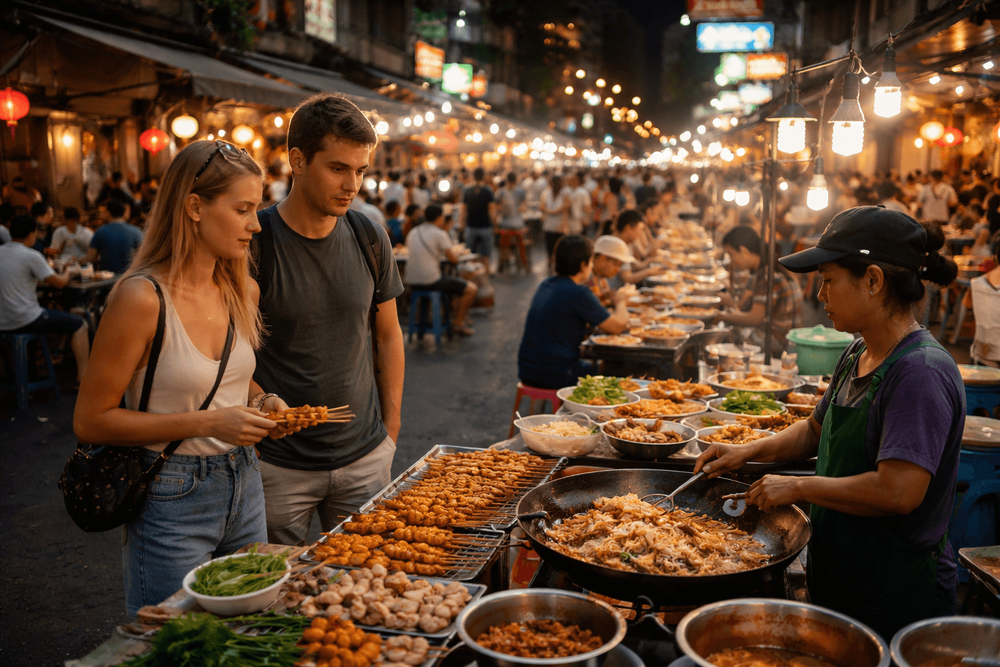
Bangkok doesn’t tiptoe when it feeds you. It clatters. You’ll eat on tiny plastic stools, knees touching a stranger’s, as a vendor in a wide‑brim hat wields a steel ladle like a drumstick. You’ll point more than you speak, sweat through at least one shirt, and discover that “spicy” here starts at “pet nit noi” (a little spicy) and still slides into nose‑tingling territory.
What you’ll see everywhere:
- Noodles: boat noodles by Victory Monument, bouncy egg noodles with roast duck, tom yum broth with a citrusy slap.
- Stir‑fries fired to a smoky sear: pad kra pao (holy basil), pad see ew (soy‑kissed wide noodles), morning‑glory greens with garlic.
- Isaan grills and salads: moo ping (pork skewers), som tam (papaya salad) pounded to order.
- One‑plate rice dishes: khao man gai (Hainanese chicken rice), khao moo daeng (red pork), khao kha moo (stewed pork leg) served with a wobbly egg.
- Sweets and drinks: mango sticky rice, kanom krok coconut cups, roti pulled on a greased griddle, and plastic cups of cha yen (Thai iced tea) sweating in your hands.
We love Bangkok’s sit‑down restaurants, but street food is where you feel the city’s pulse. It’s fast, cheap, social, and deeply local. It turns a walk down Soi Rambuttri into dinner and a show. It’s sanuk—fun—baked right into daily life.
Beginner‑friendly dishes: start here, then level up
We’ll set you up with easy wins first, then nudge you toward dishes that feel adventurous but won’t wreck your palate.
Familiar and friendly
- Pad Thai: The gateway noodle. Look for a hot wok and eggs tossed to silk; skip the pre‑made, steam‑tray versions. Price: 60–100 baht depending on shrimp/seafood.
- Khao Man Gai (chicken rice): Poached chicken over rice cooked in its broth, with a gingery dipping sauce. Mild, comforting. 50–80 baht.
- Moo Ping + Sticky Rice: Fat‑glossed pork skewers from a charcoal grill, sweet‑savory and deeply smoky. Grab 2–3 skewers (15–25 baht each) and a bag of khao niew (10–15 baht).
- Pad See Ew: Wide rice noodles and Chinese broccoli flash‑fried with soy. Ask for “mai ped” (not spicy). 50–80 baht.
- Mango Sticky Rice: Ripe mango, coconut cream, warm sticky rice. Dessert or dinner—no judgment. 60–120 baht.
For a deeper look at the city’s greatest hits, we keep this bookmarked: Bangkok Street Food: Best Dishes, Where to Eat & Traveler Tips.
A little braver (you’ve got this)
- Som Tam (Papaya Salad): Green papaya, chilies, lime, fish sauce, palm sugar, pounded to order. Say “pet nit noi” for gentle heat, or “mai sai pla ra” to avoid fermented fish if you’re not ready.
- Boat Noodles (Kuay Teow Reua): Tiny, punchy bowls, often thickened with pig’s blood for richness (you can ask to skip blood: “mai ao luead”). Order 3–5 bowls; they’re snack‑size. 15–25 baht per bowl.
- Guay Jub (Rolled Rice Noodles): Peppery broth with crispy pork; warming and slurpable. 50–80 baht.
- Pla Pao (Salt‑Crusted Grilled Fish): Stuffed with lemongrass and grilled whole; peel the skin, flake the juicy meat, wrap with herbs and sauce. 220–350 baht.
- Sai Krok Isaan (Isaan Sour Sausage): Tangy, garlicky, often paired with ginger and chilies. 20–30 baht per piece.
Snacks and sips
- Kanom Krok: Little coconut‑milk cups, custardy inside, crisp at the edges. 20–40 baht per tray.
- Roti: Flaky, griddle‑fried dough with banana and condensed milk. Street‑sugar heaven. 40–70 baht.
- Cha Yen (Thai Iced Tea) & Oliang (Thai coffee): Sweet, milky, jet fuel for hot nights. 25–45 baht.
How to spot a great, trustworthy stall
We’ve all been seduced by a glowing wok and regretted it. Here’s how we choose a winner in seconds.
- Follow the crowd: A steady line means high turnover and fresh food. Peak times are 11:30–13:30 and 18:00–20:30.
- Look for the prep: Bright greens, meat on ice, raw and cooked areas separated. If the chopping board is scrubbed and the oil looks golden (not black), we’re in.
- Watch the hands: Gloves aren’t common, but tongs for money vs. food or a designated cashier is a good sign.
- Order what locals order: Peek at bowls on tables; if every plate is the same, that’s the signature—get it.
- Hot and fast: Cook‑to‑order beats trays that have sat warming for hours, especially in the mid‑day heat.
- Clean water/ice: Tube ice (those little cylinders) is factory‑made and safe. Brownish or cloudy ice? Pass.
If you want a deeper dive into stall hygiene, digestive peace of mind, and what to avoid, we wrote this for you: Bangkok Street Food Safety Guide: How to Choose Clean, Fresh Stalls Like a Local.
Ordering and eating without stress
Street food moves fast, but there’s a rhythm. We’ll get you in step.
- Point, smile, and speak simply: “Khao man gai, mai ped” does the trick. If there’s a picture menu, point. Otherwise, gesture at someone’s plate and nod questioningly.
- Spicy levels to say out loud:
- “Mai ped” = not spicy
- “Pet nit noi” = a little spicy
- “Pet mak” = very spicy
- Pay timing: Many stalls have you pay after you eat; grills and drinks are usually pay‑as‑you‑order. Keep small bills (20s, 50s, coins).
- Sharing tables is normal: Give a nod and a “sawadee krap/ka” (hello), and tuck in.
- The condiment caddy: Chili flakes (dry heat), prik nam pla (chilies in fish sauce—salty), sugar (yes, for noodles), vinegar with chilies (tang). Taste first, doctor later.
- Offal alert: If organs aren’t your thing, say “mai ao khreuang nai.” For blood, “mai ao luead.”
- Compliments land well: “Aroi mak!” (very delicious) gets smiles every time.
For planning your snack attacks by time of day—breakfast to late‑night—this helps: Bangkok Street Food by Meal Time: Best Breakfast, Lunch, Dinner & Late-Night Stalls for Travelers.
Prices, cash, hours, and other practicalities
- Cash is king: Most carts don’t do cards. PromptPay QR codes are common with locals, but as a visitor, cash is easiest. Keep a stack of 20s/50s; vendors rarely break 1000s.
- Typical prices: Noodle bowls 50–80 baht, rice plates 50–80 baht, grills 15–25 baht per skewer, mango sticky rice 60–120 baht, grilled fish 220–350 baht. Tourist hot‑spots skew higher.
- Hours: Many morning markets wind down by 10:30. After‑work markets pop 17:00–21:00. Chinatown roars 18:00–23:00. Some of the best late‑night bites land after midnight along Phra Athit Road and the quieter ends of Soi Rambuttri.
- Hydration: Bottled water is everywhere (10–20 baht). Tube‑ice drinks are safe. Duck into 7‑Eleven for an AC blast and a top‑up.
- Utensils and cleanup: You’ll get chopsticks or a spoon/fork. Return bowls to the bin if you see one, otherwise leave them on the table.
- Trash: Use the stall’s bin. If none is visible, carry it until you spot one. Bangkok appreciates tidy farang.
- Don’t haggle over 5 baht: You’re in their kitchen. If a price seems off, clarify before ordering.
- Weather reality: Heat and monsoon bursts are part of the ride. Keep tissues and a light rain jacket handy.
Not sure what to pack for sticky nights and splashy afternoons? This checklist nails the essentials: What to Pack for Thailand for First-Time Backpackers: The Essential Starter Checklist.
Dietary notes: vegetarian, vegan, halal, and allergies
- Fish sauce is everywhere: Even “not spicy” doesn’t mean vegetarian. For strict vegetarian, look for “เจ” (jay) signs—yellow flags with red Thai letters. Say “gin jay” (I eat vegan/vegetarian Buddhist style) or “mangsawirat” (vegetarian) and confirm “mai sai nam pla/hoi” (no fish sauce/oyster sauce).
- Halal eats: Head to Bang Rak around Haroon Mosque (near Charoen Krung), or toward Ramkhamhaeng and Nana for more options. Muslim beef noodle stalls are common in older shophouse areas.
- Allergies: Peanut toppings are common but not universal; shellfish sneaks into sauces. Communicate clearly; if in doubt, choose grilled items you can see cooked clean.
Best areas for first‑timers to graze happily
We’ll keep it easy to reach via BTS/MRT or the Chao Phraya Express boat. Expect stalls to rotate; part of the fun is wandering.
Banglamphu: Khao San, Soi Rambuttri, Phra Athit Road
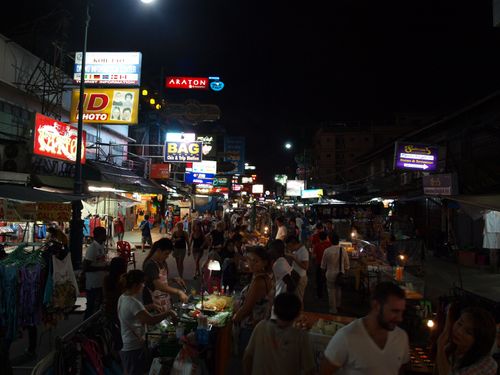
You’ll hear it before you see it—the bass of Khao San. Food here leans touristy and late, but the action on Soi Rambuttri and the quieter ends toward Wat Chana Songkhram Ratchaworamahawihan hits the spot: pad thai, banana roti, moo ping at 2 AM. For calmer grazing, follow the breeze to Phra Athit Road’s riverside stretch; papaya salad carts and grilled chicken pop up after dark. If you’re basing yourself in this area, skim our playbook: First Timer's Guide to Khao San Road.
Getting there: River boat to Phra Arthit Pier, or taxi. After midnight, tuk‑tuks are the sprint option—agree on price first.
Chinatown (Yaowarat Road)
Bangkok’s neon canyon. At dusk, the sidewalks turn into one long banquet. Think peppery guay jub, blistered oyster omelets, smoky satay, fresh pomegranate juice, and fried dough sticks (pa tong go) with pandan custard. It’s chaotic in the best way.
Getting there: MRT Wat Mangkon, then follow your nose. Best 18:00–23:00, closed or quiet on some Mondays.
Bang Rak & Charoen Krung
Old Bangkok eats: roast duck with glossy skin, boat noodles hidden in alleys, curries that make you sweat in the shade. Between Saphan Taksin BTS and the General Post Office, every block hides a gem. Haroon Mosque’s lanes add halal snacks and spiced teas.
Getting there: BTS Saphan Taksin or Chao Phraya Express to Sathorn/Taksin pier.
Victory Monument
This is the spiritual home of boat noodles. The khlong (canal) shops still ladle out inky, herb‑heavy broths into tiny bowls that stack up like poker chips. Tell them “mai ao luead” if the blood thickness puts you off, and “mai ao khreuang nai” to skip offal.
Getting there: BTS Victory Monument. Best 11:00–16:00.
Wang Lang Market (Thonburi side)
Across from the Grand Palace and Siriraj Hospital, Wang Lang is a lunchtime fever dream: crispy pork, grilled river prawns, gaeng (curries) over rice, trays of kanom krok and coconut jellies. Shade helps; crowds do not—embrace the squeeze.
Getting there: Chao Phraya Express boat to Wang Lang (N10) pier. Best 10:00–15:00, Monday–Saturday.
Phetchaburi Soi 5 (and Soi 10)
After‑work Bangkok in one stroll. Fried chicken that shatters, fish‑ball skewers, pork noodles, and Thai‑Chinese stir‑fries. It feels local but not intimidating.
Getting there: BTS Ratchathewi or Phaya Thai, then a 10–15 minute walk west to Phetchaburi Road.
Ari
Leafy, breezy, and easy for first‑timers. You get café calm next to great grilled pork, noodle stalls, and pop‑up dessert carts. It’s Bangkok on training wheels—in a good way.
Getting there: BTS Ari. Best for dinner and low‑key nights.
Silom lunch lanes (Convent, Sala Daeng)
On weekdays, the office crowd turns Silom’s side sois into a buffet: curry rice, stir‑fries, and fruit carts carving guava and pineapple to order. Come hungry, leave with a lime tea for the heat.
Getting there: BTS Sala Daeng or MRT Silom. Best 11:30–13:30, Monday–Friday.
If you’re ready to roam further afield, check our picks for big, food‑first markets that aren’t in the backpacker bubble: Best Bangkok Street Food Markets Beyond Khao San Road: Where to Eat Like a Local.
Know before you go: tiny tips that make a big difference
- Stalls move: Street‑vending rules change, and vendors rotate. If a famous cart is gone, ask a neighbor—someone will point you right.
- Mind the heat: Eat earlier, chase shade, hydrate. We duck into 7‑Eleven between stalls for a blast of AC and a regroup.
- Keep it polite: A smile gets you far. Don’t touch produce unless invited. If you photograph someone closely, buy something or ask first.
- Tuk‑tuks vs. taxis: Tuk‑tuks are fun for short hops (50–150 baht). For longer rides, taxis with the meter on are cheaper. MRT/BTS avoid traffic when the city locks up.
- Bathrooms: Markets sometimes have paid toilets (3–5 baht). 7‑Eleven or malls are your friend if you’re near one.
- Seating hack: If you see a plastic basket of chopsticks and condiments on a table, it’s fair game—hover and slide in when someone pays.
Where to sleep to eat well
Staying near Banglamphu (Khao San/Soi Rambuttri) or along the river (Phra Athit/Charoen Krung) puts you within a five‑minute stumble of late‑night snacks and early‑morning markets. Around Ari or Victory Monument, you’ll swap tourist thump for neighborhood calm without sacrificing great noodles. We usually pick a simple guesthouse with a fan and a balcony to air out the chili sweat—nothing fancy needed when dinner waits on a plastic stool.
One last bite
Let’s make a deal: tonight we start with moo ping on Phra Athit, chase it with peppery guay jub on Yaowarat, and finish with mango sticky rice as the river breeze sneaks in over the wall. We’ll bring the small bills—you bring your appetite.
Related Hotels & Places
Khao San Road
Attractions
Bangkok’s backpacker carnival: curbside bars, live bands and DJs from 3pm–2am (midnight Sun). Street eats are cheap — pad thai 70–100 THB, mango sticky rice 60–100 THB. Come for wild people-watching; duck into Rambuttri for a calmer beer.
Yaowarat Chinatown Heritage Center
Attractions
Inside Wat Traimit by Chinatown Gate, this tidy museum charts Yaowarat’s Chinese roots with bilingual displays, period photos and short films. Open Tue–Sun 8:30am–4:30pm; closed Mon. Pair it with the Golden Buddha upstairs.
Bang Lamphu Market
Markets
Old-school Banglamphu market just off Khao San for bargain clothes, luggage and the city’s go-to school‑uniform shops. Swing by at dusk when street-food carts fire up and locals shop for dinner. Open Tue–Sun till 10pm; closed Monday.
The Bird Nest Homestay & Coffeeshop
Hotels
A 3-star hotel in Bangkok.
Wat Chana Songkhram Ratchaworamahawihan
Temples
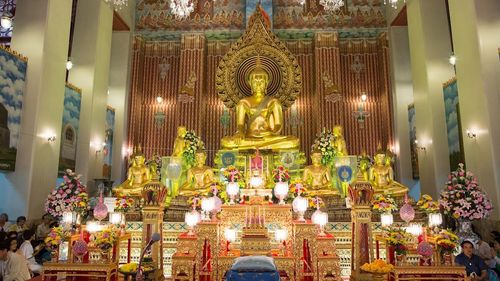
18th‑century royal temple steps from Khao San. Slip into quiet courtyards and an opulent viharn with a gilded Buddha. Opens 7:30am daily (Mon to 6:30pm). Enter on Chakrabongse Rd by Phra Athit; dress modestly.
Rambuttri
Markets
Khao San’s calmer cousin: a tree‑shaded lane of VW van cocktail bars, open‑air foot massages, pad thai grills, and easygoing live bands. Best from sunset to 11pm; beers 80–120 THB, cocktails 150–220 THB. One block from the chaos, all the charm.
More Khao San Road Guides
- Bangkok Street Food for First-Time Visitors: How to Order, Pay, and Eat Safely
- Bangkok Street Food for First-Time Visitors: A Practical Guide to Ordering, Hygiene, and Must-Try Classics
- Best Street Food in Chinatown for Khao San Road Travelers: What to Eat, Where to Start, and How to Get There
- Bangkok Street Food Guide for First-Time Visitors: What to Order, How to Order, and How to Eat Safely Around Khao San Road