Bangkok Street Food Guide for First-Time Visitors: What to Order, How to Order, and How to Eat Safely Around Khao San Road
New to Bangkok street food? We’ll show you what to order, how to ask for less spice, and where to eat safely around Khao San and Chinatown.
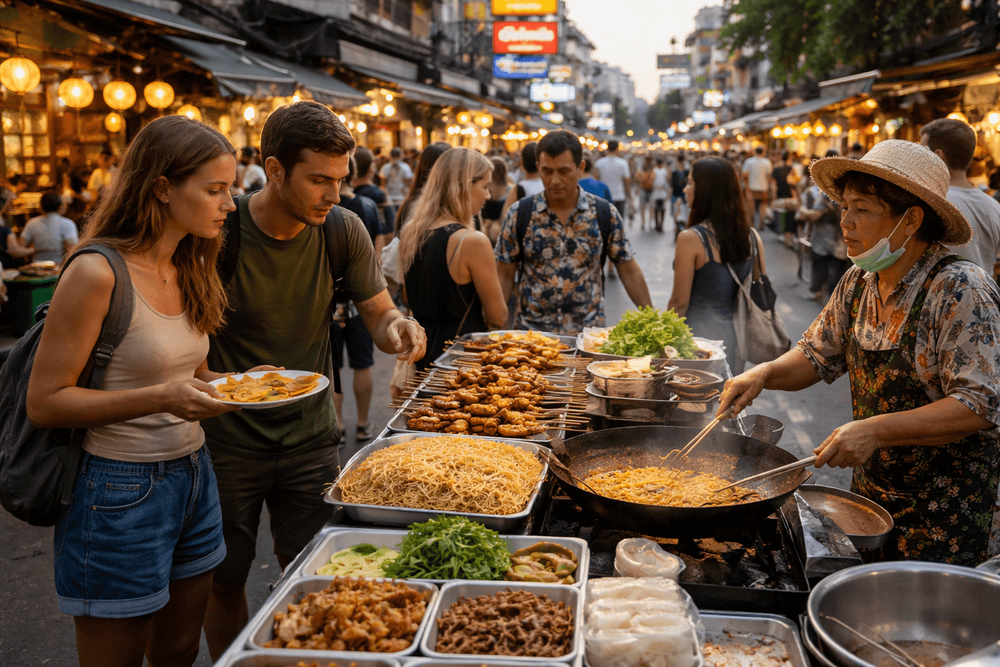
The wok hisses like summer rain and a cloud of holy basil hits us in the face—peppery, sweet, a little feral. Motorbikes skim by our ankles, a tuk-tuk coughs, and somewhere behind us a blender screams into a plastic cup of neon-orange Thai tea. It’s midnight off Rambuttri, and Bangkok Street Food for First-Time Visitors can feel like stepping into a live-fire kitchen where the sidewalk is your table. Stick with us—we’ll show you what to order, how to order it, and how to eat safely without missing the fun.
Bangkok Street Food for First-Time Visitors: Must-Try Dishes
We’ll keep this tight and useful—the dishes you’ll actually see near Khao San Road, Phra Athit, and the markets you’ll hit on day one.
Pad Thai (ผัดไทย)
- What it is: Stir-fried rice noodles with egg, tofu or shrimp, tamarind sauce, and a confetti of bean sprouts, chives, crushed peanuts.
- Flavor: Tangy-sweet-savory. You control the kick with the condiment caddy.
- Price: 50–90 baht at carts and shophouses; add a fried egg (khai dao) +10 baht.
- Tip: If you want it less sweet, say “wan noi”—a little sweet. For low spice, “mai ped.”
Pad Krapao (ผัดกะเพรา)
- What it is: Holy basil stir-fry with minced pork or chicken over rice, usually with a runny fried egg.
- Flavor: Garlicky, peppery, proudly spicy.
- Price: 50–80 baht. Egg add-on +10.
- Phrase: “Pad krapao moo khai dao, ped nid noi”—basil pork with fried egg, a little spicy.
Boat Noodles (ก๋วยเตี๋ยวเรือ)
- What it is: Intense, dark broth noodles, once served from khlong boats. Small bowls—so we order two or three.
- Flavor: Rich with star anise, cinnamon, and spice; optional pork blood gives body.
- Price: 15–30 baht per small bowl.
- Tip: If blood makes you squeamish, say “mai sai lueat.”
Som Tam + Gai Yang + Sticky Rice (ส้มตำ ไก่ย่าง ข้าวเหนียว)
- What it is: Green papaya salad smashed to order in a mortar; grilled chicken; glutinous rice.
- Flavor: Limey, fish-saucy, electric with bird’s-eye chilies.
- Price: Som tam 40–70 baht; half chicken 80–140; sticky rice 10–15.
- Spice tip: “Som tam Thai, mai ped” keeps it milder and sweeter. If you want serious heat, “ped mak.”
Moo Ping + Sticky Rice (หมูปิ้ง)
- What it is: Char-kissed skewers of sweet pork, smoky and glossy.
- Flavor: Caramelized from palm sugar, fish sauce, and coconut milk.
- Price: 10–15 baht per skewer; sticky rice 10–15.
- Best at: Early mornings and late nights around Khao San and Phra Athit.
Khao Man Gai (ข้าวมันไก่)
- What it is: Hainanese-style poached chicken over chicken-fat rice with gingery dipping sauce and a cup of soup.
- Flavor: Comforting, clean, gingery.
- Price: 50–70 baht.
- Tip: Great if your stomach needs a reset.
Tom Yum Goong (ต้มยำกุ้ง)
- What it is: Lemongrass, galangal, kaffir lime leaves, chilies, and shrimp in a sour-spicy broth.
- Flavor: Bright, citrusy, prickly spice.
- Price: 80–150 baht at simple shophouses.
- Tip: “Nam sai” (clear style) is lighter; “nam khon” (milky with evaporated milk) is richer.
Hoy Tod (หอยทอด)
- What it is: Mussel or oyster pancake—crispy edges, chewy middle—served with chili sauce.
- Flavor: Salty, crunchy, a bit decadent.
- Price: 60–100 baht.
Mango Sticky Rice (ข้าวเหนียวมะม่วง)
- What it is: Ripe mango with coconut milk-drenched sticky rice.
- Flavor: Creamy-sweet, tropical and soothing.
- Price: 60–120 baht depending on mango quality.
Thai Iced Tea/Coffee and Coconut Ice Cream
- Cha yen (Thai iced tea): 25–40 baht. Sweet, orange, refreshing.
- Oliang (Thai iced coffee): 25–40 baht. Dark, bold, sometimes smoky.
- Coconut ice cream: 30–50 baht, often served in a coconut shell with peanuts and sticky rice.
If you want a deeper dive into what to try and why it matters, bookmark this: Best Thai Street Foods for First-Time Visitors in Bangkok: What to Try and Why.
Beginner-Friendly Areas Near Khao San (and Easy Wins Beyond)
You don’t have to cross the city for greatness. We’ll start close and branch out when you’ve found your street legs.
Soi Rambuttri and Phra Athit Road (Bang Lamphu Market)
- Vibe: Backpacker chill meets neighborhood life—fair prices, English menus, plenty of turnover.
- What to eat: Pad Thai, moo ping, fruit shakes, fried chicken, banana roti.
- When: Late afternoon till after midnight; best around 7 pm–11 pm.
- Why we like it: We can graze without thinking too hard, duck into 7-Eleven for an AC blast, and people-watch the parade of farang and locals.
Wang Lang Hostel Market (Thonburi side)
- Getting there: From Phra Athit/Thammasat, take the river ferry to Wang Lang (5–10 baht). It’s across from Siriraj Hospital.
- Vibe: Local lunch crush—tight sois jammed with sizzling woks and dessert carts.
- What to eat: Boat noodles, khao kha moo (braised pork leg on rice), grilled pork neck, Thai desserts.
- When: Roughly 10 am–4 pm on weekdays; thins out on Sundays.
- Tip: Go late morning to beat the rush. Bring small bills and patience.
Chinatown (Yaowarat Chinatown Heritage Center Road)
- Getting there: MRT Blue Line to Wat Mangkon Kamalawat (Wat Leng Noei Yi), then follow the crowd towards Yaowarat after 5 pm.
- Vibe: Neon blare, thump of woks, and queues that move fast.
- What to eat: Hoy tod, guay jub (peppery rolled rice noodle soup), roasted chestnuts, fresh pomegranate juice, mango sticky rice.
- When: Best 6 pm–11 pm, later on weekends.
- Tip: Expect lines. Good sign. This is where Bangkok Street Food for First-Time Visitors graduates from training wheels to the real deal.
Nang Loeng Market
- Getting there: From Khao San, a 10-minute taxi or a 25-minute walk past the Democracy Monument.
- Vibe: Old-school community market with legendary curries and sweets.
- What to eat: Khanom buang (crispy crepes), curries over rice, kanom krok coconut pancakes.
- When: Mostly morning and lunch; many stalls wrap up by 2 pm.
Or Tor Kor Market (OTK)
- Getting there: MRT Blue Line to Kamphaeng Phet. OTK sits opposite Chatuchak Weekend Market.
- Vibe: Clean, curated, a gentle on-ramp if the street scene feels chaotic.
- What to eat: Premium tropical fruit, grilled seafood, curries, southern-style rice plates.
- When: 9 am–6 pm daily.
For a broader city overview, including where to nudge past Khao San when you’re ready, check our general primer: Bangkok Street Food: Best Dishes, Where to Eat & Traveler Tips.
How to Order, Pay, and Keep It Sanuk
The best part of eating outside? It’s playful. Here’s how we do it without stress.
Ordering Basics
- Point and smile: “Ao an-nee” means “I’ll take this.” If there’s a photo menu, point. If not, peek at what the table next to us is eating and point to that.
- Protein swap: “Moo” pork, “gai” chicken, “neua” beef, “kung” shrimp, “tao hoo” tofu.
- Spice levels: “Mai ped” (not spicy), “ped nid noi” (a little spicy), “ped mak” (very spicy).
- Eggs and extras: “Khai dao” (fried egg), “khao plaow” (plain rice), “mai sai…” (don’t add…). Example: “mai sai tua” (no peanuts), “mai sai nam pla” (no fish sauce), “mai sai pongchu rot” (no MSG).
- Vegetarian/vegan: Say “mangsawirat” (vegetarian) or “gin jay” (vegan Buddhist style, no fish sauce/egg/garlic). Look for the red-on-yellow เจ sign.
For an even more practical, step-by-step approach, this piece is gold: Bangkok Street Food for First-Time Visitors: A Practical Guide to Ordering, Hygiene, and Must-Try Classics.
Paying and Tipping
- When to pay: At carts, pay when the food is handed over. At shophouses or clustered stalls with tables, they’ll tally at the end.
- Cash is king: Most stalls are still cash-only. Carry 20s, 50s, and 100s; avoid dropping a 1,000 baht note on a 40 baht noodle.
- QR codes: Some vendors accept PromptPay. Handy if you have a Thai bank app; otherwise ignore.
- Tipping: Not required. Round up the coins or leave 5–10 baht if they went the extra mile.
Common First-Timer Mistakes (and Fixes)
- Diving straight into nuclear spice: Start “ped nid noi,” then tune with the condiment caddy—chilies in vinegar, sugar, fish sauce, chili flakes.
- Ordering too much at one place: Bangkok is a graze city. Share a plate, then move on.
- Ignoring the line: A queue means freshness and fast turnover. Join it.
- Forgetting the egg: A fried egg on pad krapao is non-negotiable. Trust us.
If you’re counting coins, this budget cheat sheet helps: Bangkok Street Food by Budget: What to Eat for 50, 100, and 200 Baht.
What to Expect: Street Food Culture, Vibes, and Peak Times
Bangkok eats in waves. Knowing when and how helps us land the good stuff hot.
- Breakfast (7–9 am): Moo ping smoke hangs over Banglamphu. Khao man gai queues move fast. Pair with iced coffee that could wake a monk.
- Lunch (11:30 am–1:30 pm): Markets like Wang Lang heave. If there’s a wok, it’s on overdrive.
- After work (5:30–8:30 pm): Chinatown flips on the neon and the scent of garlic floods Yaowarat.
- Late night (10 pm–2 am): Khao San and Soi Rambuttri become a mobile carnival—roti, fried chicken, and pad Thai sizzling under fairy lights.
Etiquette is light but real:
- Share tables: Scoot over, nod a “sawadee,” and make room. If you need to flag cutlery, say “kha-thoht” (excuse me).
- DIY flavoring: The condiment caddy is your mixing desk. No chef will be offended if you tweak.
- Bus your space: Most stalls are tidy by design. Stack plates, wipe spills, keep it moving.
- Embrace the chaos: Heat, noise, slippery spots, an uncle dozing on a scooter—this is Bangkok. Keep your jai yen (cool heart) and enjoy the ride.
If you’re staying near Khao San, we usually crash somewhere on Soi Rambuttri with a pool to rinse off the wok smoke. Being able to wander out barefoot-in-flip-flops to grab a midnight moo ping is half the magic.
Simple Safety and Dietary Guidance
We don’t do fear-mongering. We do smart.
Food Safety Basics
- Follow the crowd: A busy stall means high turnover. Fresh is king.
- Hot and sizzling: Eat things cooked to order and served steaming. Skip pre-cooked trays that look sunbaked.
- Watch the water: Ice with hollow “factory” cubes is generally safe. If the ice looks jagged from a block, maybe pass.
- Clean hands, clean bowls: Vendors who use tongs/gloves and keep raw/cooked separate get our baht. We carry sanitizer for our own hands.
- Fruit finesse: Choose fruit that’s peeled to order. If it’s pre-cut, look for covered containers on ice.
Allergies and Restrictions
- Fish sauce and shrimp paste show up everywhere. If you can’t have them, try “mai sai nam pla, mai sai kapi.” But know cross-contamination is likely; shophouses with separate woks are safer than carts.
- Peanut allergy: Say “phom/chan phae tua” and avoid dishes with obvious crushed peanuts (pad Thai toppings, some satay sauces). When in doubt, skip it.
- Shellfish allergy: “Phom/chan phae kung/hoi.” Avoid tom yum goong, hoy tod, and shared oil fryers.
- Vegetarian/vegan: Ask for “gin jay.” Pad Thai jay, pad see ew jay, or tofu krapao jay are common. Som tam Thai can be made without fish sauce—ask “mai sai nam pla.”
- Halal: You’ll find Muslim-friendly stalls scattered around the city; chicken and beef noodle shops are easier wins than pork-heavy markets.
For more safety detail and easy ordering language, see: Bangkok Street Food for First-Time Visitors: What to Order, How to Eat, and Where to Go Beyond Khao San Road and Bangkok Street Food for Travelers with Allergies: What to Order, What to Avoid, and How to Ask for Changes.
Know Before You Go
- Cash and small change: Most stalls won’t break 1,000 baht. We pocket a stack of 20s and 50s.
- Napkins and wipes: Vendors use tissue-thin napkins; bring your own wipes.
- Hydration: Street carts sell water for 10–15 baht. Electrolyte sachets help if spice or heat catches up.
- Dress and sun: Light clothes, hat, and sunscreen. Even at night, Bangkok holds the day’s heat like a wok.
- Noise and traffic: Sidewalks double as kitchens and parking lots for motorbikes. Step carefully, mind the oil slicks.
Getting There: Khao San as Your Launchpad
- Chao Phraya Express Boat: From Phra Arthit Pier, ride south to Ratchawongse Pier for Chinatown, or hop the tiny ferry to Wang Lang Market. Fares 5–20 baht—cheap wind-in-your-hair transport.
- MRT Blue Line: Wat Mangkon for Chinatown, Sam Yot for Old Town eats. From Khao San, take a short taxi or tuk-tuk to the station if it’s too hot to walk.
- BTS + Boat combo: From anywhere on the BTS, go to Saphan Taksin (Sathorn Pier), then jump on the river boat towards the Old Town.
- Taxis and tuk-tuks: For taxis, insist on “meter” before the door shuts. Tuk-tuks are fun for short hops; agree on a price first and skip “special tour” offers.
We’ll often start with an early dinner on Phra Athit, drift to Yaowarat for a late-night hoy tod, then end back near Soi Rambuttri for banana roti under the fairy lights. If you’re staying nearby, pick a spot with a decent fan or a pool—the fastest way to reset after a spicy detour.
Final Bite: Make It Yours
Bangkok street food for first-time visitors is a choose-your-own-adventure. Start gentle—khao man gai or pad Thai on Rambuttri—then crank the heat with som tam and chase neon down Yaowarat. Keep your jai yen, trust the lines, and don’t be shy with the condiment caddy. When you find your perfect bowl of boat noodles, message us—we’ll meet you by the river and show you where to get the mango that ruins all other mangoes.
Related Hotels & Places
Khao San Road
Attractions
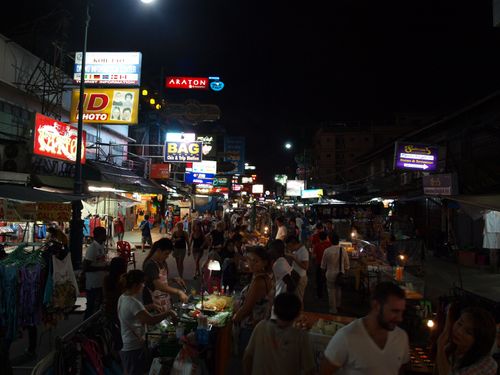
Bangkok’s backpacker carnival: curbside bars, live bands and DJs from 3pm–2am (midnight Sun). Street eats are cheap — pad thai 70–100 THB, mango sticky rice 60–100 THB. Come for wild people-watching; duck into Rambuttri for a calmer beer.
Rambuttri
Markets
Khao San’s calmer cousin: a tree‑shaded lane of VW van cocktail bars, open‑air foot massages, pad thai grills, and easygoing live bands. Best from sunset to 11pm; beers 80–120 THB, cocktails 150–220 THB. One block from the chaos, all the charm.
Bang Lamphu Market
Markets
Old-school Banglamphu market just off Khao San for bargain clothes, luggage and the city’s go-to school‑uniform shops. Swing by at dusk when street-food carts fire up and locals shop for dinner. Open Tue–Sun till 10pm; closed Monday.
Wang Lang Hostel
Hotels
A 0-star hotel in Bangkok.
Wat Mangkon Kamalawat (Wat Leng Noei Yi)
Temples
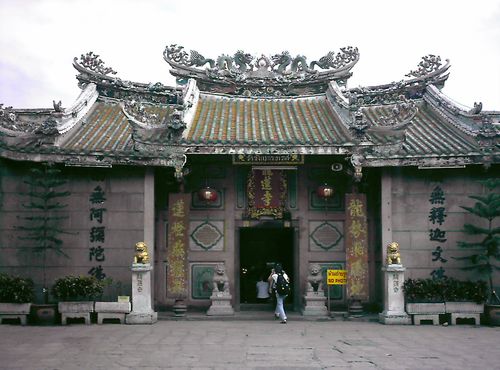
Chinatown’s grand Chinese Buddhist temple—smoky incense, red lanterns, and gilded altars. Free entry, donations welcome. Best early morning; electric during Lunar New Year and the Vegetarian Festival. Steps from MRT Wat Mangkon, 8am–5pm daily.
Yaowarat Chinatown Heritage Center
Attractions
Inside Wat Traimit by Chinatown Gate, this tidy museum charts Yaowarat’s Chinese roots with bilingual displays, period photos and short films. Open Tue–Sun 8:30am–4:30pm; closed Mon. Pair it with the Golden Buddha upstairs.
More Khao San Road Guides
- Bangkok Street Food for First-Time Visitors: What to Order, How to Eat, and Where to Go Beyond Khao San Road
- Bangkok Street Food for First-Time Visitors: A Practical Guide to Ordering, Hygiene, and Must-Try Classics
- How to Order Bangkok Street Food: Thai Phrases, Spice Levels, and Stall Etiquette for Khao San Road First-Timers
- Bangkok Street Food for Solo Travelers: Best Dishes, Stall Strategy, and Safe Eating Around Khao San Road