
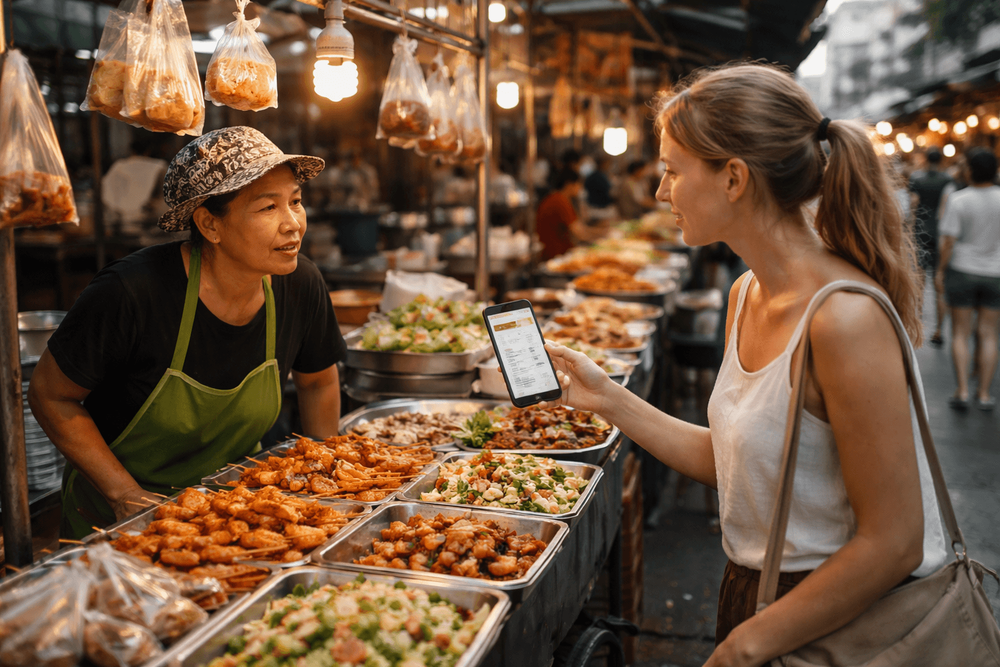
Bangkok Street Food for Travelers with Allergies: What to Order, What to Avoid, and How to Ask for Changes
Worried about Bangkok street food allergies? We share Thai phrases, safer dishes, cross-contamination tactics, and where to get help fast near Khao San.
We’re shoulder-to-shoulder on Baan Manee BKK, the wok hiss is louder than the tuk-tuks, and the air smells like garlic, chilies, and the sweet rot of a durian cart that’s seen too much sun. A pad thai guy flips noodles in a blaze, and next to him sits a smug little mountain of crushed peanuts. If you’re navigating Bangkok street food allergies, this city can feel like a minefield—fish sauce in the shadows, soy in the sizzle, shrimp paste hiding where you least expect it. But with a few phrases, a little street smarts, and a plan for cross-contamination, we can still eat well without rolling the dice.
Data Freshness + Pricing:
- Prices are approximate and in THB.
- Last checked: June 2026.
- Happy hour and promo details change frequently—confirm locally.
Bangkok Street Food Allergies: Common Triggers You’ll Meet Everywhere
Bangkok cooks are generous with condiments, and sauces are where allergens love to hide. Here’s what we watch for around Khao San Road, Phra Athit, and the markets along the khlongs.
Peanuts (ถั่วลิสง – tua-lí-song)
- Usual suspects: Pad Thai (as a topping), som tam (papaya salad), satay sauce, nam jim jaew (northeastern dipping sauce) sometimes features ground peanut.
- Hidden traps: Dessert stalls may sprinkle peanuts on sticky rice or shaved ice. Street pancakes (roti) sometimes add peanut butter.
- Ask for: “Mai sai tua-lí-song” (don’t add peanuts).
Shellfish & Crustaceans (seafood = อาหารทะเล – a-han ta-lay; shrimp = กุ้ง – gûng; crab = ปู – bpuu)
- Usual suspects: Tom yum goong, hoy tod (oyster omelet), fried rice with shrimp, mixed seafood stir-fries.
- Hidden traps: Shared fryers where shrimp tempura or fish cakes have been cooked; woks seasoned with oyster sauce.
- Ask for: “Phom/Chan phae a-han ta-lay” (I’m allergic to seafood). “Mai sai gûng/bpuu” (no shrimp/crab).
Soy & Soy Sauce (ซีอิ๊ว – see-íw), Oyster Sauce (ซอสหอยนางรม – sôt hóy naang rom)
- Usual suspects: Pad see ew, pad krapao, most stir-fries, marinades for moo ping (grilled pork) and gai yang (grilled chicken).
- Hidden traps: Even “plain” fried rice often includes both soy and oyster sauce.
- Ask for: “Mai sai see-íw, mai sai sôt hóy naang rom” (no soy sauce, no oyster sauce). Request salt and chilies instead.
Gluten & Wheat (แป้งสาลี – pâeng sà-lí; flour = แป้ง – pâeng)
- Usual suspects: Chinese-style noodles with wheat, battered fried foods (fried chicken, spring rolls), roti, bao, tempura, many street sweets thickened with flour.
- Hidden traps: Dark soy sauce and seasoning sauces often contain wheat. Some fish balls and sausages use flour as a binder.
- Safer bets: Rice noodles (sen yai/sen lek), vermicelli (wun sen), steamed rice, sticky rice.
- Ask for: “Mai ao pâeng sà-lí” (I don’t want wheat flour). “Mee sen khao mai?” (Do you have rice noodles?)
Dairy (นม – nom; เนย – noei/butter; นมข้น – nom khon/condensed milk)
- Usual suspects: Thai tea and coffee with condensed milk, roti with butter, some smoothies with milk powder.
- Hidden traps: Grilled corn brushed with butter, kaya toasts with butter, dessert stalls.
- Ask for: “Mai sai nom/nom khon/noei” (no milk/condensed milk/butter).
Eggs (ไข่ – khài)
- Usual suspects: Pad thai with egg, fried rice, omelets, kai jeow on rice.
- Hidden traps: Some batters and sweets.
- Ask for: “Mai sai khài” (no egg).
Fish Sauce (น้ำปลา – nám plaa) & Shrimp Paste (กะปิ – gà-bpì)
- Usual suspects: Nearly all Thai salads, soups, and stir-fries use fish sauce. Som tam can include dried shrimp or fermented fish (ปลาร้า – plaa raa). Many chili dips and curry pastes contain shrimp paste.
- Hidden traps: “Jay” (vegetarian Buddhist) dishes usually avoid fish sauce and animal products, but confirm—some vendors still sprinkle a little nám plaa out of habit.
- Ask for: “Mai sai nám plaa, mai sai gà-bpì” (no fish sauce, no shrimp paste). For som tam: “Som tam jay, mai sai plaa raa, mai sai gûng haeng” (vegetarian papaya salad, no fermented fish, no dried shrimp).
How to Explain Your Allergy in Thai (Without Turning Dinner Into Charades)
We keep these lines on our phone. Say it with a smile, point at ingredients, and watch the cook’s face to make sure it clicks.
- “Phom/Chan phae …” = I’m allergic to …
- “… tua-lí-song (peanuts) / a-han ta-lay (seafood) / see-íw (soy sauce) / pâeng sà-lí (wheat) / nom (milk) / khài (egg) / nám plaa (fish sauce) / gà-bpì (shrimp paste).”
- “Chûai tham mai sai … dai mai?” = Please make it without … can you?
- “Mee … mai?” = Do you have …?
- “Krueng-prûng arai bang?” = What sauces/seasonings do you use?
- “Chûai tam kap krapao/nam plaeng/nam man nid noi dai mai?” = Can you cook with basil/with plain seasoning/with a little oil?
- “Krua/khâo dang tam ngan duai kan mai?” = Is the same equipment used together? (Useful to gesture at the wok or fryer.)
Pro tip: If a vendor looks unsure, we thank them and move along. No hard feelings—sanuk (fun) is the goal, not a hospital run.
Spotting Hidden Ingredients Like a Local
- Wok shine = sauce shine. If it glistens darkly, odds are soy and oyster sauce are in play.
- Salads and “dry” dishes often hide fish sauce. Assume som tam has fish sauce unless you catch them making it jay.
- Broths are flavor bombs: tom yum, boat noodles, and clear soups are almost always seasoned with fish sauce.
- Pre-mixed vats are red flags. If it’s sitting in sauce for hours, it likely can’t be customized safely.
- Clean mise en place = safer swaps. If the vendor has separate bowls of garlic, chilies, herbs, and salt, they’re more able to cook without the usual sauces.
If you’re brand-new to Bangkok’s food scene, our practical overview for first-timers pairs well with this guide: Bangkok Street Food for First-Time Visitors: What to Order, How to Eat, and Where to Go Beyond Khao San Road.
Safer Street Food Choices (And How We Order Them)
We play to the stalls that keep it simple and cook to order around Khao San, Banglamphu Market, and down Phra Athit Road toward the river.
Fruit, Juices, and Coconuts
- Fresh-cut fruit (pineapple, watermelon, guava) is a gift; ask for a clean knife and a fresh bag. Prices are approx. 20–50 THB per bag.
- Coconut water straight from the nut is usually safe. Ask “Mai sai nam dtaan” (no added sugar) if you’re avoiding syrups. Approx. 40–70 THB each.
- Smoothies can include milk powder or condensed milk; request “mai sai nom/nom khon.” Approx. 40–80 THB.
Sticky Rice & Grilled Things
- Mango sticky rice is typically rice, coconut milk, sugar, salt—no dairy, no gluten. Confirm no sesame or peanut toppings. Approx. 60–120 THB.
- Grilled bananas (kluai ping) and sweet potatoes rely on natural starches. Ask to skip sauces or butter.
- Plain grilled meats can be tricky because of marinades (often soy/fish sauce). If you find a stall grilling to order, try “plaeng plaeng, mai sai nam plaa, mai sai see-íw” (plain, no fish sauce, no soy). Skewers run approx. 10–25 THB each.
Noodle Dishes You Can Tame
- Pad Thai: Ask “mai sai tua-lí-song” (no peanuts) and “mai sai nam plaa/sôt hóy naang rom” if fish/oyster sauce is a concern. Some cooks will season with salt and lime. Approx. 50–100 THB.
- Stir-fried basil (pad krapao): Request chili level and “mai sai see-íw, mai sai sôt hóy naang rom, mai sai nám plaa.” Served over rice. Approx. 60–100 THB.
- Rice noodle soups: Sen lek/yai (rice noodles) avoid wheat, but broths usually contain fish sauce or shrimp paste in the chili mix. If fish/seafood is an issue, skip soup stalls unless they can do a plain chicken or pork broth without fish sauce—rare but possible.
Rice Plates and Jay Stalls
- Khao man gai (Hainanese chicken rice): Chicken and rice are naturally dairy- and gluten-free; the sauce is the risk (soy/fermented soy). Ask for it plain with just ginger and chili on the side. Approx. 60–90 THB.
- Jay (เจ) vegetarian/vegan stalls pop up especially around October’s Vegetarian Festival but exist year-round in Banglamphu. They avoid animal products and typically skip fish sauce—but confirm, and watch for soy and gluten in faux meats and sauces. A plate runs approx. 40–70 THB.
Snacks and Sweets
- Khanom krok (coconut-rice pancakes) are usually rice flour and coconut milk; confirm no wheat or egg if needed. Approx. 30–50 THB per tray.
- Roti is wheat-heavy and usually buttered—skip if you’re gluten- or dairy-free.
If you’re juggling multiple dietary needs, we break down options near Khao San here: Bangkok Street Food by Diet: Halal, Gluten-Free, and Dairy-Free Options Near Khao San Road. And if hygiene is top-of-mind (it should be), bookmark our Bangkok Street Food Hygiene Guide Bangkok Street Food Hygiene Guide: How to Spot Clean Stalls and Eat Safely Without Killing the Experience.
Cross-Contamination: The Real Boss Fight at Night Markets
You’ll smell the thump of bass from a Khao San bar before you spot the fryer that cooked shrimp, chicken, and spring rolls in the same oil. In tight sois and busy night markets, cross-contact is the biggest risk.
Where Contamination Happens
- Shared woks and spatulas: A noodle guy might do seafood pad see ew, then your “plain” veg order with the same spatula.
- Fryers: Shrimp, fish cakes, and fries share oil. If you’re shellfish-allergic, assume fryer oil is contaminated.
- Sauces: One ladle dips into multiple vats; oyster sauce kisses everything.
- Cutting boards: Peanuts chopped for one dish, then herbs for yours.
How We Reduce the Risk (Without Killing the Vibe)
- Go specialty over variety. A stall that only grills chicken or only does fruit is safer than a “we do everything” cart.
- Ask for a clean pan or foil. “Chûai chai krâ-thá sà-àat/mâi?” (Please use a clean pan?) Offer to wait.
- Hit early. At 5–7 pm, gear is cleaner; by midnight, everything tastes like last order.
- Watch one full order. See the sauce bottles and the sequence before committing.
- Carry your own. A travel fork/chopsticks and alcohol wipes help when surfaces look sketchy.
Our deeper dive on choosing safe stalls goes here if you want more telltale signs: Bangkok Street Food Safety Guide: How to Choose Clean, Fresh Stalls Like a Local.
What To Do If You React in Bangkok
Breathe. We’ve been there. Know the numbers, know where to go, and don’t be shy about asking for help.
Emergency Numbers
- Medical emergency: 1669 (Erawan Center)
- Tourist Police (English help): 1155
- Police: 191 Show bystanders your allergy card/phone note; Thais are quick to help. Say “Phom/Chan phae a-han, chûai duai!” (I have a food allergy, help!)
Hospitals Near Khao San/Banglamphu
- Siriraj Hospital (Bangkok Noi): Across the river. Fastest from Phra Athit Pier via ferry to Wang Lang, or a short taxi/Grab over the Pin Klao Bridge. Large, well-equipped emergency department.
- Vajira Hospital (Dusit): 10–15 minutes by taxi in light traffic; good for urgent care.
- Private options with English-language services (longer taxi ride, higher cost): BNH (Sala Daeng) and Bumrungrad (Nana). Keep them as backups if you want private care.
Tell drivers: “Rong phayabaan Siriraj/Bajira/Bumrungrad” and show the map pin. If you carry an epinephrine auto-injector, use it at first signs of anaphylaxis and go straight to hospital.
Pharmacies and What They Stock
Banglamphu has 24-hour pharmacies and branches of Boots/Watsons along Chakrabongse and near Khao San. Over-the-counter antihistamines (cetirizine, loratadine) are common—approx. 30–80 THB per strip. Hydrocortisone creams and saline are easy to find. If you need stronger meds or a steroid pack, ask to see the on-call pharmacist or head to hospital.
Bring any critical meds from home (especially EpiPens); availability can be inconsistent and brands vary.
Know Before You Go: Planning Your Allergy-Friendly Bangkok
- Pack a Thai allergy card. Keep phrases printed or screenshotted. Back it up in your Notes with big fonts.
- Choose stalls you can watch. Made-to-order beats pre-mixed vats.
- Time your meals. Lunchtime markets turn over fresh ingredients fast; late-night oil gets… “seasoned.”
- BYO snacks for long boat rides on the River Bar - Ayutthaya—fruit, nuts (if safe for you), or sealed snacks from 7-Eleven’s blessed AC aisles.
- Practice your “mai sai” game (don’t add). It works wonders.
- Cash ready. Small bills keep things smooth: a pad krapao mod (approx. 60–100 THB) plus a drink (approx. 20–50 THB) adds up fast.
Where We Base Ourselves Near the Action
When we’re eating our way through Banglamphu and the Old City, we like staying within a 10-minute walk of Khao San or Phra Athit Road so we can bail to a cool room if our skin starts tingling. Being near the river ferries and main roads makes hospital runs faster if needed. Look for places that
- Are walking distance to Phra Athit Pier and bus lines on Phra Sumen Fort
- Have a front desk that can call a taxi fast
- Offer in-room fridges (for meds) and solid AC A quiet soi off Soi Rambuttri is the sweet spot—close enough for mango sticky rice at midnight, far enough that the bass thump doesn’t rattle your windows.
A Script You Can Show Any Vendor (Copy/Paste This)
- “Phom/Chan phae [tua-lí-song/ahaan ta-lay/see-íw/pâeng sà-lí/nom/khài/nám plaa/gà-bpì].”
- “Chûai tham mai sai [ingredient].”
- “Khor ao [dish] jay, mai sai nám plaa, mai sai sôt hóy naang rom, mai sai tua-lí-song.”
- “Chûai chai krâ-thá sà-àat dai mai?” (Please use a clean pan?) If the answer is a wince and a shrug, we walk on. Bangkok has another stall every five meters.
When to Skip a Stall (No Matter How Good It Smells)
- The wok guy says “same same” to every request.
- The fryer bubbles with mystery bits from three different animals.
- The cutting board is a peanut graveyard.
- You can’t see the cook. If you can’t watch, you can’t manage.
Bangkok rewards patience. We’ll grab fresh fruit by Santichaiprakan Park, ride the river breeze, and save our appetite for a pad krapao wizard on Phra Athit who nods confidently at our “mai sai” requests. That first bite—holy basil, garlic, and a squeeze of lime without the sneaky sauces—is why we keep coming back.
Related Hotels & Places
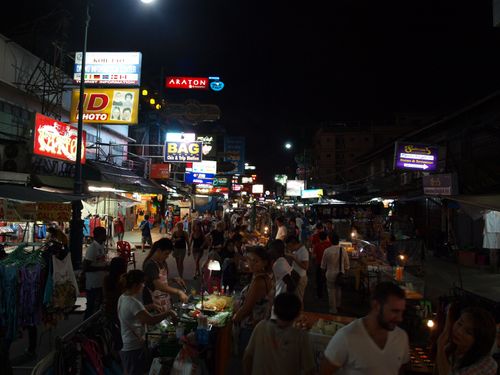
Khao San Road
Attractions
Bangkok’s backpacker carnival: curbside bars, live bands and DJs from 3pm–2am (midnight Sun). Street eats are cheap — pad thai 70–100 THB, mango sticky rice 60–100 THB. Come for wild people-watching; duck into Rambuttri for a calmer beer.
Baan Manee BKK
Hotels
Riverside boutique stay and café in a restored 118-year-old family home. Quiet Bang Yi Khan vibes, 10–15 mins from Khao San. Come for river views, iced coffee, and a slow afternoon; stay in character-filled rooms steps from Wat Daowaduengsaram.
River Bar - Ayutthaya
Bars
Phra Sumen Fort
Attractions
1783 riverfront fort on Phra Athit with white battlements, park breezes, and killer sunset views over Rama VIII Bridge. Free entry; best from 5–7pm before the gates close at 9pm.
More Khao San Road Guides
- Bangkok Street Food for First-Time Visitors: A Practical Guide to Ordering, Hygiene, and Must-Try Classics
- Bangkok Street Food for Dietary Restrictions: Vegetarian, Vegan, Halal, and Gluten-Free Options
- What to Pack for Thailand for Food Allergy and Special Diet Travel: Labels, Snacks, and Safe Eating Gear
- Bangkok Street Food for Heat-Safe Eating: The Best Low-Risk Dishes, Freshness Checks, and Stall Rules in Bangkok