
Bangkok Street Food Hygiene Guide: How to Spot Clean Stalls and Eat Safely Without Killing the Experience
Bangkok street food hygiene, decoded. Spot clean stalls, avoid risks, and eat safely—without losing the fun. Real cues, prices, and Thai phrases.
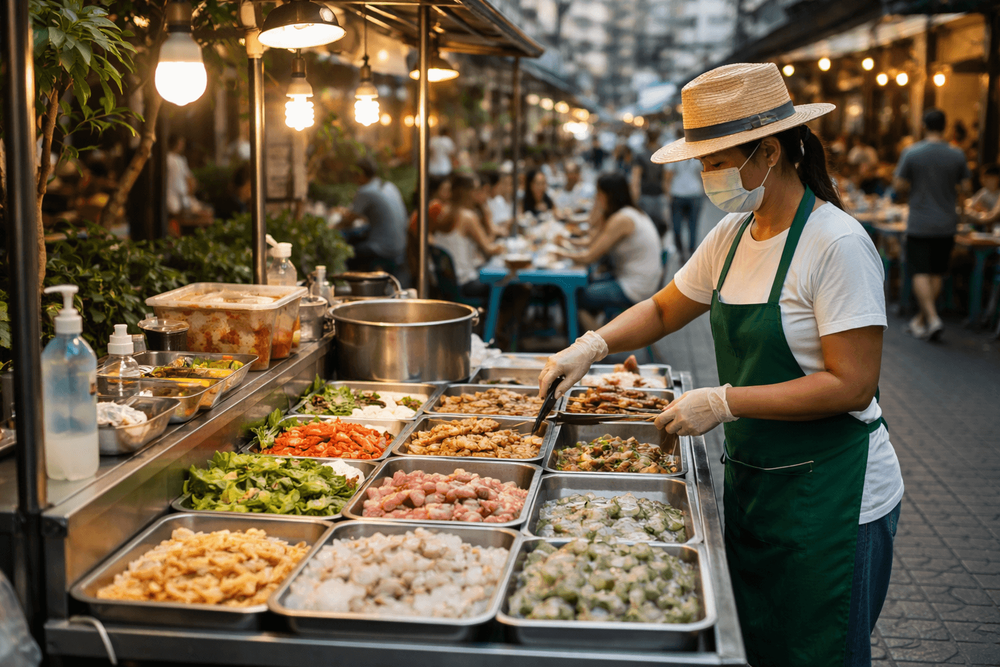
We’re shoulder-to-shoulder on Yaowarat Chinatown Heritage Center as the neon flickers to life, a wok snaps with chili and garlic, and the air smells like grilled pork and star anise. This is where Bangkok shines—and where our radar for Bangkok street food hygiene needs to be sharp. We want the butter-smooth satay and boat noodles that make locals queue, not the upset stomach that sidelines the trip. So we slow down, scan like a local, and let the city feed us—safely.
Data Freshness + Pricing:
- Prices are approximate and in THB.
- Last checked: June 2026.
- Happy hour and promo details change frequently—confirm locally.
Bangkok Street Food Hygiene: What Clean Looks Like
We don’t need lab coats—just good eyes, a nose that works, and a little patience. Here’s what we look for before ordering.
1) A clean, organized stall
- Surfaces look wiped, not gummy. The cutting board isn’t gray and frayed. Plastic sheets over prep areas are replaced, not sticky with yesterday.
- A trash bin with a lid (and emptied regularly) is a green flag. Overflowing bags buzzing with flies? We keep walking.
- Oil in the fryer should be light amber, not opaque brown. Old oil smells acrid; good oil smells like…nothing.
2) Hand and money hygiene
- Best-case: the vendor uses tongs, spoons, or gloves for ready-to-eat food and a separate person handles cash. If the same hands touch raw chicken and then your garnish? That’s a no from us.
- A quick rinse station or a bucket with flowing water and soap is an underrated gem. Bonus points if we see them actually use it between tasks.
3) Heat is your friend
- Flames licking the wok, soup at a rolling boil, grills with steady heat. We like dishes that are cooked-to-order and come out piping hot.
- Lukewarm anything is sketchy. Hot food should arrive hot; cold items should be genuinely cold (kept on ice or in a cooler).
4) Covered ingredients, smart storage
- Garnishes, noodles, and prepped meats are covered, either with lids or fly screens. Ice chests look clean and drain water, not sit like a mini khlong.
- Raw and cooked items are separated. If raw chicken and cooked pork share the same tray, we go find a different stall.
5) Clean utensils and bowls
- Chopsticks and spoons look washed and air-dried, not wiped with a random rag. Condiment jars (chili flakes, fish sauce, sugar) should be capped, not crusted over.
- If we grab a table caddy that leaves our fingers sticky, we consider moving on.
6) Freshness and turnover
- The best stalls sell out. We like seeing small batches hitting the wok and trays getting topped up often. Big mountains of pre-cooked meat sitting in full sun? Pass.
How We Judge a Vendor in 30 Seconds
Bangkok teaches you to be quick but observant. Here’s our speed-check while we hover like a hungry farang deciding between moo ping and fried chicken.
- Follow the crowd—local crowd. Office workers on Soi Sala Daeng at lunch or families on Talat Phlu at dusk are the best endorsement. A steady line means fresh turnover and hot food.
- Visible prep. We want to see the chopping, frying, and plating, not mystery food scooped from far-in-the-back pots.
- Covered food. Trays under mesh domes or lids show the vendor’s trying to keep the flies at bay. Love.
- Regular restocking. If meat comes out of a cooler in small portions and hits the grill in waves, that’s a clean habit. If ingredients are sweating on a plastic tablecloth in the sun, less so.
- Location matters. Stalls perched right by open drains or stagnant water can be more fly-prone. We’ll take the one ten meters upwind.
- The vibe. A vendor who looks calm and focused, with a clean apron and rhythmic movements, is usually on top of hygiene. Chaos can be charming—but not if it involves raw chicken juice.
We also listen to our gut. If something smells off, or the wok station looks like a chemistry set from 1998, we skip it and keep walking. Bangkok is generous; there’s always another stall two steps away.
Typical Food Safety Concerns for Travelers
Let’s cut through the rumors and get specific.
Ice and water
- Ice from big, clear tubes (sala) delivered in branded bags is usually factory-made and safe. Crushed ice from who-knows-where is iffier.
- If you’re unsure, ask for no ice: “mai sai nam keang.” Bottled water (approx 10–20 THB at 7-Eleven) is everywhere and cold enough to make your teeth sing.
Raw and undercooked ingredients
- Shellfish can be a joy but also a risk, especially raw oysters or barely cooked clams at pop-up stalls. We save those for reputable seafood shophouses.
- Look out for pink-in-the-middle chicken, half-set omelets on rice, or moo ping pulled early for speed. If in doubt, ask for “suk suk” (well cooked).
Cross-contamination
- The big one. Raw meat juices touching herbs and lime wedges can undo all the wok heat in the world. Watch for separate boards and tongs.
Day-old rice and reheated dishes
- We love khao man gai, but rice left warm for hours can invite trouble. Busy stalls that sell out are safer than lonely ones with mountain-sized rice.
Sauces and condiments
- Refilled squeeze bottles of mayo or sweet chili that sit in the sun are suspect. We lean toward vinegar-based nam som and chili flakes instead of creamy dressings.
Fruit shakes and desserts
- Fresh fruit blended to order is usually fine if the stall is clean and the ice looks factory-made. We avoid shakes with milk powder clumps and sticky blenders that never see soap. Good shakes run approx 40–80 THB.
Practical Ways to Reduce Risk—Without Killing the Fun
We’re not here to turn sanuk into a lecture. These are the moves we make so we can eat everything we want and still hop a tuk-tuk the next morning.
Choose cooked-to-order
- Stir-fries that hit a roaring wok, noodle soups assembled then dunked in boiling broth, grilled skewers flipped until they char—these are our go-tos.
- Pad kra pao or pad see ew (approx 60–120 THB depending on the soi) are perfect because everything hits high heat fast.
Time your eats
- Breakfast: markets like Nang Loeng or morning vendors off Phra Athit Road serve fresh, fast, early—great for turnover.
- Lunch: anywhere office crowds descend (Silom, Sathorn) is gold from 11:30–13:30.
- Dinner: Yaowarat (Chinatown) wakes up around 18:00; the surge means constant cooking until late.
Order smart
- Ask for well-done: “kho suk suk na krub/ka.”
- Skip the ice if it’s sketchy: “mai sai nam keang.”
- If spice masks signals, go gentle first: “mai phet” (not spicy) or “phet nit noi” (a little spicy), so you actually taste freshness.
Watch the money-hand-off
- If the grill master takes your cash and then grabs your herbs, ask politely for a fresh portion. A smile and a “khop khun” goes far.
Favor busy, simple menus
- Stalls with four things done perfectly beat 30-menu-photo trap stalls that reheat everything. Boat noodles around Victory Monument (approx 50–70 THB a bowl) are a masterclass in hot, fast, fresh.
Mind the sides
- Cucumber slices, raw sprouts, and lettuce look innocent but can be rinsed in dubious water. If your stomach is new to Thailand, skip raw garnishes for the first couple of days.
Carry a tiny kit
- Wet wipes or a pocket sanitizer (approx 20–40 THB), tissues, and a reusable spoon/chopsticks if you’re finicky. Not mandatory—just peace of mind.
Hydrate and pace yourself
- Heat plus chili can confuse your gut. Alternate a bottle of water (approx 10–20 THB) with that iced tea (approx 20–40 THB) and don’t power through ten stalls back-to-back on night one.
Where we base ourselves (for easy, cleaner eats)
- Near Phra Athit and Soi Rambuttri, we roll out of bed and into morning vendors with great turnover; many guesthouses here have decent hygiene and breezy courtyards. Mid-range rooms with AC run approx 1,200–2,000 THB.
- If we’re chasing lunch markets, staying around Silom/Sathorn lets us graze office-worker hotspots and retreat to AC fast. Boutique stays with pools start around approx 2,000–3,500 THB.
- Victory Monument is fantastic if you’re on a budget and obsessed with noodles—dorm beds nearby can be found for approx 300–600 THB, and the famous boat noodle alley is a 5–10 minute walk.
For deeper tips on picking stalls like a local, we also keep this on hand: Bangkok Street Food Safety Guide: How to Choose Clean, Fresh Stalls Like a Local.
When to Slow Down or Skip It
We want everyone to feast—but some days call for caution.
Sensitive stomach or first-day jitters
- Start with hot soups (kuay tiew nam sai, tom sap) and grilled chicken (gai yang) fresh off the coals (approx 20–40 THB per skewer). Avoid raw herbs and iced desserts on day one.
Allergies and strict diets
- Peanut, shellfish, or gluten issues? Use simple phrases and point a lot. Carry an allergy card in Thai if you can. For help navigating what’s safe, see: Bangkok Street Food for Dietary Restrictions: Vegetarian, Vegan, Halal, and Gluten-Free Options.
- Soy sauce can contain wheat; ask for “gluten-free” explicitly if sensitive, or choose rice-based dishes without dark soy.
Lowered immunity, pregnancy, or recent illness
- Skip raw seafood, undercooked eggs, and unpasteurized dairy desserts. Eat where you can see high heat and fast turnover. Consider mall food courts (MBK, Terminal 21) where prep areas are regulated and seating is air-conditioned.
Hot, stormy, or smoky days
- Bangkok heat can get brutal. Food left sitting goes off faster. On scorching afternoons or after big rain when drains burp, we prioritize stalls with covered prep and electric fans blowing flies away.
If you do get the dreaded “Bangkok belly”
- Rehydrate immediately. Oral rehydration salts (ORS) at 7-Eleven run approx 10–20 THB. Charcoal tablets or bismuth (approx 20–60 THB) can help mild cases.
- If there’s high fever, severe cramps, or blood in stool, don’t tough it out—head to a clinic or hospital. Bangkok healthcare is fast and competent.
Neighborhood Cues We Trust
Bangkok is a patchwork of smells, sounds, and micro-ecosystems. We read the room—and the soi.
- Khao San + Soi Rambuttri: fun chaos, high turnover at night. We stick to stalls with visible grills and woks, not pre-fried trays under bulbs. Great for late-night pad thai (approx 60–100 THB) when the wok line is long and loud.
- Phra Athit Road mornings: steamed buns, pork skewers, and rice porridge hot and fresh by 07:00—perfect for cautious eaters.
- Yaowarat (Chinatown): from 18:00, it’s a conveyor belt of fresh cook-ups. We avoid anything tepid on off-hours.
- Talat Phlu and Wang Lang Market: local-heavy, high-turnover snacks. If a vendor sells one specialty, we trust it more.
- Victory Monument: boat noodle alleys where broth simmers all day and bowls move fast. We watch for soup at a steady bubble and clean spoon buckets.
If you’re navigating like a local, a couple of etiquette moves help too—how to queue, pay, and snag a seat without stepping on toes. Brush up here: Bangkok Street Food Etiquette: How to Order, Pay, Sit, and Eat Like a Local.
Know Before You Go
- Cash and small change. Most stalls are cash-only; keep 100s handy so you don’t pass a 1,000 THB note over a sizzling grill.
- Basic Thai helps. A smile and “sawadee” smooth everything. Add “aroi mak” (very delicious) when it really is.
- Go light on day one. Your gut needs to meet Bangkok slowly; by day three, you’ll be invincible.
- Be kind but firm. If you need it cooked longer, just ask—politely. Thailand is big on saving face; your tone matters more than your grammar.
- Read the room. If a stall looks half-asleep and it’s 15:00, save your appetite for the spots exploding at 18:00.
If you’re budgeting your eats while staying safe, cross-check portions and prices with this handy reference: Bangkok Street Food by Budget: What to Eat for 50, 100, and 200 Baht.
We’ll leave you with this: when in doubt, chase the sizzle and the steam. If the wok kisses your food and it lands in your bowl seconds later, you’ll taste why we live for Bangkok’s streets. Tomorrow morning we’ll be by the river, slurping boat noodles off Phra Athit before the sun gets bossy—come hungry, we’ll save you a seat by the fan.
Related Hotels & Places
Yaowarat Chinatown Heritage Center
Attractions
Inside Wat Traimit by Chinatown Gate, this tidy museum charts Yaowarat’s Chinese roots with bilingual displays, period photos and short films. Open Tue–Sun 8:30am–4:30pm; closed Mon. Pair it with the Golden Buddha upstairs.
7-Eleven
Shops
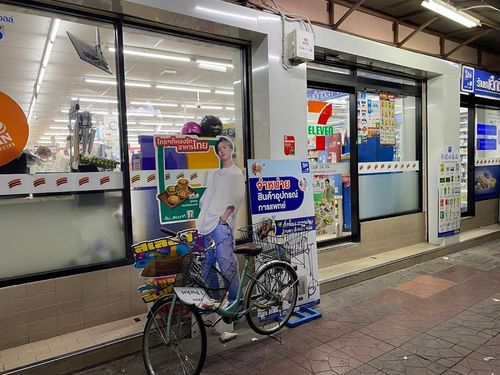
Khao San’s 24/7 reset button: ice‑cold A/C, ham‑cheese toasties, All Café iced lattes, water for 7–14 THB, and late‑night supplies from snacks to sunscreen—right by Rikka Inn.
More Khao San Road Guides
- Bangkok Street Food Safety Guide: How to Choose Clean, Fresh Stalls Like a Local
- Bangkok Street Food for Heat-Safe Eating: The Best Low-Risk Dishes, Freshness Checks, and Stall Rules in Bangkok
- Bangkok Street Food for Newcomers: How to Choose Safe, Busy Stalls and Avoid Common Mistakes
- Bangkok Street Food for First-Time Visitors: What to Order, How to Eat, and Where to Go Beyond Khao San Road