How to Order Bangkok Street Food: Thai Phrases, Spice Levels, and Stall Etiquette for Khao San Road First-Timers
Master your first Khao San order: Thai phrases, spice levels, prices, and stall etiquette—so you eat fast, delicious, and without tourist traps.
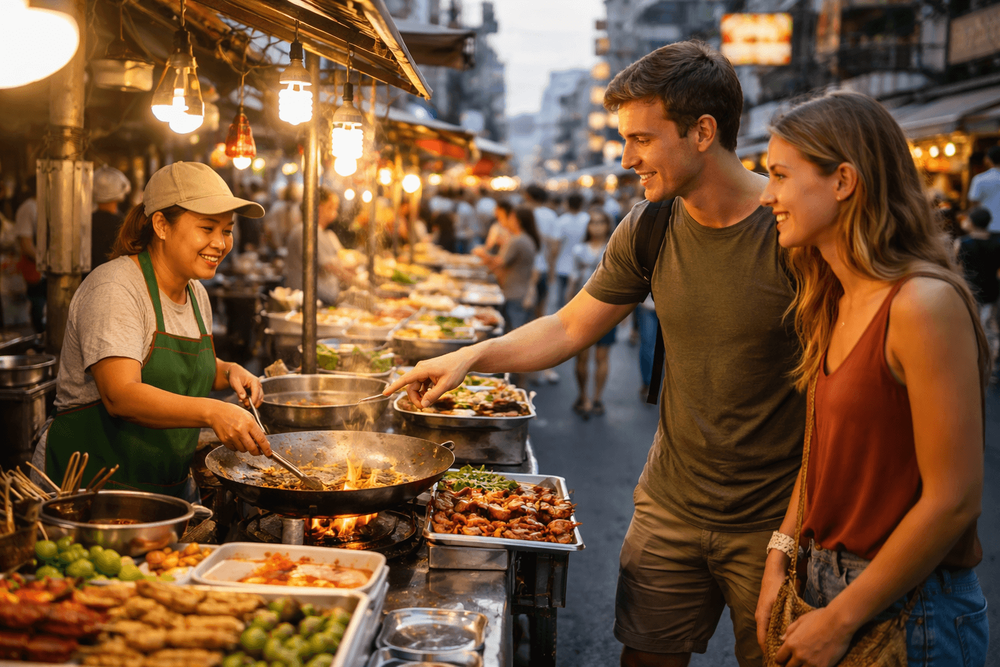
The wok hisses, a fist of chilies hits hot oil, and the air on Rambuttri goes from balmy to volcanic in a heartbeat. A vendor in a flour-dusted apron looks up, half-smile, waiting. We freeze—the eternal first-night-in-Bangkok pause—trying to remember how to order Bangkok street food without sounding like lost farang. Good news: we’ve been here before. Stick with us, and we’ll get you fed fast, spicy just-right, and with change back in your pocket.
The Language of the Cart: Phrases, Menus, and What You’re Seeing
Before we even open our mouths, we read the cart. Stainless steel tray? Likely rice dishes. A glass case with hanging red pork? That’s khao moo daeng (red pork on rice). A mortar and pestle? Som tam (papaya salad) zone. A bubbling cauldron? Soup or curry. {{place:Khao San Road:text}} and its side streets—Soi Rambuttri, Tanao Road, and Phra Athit—are a nightly parade of these clues.
Quick Thai for Ordering
- Sawadee khráp/khâ: Hello (male/female speaker)
- Ao… khráp/khâ: I’d like…
- Tao-rai khráp/khâ?: How much?
- Phet mai?: Spicy?
- Mai phet: Not spicy
- Phet nit noi: A little spicy
- Phet mak mak: Very spicy
- Kin tee-nee: Eat here
- Ao klap-baan / sai toong: To go / in a bag
- Khop khun khráp/khâ: Thank you
Polite particles matter. Men finish with khráp, women with khâ. Add a smile and you’re golden.
Menu Words You’ll See Everywhere
- Moo (pork), gai (chicken), nua (beef), pla (fish), goong (shrimp), tao hu (tofu), khai/kai (egg)
- Khao: Rice. Khao suay: plain rice. Khao pad: fried rice
- Pad: Stir-fry. Tom: Boil/soup. Yam: Spicy salad. Tod: Deep-fried
- Kai dao: Fried egg (topper that makes everything better for +10–15B)
Recognizing Popular Dishes by Sight (and Smell)
- Pad kra pao: Holy basil stir-fry—look for torn basil leaves, chopped chilies, and a sizzling wok. Usually 50–70B around Khao San.
- Khao man gai: Poached chicken over rice cooked in chicken fat, side of gingery sauce. 50–70B.
- Pad thai: Flat noodles, egg, chives, bean sprouts, peanuts. Tourist-zone carts can run 60–120B depending on protein.
- Som tam: Papaya shreds pounded with lime, fish sauce, chilies, palm sugar, tomatoes, peanuts. 50–80B.
- Moo ping + khao niew: Sweet grilled pork skewers with sticky rice. 20–30B per skewer; 10–15B for sticky rice.
- Pla pao: Salt-crusted, charcoal-grilled fish, stuffed with lemongrass—usually priced by size (expect 180–250B on the street).
- Boat noodles (kuay teow reua): Small bowls of dark, aromatic broth; look for tiny bowls stacked high. 40–60B per bowl near Khao San.
- Mango sticky rice: The coconut-scented crowd-pleaser, 60–100B.
Noodle Nerding (So You Order What You Mean)
- Noodles: sen yai (wide rice), sen lek (thin rice), sen mee (vermicelli rice), ba mee (yellow egg noodles), wun sen (glass noodles)
- Broth styles: nam sai (clear), tom yum (sour-spicy), yen ta fo (pink fermented tofu), naam tok (rich, boat-style)
We’ll mix and match soon—promise.
How to Order Bangkok Street Food (Without Overthinking It)
1) Read the Flow
Every stall has a rhythm. If there’s a queue, we join the line and watch what people do—point, pay, wait for a buzzer, or hover by a number sheet. If there are laminated menus or photos, grab one. If not, we point at ingredients and say the dish name.
Tip: If you’re unsure, ask “nee arai?” (what’s this?) with a grin. Keep it moving; Bangkok rewards confidence and courtesy.
2) Open with a Greeting and an Order
- “Sawadee khráp/khâ. Ao pad kra pao moo, kai dao, phet nit noi, khráp/khâ.” Translation: Hello. I’d like basil pork, fried egg, a little spicy.
Or build your own:
- “Ao khao pad goong, mai sai prik, khráp/khâ.” (Shrimp fried rice, no chilies.)
- “Kuay teow sen lek, tom yum, moo, khráp/khâ.” (Thin rice noodles, tom yum broth, pork.)
Numbers matter:
- “Song tee” = two orders; “nueng tee” = one; “sam tee” = three.
3) Dial the Heat Like a Local
- Mai phet: Not spicy (remarkably rare in the wild unless you insist)
- Phet nit noi: A little spicy (our usual starter)
- Phet baa: Crazy spicy (you asked for it)
If you love flavor but fear flame, say “phet nit noi, wan noi” (a little spicy, a bit sweet) at som tam carts. Different vendors, different hands on the sugar jar.
4) Customize the Details
- Add-ons: “sai kai dao” (add fried egg), “sai moo krop” (add crispy pork), “sai pak yer yer” (extra veg)
- Without: “mai sai nam pla” (no fish sauce), “mai sai tua lisong” (no peanuts), “mai sai hang hoey” (no oyster sauce)
- Protein swap: “pla/ moo/ gai/ tao hu” to switch fish/pork/chicken/tofu
- Noodle swap: “khoh plian pen sen lek/ba mee…” (please change to…)
Vegetarian/vegan:
- “Mangsawirat” (vegetarian) or “jay” (vegan Buddhist style: no meat, dairy, egg, and usually no garlic/onion). Example: “Pad thai jay, mai sai nam pla, khráp/khâ.”
Takeaway:
- “Ao klap-baan” or “sai toong” gets you a tied plastic bag and maybe a spoon. For sit-down street setups, “kin tee-nee” and they’ll point you to a stool.
5) Confirm and Step Aside
They’ll repeat your order, maybe ask “phet mai?” again. Nod, pay now or later (more on that below), then step to the side to keep the counter clear. We hover near the finishing station and let the wok show begin.
For more examples and pronunciations, see our deeper dive in the Bangkok Street Food Ordering Guide: Thai Phrases, Spice Levels, and Customization Tips. We’ll still be right here when you’re back. Bangkok Street Food Ordering Guide: Thai Phrases, Spice Levels, and Customization Tips
Paying Without Awkwardness: Cash, Change, and Street Prices
Cash is king on Khao San and around the old city. Some vendors take QR PromptPay, but unless you’ve got a Thai account, assume bills and coins.
- When to pay: Simple carts (moo ping, drinks) usually pay-on-order. Cook-to-order dishes often pay-on-serve. If in doubt, offer cash when you order; they’ll wave you off if it’s later.
- Change etiquette: You’ll see a plastic tray—drop cash there and receive change the same way. Big bills (500/1000B) at a 50B stall will test patience; we keep small notes from 7‑Eleven runs.
- Typical prices near Khao San:
- Rice plates (kra pao, khao man gai): 50–70B
- Pad thai: 60–120B depending on protein and cart location
- Noodle soups: 50–80B; boat noodles 40–60B per bowl
- Skewers: moo ping 20–30B each; sticky rice 10–15B
- Som tam: 50–80B
- Grilled fish (pla pao): 180–250B
- Fruit shakes: 40–80B; bottled water 10–20B; cha yen (Thai iced tea) 30–50B
Rounding up: Tipping isn’t expected at street stalls. If the auntie nailed your kra pao and tossed in extra basil, leaving the coins is a nice thank-you. Anything more belongs at sit-down restaurants.
Heads-up on pricing: If there’s a printed sign, that’s the price. If it’s weight-based seafood or “market price,” confirm before you order—“tao-rai?” paired with a pointing finger and raised eyebrow does the trick. Khao San’s pretty straightforward, but daylight questions save nighttime sulks.
Etiquette and Market Flow: How Not to Be That Farang
This isn’t a white-tablecloth scene; it’s better. It’s organized chaos with rules everyone instinctively knows. We learn by doing.
- Queue with your eyes: If there’s no line marker, the queue is whoever’s vaguely pointed in the right direction. Ask “khuen yang?” (are you in line?) with a smile if you’re unsure.
- Give up the edge: Don’t crowd the wok. Order, step back, and let the next person in.
- Share tables: Street dining is communal. If a seat’s open, ask “nang dai mai?” (may I sit?) and squeeze in. Keep your bag off the table; the chili jars need space.
- Self-service condiments: Taste first. Then adjust with the holy quartet—sugar, fish sauce, chili vinegar, dry chili flakes. No shame in a sprinkle of sugar on pad thai; this is Bangkok, not a wellness retreat.
- Clean and go: When you’re done, stack plates and wipe spills with the tissue tower. Bins are usually near the cart’s legs.
- No smoking near the wok: It’s illegal in many market areas and just rude.
- Photos: Snap the dish, not the auntie’s face, unless you’ve got rapport. A quick “tai ruup dai mai?” (may I take a photo?) goes a long way.
Want a deeper cultural read on lines, tables, and those condiment jars? We wrote a whole etiquette explainer you can skim between bites. Bangkok Street Food Etiquette: How to Order, Pay, Sit, and Eat Like a Local
Safety, Allergies, and Confidence for First-Timers
We eat street food almost daily because it’s fresh, fast, and fun—sanuk in edible form. A few habits keep it happy.
- Follow the crowd: Stalls with a steady line have fast turnover. Food doesn’t linger long enough to get sketchy.
- Hot over not: Things pulled straight from a wok, grill, or boiling pot are safer than pre-cut or pre-mixed. If som tam sits in a bowl looking lonely, we keep walking.
- Water and ice: Bottled water is everywhere (10–20B). Ice from big clear bags is standard; if the cooler looks dicey, skip it.
- Raw extras: If your stomach’s shy, avoid raw sprouts or herbs on day one. You can go full chili-basil jungle by day three.
Allergy talk—say it clearly:
- “Phom/chan phae tua lisong” (I’m allergic to peanuts)
- “Phom/chan phae kung” (I’m allergic to shrimp)
- “Mai sai tua lisong/kung, khráp/khâ” (No peanuts/shrimp, please)
- For shellfish allergies, avoid nam prik pao (chili jam) and kapi (shrimp paste) common in som tam and sauces—ask “mi kapi mai?” (is there shrimp paste?)
Gluten note: Soy and oyster sauces can contain wheat. If you’re strict, aim for grilled items, rice dishes customized “mai sai see-ew” (no soy sauce), or ask for salt/fish sauce only if you tolerate fish sauce.
Vegetarian/vegan confidence:
- “Jay” is your magic word. At pad thai carts: “Pad thai jay, mai sai nam pla.” At som tam stools: “Som tam thai jay, mai sai kapi.” If the vendor hesitates, they’re telling you it won’t taste right or they don’t have a clean pan—thank them and try the next cart.
If you want more first-visit reassurance—ordering flow, hygiene checks, and what to try first—we’ve bundled it here: Bangkok Street Food for First-Time Visitors: A Practical Guide to Ordering, Hygiene, and Must-Try Classics
Know Before You Go: Khao San Logistics
- Getting there: By river is the sanest way before sunset. Ride the Chao Phraya Express Boat to Phra Athit Pier (N13), then wander ten minutes past Phra Athit Road’s cafes into the Khao San–Rambuttri web. After hours, taxis or a motorcycle taxi from Sanam Luang get you close. The MRT Blue Line’s Sam Yot station is a 20-ish-minute walk if you’re feeling spry.
- When to eat: Lunch carts pop up 10:00–14:00, then vanish. The night shift starts around 17:00 and runs until midnight or later. Pad thai woks on Tanao and Rambuttri sizzle well past 1 a.m. on weekends.
- Heat survival: The blast of 7‑Eleven AC is free therapy. Grab water, break a 100B note, and practice your smile in the freezer-door reflection.
- Cash and ATMs: ATMs cluster on Khao San and Phra Athit. Fees bite—withdraw a sensible chunk once and hoard small bills for stalls.
- Where we sleep: We usually crash somewhere on Soi Rambuttri when we want quiet courtyards and morning birds, or nearer Phra Athit when a cheeky pool makes the midday nap irresistible. If you’re new-new, staying within a five-minute stumble of Khao San saves late-night tuk-tuk haggling and makes 2 a.m. moo ping a certainty.
Quick Reference Cheat Sheet
Core Phrases
- “Ao … khráp/khâ” = I’d like …
- “Mai phet / phet nit noi / phet mak mak” = Not spicy / a little / very
- “Kin tee-nee / ao klap-baan (sai toong)” = Eat here / to go
- “Mai sai …” = Don’t add … (e.g., peanuts, fish sauce)
- “Song tee” = Two orders; “nueng tee” = One; “sam tee” = Three
- “Tao-rai?” = How much?
Dish Decoder
- Pad kra pao kai dao = Basil stir-fry with fried egg
- Khao man gai = Hainanese chicken rice
- Kuay teow sen lek tom yum moo = Thin rice noodles, tom yum broth, pork
- Som tam thai = Classic papaya salad (usually with peanuts and dried shrimp—specify no peanuts/shrimp if needed)
- Moo ping + khao niew = Pork skewers with sticky rice
Street Prices Near Khao San
- Rice plates: 50–70B
- Pad thai: 60–120B
- Noodle soups: 50–80B (boat noodles 40–60B)
- Skewers: 20–30B
- Fruit shakes: 40–80B
- Bottled water: 10–20B
Etiquette Reminders
- Queue loosely, smile often
- Order, step aside, listen for your dish name or a nod
- Share tables; keep the condiment set tidy
- Pay when served unless it’s a skewers/drinks cart
One More Lap Around the Block
Let’s take what we’ve learned and do the fun bit: eat. We’ll start on Soi Rambuttri with moo ping for a warm-up, then drift toward Tanao for pad kra pao, and maybe finish with mango sticky rice by Phra Athit as the river breeze finally cuts the heat. By the end of tonight, you won’t just know how to order Bangkok street food—you’ll have your own go-to cart, your own spice level, and your own tiny victory grin when the vendor hands you exactly what you wanted.
If you get hooked—and you will—branch out by stall type next time. We put together a handy overview for plotting your next snack-crawl. Bangkok Street Food by Food Stall Type: Cart Classics, Skewers, Soups, and Grab-and-Go Meals
We’ll be around the corner, listening for that wok’s first sizzle. Your move: “Ao pad kra pao, phet nit noi, khráp/khâ.”
Related Hotels & Places
Rambuttri
Markets
Khao San’s calmer cousin: a tree‑shaded lane of VW van cocktail bars, open‑air foot massages, pad thai grills, and easygoing live bands. Best from sunset to 11pm; beers 80–120 THB, cocktails 150–220 THB. One block from the chaos, all the charm.
Khao San Road
Attractions
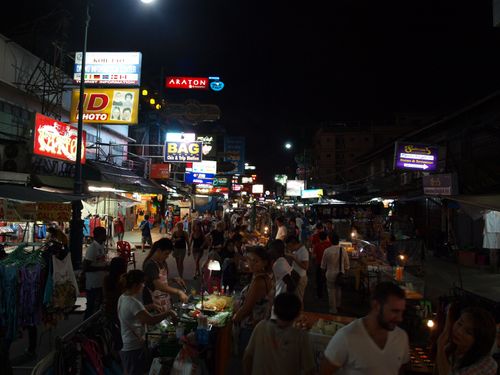
Bangkok’s backpacker carnival: curbside bars, live bands and DJs from 3pm–2am (midnight Sun). Street eats are cheap — pad thai 70–100 THB, mango sticky rice 60–100 THB. Come for wild people-watching; duck into Rambuttri for a calmer beer.
More Khao San Road Guides
- How to Order Bangkok Street Food Like a Local: Thai Phrases, Toppings, and Stall Etiquette
- How to Order Street Food in Bangkok: Thai Phrases, Stall Etiquette, and Easy Customizations
- Bangkok Street Food for First-Time Visitors: A Practical Guide to Ordering, Hygiene, and Must-Try Classics
- How to Order Street Food in Bangkok: Menu Signs, Spicy Levels, Pay Methods, and Stall Etiquette