
Where to Eat Street Food in Yaowarat: Bangkok’s Chinatown Night Market Guide
Eat your way through Yaowarat’s neon night market—what to order, when to go, savvy tips, and nearby sights in Bangkok’s Chinatown.
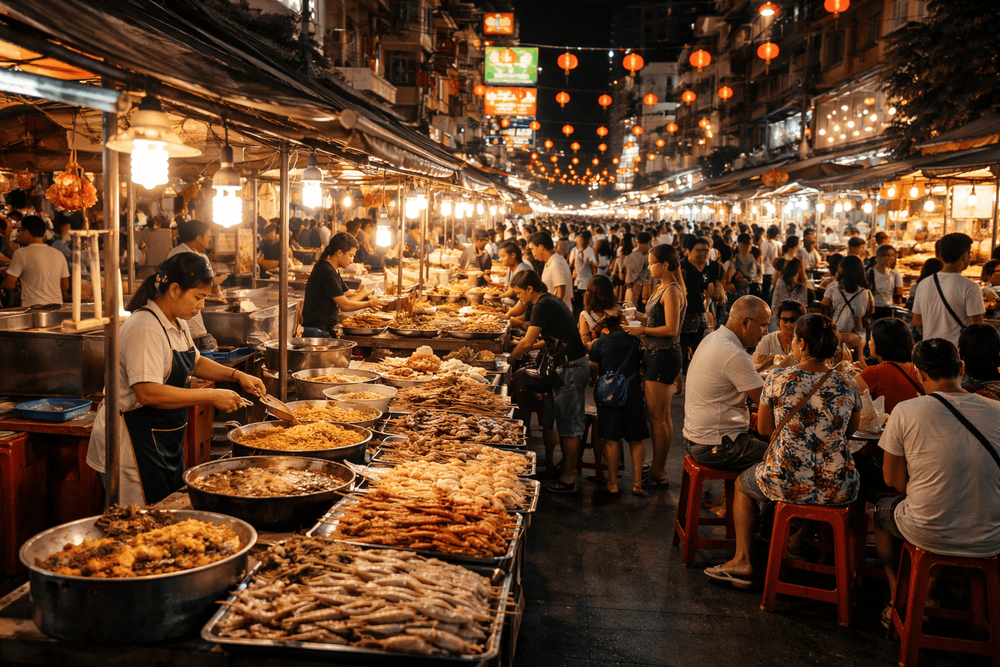
We pop out of MRT Wat Mangkon into the heat and neon—Yaowarat Chinatown Heritage Center Road already humming. Woks spit, chilies bite our eyes, and a line spills into the soi like a patient dragon. This is Yaowarat street food at its loudest and best: peppery broths, sweet rot of durian sneaking from a cart, gold-shop lights bouncing off stainless steel tables while a tuk-tuk honks us sideways. We’re here to graze, not to dine—no reservations, just appetite and the confidence to elbow in.
Yaowarat Street Food: Why Bangkok’s Chinatown owns the night
Bangkok has a thousand places to eat, but Yaowarat is where we come when we want theater with our noodles. Chinese-Thai families have been feeding this neighborhood for generations; recipes came with Teochew and Hokkien migrants, filtered through Bangkok’s markets and khlong-side produce. The result is a night market that’s equal parts tradition and chaos—crisp-skinned roast duck, pepper-charged guay jub, bubbling fish maw soup, wok-seared oyster omelettes that threaten to jump off the plate.
It’s not just the food; it’s the rhythm. By dusk, carts roll out along Yaowarat Road from Odeon Circle past the gold shops toward Ratchawong. Alleys—Soi Padungdao (Soi Texas), Plaeng Nam Road, Yaowarat Soi 6 and 11—flare to life. If you want the full picture on the neighborhood beyond what we can cram into one guide, zoom out with our overview of Yaowarat (Chinatown).
What to eat in Yaowarat: signature dishes, snacks, and sweets
We’ll never finish everything in one night, so we play the hits—small plates, share, keep moving. Expect 50–120 THB for most bowls and snacks, seafood from 300–1,200 THB depending on size, and desserts from 30–80 THB.
Noodles and soups
- Guay jub nam sai (rolled rice noodles in clear peppery broth): This is Chinatown’s calling card. The broth is white and punchy with white pepper, loaded with crispy pork belly (moo krob) and offal if you’re feeling brave. Ask “mai ao waiang” if you don’t want innards; they’ll stick to belly and maybe a soft-boiled egg. 60–100 THB.
- Bamee ped or moo daeng (egg noodles with roast duck or red pork): Springy noodles, sweet-savory soy, slivers of duck or char siu. Get it dry (haeng) with broth on the side to keep the noodles bouncy. 60–90 THB.
- Fish ball and wonton soups: Clean, light, and perfect between oilier bites. Look for vendors hand-rolling fish balls—turnover means freshness. 50–80 THB.
- Braised beef noodle soup: Deep, almost medicinal broth from hours on the fire; star anise, cinnamon, and tender tendon. 80–120 THB.
Wok and griddle classics
- Oyster omelette (hoy tod): Yaowarat-style leans crisp at the edges, gooey with starch, studded with fat oysters, and served with a tangy chili sauce. 120–200 THB depending on oyster size.
- Rad na and pad see ew: Broadsheet noodles, one sauced and silky (rad na), one char-kissed with dark soy (pad see ew). Pork or seafood, both benefit from a squeeze of prik nam som (vinegar chilies). 60–100 THB.
- Crab fried rice (khao pad boo): Big, sweet lumps of crab, not crab-flavored air. Prices vary with generosity—150–280 THB.
Seafood street dining (plastic chairs, full send)
You’ll spot the big seafood institutions by mountains of prawns on ice and hawkers waving laminated menus. Yes, they’re touristy; yes, they’re still fun if you pick wisely.
- Grilled river prawns, steamed crab, clams with sweet basil, stir-fried morning glory. Expect 400–1,200 THB for platters. Share plates, watch out for upsells on size—ask the weight first.
Roasts, grills, and bites
- Roast duck rice (khao na ped) and red pork rice (khao moo daeng): Sweet glaze, crunchy cucumber, a ladle of gravy. 60–90 THB.
- Moo satay (pork satay): Tiny skewers with coconut-peanut sauce and cucumber relish. Order by 10s; 10 sticks ~70–90 THB.
- Chinese buns and dim sum baskets: Char siu bao, shu mai, steamed custard buns. Great for nibbling while walking. 20–40 THB per piece.
- Fish maw soup (khaeng kradook pla): Silky, collagen-rich, with quail eggs and a hit of black vinegar. 60–100 THB.
Desserts and drinks
- Mango sticky rice (khao niew mamuang): Not strictly Chinese, but Chinatown does it well when mango is in season (Mar–Jun). 80–150 THB.
- Durian: Pre-packaged pods or hacked-open Monthong by weight. In peak season (Apr–Aug) you’ll smell it before you see it. Pre-packed portions often 150–300 THB.
- Black sesame dumplings in ginger syrup (bua loy nam king): Peppery-sweet ginger soup with molten sesame filling. 40–70 THB.
- Grass jelly (chao kuay), ginkgo nuts in syrup, chrysanthemum tea (nam kek huay), and herbal drinks in glass bottles—perfect at the height of Bangkok heat. 20–40 THB.
Pro tip: Yaowarat does seasonal sanuk too. During the Vegetarian Festival (Tesagan Gin Je, usually late Sep–Oct), yellow flags sprout everywhere and stalls go fully meatless with soy “duck,” crispy tofu, and peppery noodle soups that hold their own. Crowds double; flavors don’t suffer.
Best times to hit the Chinatown night market
- Peak eating window: 6:30 pm–10:30 pm. This is when the street sparks—full vendor lineup, maximum buzz. Popular stalls can mean 20–40 minute waits; we snack while we queue.
- Early birds: 5:00–6:30 pm for photos of carts setting up, less jostling, and easier table grabs. Some signature vendors won’t be ready yet.
- Late owls: 11:00 pm–1:00 am on weekends. Fewer families, more industry night-shifters, and a slightly seedier, slower burn. Not every stall stays open.
- Weekdays vs weekends: Friday–Sunday are a crush; Wednesday and Thursday are sweet spots—busy but breathable. Some vendors rest on Monday.
- Weather watch: Rainy season (May–Oct) brings sudden downpours. Many stalls roll out tarps and keep cooking, but sidewalks puddle up fast. Light rain can thin the crowds—come prepared with a cheap poncho from 7-Eleven (and yes, that AC blast at the door will feel like a polar vortex).
- Festivals: Chinese New Year turns Yaowarat into a sea of red lanterns and elbow-to-elbow humanity. Stunning—but plan to graze, not feast; lines can be epic and some vendors switch to simpler menus.
Navigating Yaowarat like we’ve done this before
Bangkok rewards a little strategy; Yaowarat even more so.
How we choose stalls
- Follow turnover, not just the queue. A 10-minute line at a cart stacking bowls nonstop beats a 2-minute line at a slow pot.
- Stainless steel is your friend: clean cutting boards, covered ingredients, and a steady boil on soups are green flags.
- Watch what locals order; copy it. If the auntie in gold bangles is getting the dry noodles with extra greens, we are too.
- Ask for the price before committing to seafood by weight. “Taorai?” gets you the number; confirm grams or size.
Ordering like we belong here
- A quick “sawadee krub/ka” goes a long way. Smile; it’s not optional.
- Spice levels: “mai phet” (not spicy), “pet nit noi” (a little spicy), “pet mak” (very spicy).
- Custom tweaks: “mai sai” (don’t add) and “khong nit noi” (a little) help with offal, coriander, or MSG if that’s your thing.
- Pay flow: Most stalls are cash. Pay as you order at carts; seated seafood spots tally at the end. Small bills are sanity savers.
- Seating: Table-sharing is normal. Squeeze in, say “khob khun krub/ka,” and leave a napkin of space.
Crowds, crossings, and the unglamorous bits
- Traffic never really stops. Cross at lights if you can; otherwise wait for a local shield and draft in.
- Sidewalks are obstacle courses: propane tanks, stools, motorbikes. It’s part of the dance—watch your ankles.
- Hydration and heat: Bring water or grab bottled drinks from a cart; beer is common at sit-down seafood but not every stall sells alcohol.
- Cleanliness: Street food here is fast and hot; that’s your best defense. Bring tissues and hand gel. If a pot looks tired or lukewarm, skip it and keep moving.
If you’re new to Thai street eats, this broader primer has your back: Bangkok Street Food: Best Dishes, Where to Eat & Traveler Tips.
Getting there
- MRT: Wat Mangkon Station (Blue Line) drops us right under Chinatown. Take Exit 1 for Yaowarat Road; Exit 3 leads to Charoen Krung and Talat Noi. Hua Lamphong Station is a 15–20 minute walk if you like a leg-stretch.
- River boat: Chao Phraya Express to Ratchawong Pier (N5), then wander east up Ratchawong Road until the neon finds you (10–12 minutes). It’s a gorgeous sunset approach if you’re coming from Tha Tien or Sathorn.
- Bus: Old-school but effective. Routes along Charoen Krung and Yaowarat connect to the Old Town and Siam. Bring coins, patience, and curiosity.
- Taxi/tuk-tuk: Make sure the taxi runs the meter. For tuk-tuks, agree on price first; short hops around 80–150 THB depending on traffic and your bargaining charm.
Tip: Start at Odeon Circle’s Chinatown Gate for bearings, then drift west. Duck into side sois whenever traffic gets feral; the best bites often hide in the alleys.
Nearby attractions to pair with your feast
Turn your chow into a full Chinatown wander.
- Wat Traimit (Golden Buddha): A short walk from the eastern end of Yaowarat. Drop by in late afternoon before the night market cranks up. Modest dress, small entry fee.
- Talat Noi: Graffiti-splashed alleys, retro machine parts, cute cafes by the river. Enter via Soi Charoen Krung 22; best in the daytime.
- Sampheng Lane Market: Narrow, old-school wholesale warren. Go in the morning before the heat gets medieval; bargains on snacks and trinkets.
- Leng Buai Ia Shrine & Guan Yin Shrine (Thian Fah Hospital): Centuries-old smoke and gilding—good for a cultural palate cleanser between bowls.
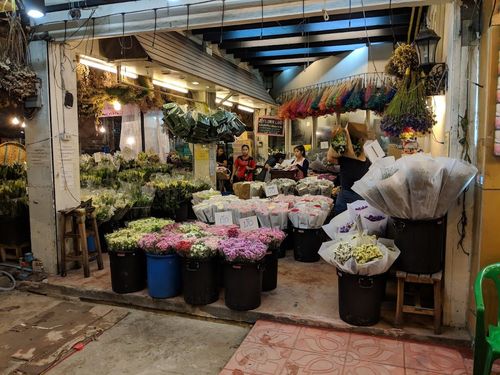
- Pak Khlong Talat (Flower Market): 5–10 minutes by tuk-tuk from the western end near Ratchawong; late-night blossoms, marigold garlands, and a photogenic caffeine hit.
If you’re splitting your Bangkok nights between Chinatown and the backpacker thump, we also roam the stalls around KSR—our deep-dive is here: Khao San Road Street Food: What to Eat & Where (2026).
Where we base ourselves for easy Chinatown runs
We don’t overthink it. If Yaowarat is our mission, we like to sleep within striking distance of MRT Blue Line stops (Wat Mangkon or Hua Lamphong) or near Ratchawong Pier for a breezy river commute. A no-fuss guesthouse around Phra Athit or the Old Town also works—quick taxi rides, daytime temples, nighttime noodles. If you prefer to soak up the party vibe and hop over to Chinatown after, staying near Khao San isn’t a bad bet; it’s a 10–15 minute taxi in light traffic.
No matter where we crash, we pack light, carry small bills, and keep a spare tote for snacks. Because there will be snacks.
Sample crawl: one-night, many bites
- 17:30 – MRT Wat Mangkon to Yaowarat Gate; iced chrysanthemum tea to start.
- 18:00 – Guay jub for the pepper blast and crispy pork.
- 18:30 – Oyster omelette share-plate; rad na while we wait.
- 19:15 – Duck noodles, dry style, with broth on the side.
- 20:00 – Quick detour down Soi Texas for dim sum and satay.
- 20:45 – Grilled prawns + morning glory at a plastic-chair seafood joint.
- 21:45 – Bua loy nam king for heat-balm; optional durian if your hotel isn’t strict.
- 22:15 – Slow wander toward Ratchawong Pier; river breeze, taxi home.
Know before you go
- Cash is king; a few vendors take Thai QR (PromptPay), but don’t count on cards.
- Expect to queue for famous stalls. It’s part of the fun; rotate jobs—one of us holds the table, the other hunts snacks.
- Rain plan: plastic stool life goes on. Step off slick tiles carefully.
- Allergies? Ask clearly, point to ingredients, and say “mai sai” (don’t add). Oyster omelettes and fish maw soup are shellfish central.
- Dress light, pack wipes, and bring your own water bottle—you can refill at cafes.
- Scams are rare here; soft upsells are not. Confirm prices, especially for seafood by weight. If it feels off, smile and walk.
We’ll say it outright: Yaowarat street food is not calm. It’s hot, loud, occasionally pushy, and totally worth it. Grab a stool, let the pepper clear your head, and keep a little room for one last bowl. The night’s still young and that wok is still singing.
Related Hotels & Places
Yaowarat Chinatown Heritage Center
Attractions
Inside Wat Traimit by Chinatown Gate, this tidy museum charts Yaowarat’s Chinese roots with bilingual displays, period photos and short films. Open Tue–Sun 8:30am–4:30pm; closed Mon. Pair it with the Golden Buddha upstairs.
Pak Khlong Talat (Flower Market)
Markets
Bangkok’s 24‑hour flower market by Memorial Bridge. Best after midnight when trucks unload orchids, marigolds, roses and fragrant jasmine garlands. Photogenic, lively, and easy to reach from Khao San for a late‑night wander.
Khao San Road
Attractions
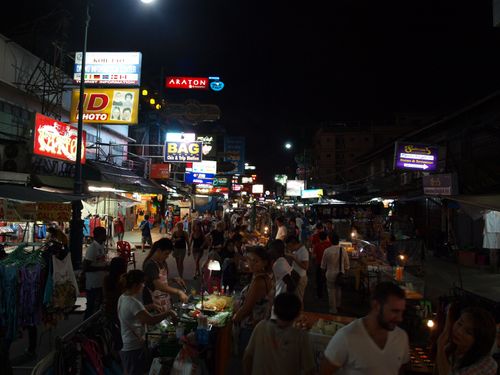
Bangkok’s backpacker carnival: curbside bars, live bands and DJs from 3pm–2am (midnight Sun). Street eats are cheap — pad thai 70–100 THB, mango sticky rice 60–100 THB. Come for wild people-watching; duck into Rambuttri for a calmer beer.
More Khao San Road Guides
- Best Hotels Near Yaowarat (Chinatown) for Food Lovers, Night Markets, and Easy MRT Access
- Bangkok Chinatown Street Food for Khao San Road Travelers: A Night Market Food Guide
- Best Street Food in Yaowarat for First-Time Visitors: What to Eat, When to Go, and How to Plan the Night
- Best Hotels Near Yaowarat for Foodies: Walkable Stays for Late-Night Street Eats, MRT Access, and Easy Old Town Day Trips