
Bangkok Street Food Order Guide: Thai Names, English Meanings, and Easy Phrases for First-Time Travelers Near Khao San Road
Menu decoder and easy Thai phrases for ordering Bangkok street food near Khao San—prices, spice levels, etiquette, and where to eat without stress.
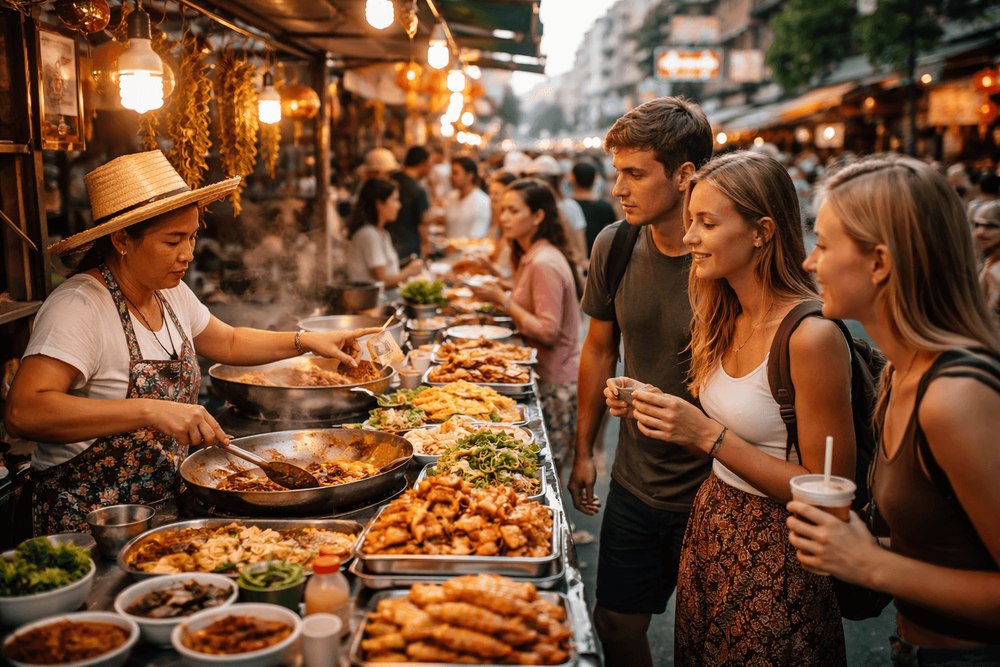
We’re shoulder-to-shoulder on Soi Rambuttri, heat licking our ankles from a charcoal brazier while a wok screams in falsetto. The auntie in a pink apron is two steps ahead of us and five orders deep. This is where a Bangkok street food order guide earns its keep—one good phrase, one confident point, and dinner materializes: sizzling, fragrant, and exactly how we like it.
What This Bangkok Street Food Order Guide Will Do
We’ll decode Thai menu words, practice dead-simple phrases, and learn how to tweak spice and toppings without breaking the auntie’s flow. We’ll also talk prices, portions, and the polite way to pay, then map out where to eat around Khao San Road when the bass thumps and our stomachs growl. You’ll see the keyword—Bangkok Street Food Order Guide—show up a few times, because that’s what we’re doing: ordering like we belong here.
Common Thai Street Food Dishes and How They Taste
Let’s read the street like a menu. We’ll go dish-by-dish, with Thai names you’ll spot on hand-painted signs or hear shouted across the wok.
Pad kra pao (ผัดกะเพรา)
Holy basil stir-fry with meat: moo (pork), gai (chicken), nuea (beef), or talay (seafood). Garlicky, peppery, a little sweet, usually spicy unless you rein it in. On rice with a runny fried egg (khai dao) is the move.
Pad thai (ผัดไทย)
Chewy rice noodles, wok-smoke, tamarind tang. Street versions near Khao San skew sweeter; hit the table caddies with lime, chili flakes, and crushed peanuts to balance it.
Kuay tiao ruea – boat noodles (ก๋วยเตี๋ยวเรือ)
Tiny bowls, big flavor. Dark, spiced broth with pork or beef, morning glory, and rice noodles. Traditionally served in multiple small bowls—sanuk (fun) to stack them.
Tom yum (ต้มยำ)
Hot-sour soup perfumed with lemongrass, galangal, kaffir lime leaf. Clear broth (nam sai) or milky with evaporated milk (nam khon). Shrimp (goong) is classic.
Som tam (ส้มตำ)
Green papaya salad, pounded in a wooden mortar. Spicy-sour-salty-sweet with lime, fish sauce, chili, palm sugar. Variants: som tam Thai (peanuts, dried shrimp), som tam pu pla ra (fermented fish funk—bold).
Moo ping (หมูปิ้ง)
Grilled marinated pork skewers, a little smoky, a little caramel. Order with sticky rice (khao niew) and stand on the curb like a local.
Gai yang (ไก่ย่าง)
Isan-style grilled chicken, char-frilled and lacquered. Dip in jaew (spicy tamarind-chili sauce); chase with papaya salad.
Khao man gai (ข้าวมันไก่)
Hainanese chicken rice. Poached chicken, gingered rice, soy-chili-ginger sauce. Comfort in a bowl when last night was too rambunctious.
Khao moo daeng (ข้าวหมูแดง)
Red pork on rice with sweet-savory gravy, boiled egg, and crispy pork bits. Balanced and not crazy spicy.
Khao kha moo (ข้าวขาหมู)
Braised pork leg over rice. Star anise, soy, and long simmering—melts into the rice.
Hoy tod (หอยทอด)
Crisped-edge oyster or mussel omelette with chili sauce. Greasy in the right way; listen for that sputter on the griddle.
Guay tiao (ก๋วยเตี๋ยว) – noodles your way
Pick your broth (tom yum, clear, or dark), your noodle size (sen yai wide, sen lek thin, sen mee vermicelli, bamee egg noodles), and your protein. Then season to taste with table condiments.
Roti (โรตี)
Griddled flatbread, often banana and egg with condensed milk. Yes, it’s dessert. Yes, we still eat it before dinner sometimes.
Mango sticky rice – khao niew mamuang (ข้าวเหนียวมะม่วง)
Sweet mango, coconut cream, sticky rice. In season it’s unbeatable; out of season, ripe banana versions do the trick.
How to Order Street Food in Bangkok (Polite, Clear, and Fast)
You don’t need perfect tones. You need rhythm: smile, point, short phrases, and a quick wai (palms together) if it feels right. Here’s our pocket script.
- Sawadee krap/ka = hello (male/female speakers)
- Ao … krap/ka = I’ll have …
- Khor … krap/ka = May I have …
- … moo/gai/nuea/talay = … pork/chicken/beef/seafood
- Mai phet = not spicy
- Phet nit noi = a little spicy
- Phet mak = very spicy
- Mai sai … = don’t add … (e.g., mai sai prik = no chili; mai sai pong chee-rot = no MSG)
- Sai … noi = add a little … (e.g., sai nam phrik = add chili paste a little)
- Khai dao duai mai? = Fried egg too?
- Kin tee nee dai mai? = Can we eat here?
- Ao klap baan = Takeaway
- Tao rai? = How much?
- Check bin / kep ngeun = The bill / collect money (stall owners will understand “check bin”)
- Khop khun krap/ka = thank you
Gesture cheat sheet: one finger means one portion; palm down, light wave over the dish you want; a tiny pinch motion when saying “nit noi” lands every time. If there’s a queue, hover near the wok and make eye contact when the cook looks up—say your order fast. If there’s a ticket system, the vendor will hand you a slip; pay when you pick up.
If you want a deeper phrase list with customization examples, jump to our expanded notes in How to Order Street Food in Bangkok (/articles/how-to-order-street-food-in-bangkok).
Prices, Portions, Spice Levels, and Customization
- Portions: One dish = one person. Noodle bowls can be on the petite side; two bowls (or a side of moo ping) is normal.
- Typical prices near Khao San: simple noodles or rice plates often in the 50–100 THB range; touristy stretches may ask more. Grilled skewers 10–25 THB each; roti 30–60 THB; fruit 20–50 THB per bag. These are safe ranges—confirm locally if a stall has no sign.
- How to ask spice level: “Mai phet” (not spicy) or “phet nit noi” (a little). If you like heat, “phet mak” gets you the real stuff.
- Ingredients and swaps: “Mee…” means “do you have…?” (Mee gai mai? = have chicken?). “Luea…” can mean “or.” You can also point and say the protein you want. No peanuts? “Mai sai tua li song.” No fish sauce? “Mai sai nam pla.” Vegetarian? “Jay” (เจ) signals vegan-leaning buddhist-style dishes—say “gin jay.”
- Add-ons that are always worth it: “khai dao” (fried egg) on rice dishes; extra crispy pork “moo krob” on noodle soups if offered.
For a detailed breakdown of spice words and common customizations, see Bangkok Street Food Ordering Guide (/articles/bangkok-street-food-ordering-guide-thai-phrases-spice-levels-customization).
Food Stall Etiquette, Payment, and Safety Checks
Bangkok works because everyone understands the dance. Here’s our side of the choreography.
- Queue like a local: If there’s a line, it’s a single-file snake. If not, it’s a soft cluster—listen for “khrap/ka?” and jump in with your order.
- Seating: Plastic stools mean communal real estate. Point at a table and ask, “Wang mai?” (available?) with a smile. Buss your tray if there’s a bin.
- Pay: Cash is king. Small notes help. Many permanent stalls accept Thai QR (PromptPay), but don’t count on cards. Some vendors tally after you eat; if in doubt, ask “Jai ngeun ton nee mai?” (pay now?) or just say “check bin.”
- Water and ice: Bottled water is safest. Ice blocks are usually food-grade, but if the cooler looks swampy, we skip it.
- Hygiene checks before ordering: Look for high turnover (freshly cooked food beats pre-cooked trays), boiling pots, covered ingredients, clean tongs, and a hand-wash bucket. If you see limp herbs and flies sunbathing, move on. Trust your nose; Bangkok smells like life, but old oil smells like a regret.
- Price clarity: If there’s no sign, ask “Tao rai?” before ordering. If it feels inflated for the area, a gentle smile-and-decline works. There’s always another stall two meters away.
More stall-side etiquette and safety detail here: Bangkok Street Food Etiquette: How to Order, Pay, Sit, and Eat Like a Local (/articles/bangkok-street-food-etiquette) and Bangkok Street Food for First-Time Visitors: What to Order, How to Spot the Best Stalls, and What a Fair Price Looks Like (/articles/bangkok-street-food-first-time-visitors-what-to-order-best-stalls-fair-prices).
Best Street Food Areas Near Khao San Road
Banglamphu is a maze of good smells. Here’s how we roam when hunger hits.
Khao San Road (night owl energy)
Neon, bass, and late-night fixes. Expect pad thai theatrics, banana roti, grilled skewers, and fruit shakes. Prices skew higher and flavors tilt sweet to flatter farang crowds. Fun after midnight; we treat it like dessert after a real meal one street over.
Soi Rambuttri (our everyday canteen)
Shadier, slower, and friendlier. Great for moo ping, tom yum noodles, and easy rice plates. Breakfast carts roll early with jok (rice porridge) and soy milk dough sticks.
Phra Athit Road and Phra Sumen Fort
Riverside vibe with shophouse noodle joints, boat noodles, and Isan grills. Grab a bench by the fort and demolish som tam and gai yang while the Chao Phraya breeze pretends to be air-con.
Chakrabongse Villas and Tani Roads
Solid noodle soup shophouses, khao man gai vendors, and late-night fried rice. When the wok breathes fire at 2 AM, we follow the sparks.
Dinso Road to Mahachai Road (a longer wander)
A 15–20 minute walk drops us into old-town greats: crisp hoy tod, legendary pad thai houses, and dessert stalls that restore your faith in sticky rice. Crowds swell; the food’s worth it.
Vendor types you’ll meet:
- Pushcarts (rot khek): Mobile, fast, best for skewers, fruit, roti.
- Permanent stalls and shophouses: Bigger menus, seating, QR payments more likely.
- Market lanes: Morning tofu, curries, and snacks; evenings lean grilled and fried.
Know Before You Go
- Heat is real. We dart into 7-Eleven for the blessed AC blast and a 10–20 THB water.
- Cash flow: Carry 100s and 20s. ATMs are on every corner, but fees bite.
- Timing: Morning for jok and soy milk; lunch crowds slam 11:30–13:30; dinner peaks 18:00–20:30; late-night until the wok tires. Hours vary—confirm locally.
- Allergies: Say “phom/chan phae …” (I’m allergic to …) and name the ingredient; still, avoid hidden minefields like nam pla (fish sauce) if you’re strict.
- Where to crash: Around Khao San, we like places with pools or quiet courtyards—you’ll appreciate it after a night of bass and basil. Check for walkable access to Rambuttri and Phra Athit so midnight noodles are a two-minute stroll.
Quick Phrase Cards You Can Copy-Paste
- Ao pad kra pao moo, mai phet, sai khai dao, krap/ka. (I’ll have basil pork, not spicy, with a fried egg.)
- Tom yum goong, phet nit noi, kin tee nee dai mai? (Tom yum shrimp, a little spicy, can we eat here?)
- Kuay tiao sen lek moo toon, ao klap baan. (Thin-rice-noodle soup with stewed pork, takeaway.)
- Som tam Thai, mai sai tua li song. (Papaya salad Thai-style, no peanuts.)
Getting Oriented Around Khao San
- Landmarks: Khao San Road runs parallel to Soi Rambuttri; Phra Athit hugs the river by Phra Sumen Fort; Banglamphu Market fans out behind Chakrabongse Road.
- Moving around: Walk everywhere; tuk-tuks are fun but agree on a price first. The Chao Phraya Express boat from Phra Arthit Pier is our favorite cool-breeze escape and a handy hop to Chinatown Bangkok (Yaowarat) for a bonus feast.
Quick Plan
- Day 1: Khao San → Soi Rambuttri (0.8 km, 10–15 min walk) — Lunch noodles, afternoon fruit cart; Overnight base: Banglamphu
- Day 2: Soi Rambuttri → Phra Athit → Phra Sumen Fort → Chakrabongse/Tani (2.0 km, 30–45 min walk) — Evening som tam and grills; Overnight base: Banglamphu
ASCII route: Khao San → Rambuttri → Phra Athit/Fort → Chakrabongse/Tani → Khao San
Costs at a Glance (THB)
- Fuel price per liter: 35–50 THB (volatile; confirm locally)
- Estimated fuel cost per segment: N/A (walking route)
- Tolls per segment: N/A (inner-old-town walk)
- National park/attraction fees per person: N/A for this route; nearby temples may request small donations—confirm locally
- Parking per night: 100–300 THB at private lots around Banglamphu (if you bring a car; confirm locally)
- Typical dish ranges: 50–100 THB for noodles/rice; 10–25 THB skewers; 30–60 THB roti; 20–50 THB fruit (ranges provided; confirm stall-side)
- Last checked: Oct 2026
Booking Pathways
- Car rental: Compare rental deals at https://www.rentalcars.com (useful if you’re road-tripping beyond Bangkok)
- Hotels: Browse well-reviewed Banglamphu stays on https://www.agoda.com (filter for pool and walkability to Rambuttri)
- Attraction tickets: Skip-the-line options and food tours at https://www.klook.com (handy for ferry passes or Chinatown tasting walks)
Verification
- We avoid quoting exact stall prices and hours unless posted on-site. Ranges above reflect common recent street prices near Khao San and Banglamphu; confirm locally. If a stall lacks signage, ask “Tao rai?” before ordering. For specialty or seafood items, expect higher ranges.
When the wok screams and the basil hits the oil, we order with a grin. Tonight we’re starting on Rambuttri, chasing boat noodles on Phra Athit, and finishing with a guilty roti on Khao San. If you see us waving for “phet nit noi,” pull up a stool—we’ll swap bites.
EVAL_DATA:
- quick_plan: true
- costs_at_a_glance: true
- booking_pathways: true
- verification_citations: true (ranges only; advised to confirm locally)
- ascii_map: true
Related Hotels & Places
Khao San Road
Attractions
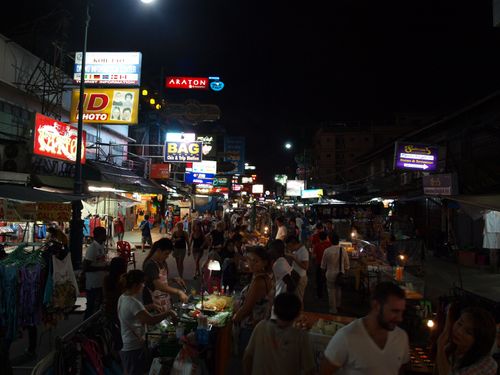
Bangkok’s backpacker carnival: curbside bars, live bands and DJs from 3pm–2am (midnight Sun). Street eats are cheap — pad thai 70–100 THB, mango sticky rice 60–100 THB. Come for wild people-watching; duck into Rambuttri for a calmer beer.
Rambuttri
Markets
Khao San’s calmer cousin: a tree‑shaded lane of VW van cocktail bars, open‑air foot massages, pad thai grills, and easygoing live bands. Best from sunset to 11pm; beers 80–120 THB, cocktails 150–220 THB. One block from the chaos, all the charm.
Phra Sumen Fort
Attractions
1783 riverfront fort on Phra Athit with white battlements, park breezes, and killer sunset views over Rama VIII Bridge. Free entry; best from 5–7pm before the gates close at 9pm.
Chinatown Bangkok (Yaowarat)
Attractions
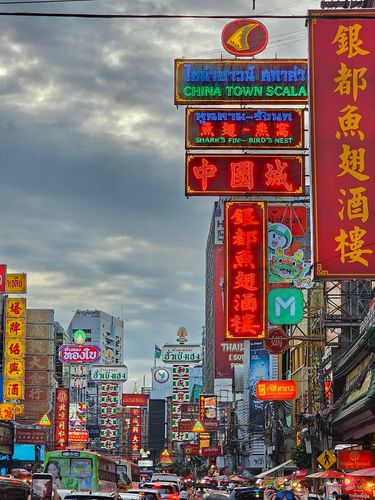
Neon, woks, and queues: Yaowarat is Bangkok’s street‑food strip. Start at Wat Mangkon MRT, graze T&K Seafood and Nai Ek’s peppery guay jub, snag toasted buns, and finish with mango sago at Sweet Time. Best 6pm–late; ~10‑minute taxi from Khao San.

Chakrabongse Villas
Hotels
A 5-star hotel in Bangkok.
More Khao San Road Guides
- How to Order Bangkok Street Food: Thai Phrases, Spice Levels, and Stall Etiquette for Khao San Road First-Timers
- Bangkok Street Food Ordering Guide: How to Read Menus, Point to Dishes, and Avoid Surprises Near Khao San Road
- Bangkok Street Food Ordering Guide: Thai Phrases, Spice Levels, and Customization Tips
- Best Thai Dishes to Try at Bangkok Street Food Stalls: A Khao San Road Ordering Guide