
Bangkok Street Food Guide for First-Timers: What to Order, How to Spot the Best Stalls, and What It Costs
Our Bangkok street food guide shows what to order, where to eat near Khao San and beyond, how to spot clean stalls, and what it all should cost.
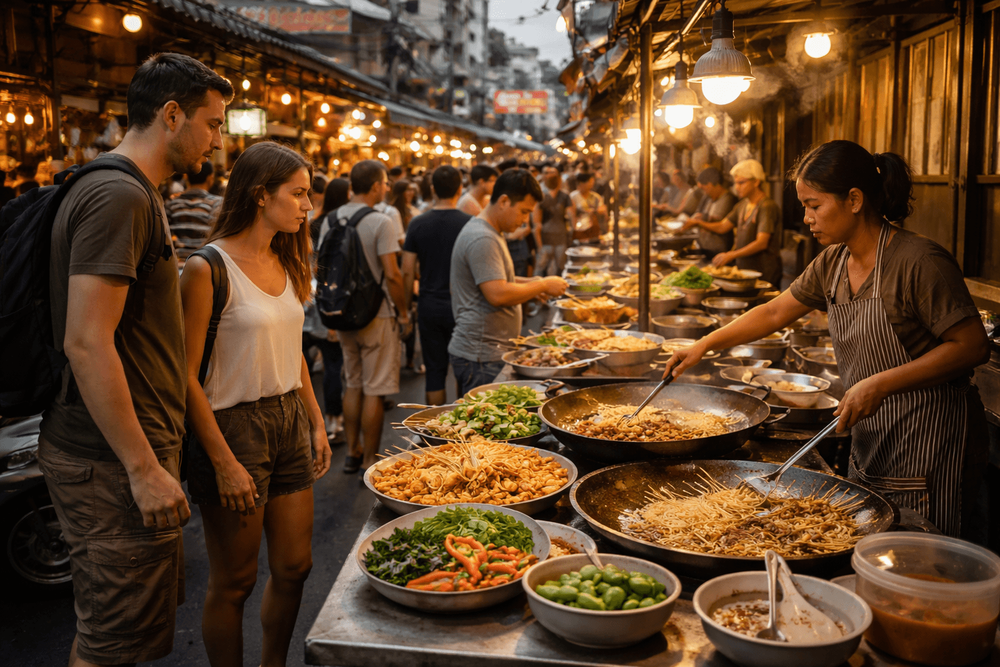
We’re shoulder-to-shoulder on The Mulberry Bangkok Khaosan Road, watching a wok flare like a fire-breathing dragon. The cook doesn’t flinch—he’s got that sabai sabai calm—just flicks his wrist and sends a comet of noodles skating through smoke. This is the Bangkok street food guide we wish someone had handed us on day one: what to order, where to go (Khao San Road and beyond), how to eat safely, and what it all should cost—without getting fleeced or bored.
Bangkok Street Food Guide: Essential Dishes to Try
Bangkok rewards curiosity. If we follow the sizzle, the clack of a cleaver, and the perfume of garlic and holy basil, we’ll eat very, very well.
Savory stir-fries and rice plates
- Pad kra pao (stir-fry with holy basil): Bangkok’s weekday hero. Pork or chicken mince, holy basil, chilies, a fried egg on top. Ask for “phet nit noi” (a little spicy) if you’re nervous. Expect 50–80 baht in local areas; 80–120 baht in tourist zones around Khao San.
- Khao man gai (Hainanese chicken rice): Poached chicken, fragrant rice cooked in chicken fat, ginger-chili sauce. If the rice is glossy and the cleaver thuds nonstop, we’re in good hands. 50–70 baht.
- Khao kha moo (stewed pork leg on rice): Tender, star anise and cinnamon in the air, braised pork with pickled greens and a jammy egg. 60–90 baht.
- Khao rad gaeng (curry-over-rice): Point-and-choose curries and stir-fries from trays. Two items over rice runs 40–70 baht; three items 60–90 baht. Great for sampling flavors without committing to a single dish.
Noodles and soups (follow the steam)
- Boat noodles (kuai tiao ruea): Dark, rich broth (often with a whisper of pig’s blood for body), tiny bowls so we can stack empties like trophies. Best near Victory Monument and around the khlongs by Golden Mount. 15–25 baht per small bowl; we order 3–5.
- Tom yum noodles: Limey, spicy, peanutty—add or subtract condiments to tune it. 50–80 baht.
- Yen ta fo: Pink tofu-based sauce, morning glory, fish balls, flat rice noodles. Sweet-sour-savory in one slurp. 50–80 baht.
- Pad see ew / pad kee mao: Wok-charred wide noodles with soy or “drunken” chili-basil swagger. 50–80 baht.
Grilled and on-the-go
- Moo ping (grilled pork skewers): Caramelized over charcoal, smoky-sweet. Pair with sticky rice. 10–20 baht per skewer; 10–15 baht for rice.
- Gai yang (grilled chicken) + som tam (papaya salad) + sticky rice: The Isan trio. Mortar-and-pestle papaya slap echoes down the soi. Combo meal 100–160 baht depending on size.
- Sai krok Isan (fermented pork sausage) and naem (sour pork): Tart, garlicky, with chiles and raw cabbage. 20–30 baht per stick.
- Fish balls and squid balls (look chin): Skewered, dunked in sweet-chili. 10–20 baht per skewer.
Sweets and drinks
- Mango sticky rice (khao niao mamuang): Peak mango with salted coconut cream. 60–100 baht near Khao San; 50–70 in local markets.
- Khanom krok: Coconut-rice pancakes, molten in the middle, lightly crisp at the rim. 20–40 baht per tray.
- Roti: Flaky griddled bread, often with banana and egg, drizzled with condensed milk. 30–60 baht.
- Thai iced tea (cha yen) and Thai iced coffee (oliang): Sweet, creamy rocket fuel. 25–40 baht.
- Fresh fruit shakes: Watermelon, pineapple, passionfruit. 40–70 baht; watch for added sugar if you prefer it “wan nit noi” (just a little sweet).
Where to Eat: Khao San Road and Beyond
We’ll use Khao San as our compass, then wander. The trick is letting our feet and nose do the plotting.
Khao San, Soi Rambuttri, and Phra Athit
- Khao San Road: Late-night sanuk central. It’s chaotic, loud, and not shy about farang prices—but the atmosphere slaps, especially after 10 pm. We pick stalls with queues and cooks who cook to order.
- Soi Rambuttri: Khao San’s breezier, leafier cousin. Think moo ping smoke curling under fairy lights, roti sizzling near the curb, and noodle carts that show up just when we thought we were done eating.
- Phra Athit Road: More local, with cheap khao man gai by day and som tam stands at dusk. Grab a bite, then stroll to the river for a Chao Phraya breeze that feels like free AC.
If you want a deeper read on this pocket of the city, we break it down here: Bangkok Street Food Guide: Khao San Road and Beyond.
Chinatown (Yaowarat)
Neon, gold shops, and a nightly parade of steam. Yaowarat Road turns into a movable feast around 6 pm: peppery guay jub (rolled rice noodle soup), charcoal-kissed kuay teow kua gai (wok-fried chicken noodles with runny egg), roasted chestnuts, oysters slurped curbside. Side sois like Soi Texas and Plaeng Nam feel like a scavenger hunt we always win. Expect 60–150 baht per dish; seafood stretches higher.
Wang Lang Market (across from the Grand Palace)
Hop the river from Tha Chang or Tha Tien to Wang Lang Pier and walk straight into a food maze: curry-on-rice stalls, fried chicken dusted with white pepper, tiny cups of khanom krok still hissing. This is a daytime play (roughly 9 am–4 pm), perfect before or after the Grand Palace or Wat Pho. Prices skew local: 40–80 baht.
Talat Phlu and Thonburi backstreets
Across the river in Thonburi, Talat Phlu brims with grilled pork, Chinese-Thai sweets, and old-school noodle shops. Nights buzz, but it’s never as slammed as Yaowarat. It’s a reminder that Bangkok’s soul didn’t all move to the mall.
Victory Monument and the Golden Mount area
Boat noodles alleys still stack bowls like Jenga near Victory Monument. Around Wat Saket (the Golden Mount), look for afternoon curry-on-rice lines and evening satay smoke pooling in the crossroads. Add a climb up the Golden Mount at sunset for that burnished skyline and a hunger to match.
Charoen Krung and Bang Rak
Bangkok’s original “downtown.” Between Saphan Taksin and Hua Lamphong, we thread through century-old shophouses and new-school cafés. Charoen Krung is where roast duck, biryani, and Thai-Chinese seafood coexist like it’s the most natural thing.
What Makes Bangkok Street Food Unique
- Balance in every bite: Thai food chases salty-sweet-sour-spicy (plus the anchoring umami of fish sauce and dried shrimp). A squeeze of lime, a shake of prik nam pla (chopped chilies in fish sauce), a dusting of sugar—customization lives in the condiment caddy.
- Wok hei and charcoal: That smoky kiss isn’t an accident. Woks scream hot; grills live over real fire. We smell it before we see it.
- Mortar and pestle magic: Som tam isn’t tossed—it’s pounded, a staccato beat that carries down the soi.
- Late-night DNA: Bangkok eats when it wants. After 11 pm, Khao San wakes up again; Chinatown keeps slinging shells; a vendor pushes a cart past our guesthouse at 2 am like it’s noon.
- Micro-cuisines on one street: Isan som tam, Southern grilled chicken with turmeric, Central Thai boat noodles, Chinese-Thai roast pork—Bangkok is the buffet of Thailand without the buffet.
How to Eat Street Food Safely and Confidently
We’re not into playing digestive roulette. Here’s how we keep the fun and skip the regret.
- Follow the line, not the sign: High turnover beats a pretty banner. Busy stalls mean fresh oil, hot pans, and constant cooking.
- Watch the heat: Anything cooked to order over a ripping flame is your friend. Reheated trays that sit lukewarm? We pass unless we see constant turnover.
- Look at hands and habits: Gloves or tongs for cooked foods, a separate chopping board for raw meats, clean aprons. If the vendor washes herbs and handles money with the same hand, we keep walking.
- Eat when locals eat: Lunch (11 am–1:30 pm) and dinner (6–9 pm) are prime. Trays are fresh and the grill never rests.
- Ice and water: Purified ice is standard and safe at legit stalls; if in doubt, go for bottled water or canned drinks.
- Allergies and spice: Learn two phrases—“mai phet” (not spicy) and “phet nit noi” (a little spicy). For shellfish or peanut allergies, say it up front and clearly, then watch prep.
- Cash is king: Small bills make everyone’s life easier. Most carts don’t do cards; some accept QR PromptPay but assume cash.
If you’re the research-before-bites type, keep this handy: Bangkok Street Food Safety Guide: How to Choose Clean, Fresh Stalls Like a Local and our practical primer for newcomers: Bangkok Street Food for First-Time Visitors: A Practical Guide to Ordering, Hygiene, and Must-Try Classics.
Ordering Like We’ve Lived Here for Years
- Pointing works: We point, smile, and hold up fingers for quantity—“nueng” (one), “song” (two). If there’s a menu with photos, even better.
- Customize with the caddy: Four pillars usually sit on the table—vinegar with chilies, sugar, fish sauce with chilies, and roasted chili flakes. Tweak to taste after a first bite.
- Seat strategy: Some vendors share tables. We grab a seat, order from the right cart, and pay that cart directly—don’t assume a server will appear.
- Bowl economics: Noodle stalls often offer small/large. If we’re sampling across stalls, we go small and keep grazing.
- Politeness pays: A simple “sawadee” and “khop khun krap/ka” (thank you) earns smiles—and sometimes a little extra basil.
Budget, Vegetarian Options, and Must-Try Specials
What it should cost
- Breakfast basics (congee, patongo donuts, soy milk, grilled skewers): 20–60 baht.
- Noodle soups and rice plates: 50–90 baht local, 80–120 baht in tourist hotspots.
- Seafood specialties (Chinatown or riverside): 120–300 baht per dish, more for big prawns or crab.
- Sweets and drinks: 20–70 baht.
If you love planning by price point, we broke it down here: Bangkok Street Food by Budget: What to Eat for 50, 100, and 200 Baht.
Vegetarian and vegan (jay) moves
- Say “kin jay” (eat vegan) and look for the yellow-red “เจ” sign at stalls, especially during the Vegetarian Festival (September/October). Jay cooking skips meat, fish sauce, and strong alliums.
- Easy wins: Pad pak (stir-fried vegetables), pad see ew with tofu, fried rice with vegetables, som tam Thai “mai pla ra, mai goong haeng” (no fermented fish, no dried shrimp), mushroom boat noodles (yes, they exist), tofu satay.
- Sauces to watch: Fish sauce and oyster sauce sneak into everything. We ask for soy-based swaps.
Halal and other dietary needs
- Muslim-friendly clusters exist around Ramkhamhaeng and parts of Bang Rak; look for halal signage. For gluten concerns, rice noodles and plain grilled meats are usually safe—soy sauce may contain wheat, so we ask.
Don’t leave without trying
- Som tam + gai yang + sticky rice on Phra Athit at sunset
- A late-night pad kra pao with a runny fried egg after the thump of a Khao San bar
- Boat noodles near Victory Monument—stack at least four bowls or we’re not done
- Khanom krok still bubbling in its cast-iron pan on a Bang Lamphu Market side soi
Know Before You Go: Heat, Crowds, and the Fun Bits
- Heat happens: Bangkok’s humidity is a wall. We tag-team stalls with 7-Eleven breaks—the blast of AC and a cold water are part of the ritual.
- Crowds aren’t a bug; they’re the feature: Lines move fast; a stall that’s too quiet makes us suspicious.
- Street tax is real: In tourist zones, prices creep. We don’t haggle over food; we just pick better stalls.
- Waste less: Bring a reusable tote or collapsible container for takeaways; ask for “mai tong” (no bag) when we can.
Getting There and Timing
- Khao San / Rambuttri / Phra Athit: From BTS Saphan Taksin, take the Chao Phraya Express boat to Phra Arthit Pier. It’s scenic, cheap, and drops us right into dinner. Tuk-tuks are fine for short hops but agree on price first.
- Chinatown (Yaowarat): MRT Blue Line to Wat Mangkon Station. Evenings from 6 pm onward; weekends are busiest (and most delicious).
- Wang Lang Market: Cross-river ferry from Tha Tien (near Wat Pho) or Tha Chang (near the Grand Palace) to Wang Lang Pier. Best 10 am–3 pm.
- Victory Monument boat noodles: BTS to Victory Monument; noodle alleys are a short walk from the station.
- Charoen Krung / Bang Rak: BTS Saphan Taksin for Sathorn Pier access, or wander up from Saphan Taksin Station into the old shophouse grid.
A Few Final Insider Moves
- Arrive hungry, leave room: The joy is grazing—not ordering the biggest plate at the first place we see.
- Watch the cook: We choose stalls where the same person cooks every plate. It’s not just theater; it’s quality control.
- Time your sweet tooth: Mango sticky rice hits different after spicy noodles. Trust us.
- Crash close to the action: We like staying within walking distance of Soi Rambuttri or Phra Athit, so the first bite (and the last roti) is never more than a five-minute wander.
Bangkok rewards the curious and the patient. Meet us at the corner of Soi Rambuttri after sunset—we’ll start with moo ping, chase it with a bowl of tom yum noodles, and see where the night takes us. If the wok’s still roaring, we’re not done yet.
Related Hotels & Places
Khao San Road
Attractions
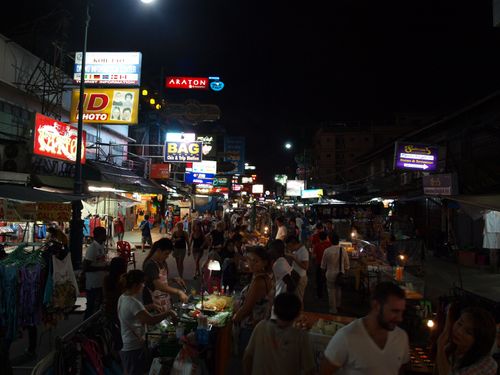
Bangkok’s backpacker carnival: curbside bars, live bands and DJs from 3pm–2am (midnight Sun). Street eats are cheap — pad thai 70–100 THB, mango sticky rice 60–100 THB. Come for wild people-watching; duck into Rambuttri for a calmer beer.
The Mulberry Bangkok Khaosan Road
Hotels
Great care is taken to ensure guests experience comfort through top-notch services and amenities. Remain linked during your visit by utilizing the complimentary internet access available. Reception services featuring luggage storage are available to cater to your requirements.Need some relaxation? Y
Bang Lamphu Market
Markets
Old-school Banglamphu market just off Khao San for bargain clothes, luggage and the city’s go-to school‑uniform shops. Swing by at dusk when street-food carts fire up and locals shop for dinner. Open Tue–Sun till 10pm; closed Monday.
Brick Bar
Bars
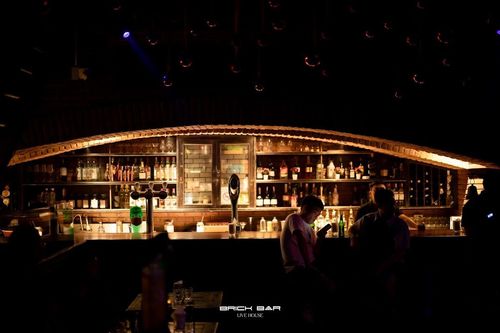
Legendary live music venue in the Buddy Lodge complex. Thai ska, jazz, and blues bands play nightly in this underground basement bar beloved by locals and travelers alike.
More Khao San Road Guides
- Bangkok Street Food for First-Time Visitors: What to Order, How to Spot the Best Stalls, and What a Fair Price Looks Like
- Bangkok Street Food for First-Time Visitors: A Practical Guide to Ordering, Hygiene, and Must-Try Classics
- Best Thai Street Food Dishes to Try in Bangkok: A First-Timer’s Guide to Noodles, Rice Plates, and Skewers
- Bangkok Street Food for First-Time Visitors: What to Order, How to Eat, and Where to Go Beyond Khao San Road