
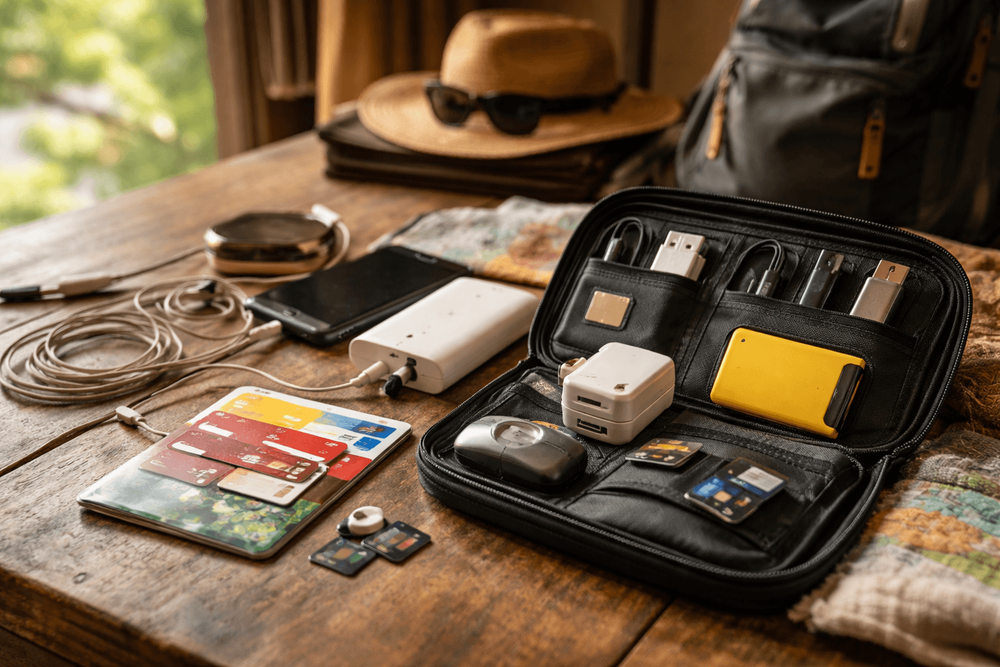
What to Pack for Thailand for Thai SIM Cards, eSIMs, and Mobile Connectivity: Power, Storage, and Backup Essentials
Your complete Thailand SIM card packing list: eSIM vs SIM, power, apps, and ID. What to bring, how to buy at airport or 7-Eleven, and how to stay online fast.
We step off the Airlink at Phaya Thai and the Bangkok heat grabs us by the collar. A 7-Eleven’s arctic blast beckons from the corner, and so does the neon glow of a carrier booth promising “Unlimited Data, 5G Ready.” Before we sprint toward the first deal, let’s open our Thailand SIM card packing list and make sure we’ve actually packed the small, boring things that keep our phones online when it matters—like when we’re trying to summon a Grab from Soi Rambuttri or navigate a tuk-tuk standoff on Phra Athit Road.
Data Freshness + Pricing:
- Prices are approximate and in THB.
- Last checked: June 2026.
- Happy hour and promo details change frequently—confirm locally.
Thailand SIM card packing list: pre-flight checks that save time
Make sure your phone will actually work here
Thailand runs on 4G/LTE nationwide and 5G in most cities. If your phone is from the last 4–5 years, you’re almost certainly fine. Still, we double-check:
- Unlocked phone: if you bought your handset via a carrier back home, confirm it’s unlocked. If it isn’t, call them before you fly—airport kiosks can’t fix a carrier lock.
- Bands: most modern devices support Thailand’s common LTE bands (1, 3, 5, 8) and 5G (n1, n3, n41). Not sure? A quick specs search for your model takes 2 minutes and can save a day of head-scratching.
- Dual SIM/eSIM: many phones now run one physical nano-SIM plus an eSIM. That’s our favorite setup: keep your home number parked for OTPs, run Thai data on the other.
Passport readiness for SIM registration
Thai law requires ID verification to activate SIMs. Airport counters, carrier stores, and many 7-Elevens will scan your passport photo page and sometimes snap a quick selfie. Pack:
- Your physical passport (not just a photo)
- A digital copy stored offline in your phone
- A small zip pouch so the passport doesn’t get soaked in a Khao San Road downpour
If you’re finicky about organizing documents and backup cards, we’ve got a dedicated guide: What to Pack for Thailand for Carrying Cash, Cards, and Travel Documents: Organization and Backup Essentials.
Power, cables, and charging sanity
Bangkok will chew through your battery. Between Grab, Google Maps, LINE, and the camera roll exploding with gilded wats, you’ll want:
- 20W+ USB-C charger and a spare cable (USB-C to USB-C, plus Lightning if needed)
- 10,000–20,000 mAh power bank (approx. 600–1,200 THB locally)
- Lightweight universal adapter (Thailand uses 220V, and many sockets accept flat or round pins—adapters still help in older guesthouses)
For deeper gear nerding, see: Thailand Electronics Packing List: Adapters, Power Banks, and SIM Gear and What to Pack for Thailand for SIM Card, Connectivity, and Charging on the Road.
App prep while you’ve got home Wi‑Fi
- Offline maps: download Bangkok, Chiang Mai, or your island of choice in Google Maps. Pin your stay, a nearby 7-Eleven, and an ATK-friendly clinic just in case.
- Ride-hailing: Grab is king; Bolt sometimes undercuts it. Both need a steady data drip at the curb.
- Messaging: LINE is big in Thailand. WhatsApp and Messenger work fine with farang, but many locals live in LINE.
- Translation: Google Translate offline Thai pack saves face when your train platform becomes a khlong of confusion.
Which Thailand SIM options to consider (tourist SIMs, eSIMs, prepaid)
You’ll see the big three everywhere: AIS, True, and Dtac. All sell tourist SIMs with chunky data, and all have eSIM options too.
Tourist physical SIMs (airport counters and city stores)
- What you get: a Thai number, a fixed bundle (say 7–15 days), heaps of data, and some voice minutes. Plans are often sold as “unlimited,” but speeds may throttle after a fair-use cap. Expect hotspot to be allowed but sometimes speed-capped—ask when you buy.
- Approx. prices: short bundles from around 149–299 THB for light data up to 599–899 THB for 10–15 days with higher-speed “unlimited.” Airport promos tend to be pricier but painless.
eSIMs (pre-buy or at the counter)
If your phone supports eSIM, this is the smoothest play. You can buy from the carrier or a reputable reseller and receive a QR code by email.
- Pros: land, switch on data at the gate, and message your guesthouse before the meter starts on that taxi. No tiny plastic to lose, and you keep your home SIM physically in place.
- Cons: older budget phones may not support eSIM. Dual eSIM support varies by model—some phones limit you to one active eSIM at a time.
- Approx. prices: broadly similar to physical SIMs—think 199–799 THB depending on days and speed.
Prepaid data top-ups and extensions
Staying longer or chewing data like som tam? Add-ons are easy via carrier apps or 7-Eleven.
- Add-on data: daily or weekly boosters commonly run approx. 25–79 THB/day or 150–300 THB/week for mid-speed “unlimited.”
- Voice minutes: usually inexpensive if you need to call a guesthouse on Koh Tao or a ferry office in Surat Thani.
Carrier differences in the real world
- AIS: generally broadest nationwide coverage—handy on islands and rural stretches.
- True: strong in Bangkok and big cities; you’ll find True shops in nearly every mall along the BTS.
- Dtac: often the value play with competitive promo bundles and solid urban speeds.
We’ve bounced between all three. In Bangkok’s core (Siam, Silom, Thonglor), speeds fly on any of them; on a night train north or a ferry wake to Koh Phangan, AIS has often kept one extra bar.
Essential items and prep to avoid arrival-day headaches
The tiny heroes
- SIM ejector tool: pack it in your wallet or tape it inside your phone case. A paperclip works, but those aren’t standard issue at Don Mueang at 2 AM.
- Nano-SIM adapter kit: if you’re swapping between older gear, a cheap adapter kit (approx. 50–100 THB) avoids a late-night hunt.
- Microfiber pouch: keeps your original home SIM and tray safe. Those things disappear faster than a bowl of boat noodles at Victory Monument.
Redundancy is your friend
- Backup eSIM QR: save the email PDF offline and screenshot the QR. If Wi‑Fi flakes, you can still install.
- Offline essentials: Google Maps, Translate, and a PDF of your hotel address in Thai for taxi drivers.
- Two-factor sanity: if your bank or email texts OTPs, keep your home line active but with data roaming OFF.
Power for hotspots and long days
We hotspot a lot—to book ferries, upload photos, and buy last-minute Chao Phraya Express boat tickets while we’re already sweating at Sathorn Pier. Thailand Electronics Packing List: Adapters, Power Banks, and SIM Gear What to Pack for Thailand for Digital Nomad Backpackers: Work Gear, Adapters, and Hostel Office Setup Thailand Packing List for Digital Nomad Backpackers.
Buying your SIM: airport kiosks, 7-Eleven, or city shops
Airport kiosks (Suvarnabhumi BKK, Don Mueang DMK)
- Why we like them: you land, you wave your passport, and five minutes later you’re online. Staff handle the install and APN, set English in the carrier app, and check that LINE pings arrive.
- What to expect: passport scan, maybe a selfie; they’ll pop the SIM/eSIM and show you your Thai number. You can pay by card or cash. Promos are convenient but usually not the absolute cheapest. Expect to pay approx. 299–899 THB depending on duration and speed.
- Pro tip: if the queue snakes halfway to baggage claim, grab airport Wi‑Fi, book a ride into town, and buy in the city.
7-Eleven convenience (ubiquitous, even on small sois)
- What they sell: starter SIM kits for the big carriers, often behind the counter near the cigarettes. Many branches can register your passport on the spot; a few may direct you to a nearby carrier shop for KYC if their system is down.
- How to activate: staff can activate or you’ll scan a QR/USSD code inside the pack. APN usually sets itself; otherwise you’ll find the APN as “internet.”
- Language: staff English varies, but a friendly “sawadee krub/ka” goes a long way. Show your passport and say the carrier name you want.
- Price: similar or a bit cheaper than the airport for the same bundle—think approx. 149–599 THB.
Carrier stores in malls and phone markets
Head to Terminal 21 Pattaya, MBK Center, or CentralWorld for official AIS/True/Dtac counters and a whole jungle of phone stalls.
- Why we go: best selection, clear English support, and repairs/cases if your phone met a Songkran bucket.
- Activation: swift. You’ll leave with the carrier app in English, top-up options explained, and your plan’s renewal date noted.
eSIM before you fly
Buying an eSIM online is the smoothest landing. Steps:
- Purchase and receive your QR. 2) On your phone, add eSIM via QR. 3) Label it “Thailand.” 4) Set as data line, leave voice on your home SIM. 5) Toggle data roaming ON for the eSIM if the provider instructs it—some need that to handshake. Once you land, it should light up within a minute or two of airplane mode off.
Troubleshooting in the wild
- No data? Toggle airplane mode, then check “Cellular Data” is set to your Thai line.
- Still nothing? Manually select the carrier in Network Selection. As a last resort, set APN to “internet” and restart.
- Can’t receive OTPs from home? Ensure your home SIM’s voice/SMS line is active and data roaming is disabled to avoid surprise bills.
Data needs, coverage, and staying connected across Thailand
How much data do we really need?
- Light user (maps, messaging, rides): 2–4 GB/week is plenty.
- Medium (social uploads, YouTube at low res, hotspot bursts): 6–10 GB/week.
- Heavy (video calls, reels, constant tethering): consider “unlimited” tourist plans—many run at a practical 10–30 Mbps cap, enough for HD calls and maps.
Approx. pricing: expect weekly data bundles around 150–300 THB for mid-speed unlimited, and 299–899 THB for 7–15 day tourist SIMs with generous caps.
Coverage by vibe and region
- Bangkok core (Siam, Silom, Sukhumvit, riverside near Tha Chang): all three majors crush it, including 5G. Underground MRT and sky-high rooftops behave.
- North (Chiang Mai, Pai): towns are solid; mountains can dip behind the ridges.
- Islands (Samui, Phangan, Tao; Andaman side like Phuket, Koh Lipe): towns and beaches are fine; ferries and remote bays can be spotty. We’ve had slightly better luck with AIS when island-hopping.
Hotspotting and fine print
- Most tourist bundles allow tethering, but some throttle after a threshold. If you’re planning a work day at a café on Soi Nana (the Chinatown one, not the red-light), ask specifically about hotspot speeds before paying.
- International calls are extra; use data calling in LINE/WhatsApp when possible.
Topping up and extending plans
- 7-Eleven: tell the cashier “Top up AIS (or True/Dtac) one hundred baht,” show your number, pay cash, and keep the receipt. Or buy a top-up voucher to key in a USSD code.
- Carrier apps: link a card and add packages directly. Set the app language to English during store activation to avoid mystery renewals.
- Boonterm machines: those bright blue kiosks on sidewalks and in malls accept cash for instant top-ups.
Keeping your number and managing renewals
- Many plans auto-renew if there’s credit. If you’re bouncing down to the islands for a week, consider disabling auto-renew in the app to avoid paying for city-speed data you won’t use.
- Short trip? A 7–10 day tourist plan with fixed validity is usually the sanuk, zero-admin choice.
Quick packing checklist for Thailand SIMs and connectivity
- Unlocked smartphone (eSIM-capable if possible)
- Physical passport + offline copy for SIM registration
- SIM ejector tool + nano-SIM adapter kit
- Small pouch for your home SIM and tray
- 20W+ USB-C wall charger and 2+ cables
- 10,000–20,000 mAh power bank (approx. 600–1,200 THB)
- Universal travel adapter (Thailand 220V)
- Offline Google Maps, Translate Thai pack, Grab/Bolt installed
- Backup eSIM QR saved offline (screenshot + PDF)
- A little cash (100–300 THB) for first top-up or snacks while you sort it out
- Ziplocks or a waterproof sleeve if you’re Songkran-bound or doing khlong-side markets
What to Pack for Thailand for SIM Card, Connectivity, and Charging on the Road What to Pack for Thailand for SIM Card, Connectivity, and Charging on the Road and Thailand Electronics Packing List: Adapters, Power Banks, and SIM Gear.
Know before you go: etiquette, scams, and real-talk
- ID photos and selfies at the counter are normal for KYC. Smile; it’s quick.
- Beware anyone offering back-alley “super-cheap unlimited forever.” If it sounds like a tourist-trap tuk-tuk to a gem shop, it probably is. Stick to carriers or legit convenience stores.
- Bangkok is loud, bright, and distracting. Do SIM swaps on a counter, not while weaving through Chatuchak crowds—one flick and your home SIM is gone for good.
- Heat is real. We duck into 7-Eleven not just for AC, but to finish activation without sweat dripping on the screen.
Where your connectivity really pays off
Here’s the sanuk part. With our Thailand SIM card packing list handled, everything else gets easier:
- Live-translate the menu at a shophouse near Golden Mount and order the off-menu bowl with extra nam tok.
- Watch the Chao Phraya Express boat map fill in while we slide under Rama VIII Bridge.
- Call a GrabBike when Khao San’s bass thump has us longing for a quieter soi.
- Message your guesthouse that you’ll arrive late because moo ping skewers ambushed you at the corner.
Anker PowerCore 10000 Portable Charger
Pack the tiny stuff now, and we’ll spend our first evening not hunting for paperclips but hunting down that alley where the wok sings. Meet you under the 7-Eleven glow—bars on full, ready to roam.
Related Hotels & Places
7-Eleven
Shops
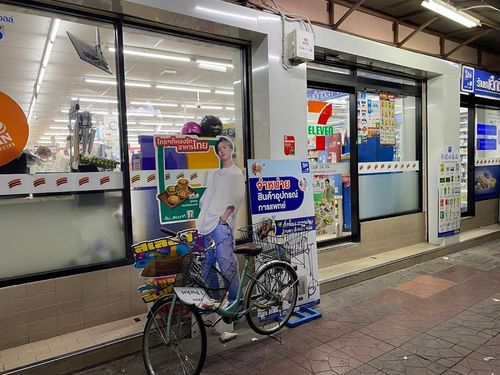
Khao San’s 24/7 reset button: ice‑cold A/C, ham‑cheese toasties, All Café iced lattes, water for 7–14 THB, and late‑night supplies from snacks to sunscreen—right by Rikka Inn.
Khao San Road
Attractions
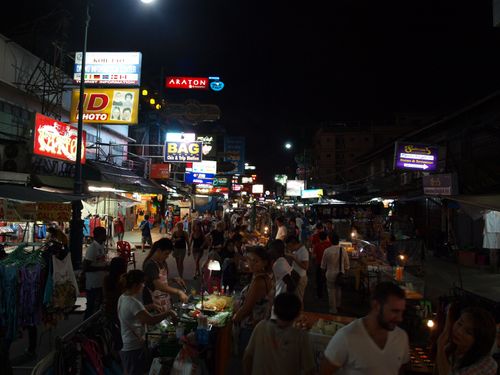
Bangkok’s backpacker carnival: curbside bars, live bands and DJs from 3pm–2am (midnight Sun). Street eats are cheap — pad thai 70–100 THB, mango sticky rice 60–100 THB. Come for wild people-watching; duck into Rambuttri for a calmer beer.

Terminal 21 Pattaya
Shops
Airport‑themed mega‑mall by Dolphin Circle with city‑style photo ops, a bargain‑friendly Pier 21 food court (dishes ~40–70 THB), cafés, and an SF Cinema upstairs. Easy Baht‑bus hop for an air‑conned break from the beach, open daily from 11am.
Recommended Products
More Khao San Road Guides
- What to Pack for Thailand for Phone-Heavy Travelers: SIMs, Chargers, and Power Bank Setup
- What to Pack for Thailand for Phone, Power, and Connectivity: SIMs, Chargers, Adapters, and Backup Battery Basics
- What to Pack for Thailand for Sim Card, Money, and Phone Setup: Staying Connected Without Overpacking
- What to Pack for Thailand for SIM Card, Connectivity, and Charging on the Road