
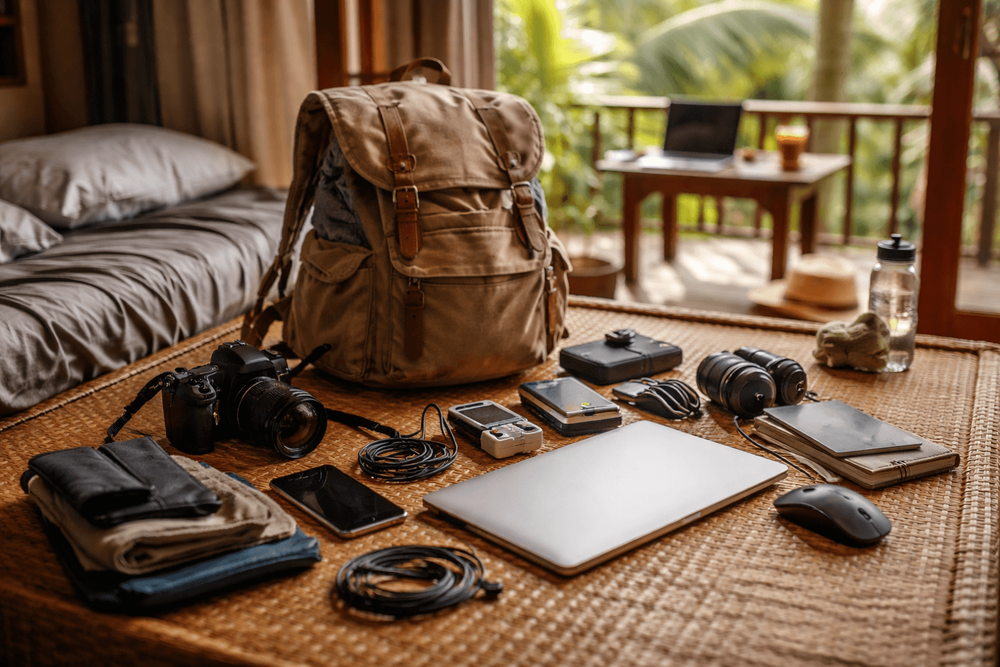
What to Pack for Thailand for Digital Nomad Backpackers: Work Gear, Adapters, and Hostel Office Setup
Light, work-ready, and heat-proof: our Thailand digital nomad packing guide covers adapters, SIMs, and a hostel office setup that actually works.
We step out of the taxi on Phra Athit Road and the heat hugs us like a damp blanket. A tuk-tuk snarls past toward Khao San Road, the thump of bass already bubbling up from a bar we’ll pretend we’re too cool for—but end up at anyway. Right now, all that matters is that our laptop survived the flight, the adapter works in this mystery socket, and there’s decent Wi‑Fi before our 10 p.m. client call. Welcome to Thailand digital nomad packing, where every gram in your bag either earns its keep—or becomes a sweaty regret you’ll trade away on Soi Rambuttri.
Thailand Digital Nomad Packing Priorities
Let’s get ruthless about what actually matters. Think of your kit in four buckets: climate clothes, work gear, documents, and health.
Clothing that respects the heat (and temples)
- Fabrics: Quick-dry tees and tanks, linen or light cotton shirts, breathable shorts. Synthetic blends handle Bangkok humidity better than thick cotton.
- Layers: A thin long-sleeve for sun and overzealous AC on the BTS or in cafes. A packable rain jacket or poncho for those surprise downpours that turn Soi Rambuttri into a shallow khlong.
- Shoes: One pair of lightweight sneakers for city miles and scooters, and sandals with decent tread for beach days and hostel showers. Leave heavy boots at home unless you’re trekking up north.
- Temple kit: Shoulders and knees covered. Toss a compact sarong or scarf in your daypack; we’ve wrapped up at Wat Phra Chetuphon Wimon Mangkhalaram Rajwaramahawihan more times than we can count.
- Laundry plan: Budget travelers live by coin machines (30–50 THB a wash) and hostel services. Pack fewer, faster-drying pieces. You can always grab a 120 THB t‑shirt at a night market when the laundry gets away from us.
If you want a broader clothing checklist for backpackers that still plays nice with laptops, skim our Backpacker Packing List for Thailand here: Backpacker Packing List for Thailand.
Work gear that won’t fail mid-call
- Laptop in a padded sleeve; humidity-resistant if you can. Slip that sleeve in a daypack when we dart out for a coffee on Soi Samsen.
- USB‑C hub with HDMI and card reader. Thailand’s budget monitors and TVs often still rely on HDMI; you’ll thank yourself on presentation day.
- Compact Bluetooth keyboard and mouse for posture sanity.
- Lightweight laptop stand (folding aluminum ones are gold). Your neck will thank you halfway through a Chiang Mai sprint.
- Noise-canceling earbuds or headphones. Khao San doesn’t care about your time zone.
- Surge-protected universal adapter and a short travel power strip. Power in older shophouses can be moody; give your charger a fighting chance.
- 10,000–20,000 mAh power bank, carry-on only. Airlines cap most packs at 100 Wh; keep it in your cabin bag.
Documents and money
- Passport + printed/digital copies. We keep one paper copy in our main pack and a photo in a secure cloud folder.
- Cards: Two debit cards and at least one credit card. Thai ATMs often charge a 220–250 THB withdrawal fee; pull more at once or use fee‑refunding banks if you have them.
- Proof of onward travel (sometimes requested), travel insurance details, and any visa paperwork. Rules shift, so check your nationality’s latest guidance and keep soft copies handy.
- Driver’s license + International Driving Permit if you plan on renting scooters up north or on the islands.
Health and comfort
- Sunscreen (reef-safe if you’ll be island‑hopping), insect repellent, and a small first-aid kit: plasters, ibuprofen, antihistamines, and tummy meds.
- Oral rehydration salts for post‑sun or post‑Songkran recovery.
- Reusable water bottle; refill stations and vending machines are everywhere.
- Compact microfiber towel and a small dry bag for monsoon days.
Thailand Tech and Connectivity: Adapters, SIMs, and Staying Online
Thailand runs on 220V, 50Hz with a mix of sockets; many accept both two‑flat and two‑round pins, sometimes three‑prong. A sturdy universal adapter with surge protection is non‑negotiable. We pack a mini power strip so one adapter powers everything from the hostel bunk to a riverside cafe on Phra Athit.
SIM and eSIM options
- Carriers: AIS, TrueMove H, and DTAC are the big three with city‑strong coverage and solid inter‑city service.
- eSIM: If your phone supports it, you can buy an eSIM from major carriers online or in official stores—handy if we’re rolling straight into a Grab from Suvarnabhumi.
- Physical SIMs: Sold at airports, malls, and 7‑Eleven. Tourist data packages are easy; for longer stays, monthly packs with generous data typically run 200–600 THB depending on speed and caps.
- Tethering: Works fine with all big carriers—great backup when a guesthouse router sputters.
Wi‑Fi reality check
- Bangkok and Chiang Mai cafes hum with caffeine and bandwidth; the islands can be fickle in storms. Ask for the speed before you order that coconut. We aim for 50 Mbps down for calls; anything under 10 Mbps gets sketchy.
- Travel router: Optional, but a pocket router can stabilize wobbly Wi‑Fi in older buildings by creating your own private network from an Ethernet port or repeating a signal.
For a deep dive into the tech side of work-travel, we put together a dedicated checklist: What to Pack for Thailand for Digital Nomads and Remote Work Trips.
Portable Office Setup and Daily-Life Upgrades
We love a good “hostel office” as much as the next farang. With a few smart bits, any dorm corner becomes a workable desk.
Build a flexible workstation
- Foldable laptop stand + external keyboard/mouse = ergonomic sanity.
- Clip‑on ring light or a tiny LED cube for late calls when we’re in a dim guesthouse on Soi Rambuttri.
- A compact, flat-folding laptop riser doubles as a breakfast tray when we hole up during monsoon squalls.
Organize like you mean it
- Tech pouch with cable ties, spare USB‑C, micro‑USB (yes, you’ll still run into it), and an extra charger brick.
- Packing cubes for clothes; zip pouches for “temple kit” and beach stuff.
- A small dry bag for your daypack when clouds crack open over the Chao Phraya.
Security without paranoia
- Lightweight cable lock to tether your bag in hostel common areas.
- Small TSA lock for lockers (many hostels include them; bring your own just in case).
- Slim sling or crossbody for phones and passports on crowded ferries and markets. Bangkok is generally safe, but night markets and buses can get cozy.
Comfort hacks
- Earplugs and a silky eye mask—the bass on Khao San has stamina.
- Compact multi‑outlet power strip so we aren’t fighting over one wall socket in a 6‑bed dorm.
- A tiny bottle of laundry detergent; sink‑wash and hang on your bunk’s railing fan-side.
We’ve collected even more work‑and‑gear organization tips here: Thailand Packing List for Backpackers Carrying Electronics and Work Gear.
Packing for Different Thai Lifestyles and Locations
Thailand is a mood ring. Bangkok runs on espresso and after-hours; Chiang Mai breathes coffee and coworking; the islands laze until the clouds burst, then everyone sprints for shelter.
Bangkok: AC blasts and city miles
- Clothes: Light, presentable tops for meetings—you’ll bounce from 35°C streets to arctic cafes. A breathable collared shirt or two goes far in Sathorn or Sukhumvit.
- Shoes: City sneakers that can handle slick sidewalks after a squall. Keep flip‑flops for hostel showers and river crossings.
- Gear: Noise‑canceling headphones cut through BTS rush-hour chatter. A compact umbrella beats a rain jacket when we’re popping between sois.
- Daypack: Slim, slash‑resistant if you like, with a laptop sleeve—some cafes along Ari or Thonglor get tight on space.
Chiang Mai: Cafe coworking and cool season nights
- Clothes: Add a light sweater or hoodie for December–February evenings; mornings can surprise you.
- Gear: A proper laptop stand and keyboard for marathon sessions along Nimmanhaemin. You’ll find reliable Wi‑Fi but bring your tether-ready SIM.
- Mobility: If you’re riding a scooter, gloves and a lightweight windbreaker make dawn commutes less frosty.
The Islands: Salt, sand, and sudden storms
- Clothes: Fewer tops, more swimwear, and a breezy long-sleeve UPF shirt. Quick-dry board shorts earn their keep.
- Gear: Dry bag, phone pouch, and a microfiber towel that shakes off sand.
- Power: Outages happen during storms—keep the power bank topped up. A lantern app or tiny USB light is clutch in bungalows.
- Footwear: Rugged sandals for rocky beaches and pier steps. Sneakers mold fast here; air them out religiously.
Short stay vs. longer base
- One to two weeks: Keep it ultralight—carry-on backpack (35–45 L) and a 12–18 L daypack. Do laundry once mid‑trip.
- One to three months: Add the comfort items that protect your body: stand, keyboard, proper mouse, second pair of headphones, a spare charger brick. Consider buying a cheap second monitor locally if you’ll park yourself for a while—it’s often cheaper than paying airline overweight fees.
Hostel life that works for work
- Pick places that mention quiet hours or separate social spaces from sleeping areas—Khao San party palaces are fun until your 8 a.m. standup.
- Ask about Wi‑Fi speed and outlets near common tables. Leafy courtyards around Phra Athit and Soi Rambuttri can be zen for morning sprints, but we still keep the hotspot ready.
- We scope a bunk with a shelf and power socket; a clip-on lamp turns it into a mini office.
Thailand-Specific Odds and Ends We Always Carry
- Small umbrella for Bangkok sidewalks; poncho for scooters and ferries.
- Temple socks (thin, quick-dry) because floors can be toasty.
- Reusable tote for 7‑Eleven hauls and market snacks.
- A printed Thai address in Thai script for taxi drivers—especially useful late at night when our tones are, let’s say, conversational.
- Modesty scarf/sarong for temples and overly enthusiastic AC.
- A little Thai: “sawadee” (hello), “khop khun” (thank you), “sanuk” (fun). It goes a long way when we’re camped in a local cafe all afternoon.
Common Packing Mistakes (and How We Dodge Them)
- Bringing too many clothes: Heat plus cheap laundry means three tops feel like seven. Swap bulky hoodies for a thin layer.
- Skipping surge protection: One weird power spike can end a trip. Bring a surge-protected adapter or power strip.
- Giant camera kit: Unless photography is your gig, one mirrorless with a prime lens covers temples, night markets, and boat rides.
- Heavy rain jackets: In the tropics, a compact poncho and quick-dry layers beat a sweaty hardshell.
- Forgetting temple clothes: Pack that scarf. Don’t be the farang turned away at Wat Arun Ratchawararam Ratchawaramahawihan.
- Not planning for ATM fees: Consolidate withdrawals, carry a backup card, and keep small bills for boats, markets, and tuk‑tuks.
- Packing restricted items: E‑cigarettes are restricted/illegal to import and use in Thailand; enforcement varies, fines don’t. Drones need permits from the aviation authority; leave them unless you’re compliant.
Know Before You Pack
- Weather rhythm: Hot all year; the rainy season roughly May–October brings glorious afternoon deluges. Pad your bag with quick-dry everything and a sense of humor.
- Transport: Overnight trains have sockets but bring your power bank. Long-haul buses crank the AC—hoodie and socks save your toes.
- Visas: Many passports get visa-exempt entry for short stays, with extensions possible for a fee. Check current rules before you fly; keep digital and paper copies of anything you’ll need at immigration.
- Money: Cash still rules at street stalls; Grab and big stores take cards. 7‑Eleven is your hydration station and emergency office (blessed AC, cheap coffee, and a printer in some branches).
If you want a printable, no‑fluff rundown to pair with this guide, we also wrote this: Thailand Packing List for Digital Nomad Backpackers.
Sample One‑Bag Setup (Carry‑On Only)
- Backpack 40 L + 15 L daypack
- 3 quick-dry tees, 2 lightweight shirts, 2 shorts, 1 long pants, 1 swimwear, 4–5 underwear, 3 socks, scarf/sarong, thin hoodie, rain shell/poncho
- Sneakers + sandals
- Laptop + sleeve, stand, keyboard, mouse, USB‑C hub, adapter + surge strip, cables, power bank, tiny travel router (optional)
- Earbuds/headphones, ring light (mini), phone tripod (mini)
- Tech pouch, packing cubes, dry bag
- Toiletries + meds + sunscreen + repellent + ORS
- Documents (passport, cards, insurance) in a waterproof pouch
How We Actually Use This Kit in Bangkok
Morning: We stroll down Soi Rambuttri while the street is still sleepy, iced coffee sweating in our hand. The laptop stand goes up on a cafe table; tethered 4G backs up the Wi‑Fi while we answer emails. A scarf keeps the AC at bay.
Afternoon: Clouds stack over the Golden Mount; we stuff the electronics into a dry bag and hop the Chao Phraya Express. A poncho beats the squall between Tha Chang pier and the Amulet Market.
Night: Earplugs in, eye mask on, cable lock looped through our pack—because someone will definitely come home at 3 a.m. singing a very off‑key “Wonderwall.”
EPICKA Universal Travel Adapter with 3 USB Ports
That’s the heart of Thailand digital nomad packing: gear that flexes with the day and doesn’t melt under Bangkok’s sun. We’ll see you by the river—laptop open, power bank full, and a mango sticky rice on standby for the sprint between calls.
Related Hotels & Places
Khao San Road
Attractions
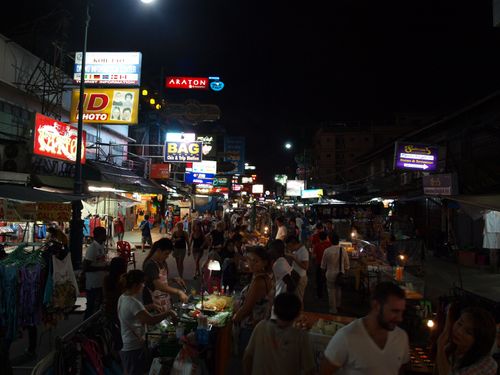
Bangkok’s backpacker carnival: curbside bars, live bands and DJs from 3pm–2am (midnight Sun). Street eats are cheap — pad thai 70–100 THB, mango sticky rice 60–100 THB. Come for wild people-watching; duck into Rambuttri for a calmer beer.
Wat Phra Chetuphon Wimon Mangkhalaram Rajwaramahawihan
Temples
Thai Beach Travellers
Services
Wat Arun Ratchawararam Ratchawaramahawihan
Temples
Amulet Market
Markets
Recommended Products
More Khao San Road Guides
- What to Pack for Thailand for Workations and Coworking Stays: Tech Gear, Power Backup, and Laptop Protection
- What to Pack for Thailand for Digital Nomads and Remote Work Trips
- What to Pack for Thailand Backpacking with a Laptop: Work, Storage, and Theft-Resistant Setup
- Backpacker Packing List for Thailand’s Work-Trip Side Hustles: Laptop, Documents, and Day-to-Day Carry