
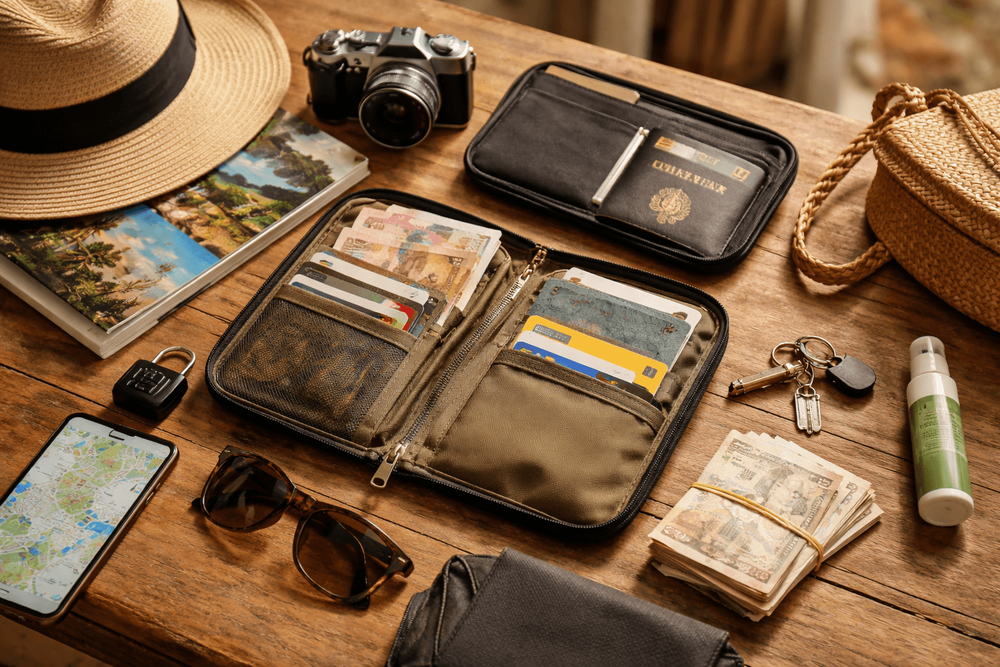
What to Pack for Thailand for Carrying Cash, Cards, and Travel Documents: Organization and Backup Essentials
Pack cash, cards, and travel documents for Thailand the smart way—backups, fees, and streetwise tips so your first hour in Bangkok is smooth, not sweaty.
We’re standing under the arrivals board at Suvarnabhumi, sticky with that first-hit Bangkok heat, juggling a passport, a pen that won’t write, and a 1,000‑baht note the taxi won’t break. This is exactly why a tight Thailand money and documents packing list saves your first hour in the Kingdom—from the stamp at immigration to the sizzle of your first chicken-on-a-stick on Rambuttri.
Data Freshness + Pricing:
- Prices are approximate and in THB.
- Last checked: June 2026.
- Happy hour and promo details change frequently—confirm locally.
Essential travel documents for Thailand
Passport, visas, and the entry basics
- Passport validity: Airlines and Thai immigration generally expect at least 6 months’ validity beyond your date of entry. If you’re close, renew before you fly—airlines can deny boarding.
- Visa or visa exemption: Many nationalities receive visa-exempt entry (length varies by nationality and policy cycles), others may use an e-visa or visa on arrival. Check current rules with your embassy or Thailand’s MFA sites before packing. Print or save a screenshot of your approval if you applied online.
- Onward or return ticket: Thai immigration can ask for proof of onward travel within your permitted stay. Have a PDF or printed copy handy and visible in your document pouch.
- Arrival/departure forms (TM6): The paper TM6 card has been suspended at most international airports for air arrivals, but policies can change or differ at land borders. If a form is issued on your flight, fill it out before landing. Carry a pen.
Copies and printouts you should carry
- Passport bio page copy: 2–3 paper copies, plus a clear photo in your phone and a cloud backup.
- Visa/e-visa and insurance documents: PDFs offline and at least one printed set.
- Passport photos: 2–4 small photos (3x4 cm is fine) for SIM registration, extensions, or border crossings.
- Confirmations: First-night accommodation and any prebooked transport confirmations printed or saved offline—you’ll appreciate this when your roaming glitches at Don Mueang at 1 a.m.
Travel insurance: proof and practicals
- Policy summary: Keep a one-page summary with your name, policy number, and emergency hotline. Store it in your main pouch and in the cloud.
- Receipts and medical notes: If you take regular meds, carry a doctor’s letter and generic names for Thai pharmacies.
Tip: Back up everything to two places—cloud + a USB thumb drive in your main pack. Bangkok’s khlongs flood, Songkran gets splashy, and tuk-tuks are windy. Paper hates all three.
Money to bring and manage in Thailand
How much cash to carry on arrival
- Bring enough Thai baht for the first 24 hours: approx 1,000–2,000 THB will cover an Airport Rail Link ride (approx 35–45 THB), a taxi top-up if needed (airport taxi to Khao San Road ends up approx 400–550 THB including surcharge and tolls), a SIM, and some street food (pad thai on Khao San is approx 60–120 THB; boat noodles near Victory Monument often 15–40 THB a bowl).
- If you can’t get THB before you fly, change a small amount at the airport or use an ATM for a single, larger withdrawal to reduce fixed fees.
Cards, ATMs, and the fees you actually feel
- Foreign card ATM fees: Most Thai ATMs charge a fixed fee per withdrawal to foreign cards—approx 220–250 THB. Maximize each withdrawal to soften the percentage hit.
- Daily caps and machine quirks: Some machines have low per-transaction limits (often 20,000–30,000 THB). If one declines your card, try another bank—Kasikorn, Bangkok Bank, Krungsri, SCB all have wide coverage.
- DCC “gotcha”: If an ATM or card terminal asks whether to charge you in your home currency, always choose THB to avoid bad conversion rates.
- PIN-first culture: Chip-and-PIN is standard; contactless works in malls and 7‑Eleven but don’t count on it in mom-and-pop shops.
Cash vs card in the wild
- Street food, markets, local buses, ferries on the Chao Phraya: mostly cash. Bring small notes (20s, 50s, 100s). Vendors hate 1,000s for a 30‑baht mango sticky rice.
- Malls, supermarkets, chain coffee, and many midrange restaurants: cards widely accepted, sometimes with a small surcharge. Your mileage varies.
- QR payments: PromptPay is ubiquitous for locals. Some foreign banking apps now scan Thai QR, but it’s inconsistent. Consider it a bonus, not a plan.
Exchange counters and strategy
- Airport rates vs city: Airport counters are convenient but pricy. For better rates, exchange in town at reputable booths (you’ll spot the neon-green and orange heavy hitters around Siam and near BTS stops). If you must change at the airport, do a small amount for transport and first bites.
- What to bring: Crisp, recent-issue USD/EUR/GBP fetch the best rates. No tears, no doodles—Thai tellers will hand your bill back with a smile and a wai but still say no.
Thailand money and documents packing list
Here’s what actually earns space in our day bag and main pack.
The must-carries
- Passport with protective cover
- Primary debit card + primary credit card (separate them physically)
- Backup debit card + backup credit card (kept in your main pack, not your day bag)
- 2–3,000 THB in mixed notes, plus a small USD/EUR stash for emergencies (100–200 in clean bills)
- Travel insurance summary and hotline numbers
- 2–4 passport photos
- Printed copies of passport, visas, onward ticket, and first-night booking
- A working pen (immigration lines are where pens go to die)
Organizers and security
- Slim document pouch or folder: Waterproof if you’re visiting during rainy season or Songkran.
- Flat money belt or neck pouch: Useful on transit days and overnight buses; not necessary daily. Don’t flash it—nothing screams farang like mid-street belt checks.
- Lockable daypack or crossbody sling with lockable zips: Great for night markets and crowded sois. Bonus points for a cut-resistant strap.
- Small coin pouch: Thai coins add up and pay for ferries and street snacks.
- Ziplock bags and dry pouch: Bangkok storms can turn Soi Rambuttri into a reflective river in five minutes. Phones and passports stay dry, and you stay smug.
- Minimalist wallet for daily carry: One card, 1–2 notes, ID copy. Keep the rest stashed.
If you want a deeper dive into anti-theft setups, we break down pouches, locks, and smart stashes in our dedicated guide: What to Pack for Thailand for Carrying Valuables: Anti-Theft, Money, and Document Protection for Backpackers.
Digital backups and access
- Cloud backups: Passport, visas, insurance, bookings, and key contacts in an encrypted cloud folder. Share view-only access with a trusted person back home.
- Banking apps: Install and test before you fly. Ensure your OTP method works abroad—roaming SMS can be flaky, so an eSIM with a Thai number helps.
- Note file with emergency details: Bank hotlines (lost card), travel insurance line, embassy/consulate address, and accommodation contacts. Save offline.
We also keep a concise day-bag loadout ready for temple days and canal rides; if you like a checklist, tap our packing cheatsheet: Thailand Packing List for Backpackers: Day Bag Essentials for Flights, Temples, and Tours.
Extras that punch above their weight
- Photocopies in separate spots: One set in the day bag, one set in the main pack.
- Small combo lock: Hostel lockers and train luggage racks.
- Thin scarf or neck gaiter: Doubles as privacy for your pouch and a sweat mop when the Golden Mount stairs win.
- Compact USB thumb drive: Offline backup of your key docs.
- Headlamp or tiny torch: Night buses, sleeper trains, and power blips.
For medication paperwork and a minimalist, buy-local strategy that saves space for markets runs on Phra Athit, see: Smart Packing for Thailand: Medications, Toiletries, and Travel Documents Checklist and our budget-first list: Thailand Packing List for Budget Backpackers: Low-Cost Gear, Laundry Strategy, and Smart Replacements.
Practical Thailand arrival readiness
Airport moves without the stress
- Cash: Withdraw or exchange a starter kitty (approx 1,000–2,000 THB). Airport ATMs are everywhere; the fixed fee hurts, but one larger withdrawal beats two small ones.
- SIM/eSIM: AIS/DTAC/True counters in BKK and DMK sell tourist SIMs—short plans often run approx 150–299 THB for a few GB, more for high-data bundles. They’ll register with your passport in minutes.
- Transport: Airport Rail Link to Phaya Thai (approx 35–45 THB) is the fast, cheap way to beat traffic. From there, a metered taxi or Grab to Khao San/Phra Athit is usually approx 120–200 THB depending on time and rain gods.
Hotel and guesthouse check-in realities
- ID and deposits: Hostels and guesthouses may hold a passport copy or a cash/key deposit (approx 200–1,000 THB). Midrange hotels sometimes pre-authorize a card. Keep one card clear for this.
- Local cash on arrival: Smaller places on or near Khao San often prefer cash at check-in for budget rooms. If you’re rolling in late, message ahead—many are chill but still lock doors at odd hours.
Keep it accessible, keep it split
- Transit-day setup: Passport + primary card + small cash in the day bag; backup cards + document copies in the main pack; emergency USD in a hidden pocket. We never keep all eggs (or cards) in one basket—or one soi.
- Tuk-tuks and motos: Secure zips before the wind hits. A crossbody worn forward keeps your kit where you can feel it when the bass thumps past Brick Bar.
Common mistakes to avoid
- Cutting it close on passport validity: The gate agent—not Thai immigration—can be your trip-ender. Six months is the safe buffer.
- Relying only on cards: Night markets, river ferries, and noodle shacks are cash-first worlds. Keep small notes ready.
- Using airport exchange for big amounts: Do a starter swap only, then hit better-rate counters in town.
- Ignoring ATM screens: Always select “Charge in THB,” never in your home currency.
- Stashing everything in one place: Split cards, cash, and copies. Assume something will get soaked or misplaced.
- Forgetting document copies: A paper copy of your passport smooths hotel check-ins and police checkpoints if you’re riding out to Bang Krachao.
- No pen, no photos: Immigration forms still appear, and some offices will want a passport photo with your best 7‑Eleven fluorescent glow.
- OTP lockouts: Banking apps that send codes to your home number can trap your funds. Sort eSIM or app-based authenticators before you fly.
Know before you go: quick streetwise notes
- Street-level spend: A solid street-food meal runs approx 60–150 THB; iced coffee on Phra Athit approx 40–80 THB; river boat from Phra Arthit pier to Sathorn approx 16–30 THB. Keep coins and 20s ready.
- Heat and paper: Sweat is a document killer. Use a slim waterproof sleeve, especially April–May and during sudden monsoon dumps.
- Scams are rare but real: If a stranger insists the Grand Palace is “closed,” thank them and walk on. Official ticket windows take cash and cards; street “helpers” sometimes don’t.
- Night outs on Khao San: We carry a decoy wallet with a couple of small bills and one expired card, while the real stash stays zipped and clipped. Sanuk without the panic.

If we were packing together right now, we’d zip our backups into the main pack, slide a tidy day wallet into a front pocket, and step out toward Soi Rambuttri for a pad thai that crackles under neon. Keep your documents dry, your cards split, and your first 1,000‑baht note in reach—and we’ll see you by the river when the sun burns off the haze.
Related Hotels & Places
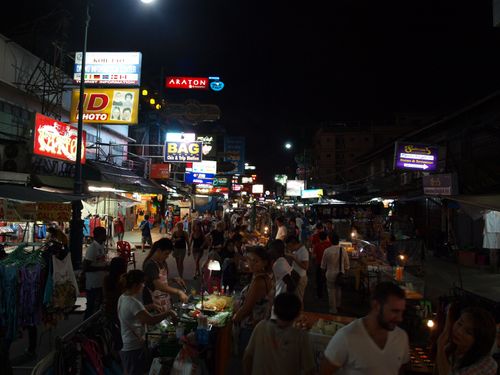
Khao San Road
Attractions
Bangkok’s backpacker carnival: curbside bars, live bands and DJs from 3pm–2am (midnight Sun). Street eats are cheap — pad thai 70–100 THB, mango sticky rice 60–100 THB. Come for wild people-watching; duck into Rambuttri for a calmer beer.
Rambuttri
Markets
Khao San’s calmer cousin: a tree‑shaded lane of VW van cocktail bars, open‑air foot massages, pad thai grills, and easygoing live bands. Best from sunset to 11pm; beers 80–120 THB, cocktails 150–220 THB. One block from the chaos, all the charm.
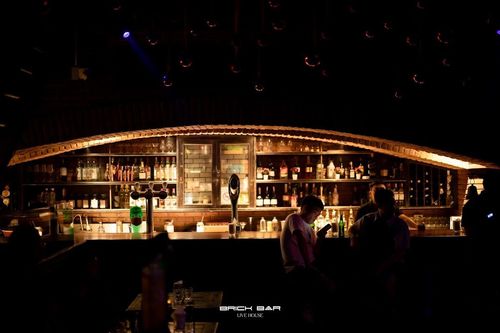
Brick Bar
Bars
Legendary live music venue in the Buddy Lodge complex. Thai ska, jazz, and blues bands play nightly in this underground basement bar beloved by locals and travelers alike.
Recommended Products
More Khao San Road Guides
- What to Pack for Thailand for Document Safety: Passport Protection, Copies, Wallet Setup, and Travel Insurance Papers
- What to Pack for Thailand for Carrying Valuables Safely: Passport, Cash, Electronics, and Hostel Security Essentials
- Backpacker Packing List for Thailand: Documents, Cash, and Travel Admin Essentials
- Backpacker Packing List for Thailand for Essential Documents and Backup Safety: Passports, Copies, and Emergency Storage