
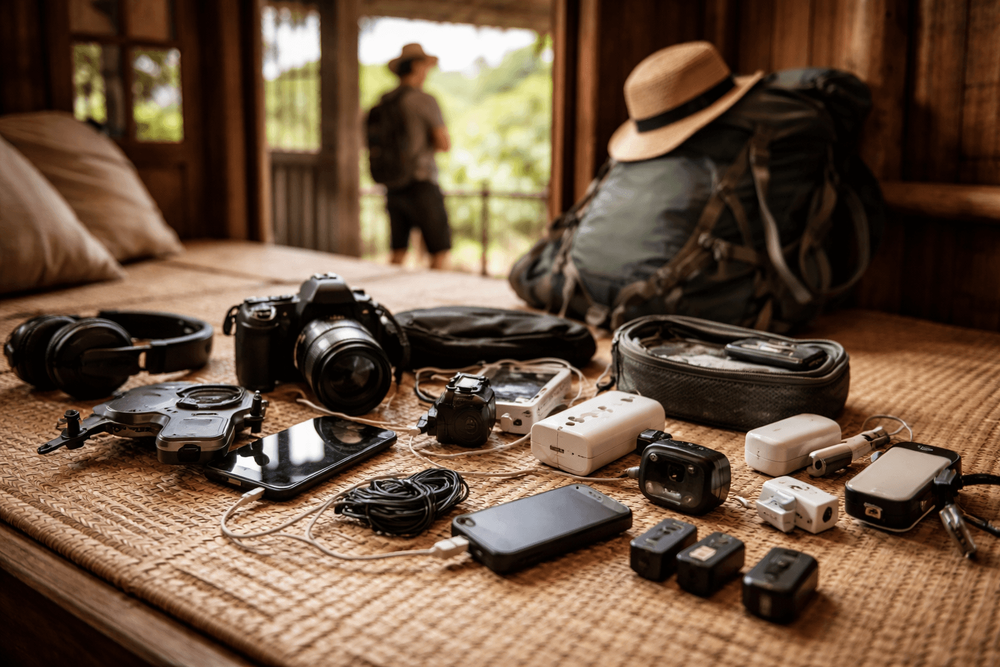
Thailand Backpacker Packing List for Electronics, Charging, and Power Adapters
Exactly which adapters, chargers, and power banks to pack for Thailand—plus plug types, voltage tips, and where to buy backups in Bangkok.
We’ve all been there: we check into a fan room off Baan Manee BKK, the tuk-tuks growl outside, the wall outlet looks a little… different, and our phone’s at 6%. This is exactly why we build a Thailand travel adapter packing list before wheels up—so when the wok sizzles on Phra Athit and the bass from a Khao San Road bar thumps past midnight, we’re fully charged and ready for sanuk.
Data Freshness + Pricing:
- Prices are approximate and in THB.
- Last checked: June 2026.
- Happy hour and promo details change frequently—confirm locally.
Thailand’s outlets and plug shapes: what you’ll actually see
Walk into a Central Park Hotel or a sleek Sukhumvit cafe and you’ll usually meet the “universal” Thai socket—a rectangle that swallows both flat and round pins. Officially, Thailand is on 230V/50Hz and recognizes Type O, but in the wild you’ll find sockets that accept:
- Type A (two flat parallel pins, common for US/Japan)
- Type C (two round pins, Europlug)
- Type F (Schuko-style round pins; sometimes a loose fit but often works)
- Type B (US with ground): hit-or-miss; some universal sockets accept it, many don’t
What this means for us:
- Two-pin plugs (A or C) are the easiest win. A slim Type C (Europlug) slides into most places across Thailand.
- Grounding can be elusive. Older sockets are two-hole only. If your laptop has a three-prong US plug, plan for an adapter solution—and understand you may end up ungrounded in budget stays.
- Socket quality varies. In older shophouses around Banglamphu or on the islands, outlets can be loose. Bring a snug, compact adapter and avoid heavy wall-warts that fall out.
Voltage, frequency, and do you need a converter?
Short answer: probably not.
- Thailand runs at approx. 230V, 50Hz.
- Most modern electronics (phones, cameras, tablets, laptops, shavers, e-readers) have chargers labeled “Input 100–240V, 50/60Hz.” If you see that, you only need a plug adapter—not a voltage converter.
- Hair tools are the gotcha. Many North American hair dryers/straighteners are 120V-only. Skip them or buy/borrow locally; cheap “converters” run hot and can fry gear.
- Power strips: make sure any strip you bring is rated 100–240V, 50/60Hz. A 120V-only US strip will fail (and could be unsafe) on Thai mains.
- Frequency (50Hz vs. 60Hz) rarely matters for modern switch-mode chargers.
Tip: If you want more background on chargers, cables, and local SIMs, we dive deep here: Thailand Electronics Packing List: Adapters, Power Banks, and SIM Gear.
Your Thailand travel adapter packing list (field-tested)
We keep it tight, light, and bombproof enough for a sleeper train, a Koh Phangan ferry, and a Khao San bar crawl.
- 1 universal travel adapter with USB-C PD
- Look for a compact, fused unit with at least 1–2 USB-C PD ports (30–65W total) and one USB-A. Approx. 600–1,200 THB for branded units; 250–500 THB for basic generics at markets.
- 1 slim Type C (Europlug) adapter
- It’s the most universally compatible with Thai sockets. Approx. 60–150 THB.
- Optional: 1 flat Type A adapter
- Handy if you’re coming from the US/Japan and prefer a low-profile plug. Approx. 60–120 THB.
- 1 compact travel power strip (100–240V)
- Three AC outlets + 2–3 USB ports is the sweet spot. Cable length 1–1.8m helps when outlets are weirdly placed. Approx. 300–900 THB depending on quality and ports.
- 1 GaN USB-C charger (30–65W)
- Fast-charges phones and can top up many ultrabooks. Approx. 700–1,800 THB for reputable brands.
- Cables you actually use
- 2x USB-C to USB-C (1 short, 1 long)
- 1x USB-C to Lightning if you’re on older iPhone; newer iPhones use USB-C
- 1x micro-USB only if you still have a device that needs it
- Good cables run approx. 120–300 THB each at malls; street-stall specials start around 60–100 THB (quality varies).
- 1 power bank (carry-on only)
- 10,000–20,000 mAh hits the sweet spot. Under 100Wh is airline-friendly without approval. Expect approx. 400–800 THB (10k) and 800–1,500 THB (20k) for decent brands.
- Camera battery gear
- 1–2 spare batteries + a dual-slot USB charger. Third-party chargers run approx. 300–700 THB in Bangkok IT malls.
- Cable management
- 1 zip pouch, a handful of reusable ties/Velcro, and a few silica gel packets for the rainy season humidity.
- Optional protection
- A small 250V-rated surge protector or a power strip with built-in surge. Approx. 200–600 THB.
- A 3-prong-to-2-prong adapter if your US laptop brick has a ground pin and you need to slim it down. Approx. 60–120 THB.
We avoid bringing: 120V-only hair tools, bulky converters, and giant six-outlet US power strips. They’re dead weight or outright risky.
Packing by device: what to bring (and how many)
Phones (Android or iPhone)
- 1 primary USB-C PD charger (30W+ if you want fast charge)
- 2 cables (USB-C to USB-C for most modern phones; USB-C to Lightning if needed)
- 1 power bank (10k–20k mAh)
- 1 slim adapter (Type C) or use your universal
Pro tip: Many cafes around Ari, Ekkamai Luxury Villa With Home Cinema, and Sathorn Vista, Bangkok - Marriott Executive Apartments are happy to let you sip an iced latte while fast-charging. Always ask with a smile—sawadee goes a long way.
Laptops (MacBook, ultrabooks, Windows machines)
- 1 GaN USB-C charger (45–65W; 100W if you’ve got a power-hungry machine)
- 1 USB-C cable rated for 60–100W (check the cable’s spec)
- 1 universal adapter or Type C adapter for wall access
- Optional: small 250V surge protector if you’re paranoid about storms
Note: Many boutique stays near the ICON SIAM charoen Luxe include universal outlets by the bed. In older guesthouses off Tanao Thai Massage - ตะนาวนวดไทย (Certified by Ministry of Public Health), you might be stretching a cable across the room—bring the longer lead.
Cameras (mirrorless/DSLR/GoPro)
- 2–3 batteries total (Thailand’s heat drains them faster on long days)
- 1 dual USB charger (so you can charge off a power bank on buses and boats)
- 1 fast card reader (USB-C) if you’re backing up frequently
- 1 dry bag (5L) for ferries to the islands
Tablets and e-readers
- 1 shared USB-C charger (use the laptop/phone brick)
- 1 cable each
Wearables (watches, earbuds, fitness bands)
- 1 shared multi-port charger is enough
- 1 spare short cable for the item most likely to die mid-day (usually earbuds before a Chinatown street-food crawl)
Creators and remote workers
- 1 compact travel power strip for cafes and co-working spots
- 1 USB hub/dock (USB-C to HDMI/USB-A/SD)
- 1 SSD for backups (USB-C)
- Consider a short right-angle USB-C cable to keep tables tidy in busy spots around Silom
If you’re building a bigger remote-work kit, this broader list helps keep the weight sensible: Thailand Packing List for Digital Nomad Backpackers.
Real-world charging scenarios we keep bumping into
- Hostel dorms near Khao San Road: Fewer outlets than roommates. A small power strip with USB saves friendships.
- Riverside guesthouses on Phra Athit: One wobbly wall socket behind the bed. A lightweight Type C adapter + long cable wins.
- Overnight trains and buses: Some newer SRT sleepers have outlets; some buses do, some don’t. Power bank = peace of mind.
- Island bungalows: Power can be flaky during storms. Charge before sunset and use a surge-protected strip if you’ve got delicate gear.
- Cafes in Ari/Thonglor: Plenty of sockets but be nice—don’t hog the only outlet without buying a drink, and keep cables tidy.
Buying adapters and chargers in Thailand (if you forget)
Bangkok is a gear candy store. We’ve sprinted from the Chao Phraya Tourist Boat ICONSIAM Pier Express boat to recharge in these places more than once:
- 7-Eleven: Cables, basic adapters, small power banks. Approx. 60–250 THB. Great in a pinch.
- MBK Center (National Stadium BTS): Phone accessories galore. Haggle politely; test items before paying.
- Fortune Town (Phra Ram 9 MRT): The IT mall for chargers, power strips, and cameras. Good balance of price and legit stock.
- Power Buy, Banana IT (in Central malls citywide): Branded GaN chargers, OEM cables, and legit power banks. Higher prices, reliable warranties.
- Big C, Lotus’s, HomePro: Solid mid-range for power strips and household adapters.
- Market stalls around Khao San/Soi Rambuttri: Cheap basics (adapters ~60–120 THB, cables ~60–100 THB). Quality varies—inspect the build and connectors.
Price ballparks (approx.):
- Simple plug adapter: 60–150 THB
- Universal all-in-one: 250–1,200 THB (brand and features vary)
- GaN USB-C charger (30–65W): 700–1,800 THB
- Power strip (3 outlets + USB): 300–900 THB
- Power bank 10,000–20,000 mAh: 400–1,500 THB
If you want more on phones, adapters, and airline-safe power banks, bookmark this too: What to Pack for Thailand for Phone, Power, and Connectivity: SIMs, Chargers, Adapters, and Backup Battery Basics.
Avoid overpacking: trim the tangle
- One fast charger, many ports. Replace three tiny bricks with a single 45–65W GaN.
- Standardize on USB-C if you can. Add one small adapter for legacy devices.
- Ditch the converter. If a device isn’t dual-voltage, leave it.
- Share cables. If two of us carry the same phone, one spare cable is enough.
- Use a flat extension. A 1–1.8m cord extends reach without hauling a huge strip.
We also keep a tiny checklist taped inside our tech pouch: adapter, charger, cables, power bank. Saves the day when we roll out for boat noodles and realize the phone’s on 8%.
Safety and etiquette (Bangkok-tested)
- Don’t overload. Thai sockets—especially in older buildings—aren’t fans of high-wattage hair dryers plus laptops plus kettles.
- Carry-on only for power banks. Under 100Wh is fine; keep it visible at security. Most 20,000 mAh packs are ~74Wh.
- Keep chargers cool. Don’t charge phones under pillows; rooms can run hot, and batteries hate heat.
- Moisture watch. Rainy-season air plus AC can fog lenses and corrode ports. Silica packets help; dry gear in the room with gentle airflow.
- Label your cables. In dorms, black cables all look alike at 2 a.m.
Know before you go: quick power specs and rules
- Mains: approx. 230V, 50Hz
- Common plug fits: Type A/C/F; Type B sometimes; Type O exists but not universal yet
- Most chargers: 100–240V—check your brick’s label
- Power bank flight rules: carry-on only, ≤100Wh without airline approval; 100–160Wh typically needs approval; >160Wh prohibited
- Typical outlet access: better in newer hotels and cafes, spottier in older guesthouses and bungalows
Where we set up to charge between adventures
When we’re bouncing between a riverside guesthouse off Phra Athit and late-night pad thai on Tanao Road, we aim for stays with bedside outlets and at least one sturdy universal socket. Boutique spots often have them; older shophouse rooms might not. Worst case, we slip into a cafe, order an iced cha yen, and let the GaN brick do its thing while the Chao Phraya breeze dries our ferry hair.
If you’re building a bigger overall pack, not just electronics, this master checklist plays nice with the gear above: Backpacker Packing List for Thailand.
EPICKA Universal Travel Adapter with USB-C PD
The move
Pack one great GaN charger, a slim Europlug adapter, a compact power strip, and the cables you actually use. That’s it. Next time we duck into 7-Eleven for the blessed AC blast and a cold electrolyte drink before climbing the Golden Mount, we’ll know our phones, cameras, and laptops are juiced and ready. See you under the neon of Yaowarat Chinatown Heritage Center—if your battery dips, we’ve always got a spare USB-C.
Related Hotels & Places
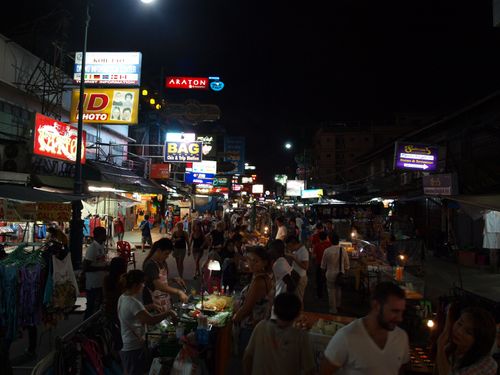
Khao San Road
Attractions
Bangkok’s backpacker carnival: curbside bars, live bands and DJs from 3pm–2am (midnight Sun). Street eats are cheap — pad thai 70–100 THB, mango sticky rice 60–100 THB. Come for wild people-watching; duck into Rambuttri for a calmer beer.
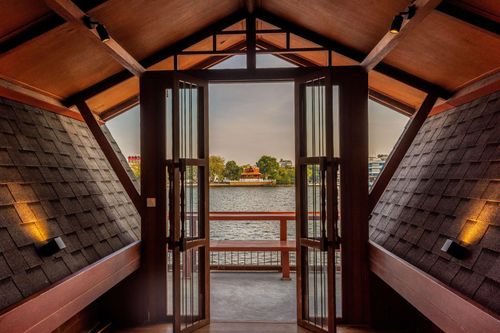
Baan Manee BKK
Hotels
A 118‑year‑old riverside house turned boutique stay and café. Sunset terrace, a small bar and a fire pit on the Chao Phraya. Ten minutes across from Khao San—come for proper coffee by day, drinks after dark, and quiet sleep away from the noise.
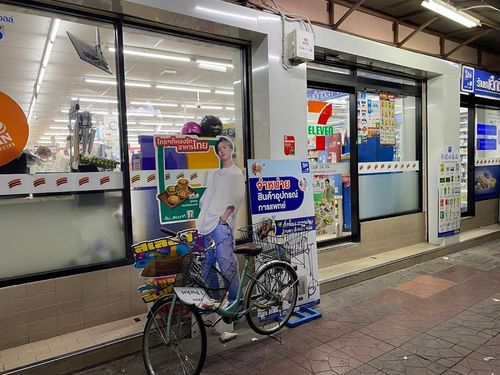
7-Eleven
Shops
Khao San’s 24/7 reset button: ice‑cold A/C, ham‑cheese toasties, All Café iced lattes, water for 7–14 THB, and late‑night supplies from snacks to sunscreen—right by Rikka Inn.
Central Park Hotel
Hotels
Experience an abundance of unparalleled facilities and features at Central Park Hotel.Share your photos and respond to emails at your convenience, thanks to the free Wi-Fi internet access offered by hotel.
Yaowarat Chinatown Heritage Center
Attractions
Inside Wat Traimit by Chinatown Gate, this tidy museum charts Yaowarat’s Chinese roots with bilingual displays, period photos and short films. Open Tue–Sun 8:30am–4:30pm; closed Mon. Pair it with the Golden Buddha upstairs.
ICON SIAM charoen Luxe
Hotels
A 3-star hotel in Bangkok.
Tanao Thai Massage - ตะนาวนวดไทย (Certified by Ministry of Public Health)
Massage
Thai massage near Khao San.
Ekkamai Luxury Villa With Home Cinema
Hotels
A 0-star hotel in Bangkok.
Sathorn Vista, Bangkok - Marriott Executive Apartments
Hotels
A 5-star hotel in Bangkok.
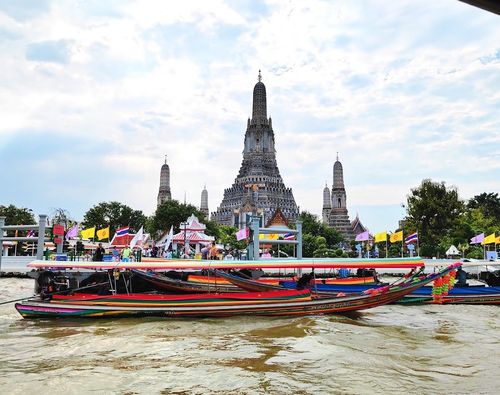
Chao Phraya Tourist Boat ICONSIAM Pier
Services
Hop on the blue‑flag tourist boat at ICONSIAM to cruise Wat Arun, Wat Pho, the Grand Palace and Chinatown. Day pass ~150 THB, boats every ~30 mins, last runs around 7:15pm. Easiest river launchpad via BTS Gold Line to Charoen Nakhon.
Recommended Products
More Khao San Road Guides
- Backpacker Packing List for Thailand: Electronics, Power, and Charging Adapters
- Backpacker Packing List for Thailand with Electronics: Adapters, Chargers, Power Banks, and Device Protection
- What to Pack for Thailand for Backpacker Electronics: Charging, Adapters, and Power Backup Essentials
- Backpacker Packing List for Thailand’s Tech and Charging Setup: Adapters, Power Banks, and Cable Control