
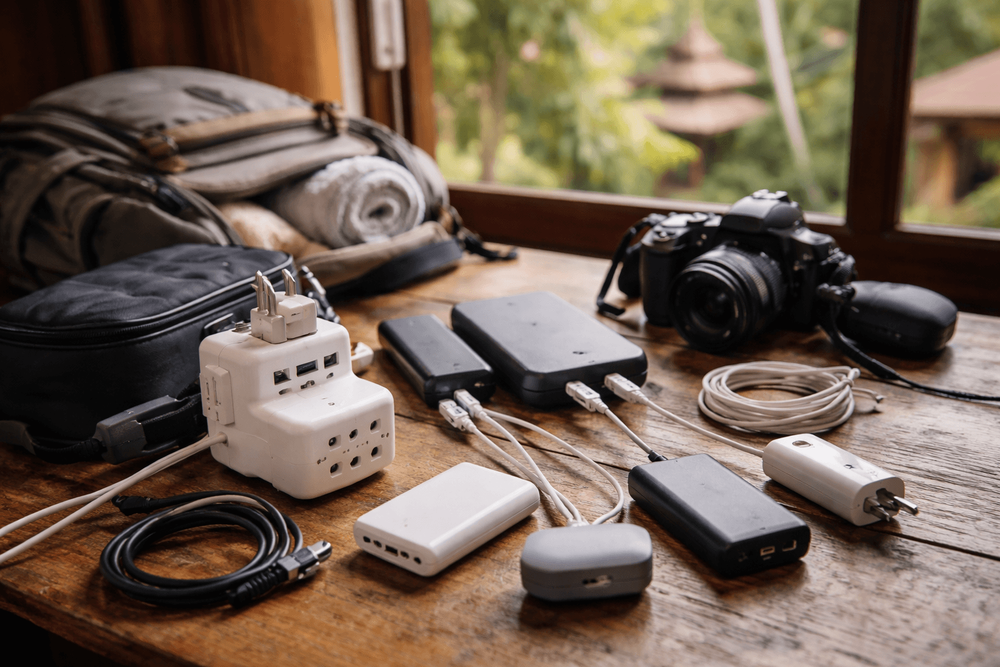
What to Pack for Thailand for Backpacker Electronics: Charging, Adapters, and Power Backup Essentials
Plug types, voltage, and the Thailand power adapter packing list: what chargers, adapters, and power banks to bring—plus where to buy in Bangkok.
We’ve all been there: ducking into a 7-Eleven on Rambuttri for that glorious blast of AC, screen at 3%, maps struggling, the tuk‑tuk we just waved off disappearing into the khlong-threaded night. This is exactly why a smart Thailand power adapter packing list matters—because Bangkok moves fast, and dead batteries don’t.
Data Freshness + Pricing:
- Prices are approximate and in THB.
- Last checked: July 2026.
- Happy hour and promo details change frequently—confirm locally.
Thailand Power Adapter Packing List: The Quick Version
If you want the no-drama kit that keeps phones, laptops, and cameras juiced from Khao San Road to Krabi, this is what we pack:
- 1 compact universal travel adapter with USB‑C PD (at least 30–65W). Approx 250–800 THB in Thailand for decent models
- 1 high‑watt USB‑C wall charger (65–100W) with multiple ports for laptop + phone. Approx 500–1,200 THB
- 1 small travel power strip (2–3 AC outlets + 2–3 USB ports), ideally with a Thai plug and surge protection. Approx 250–600 THB
- 1 power bank (10,000–20,000 mAh) with USB‑C in/out and PD. Approx 400–1,500 THB depending on capacity/brand
- Cables: 2x USB‑C to C (100W rated), 1x USB‑A to C, and—if your older gear needs it—1x Lightning or micro‑USB. Approx 80–300 THB per cable
- Optional if you need a grounded connection: a 3‑prong adapter that preserves earth (Type G/Type I to Thai Type O). Approx 150–400 THB
We go deeper below—plug types, voltage, what works for phones vs. laptops, where to buy in Bangkok (MBK, Power Buy, even 7‑Eleven), and the little tricks that save your day.
Thailand’s Plugs, Voltage, and Frequency (and Why It Matters)
Bangkok’s not trying to fry your gadgets—but you do need to know the basics before we hop the Chao Phraya Tourist Boat ICONSIAM Pier to Tha Chang Bangkok.
- Voltage: Thailand uses 220–230V, 50 Hz
- Common plug types accepted: Type A (US/Japan two flat pins), Type C (Euro two round pins). You’ll also see grounded Thai three‑pin outlets (Type O) in newer places
- Most sockets in hotels, cafes, and malls are “universal” and swallow both A and C. UK Type G won’t fit without an adapter
What this means for you:
- Modern chargers (phones, laptops, cameras) almost always say “100–240V, 50/60Hz.” If you see that on the brick, you only need a plug adapter, not a voltage converter
- Hair dryers, curling irons, and older gear may be single‑voltage. Bringing a heavy voltage converter is a pain; better to pack dual‑voltage travel versions or buy cheap locally if you must
Plug Types You’ll Actually See
- Type A (two flat blades): Common and accepted almost everywhere
- Type C (two round pins): Equally common; many wall plates take both A and C
- Type O (Thai three round pins with ground): Newer buildings, co‑working spaces, and modern hotels may have this. Cheap adapters often ignore the ground; if you truly need earth for a sensitive laptop, bring an adapter that preserves it
Brits (Type G): You’ll need a G‑to‑C (slim) adapter or a universal adapter. US/Japan folks usually plug straight in with Type A. Europeans (Type C/F): You’re good with C; F often fits many universal sockets too.
Which Adapters to Pack for Phones, Laptops, Cameras, and More
Different toys, different thirst. Let’s break it down before the bass on Khao San drowns us out.
Phones
- Bring a USB‑C PD charger with at least 30W. It’ll fast‑charge modern Androids and still fill an iPhone quickly via USB‑C
- A compact universal travel adapter with built‑in USB‑C is a tidy backup, but don’t rely on it as your only high‑wattage source
- Power bank: 10,000–20,000 mAh with USB‑C in/out and PD keeps you alive on long boat rides or bus transfers. Approx 400–1,500 THB if you buy in Bangkok
Tip: Short 0.5 m cable for cafes, 1–2 m cable for awkward hotel sockets that hide behind nightstands.
Laptops and Tablets
- For USB‑C laptops (MacBook, many Windows ultrabooks): pack a 65–100W USB‑C charger with two ports so you can do laptop + phone at once. Approx 700–1,200 THB locally for reputable brands
- If your charger is grounded (three‑prong), either bring an adapter that keeps the ground or accept you’ll use two‑prong sometimes. We’ve used two‑prong plenty in Thailand with no drama, but surge protection is smart in rainy season
- iPad and tablets charge nicely off 30W+ USB‑C too
Cameras, Drones, and Action Cams
- Many camera bricks are 100–240V. Carry a small dual‑slot USB charger for camera batteries if your brand supports it—charges from your USB‑C brick or power bank
- Drones are power‑hungry. Plan hotel room charging windows and rotate batteries while we grab noodles on Phra Athit Road
- Micro‑USB still lurks in older gear; toss one in your pouch
Wearables, E‑readers, and Headphones
- These sip power but ruin days when dead. Keep a Y‑split or multi‑port charger so your watch doesn’t lose the plot at Chatuchak
If you want more depth on SIMs, adapters, and charger picks, we put a fuller breakdown here: Thailand Electronics Packing List: Adapters, Power Banks, and SIM Gear.
Universal Adapter, USB Charger, or Power Strip—What’s Best for Thailand?
We carry all three, because Bangkok.
- Universal travel adapter: Great for hotel rooms and random guesthouses upcountry. One brick solves plug shapes. Get one with a 10A fuse and at least one USB‑C PD port. Approx 250–800 THB
- High‑watt USB‑C wall charger: Your daily driver. This handles fast‑charge for phone + laptop and skips the bulky adapter when you just need USB. Approx 500–1,200 THB
- Travel power strip: Our secret weapon in rooms with one lonely socket controlled by the keycard. A 1–1.5 m cord lets you bring power where you need it. Look for surge protection if possible. Approx 250–600 THB
What we skip: Heavy voltage converters and giant six‑outlet monsters. Not worth the weight.
Where to Buy Power Adapters in Thailand
We love landing light, then plugging gaps (pun intended) once we’ve dropped bags near Khao San.
7‑Eleven and Convenience Stores
- You’ll find basic two‑pin plug adapters, cables, and small power banks at 7‑Eleven almost anywhere in Bangkok. Expect approx 60–120 THB for simple adapters, 100–300 THB for basic cables, 400–900 THB for smaller power banks
- Selection is hit‑or‑miss, but perfect in a pinch—plus you get that sweet AC and a cold Namthip water
Malls and Electronics Chains
- Power Buy (in malls like MBK Center and Central): Reliable chargers, branded cables, and travel adapters. Approx 300–1,500 THB
- IT City and JIB: Good for laptop chargers and cables
- HomePro and Lotus’s/Big C: Solid for surge‑protected strips and household adapters
MBK Center and Pantip Plaza
- MBK’s upper floors have stalls with every cable under the Bangkok sun. Haggle lightly, and test before buying. Approx 120–250 THB for adapters, 200–600 THB for multi‑port chargers depending on brand
- Pantip Plaza is geek heaven but can be a hike; we usually hit MBK after an iced coffee on Rama I
Airports (Suvarnabhumi BKK, Don Mueang DMK)
- You can buy adapters and power banks airside, but you’ll pay a premium—often 1.5–2x city prices. Treat it as last‑resort convenience
For phone‑and‑power specifics (SIMs/eSIM, charger picks, backup battery basics), we’ve got a focused primer here: What to Pack for Thailand for Phone, Power, and Connectivity: SIMs, Chargers, Adapters, and Backup Battery Basics.
Practical Packing Tips to Avoid Charging Headaches
The heat, the rain, the stop‑start tuk‑tuk rides—Bangkok’s fun but hard on batteries. Here’s what keeps us charged from sunrise at Wat Saket Ratchawora Mahawihan to neon o’clock on Khao San.
1) Respect the Rain and Surges
- Summer storms can flicker power. A surge‑protected power strip is cheap insurance. Approx 300–700 THB
- Unplug sensitive gear during lightning shows if you can; charge power banks off your surge‑protected strip first
2) Work With the Keycard Power Slot
- Many rooms cut electricity when you take the keycard. If you need to keep charging while you shower or pop to 7‑Eleven, any spare RFID‑style card (even a transit or business card in some places) can sit in the slot. Don’t abuse it—Bangkok doesn’t need us chilling rooms all day while we’re out
3) Cable Strategy That Actually Works
- 2x USB‑C to C (100W rated) covers phone, laptop, and power bank fast‑charge
- 1x USB‑A to C for older ports (buses, planes)
- 1x specialty (Lightning or micro‑USB if you still need it)
- Color‑code or label with washi tape; Bangkok hotel rooms all start to look the same at midnight
4) Keep Juice on the Move
- Power bank in daypack, short cable in pocket. Charge whenever we sit—boat piers, cafes on Phra Athit, even a quick plug‑in at a co‑working space between pad thai and plans
- Public USB ports are sketchy. Use a USB data‑blocker or, better, your own charger
5) Airlines and Power Banks
- Power banks go in carry‑on only. Most airlines allow up to 100 Wh without approval; 100–160 Wh often needs airline permission. 20,000 mAh is about 74 Wh and is fine on most carriers—check your airline if in doubt
6) Don’t Count on Ground Everywhere
- If your laptop brick has a third pin and you really care about a grounded connection, bring a proper adapter that keeps earth to Thai Type O. Many “universal” adapters drop the ground
7) Backup the Backup
- Two chargers are better than one. We usually carry a compact 30W for cafes and a 65–100W for room duty. If one dies (it happens), the trip doesn’t
8) Heat Management
- Don’t leave power banks or phones cooking on tuk‑tuk seats or sun‑blasted balconies. Bangkok sun turns lithium into grumpy dragons
9) Test Before You Fly South
- The night before a train to Surat Thani, plug everything once: laptop, camera bricks, all cables. Fix issues while you’re still near MBK and not a beach bungalow
10) eSIMs and Tethering Save Days
- Having data means maps, ride‑hails, and hotel messages—all battery drains, yes, but life‑savers. You’ll find eSIMs at the airport or physical SIMs at 7‑Eleven. If you want a full gear checklist including SIM tips, park this for later: Backpacker Packing List for Thailand: Electronics, Power, and Charging Adapters
Sample Loadouts (Pick Your Style)
We pack by mission. Here are three kits that always work in Thailand.
- Minimalist (hostels + cafes): 30W USB‑C dual‑port charger, universal adapter, 10,000 mAh power bank, 2x USB‑C cables, 1x short Lightning/micro if needed
- Creator (laptop + camera + drone): 65–100W USB‑C multi‑port charger, grounded adapter, 2‑3 camera battery slots via USB, 20,000 mAh PD power bank, travel power strip with surge
- Couple/Friends (two phones + one laptop): 65W USB‑C dual‑port, universal adapter, 10–20k mAh bank, 3–4 mixed cables, slim two‑outlet strip for hotel rooms
“Where Does This Actually Matter in Bangkok?”
- Khao San/Soi Rambuttri: Rooms often have one reachable socket; that strip earns its keep while we rinse off the street‑cart smoke and sweet rot of durian drifting by
- BTS/MRT days: We burn battery on maps and translation; top up at cafes around Siam and Silom
- River days: Boat piers are breezy but bare of plugs. Pre‑charge in the morning before we float past Wat Arun Ratchawararam Ratchawaramahawihan
Know Before You Go
- Outlet fit: Type A and C are king; Type G needs an adapter
- Voltage: 220–230V, 50 Hz. Check “100–240V” on your charger brick
- Power bank rules: Carry‑on only, usually ≤100 Wh without paperwork
- Buying local: 7‑Eleven for emergencies; MBK/Power Buy for choice; airports if you must
- Surge: Worth it in rainy season
- Keycards: Expect power to cut when you leave—plan charges while you’re in the room
Anker PowerPort III 65W Pod
If you keep this Thailand power adapter packing list handy, your gear will hum along from morning market sizzle on Banglamphu’s side streets to that thump of bass echoing down Khao San at 2 AM. We’ll be the ones by the window, phones topped up, plotting the next bowl of boat noodles and the best seat on the Chao Phraya boat, chargers coiled and ready for another day in the city that never sleeps—just recharges.
Related Hotels & Places
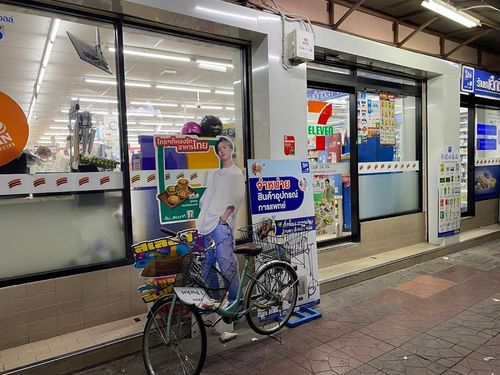
7-Eleven
Shops
Khao San’s 24/7 reset button: ice‑cold A/C, ham‑cheese toasties, All Café iced lattes, water for 7–14 THB, and late‑night supplies from snacks to sunscreen—right by Rikka Inn.
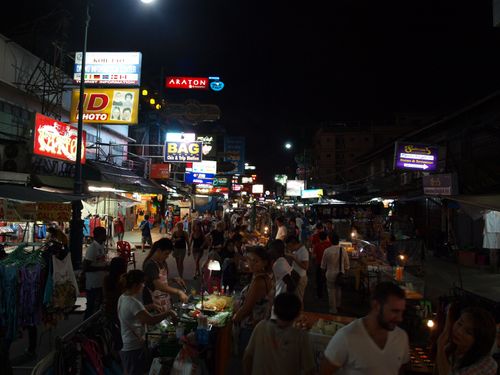
Khao San Road
Attractions
Bangkok’s backpacker carnival: curbside bars, live bands and DJs from 3pm–2am (midnight Sun). Street eats are cheap — pad thai 70–100 THB, mango sticky rice 60–100 THB. Come for wild people-watching; duck into Rambuttri for a calmer beer.
Rambuttri
Markets
Khao San’s calmer cousin: a tree‑shaded lane of VW van cocktail bars, open‑air foot massages, pad thai grills, and easygoing live bands. Best from sunset to 11pm; beers 80–120 THB, cocktails 150–220 THB. One block from the chaos, all the charm.
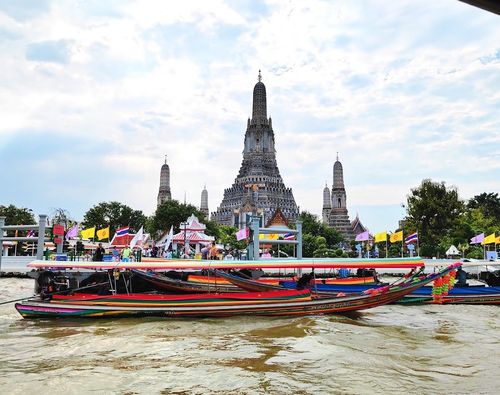
Chao Phraya Tourist Boat ICONSIAM Pier
Services
Hop on the blue‑flag tourist boat at ICONSIAM to cruise Wat Arun, Wat Pho, the Grand Palace and Chinatown. Day pass ~150 THB, boats every ~30 mins, last runs around 7:15pm. Easiest river launchpad via BTS Gold Line to Charoen Nakhon.
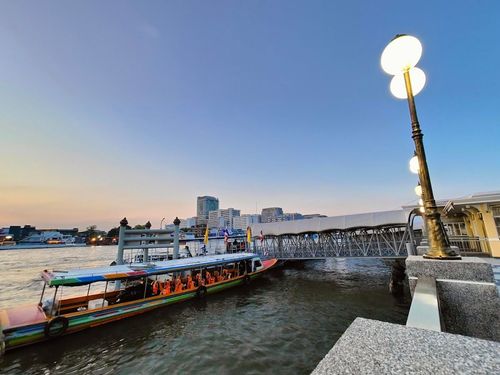
Tha Chang Bangkok
Bars
Bar on Khao San Road.
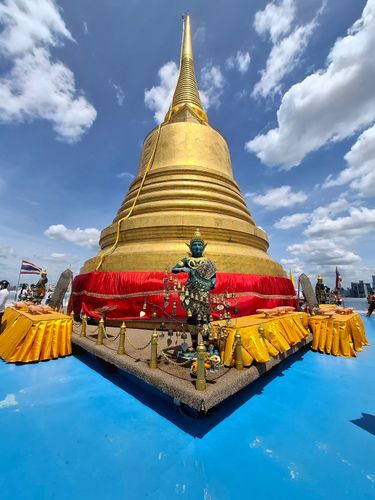
Wat Saket Ratchawora Mahawihan
Temples
Wat Arun Ratchawararam Ratchawaramahawihan
Temples
Recommended Products
More Khao San Road Guides
- Thailand Backpacker Packing List for Electronics, Charging, and Power Adapters
- Backpacker Packing List for Thailand: Electronics, Power, and Charging Adapters
- What to Pack for Thailand for Phone, Power, and Connectivity: SIMs, Chargers, Adapters, and Backup Battery Basics
- Backpacker Packing List for Thailand with Electronics: Adapters, Chargers, Power Banks, and Device Protection