
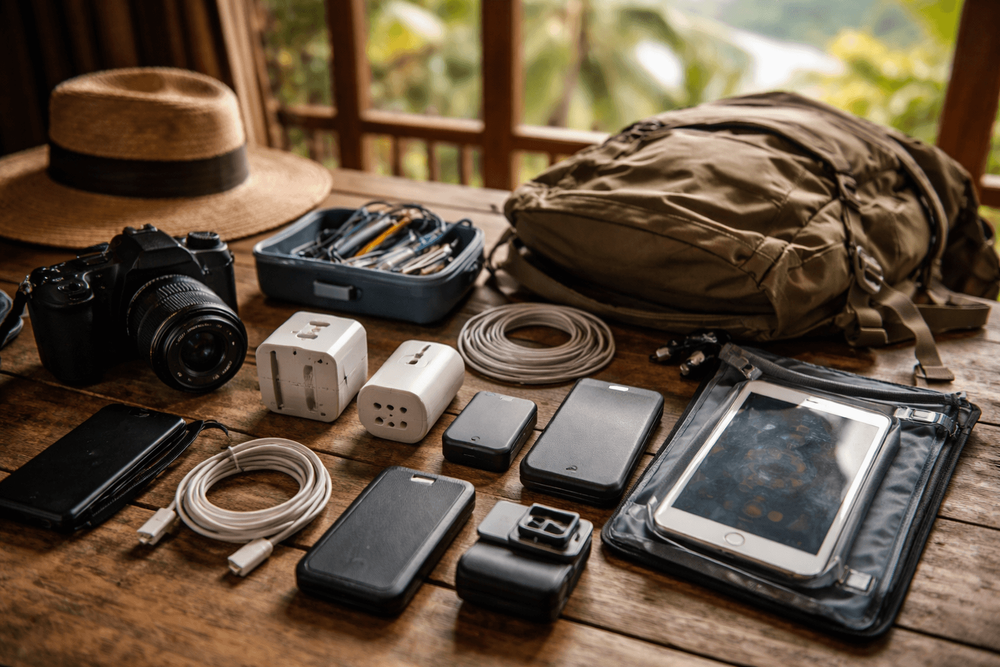
Backpacker Packing List for Thailand with Electronics: Adapters, Chargers, Power Banks, and Device Protection
Street-smart Thailand electronics packing guide: adapters, chargers, power banks, SIMs, and waterproofing so you stay charged from Khao San to the islands.
We’re shoulder to shoulder on Soi Baan Manee BKK, dodging a tuk-tuk that thinks it’s a race car, the air thick with lemongrass smoke from a grill and the sweet funk of durian from a cart. Our phone is at 3%, the roti guy is flambéing a banana pancake, and the thump of bass from Khao San Road is starting to feel like a timer. This is exactly why we take Thailand electronics packing seriously — because Bangkok doesn’t slow down just because your battery does.
Essential electronics to pack for Thailand
Before we get lost down a khlong of technicalities, here’s what we actually carry and why it matters when we’re bouncing from Banglamphu to the islands.
Phone and everyday essentials
- Smartphone with USB-C or Lightning cable: Your camera, map, translator, and wallet. Pack two cables — one lives in your day bag, one in your room. Spare cables save you 150–250 THB at a 7-Eleven at 1 AM.
- Dual-port wall charger: Go for a compact USB-C PD charger (at least 30W) with a second USB-A port. Solid mid-range options in Bangkok run 400–1,000 THB at MBK Center or Fortune Town.
- Power bank: 10,000–20,000 mAh with USB-C PD. Expect 400–900 THB for 10k, 800–1,500 THB for 20k depending on brand. Keep it in carry-on (airline rule).
Camera, action
- Mirrorless or action cam: Thailand’s light is wild — gold at dawn on the Chao Phraya and neon by night on Khao San. If you shoot video, bring extra batteries (humidity saps them) and a dual-bay charger.
- Lenses or mounts: A small prime for temples, a wide for night markets, and a floaty grip for Songkran-level splash situations.
- Memory cards: Two or three fast U3 microSD/SD cards. Branded 128 GB cards run roughly 400–800 THB at reputable counters; avoid super-cheap mystery cards.
Laptop or tablet
- Laptop with USB-C charger: If you’re editing or working, a 65W GaN charger can juice your laptop and phone. If you’re just streaming and backing up photos, a tablet might be lighter (and less worry on the beach).
- External SSD: 1 TB drives are 2,000–3,500 THB in Bangkok malls. Use them for nightly backups so one spilled Thai tea doesn’t take your trip with it.
Sound and small comforts
- Lightweight earbuds or on-ears with a wired backup. Long buses can be loud; so can your hostel neighbor who discovered Leo beer.
- E-reader or offline playlists for ferries and trains when signal drops.
Cables and tiny lifesavers
- Short 30 cm cable for power banks, plus a 1.5–2 m cable for awkward wall sockets.
- USB-C to USB-C, USB-C to Lightning, and a C-to-A adapter. A tiny 3-port USB hub turns one hotel socket into a charging station.
- Zip ties or Velcro wraps to tame cable chaos.
If you want a deeper dive into brands and wattage, we’ve put more detail in our adapter and charging explainer here: Backpacker Packing List for Thailand: Gadgets, Chargers, and Power Bank Essentials.
Thailand electronics packing: plugs, voltage, and adapters
Thailand runs on 220V, 50 Hz. The sockets you’ll most often see accept two flat pins (Type A) and two round pins (Type C). Many hotels and cafés use hybrid sockets that swallow both with a shrug. Three-pin grounded plugs (Type B) are less common but not rare in newer buildings.
What that means for us:
- You probably don’t need a voltage converter. Modern phones, laptops, cameras, and chargers are dual voltage (100–240V). Check the tiny print on your charger to be sure.
- Do pack a compact universal plug adapter if your gear uses non-Thai plugs, or if you want a single setup that works everywhere. A slim, non-bulky one is kinder to loose wall sockets.
- A short, two-prong Thai extension strip (100–200 THB at convenience stores) turns one outlet into three and keeps your charger off the floor when the only plug is behind the mini-fridge.
We get lots of questions about grounding and surge. Power in Bangkok is generally stable, but storms and island grids can hiccup. A small surge-protecting travel strip is nice-to-have if you’re toting a pricey laptop.
Nerd out on plug shapes, grounding, and when you actually need an adapter in our detailed breakdown: What to Pack for Thailand for Backpacker Electronics: Charging, Adapters, and Power Backup Essentials.
Protecting your gear from heat, humidity, and rain
Bangkok is a sauna with better food. Heat, humidity, and sudden rainstorms are the triple threat to electronics — and all three show up to the party.
Beat the heat
- Keep batteries out of direct sun. A phone left on a scooter seat will overheat faster than a wok on Yaowarat Road.
- Stash gear in the shade at temples and markets; duck into a 7-Eleven for an AC blast and a 14 THB water when your phone is overheating.
- Don’t charge devices under a pillow or stacked together; they need air. A perforated pouch keeps them cool in your daypack.
Tame the humidity
- Throw a few silica gel packets in your camera pouch or laptop sleeve. Rotate them every few days by airing them in your room.
- At the beach, keep your tech in a dry bag between hut and hammock. Salt air is sneaky and corrosive.
Rain warriors
- Cheap waterproof phone pouches (50–150 THB on Khao San Road night market) are worth their weight during monsoon squalls and full-on Songkran water fights.
- A 5–10 L roll-top dry bag (100–250 THB) carries phone, wallet, and camera across rainy sois and splashy long-tail rides.
Sand and splash
- Use a microfiber cloth to dust lenses and screens; never wipe salt spray with a dry hand.
- If your camera gets lightly splashed, a damp fresh-water wipe and gentle dry beats panic.
Crowded places and sticky fingers
- Khao San bars, BTS rush hour, and ferry boarding can be a pickpocket’s playground. A crossbody bag with a zipper and a phone lanyard save headaches. We keep our power bank tethered with a short cable so it’s harder to snatch mid-charge.
Charging and connectivity on the move
Phones die at the worst times — mid-Grab booking, mid-WhatsApp with your dive shop, mid-sunset at the Golden Mount. Here’s how we stay topped up and online.
Airports: BKK and DMK
- Charging points exist but get crowded. Bring a compact two-prong plug and a short cable so you can share an outlet without being that farang who hogs the only socket by the gate.
- Free Wi‑Fi is easy to join but often time-limited and slow. We hop on, pull maps for offline, then switch back to data when we need speed.
Hotels, hostels, and guesthouses
- Budget rooms sometimes have one hard-to-reach outlet. That’s where your extension strip shines.
- If a place turns off power midday to save energy (common on smaller islands), ask at check-in. We charge overnight and keep a 10k power bank topped for beach days.
- We usually crash near Soi Rambuttri or riverside around Phra Athit Road when we want calmer nights and easy charging before early temple runs. The Chao Phraya Express boat whisks us south, phones full, without dealing with rush-hour gridlock.
Buses, trains, and boats
- Long-distance buses vary: some have USB ports; others are pure naps and snacks. Assume no power and you won’t be disappointed.
- Thai Railways sleepers often have a shared outlet per bay — not per bed. A multi-charger and long cable are gold when your berth isn’t near the socket.
- Ferries to Koh Tao, Koh Lanta, and Koh Phi Phi sometimes have outlets in VIP sections; on open decks, count on your power bank.
Local SIMs, eSIMs, and data packs
- Buy a tourist SIM from AIS, True, or DTAC at the airport kiosks or any neighborhood shop. Expect 8–15 days with a hefty data chunk for 299–599 THB. Passport needed for registration.
- eSIMs are convenient if your phone supports them — scan a QR, switch on data when you land, done. Keep your home SIM line on standby for banking 2FA.
- Data in cities is fast; islands can throttle during storms or at peak hours. We pre-download offline maps for Bangkok and our island of choice just in case.
- Tethering works fine if you’re pairing a laptop to your phone. Heavy upload days are better in cafés with fiber.
If you want our quick-hit picks on tourist SIMs and where to buy them near Khao San and Suvarnabhumi, we’ve got a dedicated SIM and power rundown here: Thailand Electronics Packing List: Adapters, Power Banks, and SIM Gear.
Common packing mistakes and smart backups
We’ve made these so you don’t have to.
- Bringing a hairdryer or kettle: Leave the power-hungry stuff. Thai voltage is high, and rooms usually provide basics. If not, street food solves the kettle problem.
- One cable to rule them all: It will die on a three-hour bus to Kanchanaburi. Pack duplicates and a shorty for your pocket.
- Tiny power bank: A 5k mAh brick is cute until your GPS chews it in two hours. Go 10k minimum; 20k if you shoot video.
- No waterproofing: Bangkok can go from drizzle to fire hose in five minutes. Dry bag plus phone pouch, always.
- Skipping backups: At day’s end (or a Chang-fueled midnight), back up photos to cloud or SSD. Don’t wait for the last night in Railay.
- Ignoring airline rules: Power banks must ride in carry-on only. Under 100 Wh is the safe zone — that’s up to about 27,000 mAh for most banks. Bigger bricks (100–160 Wh) need airline approval and are rarely worth the hassle.
- Forgetting storage: MicroSD space is cheap compared to regrets. Keep a fresh, sealed card in your sling for the trip of a lifetime you didn’t know you’d take.
A smart, compact backup kit
- 10–20k mAh power bank
- 30–65W USB-C PD wall charger with two ports
- 2x phone cables (one short, one long)
- 1x USB-C to USB-C, 1x USB-C to Lightning (if needed), 1x USB-C to USB-A adapter
- Dry bag + waterproof phone pouch
- External SSD and/or spare microSD card
- Silica gel sachets
- Compact extension strip
If you’re traveling lighter or working on the road, we’ve sketched out variants for both in our broader pack guides: Thailand Packing List for Digital Nomad Backpackers and Thailand Packing List for Backpackers Carrying Electronics and Work Gear.
Know before you go: where to buy, what it costs, and street-savvy habits
- Where to buy: 7‑Eleven and FamilyMart carry basic cables, adapters, and small power banks 24/7. For the good stuff, MBK Center (Siam), Fortune Town IT Mall (Rama 9), and Pantip Plaza (Pratunam) have rows of legit shops. Mall hours are usually late morning to late evening — figure around 10:00 to 22:00.
- Prices you’ll actually see: USB-C cables 150–400 THB, compact GaN chargers 400–1,000 THB, branded 10k power banks 400–900 THB, 20k banks 800–1,500 THB, waterproof phone pouches 50–150 THB, roll-top dry bags 100–250 THB.
- Avoid fakes: If a deal on a premium brand feels too sanuk to be true, it probably is. Buy memory cards and power banks from brand counters or established stores.
- Power brownouts: On smaller islands, some bungalows cut daytime power or the grid hiccups during storms. Keep your power bank topped and your laptop off the wall when lightning gets theatrical.
- Charging etiquette: In cafés along Phra Athit Road or by the river, it’s polite to order something if you’re juicing for a while. An iced Americano runs 60–90 THB and buys you goodwill and AC.
- Temple respect: At Wat Saket Ratchawora Mahawihan (the Golden Mount) and other wats, keep tripods and big rigs tucked away unless you have permission. A phone and small camera draw less attention and capture the vibe just fine.
- Paper backups: Screenshot your hotel address in Thai and English, your transit QR codes, and your passport photo page. Save to your phone and also stash a printout in your day bag — quick help for a taxi on a rainy night in Banglamphu.
Our pocket-sized Thailand electronics packing checklist
- Phone + 2 cables + dual-port PD wall charger
- 10–20k mAh power bank (carry-on only)
- Universal plug adapter + compact extension strip
- Camera + 2 batteries + 2–3 memory cards + microfiber cloth
- Laptop/tablet + external SSD (if needed)
- Dry bag + waterproof phone pouch + silica gel
- Earbuds/headphones + wired backup
- Offline maps + SIM/eSIM plan lined up
EPICKA Universal Travel Adapter Plug with USB C and 4 USB Ports
When the wok sizzles, the monsoon hits, and the bass thumps through Khao San, we still want a working phone, a charged camera, and enough juice to find late-night boat noodles on Phra Athit. Pack smart once and let the chaos be part of the story — not the reason your screen goes black.
Related Hotels & Places
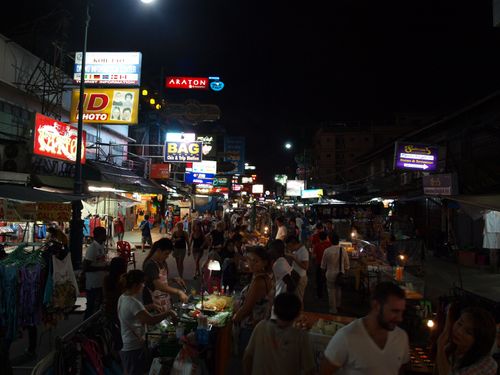
Khao San Road
Attractions
Bangkok’s backpacker carnival: curbside bars, live bands and DJs from 3pm–2am (midnight Sun). Street eats are cheap — pad thai 70–100 THB, mango sticky rice 60–100 THB. Come for wild people-watching; duck into Rambuttri for a calmer beer.

Baan Manee BKK
Hotels
A 118‑year‑old riverside house turned boutique stay and café. Sunset terrace, a small bar and a fire pit on the Chao Phraya. Ten minutes across from Khao San—come for proper coffee by day, drinks after dark, and quiet sleep away from the noise.
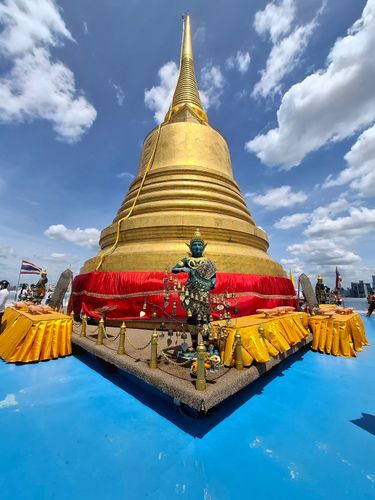
Wat Saket Ratchawora Mahawihan
Temples
Recommended Products
More Khao San Road Guides
- Backpacker Packing List for Thailand: Electronics, Power, and Charging Adapters
- Backpacker Packing List for Thailand: Gadgets, Chargers, and Power Bank Essentials
- Thailand Backpacker Packing List for Electronics, Charging, and Power Adapters
- Backpacker Packing List for Thailand for Phone, Power, and Connectivity Essentials