
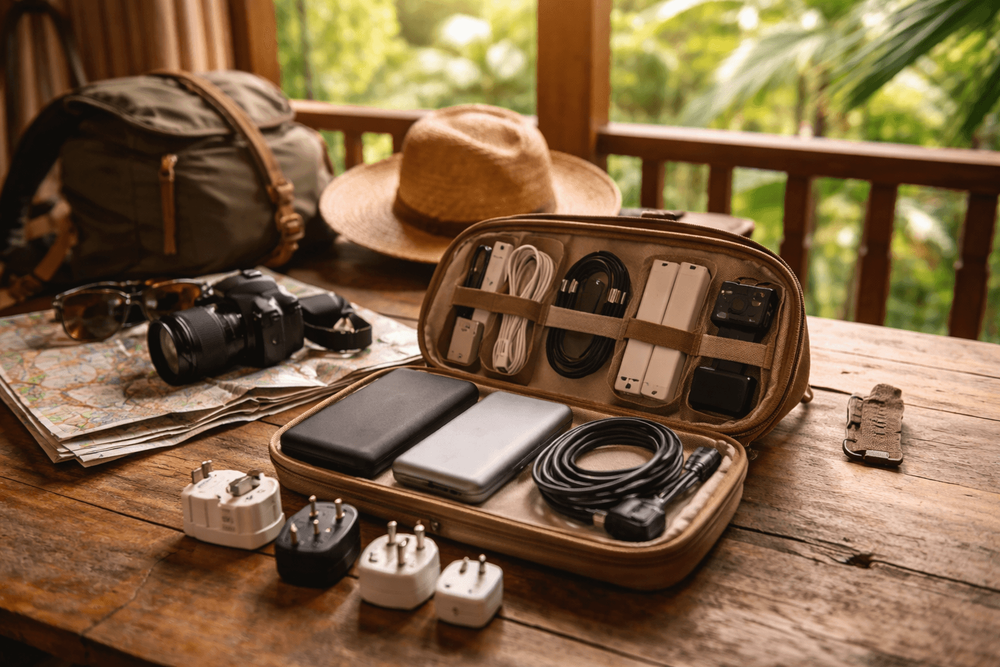
Backpacker Packing List for Thailand’s Tech and Charging Setup: Adapters, Power Banks, and Cable Control
A field-tested Thailand tech packing list: chargers, adapters, eSIMs, and waterproof essentials to keep your phone powered from Khao San to Koh Lanta.
We’re wedged into a tuk-tuk rattling up Chakrabongse Road, neon from Khao San Road splashing across our knees, phone at 3% and the driver grinning in the mirror like this is a race. This is exactly why we carry a tight, no-nonsense Thailand charging adapter packing list: the small, light kit that keeps our maps live on the Chao Phraya Tourist Boat ICONSIAM Pier, our photos safe after a sweaty night on The Thai Massage ChiangRai, and our battery green when the only open outlet is hidden behind a fan at a noodle stall.
Data Freshness + Pricing:
- Prices are approximate and in THB.
- Last checked: July 2026
- Happy hour and promo details change frequently—confirm locally.
thailand tech packing list: the essential core kit
Here’s the compact, proven setup we actually use in Bangkok, on the islands, and bouncing up to Chiang Mai. It fits in a palm-sized pouch and shrugs off heat, rain, and 2 AM pad thai grease.
- Unlocked smartphone (dual-SIM or eSIM capable): Your lifeline for Grab, Bolt, and maps. Bring a case with a little lip—street drops happen when a tuk-tuk brakes hard by the Democracy Monument.
- 30–45W USB‑C fast charger (GaN if possible): One charger to rule them all—phone, tablet, earbuds, action cam. Expect approx. 400–900 THB if you need to buy at MBK Center.
- USB‑C to USB‑C cable + short spare: One 1 m and one 0.3 m. Plan on approx. 80–250 THB each at Fortune Town (Rama 9) or a mall kiosk. If you’re on iPhone, add a USB‑C to Lightning.
- 10,000–20,000 mAh power bank with PD: 10k for city days, 20k for island ferries and night trains. Figure approx. 500–900 THB (10k) or 900–1,500 THB (20k).
- Universal travel adapter (compact): Thailand uses 220V, and sockets accept Type A (flat), Type C (round), and often Type B (three-prong). Most hotels have combo sockets, but an adapter saves you when your plug is the odd one out (approx. 150–400 THB at 7-Eleven, Big C, or Lotus’s).
- Slim extension lead or 3‑port travel power strip: Old guesthouses near Phra Athit Road may have a single awkward outlet behind the bed. A 1–1.5 m cord turns one socket into a charging station (approx. 150–350 THB).
- Local data plan: eSIM or physical SIM from AIS, True, or dtac. Tourist packages run approx. 149–599 THB depending on days and data; airport counters are painless, 7‑Eleven can top you up late-night.
- Tiny SSD (500 GB–1 TB) or large microSD: Back up photos nightly. Expect approx. 1,800–4,500 THB for a 1 TB SSD at Fortune Town.
- Earbuds with a cable backup: Bluetooth dies at the worst time—keep a wired fallback.
- Lightweight headlamp or keychain torch: Alleyways, ferries at dawn, temple steps up the Golden Mount at night—useful and tiny.
If you want a deeper gear breakdown for chargers and adapters specifically, we keep a more focused list here: Thailand Backpacker Packing List for Electronics, Charging, and Power Adapters (/articles/thailand-backpacker-packing-list-electronics-charging-power-adapters).
Power and connectivity in Thailand: what actually matters
Plugs, voltage, and surge sanity
Thailand runs 220V at 50 Hz. Most modern chargers (phone, laptop, camera) are dual‑voltage—check the fine print on your brick. Sockets usually accept both two flat blades (Type A) and two round pins (Type C); three‑prong (Type B) is common in newer hotels and cafes but not guaranteed in older shophouses.
- Bring one compact universal adapter and a short, three‑socket extension. That combo beats carrying multiple bulky adapters.
- Cheap rooms can have loose sockets; a right‑angle plug or tight-fitting adapter helps keep weight off the wall.
- Power cuts happen during storms on the islands. A 20k mAh bank plus a small power strip makes you popular in the dorm.
Wi‑Fi reality check
- Bangkok: Cafes on Phra Athit Road, Ari, and Ekkamai push solid Wi‑Fi, often 50–300 Mbps. Malls (MBK, Siam Paragon) have free networks that SMS‑verify and work decently.
- Islands: Beach bars and bungalows keep it casual—expect dropouts when it rains and during dinner rush. Tethering saves the night.
- Guesthouses near Khao San and Soi Rambuttri often throttle at peak hours. We upload photos and sync backups midday or late.
Mobile data: eSIM vs SIM, and where to buy
- eSIM: Easy and immediate if your phone supports it. Carrier eSIMs priced similarly to physical SIMs (approx. 150–600 THB for 7–30 days), and you can top up online. Third-party eSIMs work but may not include local voice—fine for data and app calls.
- Physical SIM: Grab one at Suvarnabhumi or Don Mueang arrivals. Staff will swap and activate while you blink. If you wait, 7‑Eleven sells and tops up after a quick passport scan.
- Coverage: AIS and True dominate Bangkok, Chiang Mai, and most beach towns; dtac holds its own. 5G is common in cities, 4G almost everywhere but can sag on remote ferries and deep in the khlong-side neighborhoods.
Tip: Screenshot your data balance and package details; SMS menus can be very Thai‑only. If you want a full backpacker‑friendly packing overview (not just tech), we’ve laid that out here: Backpacker Packing List for Thailand (/articles/backpacker-packing-list-for-thailand-2026-06-06).
Gear by travel style and weather
Thailand flips from steam‑bath afternoons to sudden monsoon slaps. We pack for sweat, salt, and the kind of rain that turns Rambuttri’s fairy lights into prisms.
Islands and boats
- Waterproof phone pouch: For longtails to Railay or Koh Phi Phi. The cheap clear kind (approx. 100–200 THB at beach stalls) keeps salt out while you film the limestone.
- 5–10 L dry bag: Ferry baggage gets stacked; a dry bag protects camera, SSD, and passport (approx. 200–400 THB at night markets and dive shops).
- Corrosion control: Rinse gimbal hinges and wipe gear after sea spray; toss a couple of silica gel packs in your tech pouch.
- Action cam + floaty grip: Waves don’t care about your content calendar.
Cities and night markets
- Fast prime lens or bright phone mode: Talat Rot Fai Ratchada may be gone, but JJ Green and new night markets pop with neon and smoke—low light, high vibes. A 35mm or 50mm prime (f/1.8) shines.
- Mini tripod or clamp: For time lapses on the Skytrain platform with the wind roaring past to Mo Chit.
- Sling with lockable zips: Chatuchak Weekend Market is sanuk and sweat; keep your phone cross‑body and your power bank tethered inside.
- Cable control: A small zip pouch with three short leads (USB‑C, Lightning, USB‑A adapter) beats a medusa of cords.
Songkran and monsoon season
- Double protection: A waterproof pouch plus a roll‑top dry bag. Songkran on Khao San is a full‑send soak—assume you’ll be blasted point‑blank.
- Quick‑dry microfiber cloth: Wipe lenses, then bag dry before you step into that 7‑Eleven blast of AC.
Anti‑theft without paranoia
- Tiny retractable cable lock: Loop through a daypack strap on overnight trains.
- Airtag/Tile in your main pack: Peace of mind when your bag disappears behind the reception counter.
- Low‑profile wallet: Keep a decoy note outside and the rest zipped inside.
If you’re setting up a daypack dialed for Bangkok buses, boats, and BTS hop‑offs, we break down a carry that just works: Backpacker Packing List for Thailand for Daily Carry and Daypack Setup (/articles/backpacker-packing-list-thailand-daily-carry-daypack-setup).
Digital prep before you fly
Offline tools that save the day
- Offline maps: Download Bangkok, Chiang Mai, Phuket, and any island area on Google Maps. Mark your guesthouse, nearest 7‑Eleven, MRT/BTS stations, and a clinic.
- Translation: Download Thai in Google Translate. Practice a quick “sawadee krub/ka” and “chai/mai chai” (yes/no). Keep your manners; it opens doors.
- Bookings: Save PDFs/screenshots of hotel reservations and ferry tickets. Not every pier has perfect signal.
- Transport apps: Grab and Bolt for rides; the BTS SkyTrain and MRT apps for route maps; Chao Phraya Express timetable screenshot for boat runs.
- Food delivery: LINE MAN or Foodpanda when you hit the wall after Chatuchak.
Backup like you mean it
- Cloud sync: Auto‑upload photos nightly on Wi‑Fi. If speeds drag, switch to “Wi‑Fi + mobile data” just for the night.
- Physical backup: Offload to a labeled folder on your SSD. We do it while slurping boat noodles near Victory Monument; five minutes now saves tears later.
- 2FA sanity: Add backup codes and a secondary authenticator. Losing a phone at a night market shouldn’t lock you out of your email and bank.
Emergency access
- Key numbers saved and screenshotted: 1155 Tourist Police (English), 191 general emergency, 1669 medical emergency. Add your embassy and travel insurance hotline.
- Document cache: Passport photo, visa stamp, vaccine card, and insurance PDF saved offline and in the cloud.
For longer work‑and‑travel stints, we’ve also put together a nomad‑leaning pack that balances laptops and lightness: Thailand Packing List for Digital Nomad Backpackers (/articles/thailand-packing-list-for-digital-nomad-backpackers) and What to Pack for Thailand for Digital Nomads and Remote Work Trips (/articles/thailand-remote-work-packing-list).
Packing priorities to keep tech light, safe, and useful
Weight and redundancy
- One brick, many outputs: A 45W USB‑C GaN charger plus a tiny 18–20W backup is smarter than two big bricks.
- Three‑cable rule: USB‑C to C, USB‑C to Lightning (if needed), and a short USB‑A adapter. Anything else, buy locally.
- SD/SSD redundancy: Photos in three places—phone, cloud, SSD. Delete only when you’ve got triple coverage.
Daily flow in Bangkok
- Morning charge: Top everything up while you cool off under the guesthouse fan. Label your charger with tape; communal sockets can become a gear swap meet.
- Midday check: Slip into 7‑Eleven for AC and a top‑up card (approx. 50–200 THB). A Thai iced tea and a battery check beat a sweaty panic later.
- Night run: Markets and river piers mean jostles—use the short cable from your bank to your phone and keep both in the same pocket or sling compartment.
Heat, rain, and electronics
- Don’t charge under a pillow or on a mattress. Cheap rooms, hot bricks, and soft surfaces are a toasty mix. Charge on tile or a desk.
- Keep a zip bag in your sling. Sudden cloudburst on Phra Arthit? Phone goes in the bag, then into the sling. Finish your mango sticky rice like a local.
Buying or fixing gear in Bangkok
- MBK Center (National Stadium BTS): SIMs, cases, cables, quick phone repairs. Haggle lightly; prices vary by stall.
- Fortune Town (Rama 9 MRT): Real IT mall with better‑than‑touristy pricing on SSDs, power banks, and chargers.
- Pantip Plaza has faded, but you can still find odds and ends.
Safety without stress
- Public Wi‑Fi is fine for scrolling; use a VPN for banking and bookings.
- Don’t flash your phone in the street while a scooter zips by your elbow. Step into a doorway or 7‑Eleven to check maps.
- Hostel lockers vary—carry your own small combo lock (approx. 100–200 THB). In private rooms, tuck gear out of sight and close curtains on ground floors.
Know before you go: small tips that feel big later
- Bring a spare SIM ejector, or just use a paperclip from the nearest 7‑Eleven receipt pile.
- Keep 100 THB in small notes for coin‑op laundry and photocopies; some shops still want printed passport pages.
- Screenshot Thai addresses in Thai script for taxi drivers. “Soi” numbers jumble fast when the tuk‑tuk wind is in your ears.
- If your bank blocks top‑ups, buy physical top‑up slips at 7‑Eleven and let the cashier load your number.
If you’re still refining the broader backpack—clothes, shoes, toiletries—pair this tech guide with our complete backpacker list: Backpacker Packing List for Thailand (/articles/backpacker-packing-list-for-thailand-2026-05-15).
Quick buy‑there cheat sheet (approx. THB)
- SIM/eSIM package (7–30 days, data‑heavy): 149–599
- USB‑C cable (1 m): 80–250
- 30–45W GaN charger: 400–900
- 10k/20k mAh power bank: 500–900 / 900–1,500
- Waterproof phone pouch: 100–200
- 5–10 L dry bag: 200–400
- Compact power strip/extension: 150–350
- 1 TB SSD: 1,800–4,500
EPICKA Universal Travel Adapter with 4 USB Ports
We keep the kit lean so we can say yes in the moment—yes to a last‑minute ferry to Koh Lanta, yes to a midnight moo ping run on Soi Rambuttri, yes to getting gloriously lost in the alleys above Phra Athit. Pack smart, keep your battery topped, and meet us by the river at sunset—when the temple lights blink on and the longtails purr, we’ll be the ones with dry phones and 78% charge, ready for whatever Bangkok throws next.
Related Hotels & Places
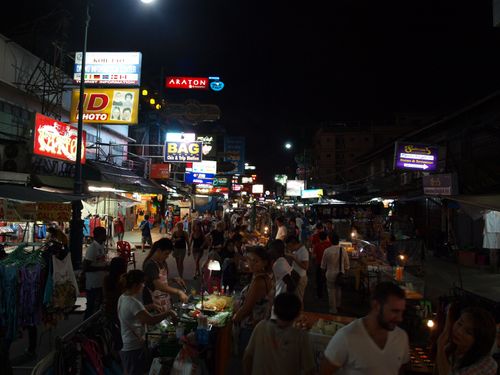
Khao San Road
Attractions
Bangkok’s backpacker carnival: curbside bars, live bands and DJs from 3pm–2am (midnight Sun). Street eats are cheap — pad thai 70–100 THB, mango sticky rice 60–100 THB. Come for wild people-watching; duck into Rambuttri for a calmer beer.
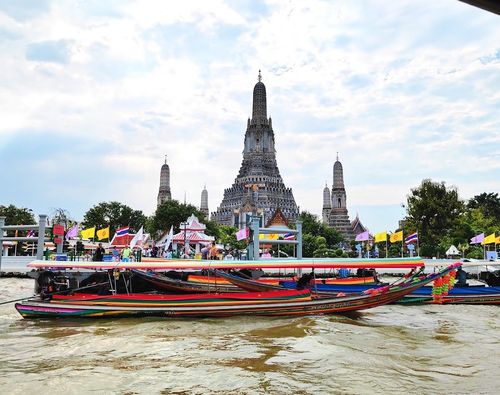
Chao Phraya Tourist Boat ICONSIAM Pier
Services
Hop on the blue‑flag tourist boat at ICONSIAM to cruise Wat Arun, Wat Pho, the Grand Palace and Chinatown. Day pass ~150 THB, boats every ~30 mins, last runs around 7:15pm. Easiest river launchpad via BTS Gold Line to Charoen Nakhon.
The Thai Massage ChiangRai
Massage
Calm, central Wiang shop known for quality Thai and foot massages — with the neat trick of working head/neck while you recline. Open daily 11am–10pm. Call +66 89 222 2267 or book via Line; walk-ins fine most days.
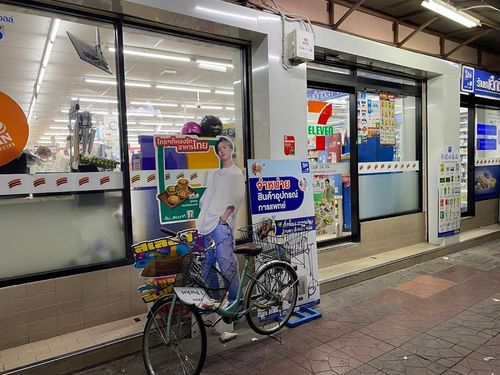
7-Eleven
Shops
Khao San’s 24/7 reset button: ice‑cold A/C, ham‑cheese toasties, All Café iced lattes, water for 7–14 THB, and late‑night supplies from snacks to sunscreen—right by Rikka Inn.
Recommended Products
More Khao San Road Guides
- Backpacker Packing List for Thailand: Electronics, Power, and Charging Adapters
- Backpacker Packing List for Thailand with Electronics: Adapters, Chargers, Power Banks, and Device Protection
- Thailand Backpacker Packing List for Electronics, Charging, and Power Adapters
- Thailand Backpacker Packing List for Electronics and Power: Adapters, Chargers, Backup Battery, and Tech Safety