
Best Street Food in Chinatown for Khao San Road Travelers: What to Eat, Where to Start, and How to Get There
A hungry, no-nonsense guide to Chinatown street food near Yaowarat — what to eat, where to line up, how to order, and the easiest ways from Khao San.
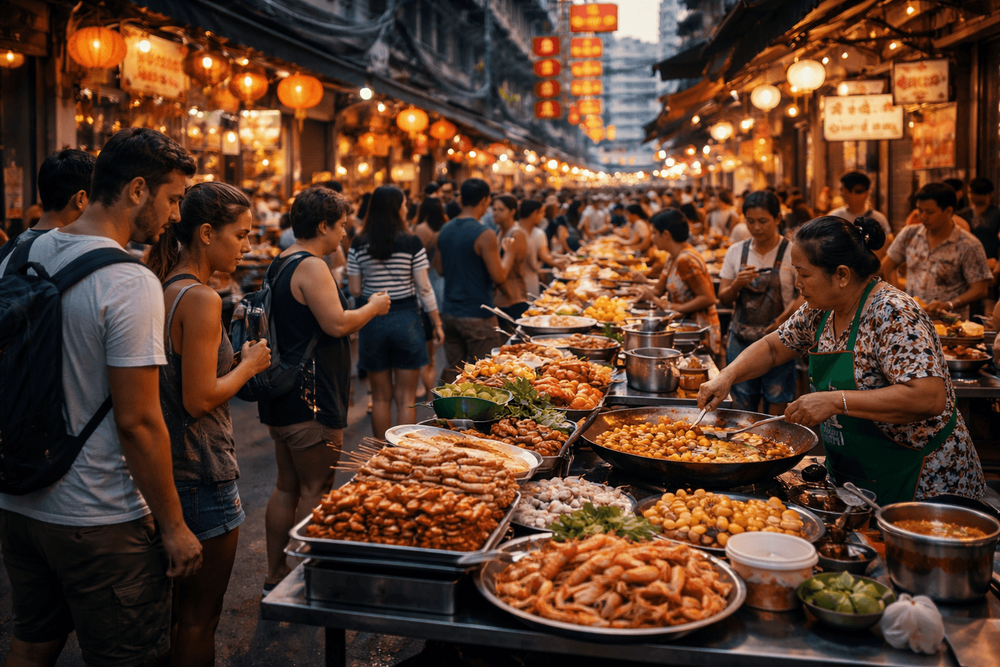
We hit Yaowarat Chinatown Heritage Center just as the neon flickers on and the woks start to sing. The air is a mix of peppery steam from kuay jab, sweet rot from a durian cart, and the caramel smell of chestnuts tumbling in a drum. This is Bangkok’s Chinatown street food at full throttle — loud, chaotic, deeply delicious — and it’s an easy hop from Khao San Road if we time it right and show up hungry.
The Chinatown street food hits: what to eat first
We could spend a week in Chinatown’s Yaowarat’s lanes and still miss things, so let’s zero in on the Chinatown street food greatest hits — the dishes locals line up for and travelers remember.
Noodles and soups we always slurp
- Kuay Jab (rolled rice noodle soup): Peppery, porky, and pure comfort. Sheets of rice noodles curl into a broth studded with crispy pork belly, offal if you want it, and a rain of white pepper. Say “mai ao taeng” if you don’t want intestines; add “moo krob” if you do want the crispy pork. Expect 60–100 THB.
- Duck noodles (ba mee ped): Egg noodles with slices of soy-braised duck and star anise gravy. Order “ba mee haeng” for dry noodles with soup on the side, or “nam” if you want it all in one bowl. 70–120 THB.
- Fish maw soup (kra por pla): Collagen-rich and silky, brightened with black vinegar and coriander. A Chinatown classic for 80–150 THB, more if you upgrade to bigger maw or crab.
- Tom yum seafood: Not the tourist-red stuff — here it’s often clean and sharp, with prawns, squid, and straw mushrooms. Bowls run 120–220 THB depending on seafood.
Grills, woks, and big-flame drama
- Hoi tod (oyster or mussel omelette): A crunchy, chewy tangle on a sizzling iron plate. Good stalls use plump oysters and a sauce with a little funk. 100–180 THB.
- Moo satay (pork satay): Skewers get fan-flipped over charcoal, brushed with coconut milk and turmeric, and dunked in peanut sauce. Usually 6–10 THB per stick; we grab 10 and don’t overthink it.
- Stir-fried crab and prawns: The show-stopper carts pile live or iced seafood high. Stir-fried crab with curry powder (poo pad pong karee) or garlic prawns will set you back 300–700 THB depending on size — pricier than an average Bangkok street stall, but you’re here for the sanuk and spectacle.
- Fried rice with crab (khao pad boo): Look for big wok tosses and visible crab chunks, not mystery flakes. 120–180 THB.
Snacks that fuel the stroll
- Dim sum baskets: Steamed siu mai, shrimp dumplings, and bao buns migrate onto the street at sunset. Pick by pointing; 10–25 THB each or 60–120 THB per small plate.
- Pa tong go (Thai-style youtiao): Deep-fried dough sticks, golden and airy. Best dunked in warm soy milk (nam tao hoo) late-night. 5–10 THB per piece; soy milk 15–30 THB.
- Roasted chestnuts: You’ll hear the scoop clanging against the roaster before you see the cart. Half-bags go for 50–80 THB; full bags 100–160 THB.
- Spring rolls and chive cakes (gui chai): Pan-fried until the edges snap, then sliced and drizzled with sweet soy. 30–60 THB.
Desserts and drinks we never skip
- Black sesame dumplings in ginger tea (bua loy nam king): Peppery ginger syrup with molten-sesame dumplings — warming even in Bangkok heat. 40–60 THB.
- Grass jelly (chao kuai) or “Lod Chong Singapore”: Jellies and pandan noodles over crushed ice, smoky with palm sugar. 30–50 THB.
- Fresh juices: Pomegranate (matum), sugarcane, and longan juices poured from plastic pitchers. 40–80 THB.
- Durian and seasonal fruit: Follow your nose. If you’re durian-curious, ask for a small pack to test the waters. 120–200 THB for premium varietals.
Where to find the best street food around Yaowarat Road
Chinatown isn’t just one strip; it’s a web of sois (alleys) and snaking lanes. The busiest, most reliable food action clusters around these spines:
The Yaowarat Road night market strip
From Odeon Circle (the big red Chinatown Gate) east toward Ratchawong Pier, the footpaths turn into a runway of carts after sunset — grills sparking, noodles sloshing, staff yelling “sawasdee!” over traffic. This is where the oyster omelettes shout for your attention next to dim sum towers and tom yum cauldrons. You’ll pay a little more on the main road, but turnover is high and flavors punchy.
- Best window: 6:00 pm–10:30 pm for peak buzz; later on weekends.
- Watch the cross-street tangle; follow locals to crosswalks or wait for the lulls.
For a lane-by-lane look at the vendors that set up here, we break it down in detail in our Yaowarat Night Market guide: Where to Eat Street Food in Yaowarat: Bangkok’s Chinatown Night Market Guide.
Soi Texas (Phadung Dao) and friends
Soi Texas — also marked as Phadung Dao — is basically Yaowarat’s sidecar. At night it’s lined with charcoal grills, seafood spreads, and tables that creep into the road. If a table runner waves a laminated menu at us, we keep walking until we see a wok master working without theatrics. A short hop away, Plaeng Nam Road near Wat Mangkon Kamalawat (Wat Leng Noei Yi) MRT is dotted with excellent kuay jab and roast duck.
Wat Mangkon area and Plaeng Nam, daytime to early night
Around Wat Mangkon Kamalawat temple, the daytime scene is shophouse noodles, soy milk stands, and old-school coffee (oliang) poured from sock filters. When the sun dips, carts roll out on Plaeng Nam with soups, skewers, and dessert bowls. It’s a great first stop if we arrive by MRT Blue Line — follow Exit 1 signs and you’ll smell the broth before you see it.
Song Wat and Talat Noi, daytime gems
Two blocks toward the river, Song Wat Road and into Talat Noi are perfect for a pre-sunset wander: dried seafood shops, hidden noodle joints, and family-run eateries with enamel bowls older than we are. Food here tilts lunchy: 10:30 am–3:00 pm is the sweet spot. Snap a bowl, then loop back to Yaowarat for the night shift.
Sampeng Lane (Wanit 1), snack central
Sampeng is a maze — narrow, busy, and brilliant for snacks while you bargain for socks or phone cases. Go for chive cakes, spring rolls, and fruit over crushed ice. It winds between Charoen Krung and Yaowarat; we dip in when the main road gets too intense.
Practical tips for eating street food in Chinatown
We love a little chaos, but a few tricks keep it tasty and smooth.
- Timing: Arrive 5:30–6:00 pm to see stalls set up and beat the longest queues. Weekend nights are electric but crowded. If it’s raining lightly, go — you’ll have more elbow room.
- Prices: Street bowls 60–120 THB; grilled seafood 200–700 THB; skewers 10–20 THB; desserts 30–60 THB; fresh juice 40–80 THB. Bird’s nest or premium dishes can hit 200–500+ THB.
- Cash rules: Most carts prefer cash. Keep small bills (20s, 50s, 100s). Some take Thai QR (PromptPay), but don’t count on it.
- Order like a pro: Point and smile works. Add a few Thai words: “ped nit noi” (a little spicy), “mai ped” (not spicy), “mai sai pak chee” (no coriander), “song tee” (two of these). For noodles, “haeng” is dry, “nam” is with soup.
- Seats: Tiny plastic stools appear like magic. Share tables; it’s part of the fun. If they hand you a number, that’s your queue — hang tight.
- Hygiene: Follow the crowds. Busy stalls mean turnover and hot oil. Aim for cooked-to-order dishes, watch for boiling broth, and use the provided chopsticks/spoons still in wrappers. Bring tissues and hand gel. If shellfish have been sunbathing in the afternoon heat, we skip them until evening.
- Expect the heat, noise, and traffic: Yaowarat is a sensory punch. Hydrate and know that your shirt will smell like smoke — fine by us.
- Vegetarian, halal, gluten-sensitive: Chinatown is flexible if you know what to ask for. For tailored advice across Bangkok stalls, we’ve got a focused piece here: Bangkok Street Food for Diets: Vegetarian, Halal, and Gluten-Free Options.
If you want a broader primer before you dive in — paying at stalls, picking safe vendors, and avoiding rookie mistakes — bookmark this: Bangkok Street Food for First-Time Visitors: How to Order, Pay, and Eat Safely.
Why Chinatown street food hits different
Bangkok has legendary eats everywhere — Isaan grills in Silom, late-night noodles in Sukhumvit, homey curries in Old Town — but Chinatown brings its own swagger.
- The night market electricity: Nowhere else in Bangkok throws neon across a river of motorbikes while a hawker flips oysters at your knee as gold shops glitter behind him.
- Thai-Chinese flavor DNA: Many families here are Teochew or Hokkien, so you get pepper-driven broths, soy-braised meats, and wok hei — that breath-of-wok char — layered over Thai heat, lime, and fish sauce.
- The show: Seafood carts stack crabs higher than our heads, chestnut roasters clang like a percussion section, and dessert aunties move faster than our camera shutter.
- Heritage shophouses: Slurp a duck noodle under whirring old fans, then slip into a temple courtyard perfumed with incense — food and culture in one block.
When you’ve eaten your way across other neighborhoods and want the Chinatown angle mapped out, we also compare scenes across Bangkok here: Bangkok Street Food by Neighborhood: Where to Eat in Banglamphu, Old Town, Chinatown, and Riverside.
Getting there from Khao San Road (and back)
From backpacker base to bao buns without blowing your budget — here’s how we roll.
- Chao Phraya Express boat: From Phra Arthit Pier (N13), hop the Orange Flag boat to Ratchawong Pier (N5). It costs about 20–22 THB and drops you at the west end of Chinatown; from there it’s a 10–12 minute walk up Ratchawong Road to Yaowarat. Note: boats run most of the day but taper in the evening; after dark we switch to MRT or taxi.
- MRT Blue Line: Grab a quick taxi or tuk-tuk to Sam Yot MRT from Khao San (5–10 minutes off-peak), then ride to Wat Mangkon Station — you’ll pop up right by Plaeng Nam Road. Fares 16–30 THB depending on distance.
- Taxi or Grab: Easy, door-to-door. Off-peak 15–25 minutes and 80–140 THB on the meter; rush hour can hit 45–60 minutes. Tuk-tuks are fun but negotiate up front; 120–200 THB is typical Khao San to Yaowarat depending on your bargaining mojo.
- Walk it: Doable in cooler hours if you like urban rambles — roughly 3–4 km from Khao San to the Chinatown Gate at Odeon Circle — but the midday sun will test your soul.
Here’s a pinpoint for our usual starting photo-op and snack warm-up at the Chinatown Gate (Odeon Circle):
If you want a ready-made plan focused on doing this as a single outing from Khao San (with timing and stall clusters), we’ve laid one out here: Best Bangkok Chinatown Street Food for a Day Trip from Khao San Road.
A simple Yaowarat route (90 minutes to 3 hours)
We like a loose loop that stacks savory, seafood, and sweets without backtracking too much.
- Chinatown Gate snack start (sunset)
- Grab roasted chestnuts or a bao to prime the engine. Snap your photo and slip onto Yaowarat Road.
- Soi Texas (Phadung Dao) for wok fire
- Find a stall where the wok boss is too busy cooking to hustle you. Share an oyster omelette and a plate of garlic prawns. If the tables look staged for photos, we bail and try the next cart.
- Plaeng Nam for soup
- Walk or hop one block north to Plaeng Nam. Join the kuay jab line — it moves fast — or order duck noodles. Peppery broth now will make dessert taste better later.
- Yaowarat dessert lane
- Drift back to the main strip for black sesame dumplings in ginger tea, grass jelly over ice, or pa tong go with soy milk. If you see the pomegranate press working overtime, that’s your palate cleanser.
- Wind-down
- If it’s early evening, amble down to Ratchawong Pier for the boat ride. After 7-ish, tilt toward Wat Mangkon MRT to glide back under the city.
Nearby places to pair with a food run
- Wat Traimit (Golden Buddha): Just off Yaowarat near Hua Lamphong. Cool gold, quiet hall, easy pre-dinner stop.
- Talat Noi: Street art, old engine shops, hidden riverside shrines, and contemplative coffee. Go late afternoon before the night market wakes up.
- Sampeng Market: Knickknacks, textiles, and snack stops — best in the morning to avoid the shoulder-checks.
- Phahurat (Little India): Spice shops and samosas if you want to cross-train your taste buds.
Know before you go
- Weather: Bangkok heat is a character in this story. Dress light, carry water, and duck into a 7-Eleven for that blessed AC blast when needed.
- Clothing and temples: If you step into Wat Mangkon or Wat Traimit before dinner, cover shoulders and knees out of respect.
- Safety: Yaowarat is lively and generally safe, but crowds are perfect for pickpockets. Keep phones and wallets close.
- Expect flux: Some vendors close midweek or shift spots; others appear out of nowhere. That’s half the fun. When in doubt, trust the longest line and the deepest sizzle.
If we’re eating late we like to sleep nearby — anywhere with a pool and decent AC feels like cheating the humidity — but you can also base around Khao San and treat Chinatown as your nightly field trip. Either way, save room for a second round of satay. We’ll see you under the neon, elbows deep in peppery broth.
Related Hotels & Places
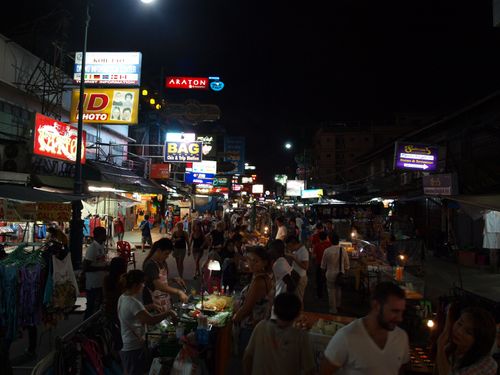
Khao San Road
Attractions
Bangkok’s backpacker carnival: curbside bars, live bands and DJs from 3pm–2am (midnight Sun). Street eats are cheap — pad thai 70–100 THB, mango sticky rice 60–100 THB. Come for wild people-watching; duck into Rambuttri for a calmer beer.
Yaowarat Chinatown Heritage Center
Attractions
Inside Wat Traimit by Chinatown Gate, this tidy museum charts Yaowarat’s Chinese roots with bilingual displays, period photos and short films. Open Tue–Sun 8:30am–4:30pm; closed Mon. Pair it with the Golden Buddha upstairs.
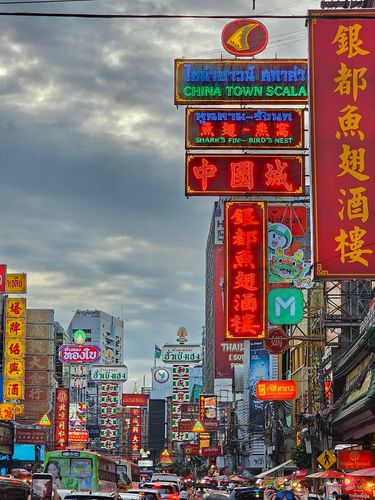
Chinatown Bangkok (Yaowarat)
Attractions
Neon, woks, and queues: Yaowarat is Bangkok’s street‑food strip. Start at Wat Mangkon MRT, graze T&K Seafood and Nai Ek’s peppery guay jub, snag toasted buns, and finish with mango sago at Sweet Time. Best 6pm–late; ~10‑minute taxi from Khao San.
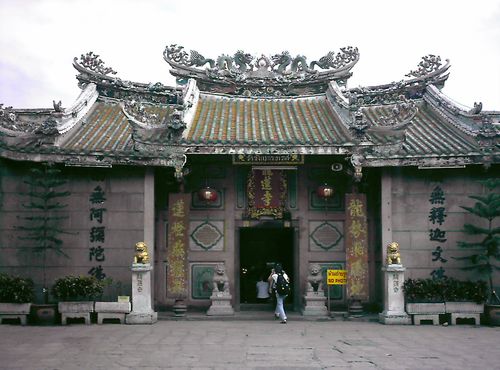
Wat Mangkon Kamalawat (Wat Leng Noei Yi)
Temples
Chinatown’s grand Chinese Buddhist temple—smoky incense, red lanterns, and gilded altars. Free entry, donations welcome. Best early morning; electric during Lunar New Year and the Vegetarian Festival. Steps from MRT Wat Mangkon, 8am–5pm daily.
More Khao San Road Guides
- Bangkok Street Food for First-Time Visitors: What to Order, How to Eat, and Where to Go Beyond Khao San Road
- What to Eat on Khao San Road: 20 Must-Try Foods & Where to Find Them
- Best Bangkok Chinatown Street Food for a Day Trip from Khao San Road
- Bangkok Street Food by Area: Where to Eat from Khao San Road to Chinatown and Ari