
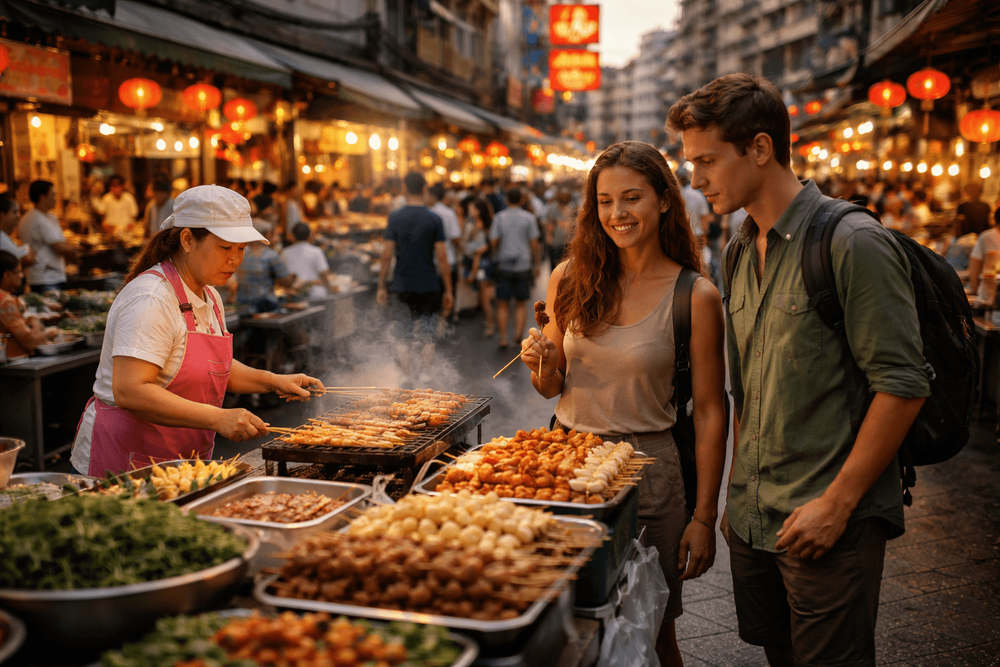
Best Bangkok Chinatown Street Food for a Day Trip from Khao San Road
Our insider guide to Bangkok Chinatown street food from Khao San: what to eat, the best lanes, prices, how to get there, and how to survive the neon frenzy.
We step off the Chao Phraya boat at Ratchawong Pier and the city exhales steam and spice in our faces. The wok roar hits first, then the perfume of garlic, pepper, and soy, the sweet rot of durian sneaking in from a cart piled like spiky grenades. Neon dragons flicker to life down Chinatown Bangkok (Yaowarat). This is Bangkok Chinatown street food at full throttle—where we eat standing up, talk with our hands, and chase bowls of peppery guay jub with plastic cups of chrysanthemum tea while tuk-tuks growl past our ankles.
Bangkok Chinatown Street Food Highlights
We’re here for the classics and the cult favorites—the dishes that taste like old shophouse kitchens and late-night secrets. You’ll find menus taped to metal carts and prices scrawled on cardboard. If you’re new to Bangkok Chinatown street food, start with these:
- Guay Jub (rolled rice noodles in peppery broth): Slippery, coiled sheets of rice noodle swimming in a white pepper punch. Usually with crispy pork belly (moo krob) and offal if you’re feeling brave. Ask for “mai rao” if you want to skip the organs.
- Hoy Tod (oyster omelette): A crackling-edged, chewy-gooey mess of tapioca-studded egg and baby oysters, fried hot and fast, finished with a fistful of cilantro and a shot of tangy chili sauce.
- Khao Kha Moo (stewed pork leg on rice): Soy-braised pork that collapses at a spoon’s nudge, draped over rice with pickled mustard greens and a jammy egg. Comfort in 45 baht.
- Fish Maw Soup: Collagen-rich, gingery broth loaded with fish maw and mushrooms, a Chinatown stalwart when you want something that tastes like it fixes you.
- Roast Duck and Char Siu over Rice or Noodles: Red-lacquered pork, bird with shining skin—watch cleavers thrum on chopping blocks like techno.
- Satay & Moo Ping (pork skewers): Fat sizzles, smoke hugs the block, and 10 baht skewers vanish before they cool.
- Dim Sum & Cheung Fun: Bamboo steamers stacked like pagodas in side alleys; rice noodle rolls slick with soy and sesame.
- Sweet bites: Yaowarat toasted buns dripping with pandan or condensed milk, black sesame dumplings in warm ginger syrup, and ice-cold grass jelly.
- Drinks: Fresh pomegranate juice poured crimson into plastic bottles; longan or chrysanthemum tea over shaved ice; and the occasional herbal concoction promising longevity.
A few Chinatown legends run day and night. Expect lines for the big names (you’ll spot them by the queue and the controlled chaos of the wok station). Don’t be shy—if there’s a list, add your name; if there isn’t, stand where you can catch the vendor’s eye and smile. We’ll get fed.
If you want a stall-by-stall hit list with more specifics, we put together a deeper dive: Where to Eat Street Food in Yaowarat: Bangkok’s Chinatown Night Market Guide.
Best Areas and Lanes in Yaowarat (and What They’re Known For)
Yaowarat isn’t just one street; it’s a maze of sois (alleys) and cross-streets where the real magic happens. Here’s how we roam.
Yaowarat Road (Main Drag)
The neon artery itself. From the Chinatown Gate near Odeon Circle down past Soi Texas (Phadung Dao), this is where the night market vibe peaks after 6 pm—plastic stools encroach on traffic, and vendors blaze through orders like auctioneers.
- What to eat: Oyster omelettes, grilled seafood, roast duck rice, bird’s nest and shark fin soups (the latter is controversial; we skip it), pomegranate juice, toasted buns.
- Why we love it: It’s the spectacle—the show kitchen of Bangkok. Even if we’re eating elsewhere, we stroll here first to warm up our appetites.
Soi Texas (Phadung Dao)
This short lane off Yaowarat is a seafood showdown. Two titans face each other across the street, tables spilling onto the asphalt, flames flaring under woks. Menus are thick with grilled prawns, clams, and morning glory flash-fried with chili and garlic.
- What to eat: Grilled river prawns, stir-fried crab with curry powder, tom yum talay, simple fried rice if your budget needs ballast.
- Tip: Seafood is often priced per 100 grams. Confirm weights and totals before ordering to avoid surprise bills.
Plaeng Nam Road
A quieter feeder street, good for noodle houses and snack carts if the Yaowarat crush gets intense.
- What to eat: Guay jub, fish balls with flat rice noodles, and cheung fun with minced pork.
- Why we love it: You can actually hear your friend talk while the pepper hits.
Charoen Krung and Song Wat Roads
Old shophouse Bangkok—antiques, hardware stores, and cafés tucked between timeworn shrines. By day it’s photogenic; by late afternoon, stalls roll out grilled pork and duck noodles. Song Wat has morphed into a café crawl with plenty of snacky stops.
- What to eat: Duck noodles, Chinese pastries, meat skewers, ginger soups, and modern desserts to cool the spice.
- Bonus: Talat Noi is a short wander away—rusted car parts, street art, and a few noodle gems.
Sampeng Lane (Soi Wanit 1)
Narrow, crowded, and best by day. It’s more about fabric and trinkets than hot food, but you’ll find portable snacks to graze on as you shop.
- What to eat: Fried dough sticks (pa tong go), pandan waffles, sesame crackers, and iced herbal drinks.
- Tip: Go in the morning before the heat and crowds crush you flat.
Around Wat Mangkon Kamalawat (Wat Leng Noei Yi) and Issaranuphap
Near the Wat Mangkon Kamalawat temple, small lanes (Trok Issaranuphap and friends) hide old-school dessert shops and vendors selling tofu pudding, black sesame, and herbal tonics.
- What to eat: Tau huay (warm soy pudding), black sesame paste, and peppery soups that feel medicinal in the best way.
Know Before You Go: Peak Times, Prices, and How to Pay
Chinatown runs on rhythm. The morning hum is bakery-sweet; lunch is quick bowls and office rush; the night is a neon parade.
- Peak dining times: 7–9 pm is a human river. We like hitting a first wave around 5:30–6:30 pm for easier seating, then a second snack circuit after 9:30 pm when queues soften.
- Days: Every night sees action, but weekends are shoulder-to-shoulder sanuk. Some daytime vendors rest on Mondays.
- Price ranges:
- Noodle soups and rice plates: 40–90 baht
- BBQ skewers and dim sum bites: 10–30 baht each
- Grilled seafood plates: 180–600 baht+ depending on size and weight
- Fresh juices: 40–100 baht
- Desserts: 20–60 baht
- Payments: Cash rules. Many vendors take Thai QR (PromptPay), but don’t bet dinner on your foreign card or e-wallet. Bring small bills and coins—100s and 20s make life easy.
We’ve put our best ordering hacks in one place if you want a quick primer before you hit the queues: Bangkok Street Food Etiquette: How to Order, Pay, Sit, and Eat Like a Local.
Getting There from Khao San Road
- Chao Phraya Express Boat: From Phra Athit Pier (N13), ride the Orange Flag boat south to Ratchawong Pier (N5). It’s about 15–20 minutes and around 16–20 baht. Walk straight up Ratchawong Road into Chinatown; Yaowarat is a 10-minute stroll.
- MRT Blue Line: If you’re already on the MRT, hop to Wat Mangkon Station and use the exits to Yaowarat Road. From Khao San, you’ll need a short taxi or tuk-tuk to reach an MRT station first.
- Taxi/Grab: 80–180 baht depending on traffic and your driver’s temple karma. Make sure the meter is on; if you go tuk-tuk, agree on a flat fare first (100–200 baht is normal for the short run, more in rush hour).
- On foot? It’s a long, sweaty slog. Save your feet for food lines.
We often base ourselves in Banglamphu (near Khao San and Soi Rambuttri) so we can boat-hop to Ratchawong at dusk, eat like locusts, then sail home with the river breeze doing its best impression of air-con.
What the Evening Feels Like
By sunset, the road clamps down to a moving corridor of headlights and wok smoke. We slide between tables, our knees grazing bumpers, while aunties bark orders that sound like drumrolls. A fan clatters above our heads, chopping the heat into edible pieces. Someone leans over with a plate of crab fried rice and says “gin duai,” eat together—because in Chinatown, your table is anyone you share chili with.
Traffic inches. A monk pads past the grill smoke, saffron against navy sky, and we swear the air changes. A fruit vendor stacks dragon fruit like dice. The chestnut roaster spins a black cauldron filled with tiny, gleaming stones; the nuts hit your palm too hot to hold and you juggle them like a fool. Bass thuds from a car on Charoen Krung, counter-beat to chopsticks tapping bowls. We pause at a stall where a kid flames a wok so high the awning curls, and we grin—this is why we came.
For more late-night ideas across the city once you’ve conquered Yaowarat, we keep a list here: Bangkok Night Street Food Guide: Best Late-Evening Stalls, Markets, and Snacks After Dark.
How to Navigate the Chaos (And Eat Well)
We treat Chinatown like a progressive dinner—small bites, big curiosity. Here’s our game plan:
- Walk one full block before committing. Spot the queues, clock the wok technique, smell the oil. Golden, not burnt. Sizzle, not sputter.
- Start with something light (fish balls or a small bowl of noodles), then graduate to grilled seafood and heavier plates.
- Share everything. Two of us can sample six stalls without rolling home.
- Use the sidewalk counter if seating is a myth. Slurp, smile, move.
- Hydrate. Herbal tea or ice water from shops—vendors often don’t serve drinks, but a nearby cart will.
- Dessert last, or whenever you pass a toasted-bun queue you can’t ignore.
Safety, Hygiene, and Cultural Etiquette in Chinatown
Bangkok Chinatown street food is thrilling, and with a few sensible moves, it’s belly-friendly too.
- Choose high turnover: If a stall is slammed, that pot is fresh. Trust the line.
- Watch the oil: It should be clear amber, not black and tired.
- Plates and chopsticks: Many places use shared chopstick tins; grab from the middle. Some spots have a little pot of boiled water to rinse utensils—use it if provided.
- Ice: Clear, cylindrical ice is factory-made and generally safe. Shaved block ice can be questionable.
- Allergies: Fish sauce, oyster sauce, and peanuts lurk everywhere. Ask: “Mee tua li-song mai?” (Are there peanuts?) and “Mai sai…” (don’t add…) followed by the ingredient.
- Spice: Say “phet noi” for a little spicy, “mai phet” for not spicy. Peppery broths still kick.
- Queue politely: There’s usually an order even if it looks like chaos. If there’s a ticket, take it. If not, make eye contact, point at the dish, hold up fingers for quantity, and smile.
- Payment: Pay when the food lands or when you stand up—follow the flow. Don’t haggle over a 5 baht difference; this isn’t a souvenir market.
- Tables: Sharing is normal. Don’t sprawl. Keep feet tucked; don’t point soles at elders or monks.
- Street sense: Pickpocket risk rises in tight crowds. Keep zips shut and bags front-facing. Sidewalks are uneven; watch for loose tiles after rain.
For more on picking clean, fresh stalls like a local, here’s our playbook: Bangkok Street Food Safety Guide: How to Choose Clean, Fresh Stalls Like a Local.
A Sample Chinatown Crawl (Day to Night)
We like to arrive before the neon pops.
- 4:30 pm — Coffee and a wander: Duck down Song Wat and Talat Noi for murals, shrines, and a cold brew. Snack on sesame crackers if you spot them.
- 5:30 pm — First slurp: Hit a guay jub specialist for peppery rolls with crispy pork. Ask for a small bowl; bigger isn’t better when you’ve got six stops planned.
- 6:15 pm — Seafood time: Slide into Soi Texas, confirm prices by weight, share one grilled prawn plate and a plate of morning glory to save budget and stomach space.
- 7:00 pm — Main drag stroll: Back to Yaowarat Road for an oyster omelette and a bottle of pomegranate juice. The toasted-bun line will tempt you—give in.
- 8:00 pm — Side-street sweets: Around Wat Mangkon, find warm soy pudding or black sesame paste to soothe the spice.
- 9:00 pm — Bonus bites: If we’ve still got room, a skewer or two of moo ping and a bag of chestnuts for the ride home.
FAQs We Get All the Time
- Can vegetarians eat well here? Yes, but you’ll need to ask for “jay” (Thai-Chinese vegetarian) and confirm no fish sauce or oyster sauce. Look for tofu dishes, stir-fried morning glory without oyster sauce, and vegetable dim sum.
- Is tipping a thing? Not required at stalls. If someone hustled for you, rounding up a bit is a nice thank you.
- Are prices posted? Often, but not always—especially for seafood. Ask before ordering.
- What if I don’t speak Thai? Pointing works. Photos on menus help. A smile and a “khop khun krub/ka” (thank you) go further than perfect grammar.
If You Fall in Love with the Street Food Life
When we’re not prowling Yaowarat, we’re snacking our way through markets from Victory Monument boat noodles to Udom Suk night eats. If you want more neighborhoods and dishes to chase, bookmark this citywide starter: Bangkok Street Food: Best Dishes, Where to Eat & Traveler Tips.
Final Bite
By the time we circle back toward Ratchawong, our fingers smell like smoke and soy, and our pockets jingle with change. The river air feels cool after the furnace of Yaowarat. Tomorrow we’ll swear to eat light—and tomorrow we’ll lose that promise the second a wok roars. If you’ve only got one night for Bangkok Chinatown street food, make it count: arrive hungry, walk slow, point boldly, and let the neon lead your nose.
Related Hotels & Places
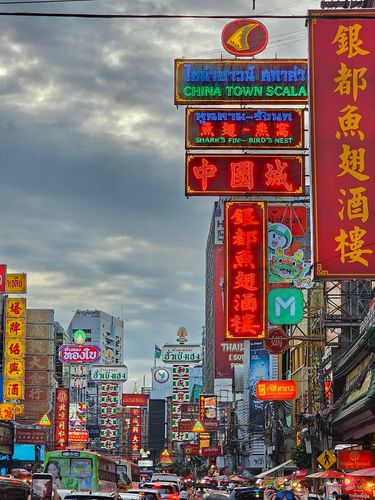
Chinatown Bangkok (Yaowarat)
Attractions
Neon, woks, and queues: Yaowarat is Bangkok’s street‑food strip. Start at Wat Mangkon MRT, graze T&K Seafood and Nai Ek’s peppery guay jub, snag toasted buns, and finish with mango sago at Sweet Time. Best 6pm–late; ~10‑minute taxi from Khao San.
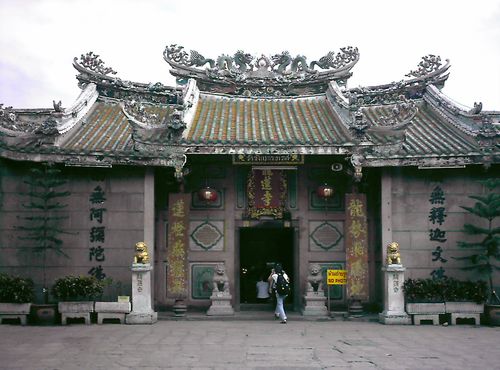
Wat Mangkon Kamalawat (Wat Leng Noei Yi)
Temples
Chinatown’s grand Chinese Buddhist temple—smoky incense, red lanterns, and gilded altars. Free entry, donations welcome. Best early morning; electric during Lunar New Year and the Vegetarian Festival. Steps from MRT Wat Mangkon, 8am–5pm daily.
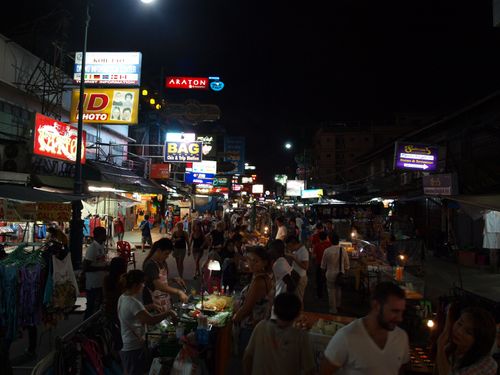
Khao San Road
Attractions
Bangkok’s backpacker carnival: curbside bars, live bands and DJs from 3pm–2am (midnight Sun). Street eats are cheap — pad thai 70–100 THB, mango sticky rice 60–100 THB. Come for wild people-watching; duck into Rambuttri for a calmer beer.
More Khao San Road Guides
- Where to Find Bangkok Street Food in Rattanakosin Beyond Khao San Road: Local Stalls, Side Streets, and Neighborhood Eats
- Best Street Food in Chinatown for Khao San Road Travelers: What to Eat, Where to Start, and How to Get There
- Bangkok Street Food for First-Time Visitors: What to Order, How to Eat, and Where to Go Beyond Khao San Road
- Bangkok Street Food by Area: Where to Eat from Khao San Road to Chinatown and Ari