
Bangkok Street Food by Neighborhood: Where to Eat in Banglamphu, Old Town, Chinatown, and Riverside
Eat your way through Banglamphu, Old Town, Chinatown, and the Riverside. A local’s guide to Bangkok street food by neighborhood with times, prices, and tips.
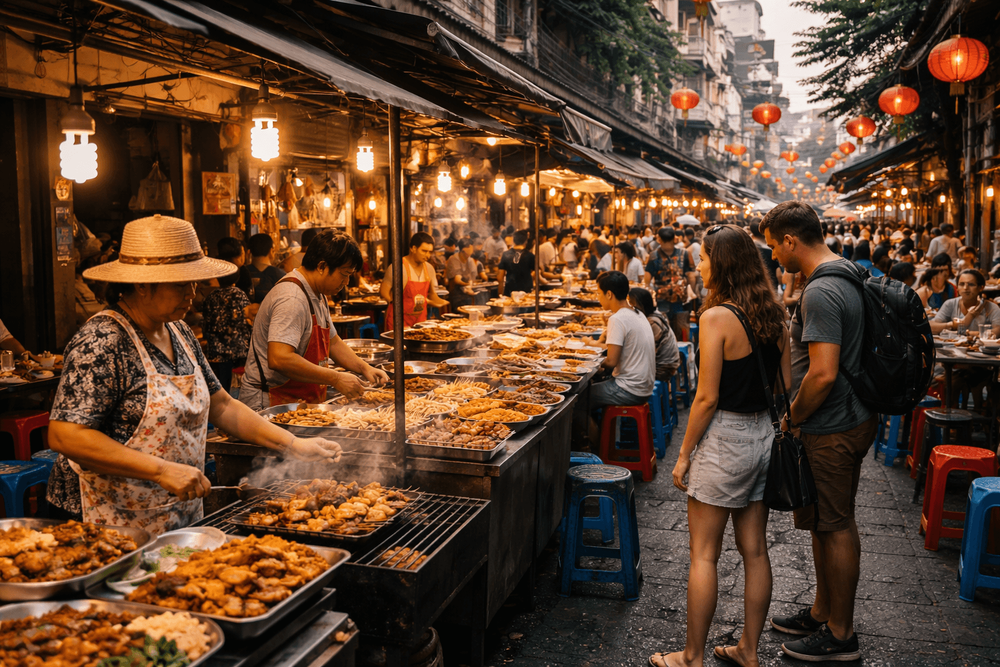
We’re shoulder-to-shoulder on Yaowarat Road, eyes watering as a wok flames high enough to singe our eyebrows. The air smells like garlic, caramelized pork, and a hint of sweet rot from a durian cart that’s doing brisk business. A tuk-tuk coughs past, bass thumps from a Khao San Road bar a few khlongs away, and a vendor slaps down a plate with a smile—“kin khao,” let’s eat. This is Bangkok street food by neighborhood in action; the trick isn’t just what to order, but where to stand when the smoke hits your face just right.
Bangkok Street Food by Neighborhood: Where to Start
Bangkok is a city of micro-ecosystems, each soi and market shaping what shows up on your plate. That’s why hunting Bangkok street food by neighborhood pays off. In Banglamphu, we chase late-night pad thai and banana roti on Soi Rambuttri. In Old Town, the shadows of the Giant Swing (Sao Chingcha) hide crisp-edged oyster omelettes and peppery rolled noodles. Chinatown (Yaowarat) is a neon-lit conveyor belt of skewers, seafood, and sweets. Down by the river, Wang Lang Market raids your self-control with fried bananas, boat noodles, and sizzling pork at prices that still feel like a local secret.
A few ground rules while we roam:
- Follow the crowds and the clatter. Turnover equals freshness.
- Posted prices keep things honest; when in doubt, ask—“tao rai?”
- Order small and often. We graze, not gorge.
Banglamphu: Khao San, Soi Rambuttri, and Phra Athit
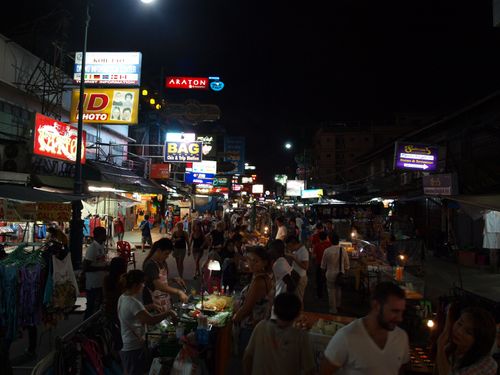
Banglamphu hums late. The glow here comes from woks and fairy lights twisted through frangipani trees on Soi Rambuttri, not the fluorescent blast of a mall food court. We drift between stalls, dodging guitar buskers and the occasional farang trying their first spicy som tam while sitting cross-legged on a curb.
What to Eat
- Pad thai at a cart where the cook flips noodles in pork fat and smoke. Expect 60–100 THB depending on shrimp/egg add-ons.
- Moo ping (grilled pork skewers) sweet with palm sugar, 10–15 THB a stick, parked near Chakrabongse Road as the bars warm up.
- Banana roti with condensed milk and sugar at midnight, 30–60 THB. Listen for the slap-slap of dough on steel.
- Som tam (papaya salad) Isan-style: say “pet nit noi” (a little spicy) unless you want your face melted. 50–80 THB.
- Tom yum noodles or boat-style pork noodles in alleys off Phra Athit—lean in, point at the broth you want, and hold up fingers for noodle thickness.
When to Go
- Evening to late night: This is Banglamphu’s prime time, roughly 6 pm until after midnight. Fewer stalls at dawn; many carts sleep in.
Vibe and Tips
- The area can be loud and sanuk (fun) in a chaotic way—expect bass from Khao San and a steady flow of backpackers. The upside: lots of quick bites and people-watching.
- Hygiene cue: look for fry oil that’s amber, not black, and meat kept on ice. Busy equals good.
Getting There
- River: Chao Phraya Express boat to Phra Arthit Pier, then a short stroll to Phra Athit, Soi Rambuttri, and Khao San.
- MRT/BTS: Hop the MRT to Sanam Chai or Sam Yot, then grab a tuk-tuk (agree on a price—80–120 THB in light traffic) or a short taxi ride. Walking is doable if you like the heat.
Old Town (Rattanakosin): Dinso, Maha Chai, Giant Swing, and Nang Loeng
Old Town is where Bangkok still walks in sandals and chews thoughtfully. The streets around the Giant Swing (Sao Chingcha), Dinso Road, and the Democracy Monument deliver old-school recipes with zero fuss—wood stools, enamel bowls, and decades of muscle memory behind each ladle.
What to Eat
- Guay jub nam sai: rolled rice noodles in peppery clear broth. Add crispy pork belly if you’re feeling bold. 50–80 THB.
- Pad thai on Maha Chai Road with orange-glow charcoal heat and big shrimp splurges. 80–150 THB.
- Khanom buang (crispy pancakes) with sweet coconut or savory shrimp, made to order on griddles. 20–40 THB for a few.
- Moo satay (pork satay) with peanut sauce and tangy cucumber relish. 60–100 THB per set.
- Classic curry-over-rice stalls near Sao Chingcha—point to trays; they’ll spoon over jasmine rice: 50–70 THB for two curries.
- Nang Loeng Market at lunchtime: braised pork leg, old-style Thai desserts, and a chilly herb drink when the heat drops you to your knees.
When to Go
- Breakfast to lunch is best. Many Old Town vendors clock off by mid-afternoon. Go early for jok (rice porridge) and soy milk with pa tong go (Thai doughnuts) if you’re an AM eater.
Getting There
- MRT Sam Yot or Sanam Chai puts you right in the old grid. From the river, Tha Chang and Tha Tien piers are your gateways.
Local Moves
- Menus aren’t always written. Smile, name a dish, or point. If spice worries you, “mai pet” (not spicy) helps, though in practice it usually means “medium.”
- Keep small bills handy; many old-town legends are cash-only.
Chinatown (Yaowarat, Charoen Krung, Talat Noi): Neon, Noodles, and Night Bites
By 6 pm, Yaowarat Road flicks on like a spaceship. Red-and-gold signs bathe the asphalt in warm light, and the sizzle chorus kicks off: oyster omelettes snapping in oil, metal ladles pinging woks, and hawkers calling out in Thai, Teochew, and a little English.
What to Eat
- Hoi tod (oyster or mussel omelette): crispy edges, runny center. 120–200 THB depending on size.
- Guay jub (rolled noodles again, but richer pepper blast here). 60–80 THB.
- Roasted duck over rice with a glossy, star-anisey gravy. 60–100 THB.
- Seafood street grills—prawns, squid, morning glory stir-fried with garlic—expect 150–300 THB plates on the main drag.
- Chinese desserts: black sesame dumplings in ginger syrup, grass jelly, or shaved ice bowls. 30–60 THB.
- Morning side quest: slip into Talat Noi for coffee and a hot, airy pa tong go while the car-parts alleys wake up.
When to Go
- Evenings, especially Friday–Sunday, are electric and crowded. Come just before sunset if you want a seat without a 20-minute queue. For market life and wholesale snacks, Sampheng Lane hums by day.
Getting There
- MRT Wat Mangkon drops you in the heart of it; Hua Lamphong MRT is a nice walk if you like alleys. From the river, Ratchawong Pier lands you near the action.
Street Smarts
- Prices skew higher right on Yaowarat Road. Step one block off to Charoen Krung or Soi Texas for friendlier menus and the same wok magic.
- Follow your nose. If you smell slightly burned garlic and see a line of aunties in floral aprons—join it.
For more area-by-area eats across the city, we break down favorites here: Bangkok Street Food by Neighborhood: Where to Eat from Old Town to Chinatown.
Riverside: Wang Lang, Tha Prachan, Pak Khlong Talat, and Bangrak
The river is Bangkok’s original food highway. Ferries knit together neighborhoods that still eat like the city is one big kitchen. We love to orbit around Wang Lang Market (across from the Grand Palace), drift through the amulet stalls at Tha Prachan, swing by the flower market (Pak Khlong Talat) at night, and snack our way down old Charoen Krung in Bangrak.
What to Eat
- Wang Lang Market: boat noodles with pork crackling, grilled pork neck (kor moo yang), and bags of deep-fried bananas (kluay tod) still snapping hot—20–30 THB for snacks, 40–70 THB for noodles.
- Tha Prachan: curry puffs, Thai tea bags to-go, and herbal drinks over clinking ice on a sweat-slick afternoon.
- Pak Khlong Talat at night: lotus and jasmine fragrances plus late-night eats—noodles and stir-fries for market workers and us lucky strays.
- Bangrak (near Saphan Taksin): old-school rice-and-curry shophouses, Hainanese chicken rice, and sticky rice with mango when the season hits. 50–80 THB for staples.
When to Go
- Wang Lang is a daytime beast (late morning to late afternoon). After dusk, head to the flower market or along the river by Memorial Bridge for grills and desserts.
Getting There
- Chao Phraya Express boat all the way: Wang Lang (Prannok) Pier for the market; Tha Prachan for amulets and snacks; Saphan Taksin (Sathorn) for Bangrak. Boats are cheap, breezy, and scenic—our favorite Bangkok transit hack.
Know Before You Eat: Ordering, Spice, Hygiene, and Payment
You don’t need perfect Thai to eat perfectly in Bangkok. A few words and a curious grin get you 90% there.
Ordering Basics
- Point and smile: “Ao an nee, krap/ka” (I’ll take this). Hold up one or two fingers for portions.
- Spice control: “mai pet” (not spicy), “pet nit noi” (a little spicy), “pet mak” (very spicy). “Sai prik” means add chili; “mai sai” means don’t add.
- Noodles: Choose size (sen lek thin rice, sen yai wide rice, ba mee egg noodles), soup or dry (nam or haeng), and protein (moo pork, gai chicken, talay seafood).
Hygiene Cues That Matter
- Turnover: Look for long lines and fast-moving pots.
- Separation: Raw meats on ice, cooked items high and away from splash zones.
- Oil: Clear to light amber is a good sign; inky black is your cue to wander.
Cash, QR, and Change
- Most carts are cash-only; small bills (20s, 50s) make friends. Big night markets may take Thai QR, but don’t count on it.
- ATMs and 7-Elevens are everywhere; the blast of AC while you break a 1,000 is its own reward.
Practical Game Plan: Times, Prices, and Transport
Best Times to Eat
- Dawn: Jok porridge, soy milk, pa tong go, and khao tom (rice soup). Chinatown and Old Town shine early.
- Lunch: Markets like Nang Loeng and Wang Lang are in full swing.
- Evening: Yaowarat and Banglamphu light up. Highest energy, biggest crowds.
Typical Price Ranges (per person)
- Skewers and snacks: 10–30 THB each
- Noodles and rice plates: 40–80 THB
- Seafood plates on main roads: 150–300 THB
- Desserts and drinks: 20–60 THB
For more on stretching your baht, check this breakdown: Bangkok Street Food by Budget: What to Eat for 50, 100, and 200 Baht.
Getting Around Without Melting
- River first: The Chao Phraya Express boat is cheap, breezy, and drops you near Old Town, Banglamphu, Chinatown, and Bangrak.
- Underground and sky-high: MRT to Sam Yot, Sanam Chai, or Wat Mangkon; BTS to Saphan Taksin for the river. Then walk, or hail a taxi/Grab if the heat has teeth.
- Tuk-tuks are fun, not cheap. Agree on a price before you hop in and skip any “special gem shop” detours.
If you like to anchor meals to stations and piers, we mapped easy eats near transit here: Bangkok Street Food Around Transit Hubs: Easy Eats Near MRT, BTS, and River Ferry Stops.
Neighborhood-Specific Eating Tips
Banglamphu
- Late-night friendly. Expect a party vibe around Khao San and Soi Rambuttri; quieter bites on Phra Athit and Samsen.
- Tourist tax happens. Step one street over to find 20–30 THB cheaper plates.
Old Town
- Many vendors close early. Plan a brunch crawl and shade-hop temple walls.
- Great for beginners—classic dishes, posted prices, slower pace.
Chinatown
- Go light on lunch if you’re coming here for dinner. Save stomach space and cash for that second seafood plate.
- Watch the grills—if flames lick nonstop and oil isn’t refreshed, pick a different stall on the same block.
Riverside
- Wang Lang is wonderful but packed at noon. Aim 10–11 am for easier grazing.
- Use ferries for two-stop food hops: Tha Chang to Wang Lang for lunch, then Saphan Taksin to Bangrak for dinner.
Who Should Eat Where
- First-time visitors: Start in Old Town for gentle on-ramps, then graduate to Chinatown at dusk. You’ll get variety without the whiplash. Extra tips live here: Bangkok Street Food for First-Time Visitors: What to Order, How to Eat, and Where to Go Beyond Khao San Road.
- Late-night eaters: Banglamphu is your playground—pad thai, roti, and skewers until the bar lights go soft.
- Budget travelers: Riverside markets and Old Town curry rice stalls give you the most bites per baht. Our 50/100/200 THB game plan helps—see the budget guide above.
- Food-focused visitors: Chinatown for technique and spectacle, then Wang Lang for market depth. Sprinkle in a focused Old Town noodle hunt to round out your flavor map.
- Vegetarians and light eaters: Look for jay (เจ) signage near Old Town and Banglamphu, and order stir-fries “mai sai neua sat” (no meat). Tofu and mushrooms are easy swaps.
Where We Catch Our Breath Between Bites
We usually crash somewhere walkable to Soi Rambuttri or a quiet lane off Phra Athit so we can graze Banglamphu at night and boat to Old Town by morning. On Chinatown nights, we favor the MRT line for a fast escape and a blast of train AC. If your plan is full-on food crawl, pick a place near the river or an MRT stop—you’ll thank yourself when the heat rises and your feet mutiny.
Ready for round two? We’ll meet you at the orange-flag pier just before sunset—grab small bills, say “pet nit noi,” and let the woks decide the rest.
Related Hotels & Places
More Khao San Road Guides
- Where to Eat on a Bangkok Street Food Crawl: Old Town, Banglamphu, and Riverside Stops
- Bangkok Street Food by Neighborhood: Where to Eat from Old Town to Chinatown
- Bangkok Street Food by Region: Best Dishes in Chinatown, Old Town, Silom, and Sukhumvit
- Best Street Food in Bangkok Old Town Beyond Khao San Road: Local Eats in Rattanakosin and Banglamphu