
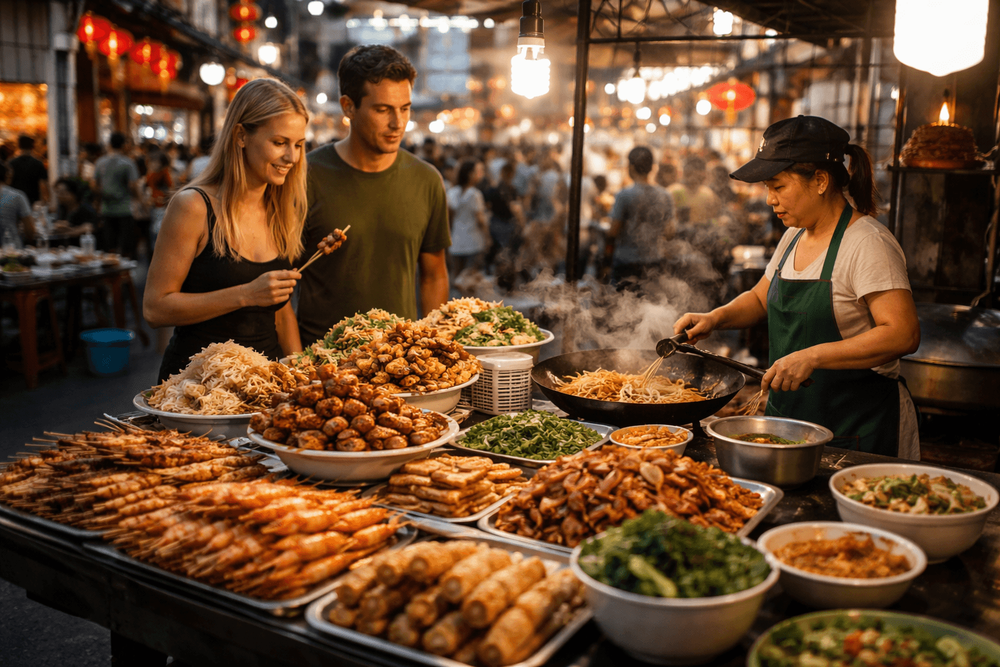
Best Chinatown Street Food Dishes for Khao San Road Travelers
From peppery guay jub to crispy oyster omelets, here’s what to eat in Yaowarat—and where to find it—just a breezy boat ride from Khao San.
We step off the Chao Phraya boat at Ratchawong Pier and the city hits us in stereo: woks hissing, cleavers thumping, the sweet rot of durian drifting from a cart. Neon lights on Yaowarat Road flicker awake. We’re here for the Bangkok Chinatown food dishes that make this neighborhood a pilgrimage—peppery soups, lacy omelets, roast-duck noodles—and we’re not leaving until our shirt smells like smoke and sesame oil.
Must-Order Bangkok Chinatown Food Dishes
Yaowarat is a delicious mash-up of Thai-Chinese flavors—five-spice and fish sauce, chrysanthemum tea and chili vinegar. Here’s what we hunt first.
Noodle Bowls That Slurp Back
Guay Jub (Rolled Rice Noodles in Peppery Broth)
- What it is: Curly rolls of rice noodles swimming in a black-pepper pork broth. Usually topped with crispy pork belly, pork slices, and offal if you’re into it.
- Why it stands out: The broth is a pepper bomb that clears your sinuses in the best way. We ask for “mai ao khruang nai” (no offal) if we want to keep it tame.
- Flavor notes: Savory, peppery, fatty-crisp from the pork.
Ba Mee Ped/Moo Daeng (Egg Noodles with Roast Duck or Red Pork)
- What it is: Springy egg noodles tossed with pork fat or oil, topped with roast duck (ped) or sweet red pork (moo daeng), sometimes with wontons and a side of broth.
- Why it stands out: Chinatown roast duck is king—glossy skin, star anise perfume. We like it “haeng” (dry, not in soup) so the noodles keep their chew.
- Flavor notes: Soy, five-spice, duck jus richness.
Yen Ta Fo (Pink Fermented Tofu Noodles)
- What it is: Rice noodles in a sweet-sour pink broth colored by fermented tofu, with fish balls, morning glory, and often crispy tofu skins.
- Why it stands out: Funky, rosy, and very Thai-Chinese. We dial spice with “phet nit noi” (just a little spicy).
- Flavor notes: Sweet-tangy, umami, a touch funky.
Kuay Tiew Kua Gai (Smoky Fried Chicken Noodles)
- What it is: Wide rice noodles pan-fried with chicken and egg until edges crisp.
- Why it stands out: Proper wok hei—the breath of the wok—gives that toasty-char you taste before you chew.
- Flavor notes: Smoky, savory, eggy.
Seafood and Skillet Stars
Hoy Tod (Crispy Oyster or Mussel Omelet)
- What it is: Starchy egg batter fried to a lacy crisp, studded with oysters (hoy nang rom) or mussels (hoi malaeng puu), served with chili sauce.
- Why it stands out: The contrast—crunchy edges, custardy center, slippery shellfish—is pure sanuk for your mouth.
- Flavor notes: Crispy, briny, a little greasy in a good way.
Stir-Fried Crab with Curry Powder (Poo Pad Pong Karee)
- What it is: Crab chunks wok-tossed with yellow curry powder, egg, and celery in a rich, almost custardy sauce.
- Why it stands out: Thai-style curry meets Chinese stir-fry—silky, aromatic, decadent.
- Flavor notes: Savory-sweet, curried, buttery.
Grilled River Prawns & Squid
- What it is: Charcoal-grilled seafood brushed with oil, served with a limey, garlicky nam jim talay dip.
- Why it stands out: Simple, smoky, and you can smell it half a soi away.
- Flavor notes: Char, citrus, garlic heat.
Rice Plates & Roasts
Khao Moo Daeng / Moo Grob (Red Pork and Crispy Pork on Rice)
- What it is: Slices of sweet red pork (moo daeng) and shattering-crisp pork belly (moo grob) over rice with hard-boiled egg, cucumber, and sweet-savory gravy.
- Why it stands out: Texture party—crunch, chew, soft rice—and that caramelized gravy.
- Flavor notes: Sweet-savory, porky, a hint of five-spice.
Khao Na Ped (Roast Duck on Rice)
- What it is: Roast duck fanned over rice with soy gravy and pickled ginger.
- Why it stands out: Chinatown duck again—don’t fight it.
- Flavor notes: Rich, soy-forward, gingery brightness.
Bak Kut Teh (Herbal Pork Rib Soup)
- What it is: Teochew-style pork rib soup simmered with medicinal herbs and garlic, served with youtiao (Chinese crullers) for dunking.
- Why it stands out: Deep, pepper-garlic warmth—like a hug from a Chinatown grandma.
- Flavor notes: Herbal, garlicky, peppery.
Dim Sum, Dumplings, and Handhelds
Salapao (Steamed Buns)
- What it is: Fluffy buns with fillings like char siu pork, red bean, or custard.
- Why it stands out: Street-side bao steaming from bamboo towers—perfect walk-and-munch.
- Flavor notes: Sweet or savory, pillowy.
Kui Chai (Chive Dumplings)
- What it is: Pan-fried rice flour dumplings, chewy with crisped bottoms, dunked in sweet soy-vinegar.
- Why it stands out: Snackable, vegetarian-friendly, addictive.
- Flavor notes: Garlicky-chive, tangy dip.
Satay (Moo or Gai Satay)
- What it is: Skewers of marinated pork or chicken grilled over charcoal, served with peanut sauce and cucumber relish.
- Why it stands out: Malay-Chinese-Thai crossroads on a stick.
- Flavor notes: Coconut, turmeric, smoke, sweet-sour relish.
Sweets and Night-Market Treats
Pa Tong Go with Soy Milk (Chinese Crullers & Warm Soy)
- What it is: Golden dough sticks fried to order, dipped in condensed milk or paired with hot soy milk (nam tao hu).
- Why it stands out: Crisp, airy, not too sweet—the late-night carb pillow you didn’t know you needed.
- Flavor notes: Lightly sweet, toasty, creamy if you dunk.
Bua Loy Nam Khing (Black Sesame Dumplings in Ginger Tea)
- What it is: Glutinous rice balls filled with molten black sesame paste, floating in gingery syrup.
- Why it stands out: Spicy-sweet and soothing; Chinatown’s winter-in-a-bowl even when Bangkok is 32°C at midnight.
- Flavor notes: Gingery heat, nutty sesame.
Grass Jelly & Chinese Herbal Drinks
- What it is: Cups of chao kuai (grass jelly) with syrup and ice, or chrysanthemum and liang cha herbal teas.
- Why it stands out: Cooling relief after wok alley.
- Flavor notes: Lightly sweet, herbal, floral.
Roasted Chestnuts & Candied Fruits
- What it is: Drum-roasted chestnuts and glossy, jewel-like fruit on skewers.
- Why it stands out: That nutty aroma is Chinatown’s unofficial perfume.
- Flavor notes: Nutty warmth, syrupy pops of fruit.
Bird’s Nest Soup
- What it is: Rock-sugar or savory bird’s nest, a Chinese delicacy.
- Why it stands out: Splurgey and very Yaowarat. If you’re curious, split a bowl.
- Flavor notes: Delicate, lightly sweet or savory depending on style.
Where to Find the Best Bites in Yaowarat
Chinatown sprawls wider than the neon strip. We work it in loops so we can graze, people-watch, then circle back when the grills are hottest.
Yaowarat Road (Main Drag): From the Yaowarat Chinatown Heritage Center east toward the bright sign forest. At dusk, carts roll out and a night market of pop-up stools takes shape. Expect guay jub, oyster omelets, grilled seafood, and dessert stalls plugging into every spare outlet.
Soi Phadung Dao (Soi Texas): Perpendicular to Yaowarat, this alley is a seafood magnet—woks thundering, tanks bubbling. It’s where we sniff out poo pad pong karee, grilled prawns, and stir-fries with ridiculous flame shows. Ask prices by weight for seafood before you order.
Plaeng Nam Road: A parallel backstreet with classic noodle shophouses—ba mee, roast duck, wontons—and kui chai stands. Slightly calmer than the main drag, good for a breather.
Around Wat Mangkon Kamalawat (Wat Leng Noei Yi): The MRT brought a fresh wave of snacks to the station area—pa tong go, grass jelly, and portable sweets. Great starting point if you’re arriving by train.
Songwat & Chakkrawat Roads (Daytime): Morning markets buzz here with roasted chestnuts, Chinese pantry goods, and breakfast bowls like pork congee and soy milk with crullers.
Soi Nana (the Chinatown one): The slim alley of cocktail bars and snacks, not to be confused with Sukhumvit’s Nana. Come for a pre- or post-street-food drink and a few small plates.
If you want a step-by-step route from Khao San that hits the classics with minimal backtracking, we’ve mapped a friendly crawl in our Chinatown primer: Best Street Food in Chinatown for Khao San Road Travelers: What to Eat, Where to Start, and How to Get There.
What Makes These Dishes Sing in Chinatown
Guay Jub: It’s all about the broth balance—white pepper heat without burning your face, plus porky depth. The rolled noodle shape clings to pepper oils for a lasting tingle. Add a splash of tangy chili vinegar if you want brightness.
Ba Mee with Duck: Chinatown roasters treat duck like jewelry—lacquered skin, juicy meat. Egg noodles here are springier, often tossed with rendered duck fat. We go “haeng” (dry) and spike it with chili flakes and pickled chilies.
Hoy Tod: In Yaowarat, the best versions split the batter for a lacy ring of crisp plus a tender core. Ask for “krob” (crispy) if you like extra crunch, and don’t be shy with the chili sauce.
Crab Curry: The curry-egg emulsion clings to every crack of shell. Suck the legs like you mean it; the sauce is the point.
Kui Chai: A Chinatown staple that tastes like childhood—the chew, the chive, the sweet-tart dip. Vegetarian without shouting about it.
Desserts & Drinks: Ginger syrup in bua loy nam khing wakes you up after a carb coma; grass jelly and chrysanthemum tea cool you back down. It’s Bangkok’s built-in thermostat.
Practical Tips: How We Eat Yaowarat Without Losing the Plot
Timing
- Peak street action runs roughly 6 pm–11 pm. Some carts start earlier; the biggest sizzle hits around 7:30–9:30 pm.
- Weekends are a zoo—in a fun way. Expect queues. If we’re crowd-averse, we go early on a weekday.
Prices
- Noodle bowls: 50–100 THB.
- Skillet dishes and fried noodles: 80–150 THB.
- Seafood by weight: clarify price per 100 g or per kilogram before ordering.
- Desserts and drinks: 20–60 THB.
Ordering Basics
- Point and smile works. Add a “sawadee krub/ka” and a “khop khun krub/ka” for instant goodwill.
- Phrases we use:
- “Mai phet” (not spicy) or “phet nit noi” (a little spicy).
- “Mai ao moo” (no pork) / “mai ao pla krai/pla muek” (no fish ball/squid).
- “Haeng” (dry) vs. “naam” (soup) for noodles.
- “Khao sai” (eat here) vs. “khao glap baan” (take away).
- Cash is king; bring small bills. Some shophouses accept QR PromptPay.
Spotting Good Stalls
- Look for turnover—stews bubbling, noodles blanching nonstop, seafood coming off the grill in waves.
- Short menus are a green flag; a 50-dish laminated book usually isn’t.
- Locals at plastic stools and a visible auntie running the wok like a drum kit is our gold standard.
Hygiene & Heat
- We stick to stalls frying or boiling to order. Piping hot beats lukewarm every time.
- Skip pre-peeled shrimp sitting on ice. Choose whole, shell-on seafood that hits the grill.
- Iced drinks are fine when the ice is the tubular kind with a hole (factory-made). If your stomach’s shy, order bottled.
- Bangkok is a sauna. Duck into a McDonald's Khaosan Road for an AC blast between rounds.
For more street-smart basics, including paying, condiments, and stool etiquette, we’ve got a first-timer’s playbook: Bangkok Street Food for First-Time Visitors: How to Order, Pay, and Eat Safely.
Dietary and Traveler Considerations
Spice Levels
- Most bangkok chinatown food dishes lean peppery, garlicky, or sweet-savory rather than fiery. That said, chili sauces lurk on every table. Start light and tune to taste.
Vegetarian
- Great picks: kui chai (chive dumplings), pa tong go with soy milk, tofu-and-veg stir-fries, some versions of yen ta fo (ask to skip fish balls), and desserts galore.
- Note that “vegetarian” in Thailand can still include fish sauce or oyster sauce. Say “mangsawirat, mai sai nam pla/hoi nang rom” (vegetarian, no fish sauce/oyster sauce).
Halal-Friendly
- Pork is everywhere, but seafood lanes and some chicken satay vendors work. Confirm grilling surfaces if you’re strict. If in doubt, stick to grilled prawns/squid, fried mussel omelets, and fruit/desserts.
Gluten Concerns
- Rice noodles (guay jub, kuay tiew) are usually safe, but soy sauce contains gluten. Ask “mai sai see-iew” (no soy sauce). Avoid battered items like hoy tod if cross-contamination worries you.
Allergies & Preferences
- Shellfish shows up in surprise places (oyster sauce, fish sauce). If allergic, say “phae shellfish” and emphasize “mai ao hoy/pla kung/nam pla.”
We go deeper on veg/halal/gluten strategy here: Bangkok Street Food for Diets: Vegetarian, Halal, and Gluten-Free Options.
Getting There from Khao San (and Back with a Food Baby)
By Boat (our favorite): Walk to Phra Arthit Pier and hop the Chao Phraya Express Boat (orange flag). Ride south to Ratchawong Pier (N5). From there it’s a 10-minute stroll up Ratchawong Road to the neon of Yaowarat. Cheap, breezy, and zero traffic.
By MRT: Grab a taxi or bus to a Blue Line station and ride to Wat Mangkon. Pop out at Exit 1 or 2 and you’re basically in the snack zone.
By Tuk-Tuk/Taxi: Agree on the tuk-tuk price up front (expect a few hundred baht round-trip). Taxis should use the meter; if they won’t, politely decline. Beware detours to “special gem shops”—we’re here for noodles, not necklaces.
If you want a tidy day (or night) plan that strings boats, bites, and backstreets together, bookmark this handy Chinatown day trip from Khao San: Best Bangkok Chinatown Street Food for a Day Trip from Khao San Road.
A Simple Yaowarat Crawl We Actually Do
- Start: Chinatown Gate at golden hour. Walk east along Yaowarat Road.
- First bite: Guay jub or ba mee—set a savory base.
- Skillet stop: Hoy tod or kua gai on a side soi; watch the flames leap higher than your tuk-tuk bill.
- Seafood round: Split a plate of crab curry or a few grilled prawns. Confirm the price by weight first.
- Sweet finish: Pa tong go with hot soy milk, or bua loy nam khing if you want ginger warmth.
- Nightcap: A chrysanthemum tea or a quick drink on Soi Nana (Chinatown). Then we roll ourselves back to the river or into a taxi with the windows down.
Know Before You Go
- Many vendors rest one or two days a week; Mondays can be quieter. If a stall has a line at 7:30 pm, it’s probably the thing to eat on that block.
- Bring wet wipes, a small hand sanitizer, and patience. Seating is tight; motos zip past your elbows.
- Don’t try to eat everything in one night. Yaowarat rewards repeat raids; we space the hits across a couple evenings and nap by the khlong the next day.
If you’re building a bigger eating plan across the city—Chinatown, Old Town, Silom, and Sukhumvit—this breakdown helps you aim your appetite: Bangkok Street Food by Region: Best Dishes in Chinatown, Old Town, Silom, and Sukhumvit.
Back in Banglamphu after a Chinatown raid, we like a room with a pool and a quiet corner so the only thump we hear is our own satisfied food coma. Pack your appetite—we’ll be back on Yaowarat tomorrow for round two, chasing that perfect crackle of oyster omelet.
Related Hotels & Places
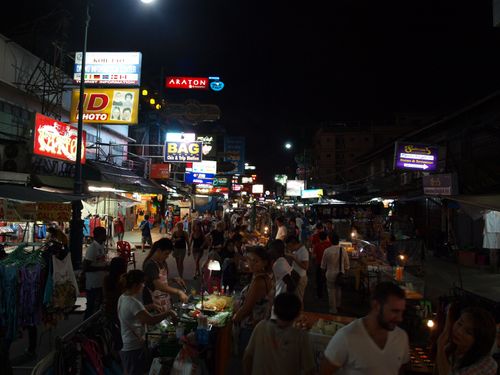
Khao San Road
Attractions
Bangkok’s backpacker carnival: curbside bars, live bands and DJs from 3pm–2am (midnight Sun). Street eats are cheap — pad thai 70–100 THB, mango sticky rice 60–100 THB. Come for wild people-watching; duck into Rambuttri for a calmer beer.
Yaowarat Chinatown Heritage Center
Attractions
Inside Wat Traimit by Chinatown Gate, this tidy museum charts Yaowarat’s Chinese roots with bilingual displays, period photos and short films. Open Tue–Sun 8:30am–4:30pm; closed Mon. Pair it with the Golden Buddha upstairs.
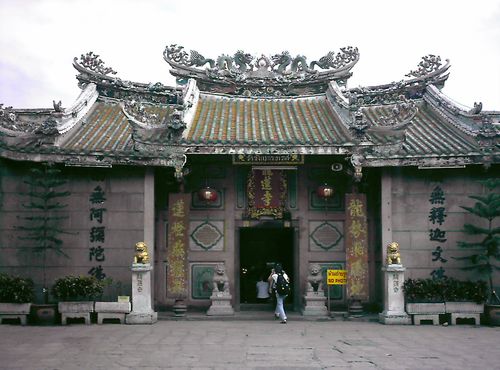
Wat Mangkon Kamalawat (Wat Leng Noei Yi)
Temples
Chinatown’s grand Chinese Buddhist temple—smoky incense, red lanterns, and gilded altars. Free entry, donations welcome. Best early morning; electric during Lunar New Year and the Vegetarian Festival. Steps from MRT Wat Mangkon, 8am–5pm daily.
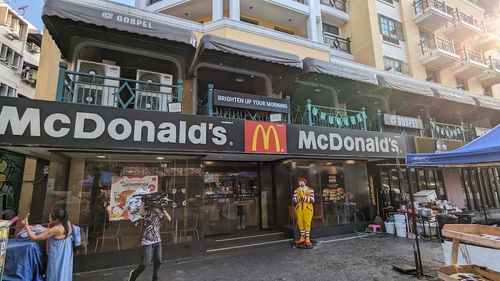
McDonald's Khaosan Road
Restaurants
Khao San’s reliable late-night fix. Burgers, fries and spicy McWings served till 4am daily — ideal post-bar fuel. Streetfront on Thanon Khao San; quick counter service and takeaway. Last checked Mar 2026.
More Khao San Road Guides
- Best Bangkok Chinatown Street Food for a Day Trip from Khao San Road
- Best Street Food in Chinatown for Khao San Road Travelers: What to Eat, Where to Start, and How to Get There
- Best Street Food Stalls on Khao San Road: What to Eat, What to Skip, and When to Go
- Where to Find Bangkok Street Food in Rattanakosin Beyond Khao San Road: Local Stalls, Side Streets, and Neighborhood Eats