
Bangkok to Chiang Mai by Night Train vs Day Train: Which Rail Option Is Better for Your Trip?
We’ve ridden both: the sleeper that steals the night and the daylight ride through rice paddies. Here’s the real Bangkok–Chiang Mai night vs day train breakdown.
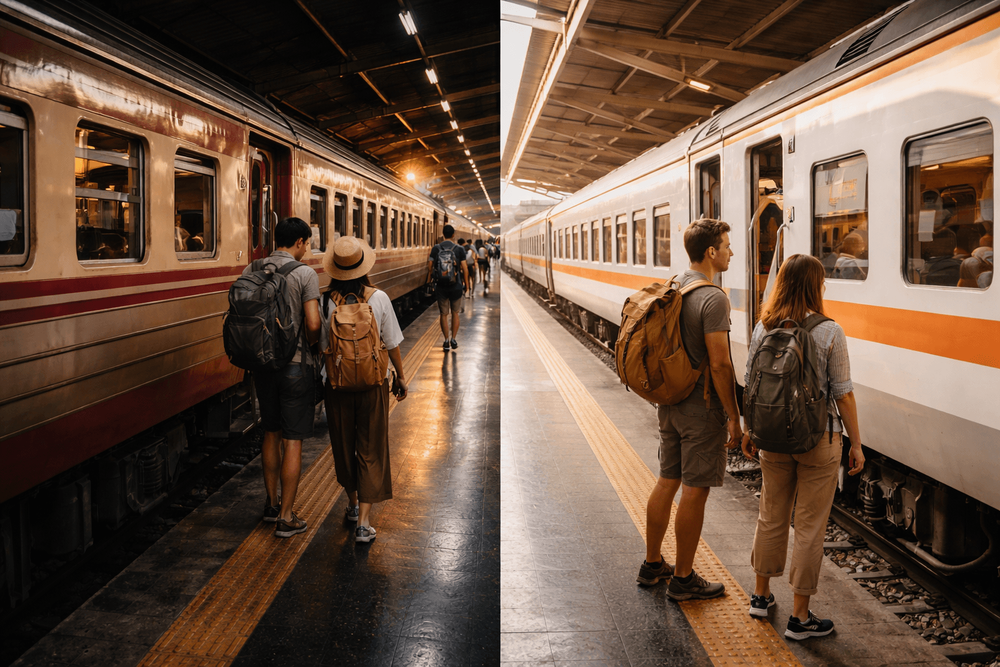
We’re standing under the vaulting roof of Krung Thep Aphiwat (Bang Sue Grand Station), the new cathedral of Thai rail. The LED board flickers, a platform fan chops the humid air, and someone’s grilling moo ping just outside—sweet smoke slipping in every time the automatic doors whoosh. This is the moment we decide: Bangkok to Chiang Mai by night train vs day train. Are we curling up in an air‑conned berth and waking to northern mountains, or riding daylight through rice paddies and limestone cuttings all the way up the spine of the country?
We’ve done both, more than once. Here’s how they really compare, without the brochure gloss.
Bangkok to Chiang Mai night train vs day train: the big differences
Travel time and rhythm
- Night trains: Typically 11–13 hours. We board after dinner—say 6:00–10:00 pm—and roll into Chiang Mai with the first coffee carts around 7:00–9:00 am. The hours disappear while you sleep (or try to). Convenient if you want to save a hotel night and maximize your first Chiang Mai morning.
- Day trains: Usually 10–11.5 hours. We leave Bangkok after sunrise and pull into Chiang Mai around dusk. It’s one long, scenic day—no sleep gymnastics required, but it does swallow the whole day.
Comfort in real life
- Night: Second‑class AC sleepers are the sweet spot—soft berths, curtains, a blanket, and a gentle sway that can lull you once the city shakes off. First‑class gives you more privacy (two‑berth cabins with doors), but the price jump isn’t trivial. The downside? If you’re a light sleeper, expect carriage noises, station stops, and the occasional snorer to gatecrash your dreams.
- Day: Second‑class AC seats recline decently and line up with big windows. You get elbow room and daylight; no bedding or lie‑flat. For those of us taller than a standard tuk‑tuk canopy, it’s comfortable enough, but your back will know you’ve done the distance.
Scenery and sanuk
- Night: You miss a lot of the countryside, though sunrise between Lampang River Lodge and Chiang Mai can be magic—the train snakes through teak forest, mist in the khlongs, roosters in stilted villages, and a quick blink through Khun Tan Tunnel.
- Day: This is the show. We roll past Ayutthaya’s stupas, Lopburi’s sun‑bleached fields, Den Chai’s big‑sky plains, then climb into green hills and wooden trestles. Camera people, this one’s for you.
Sleep quality vs arrival energy
- Night: If you sleep okay with motion and ambient sound, you step off fresh enough to hunt khao soi by 10 am. If not, you’re that farang zombie shuffling to 7‑Eleven for a M‑150. Earplugs and an eye mask make all the difference.
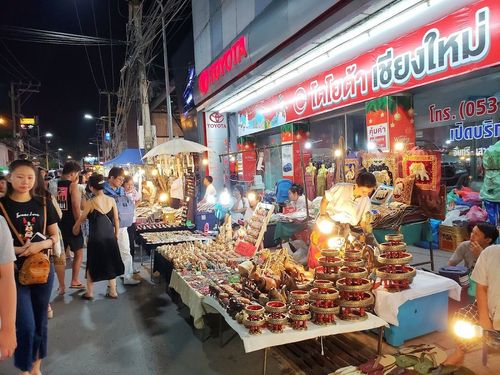
- Day: No sleep required; you’ll arrive mentally baked but physically fine. We like an early shower, then a sunset wander on Tha Phae Walking Street.
Overall convenience
- Night: Wins for time efficiency and hotel cost savings. You do your long haul while “off duty.”
- Day: Wins if scenery matters and you prefer normal sleep in a real bed. Also simpler for families who don’t want to wrangle bunks at midnight.
Tip: If you’re connecting from Khao San Road/Soi Rambuttri, plan extra time. Bangkok traffic can turn an easy hop into a sweaty tuk‑tuk saga.
Classes, seats, berths, and what you actually get
The State Railway of Thailand (SRT) runs a mix of rolling stock on the Northern Line. Names change (Rapid, Express, Special Express), but what matters is the hardware you’ll sit or sleep on.
First‑class sleeper (night trains)
- Layout: Two‑berth private cabins with a door that locks, small table, power outlet, and sometimes a basin. Upper and lower berths convert from daytime seats.
- Vibe: Quiet, business‑class feel of the rails. Great for couples and light sleepers.
- Price: Expect a premium. Safe range: roughly 1,400–2,100 THB per person depending on lower/upper berth and specific train; confirm locally. Sources we check: SRT’s official booking portal and published fare tables, plus third‑party aggregators like 12Go Asia for comparison.
Second‑class sleeper AC (night trains)
- Layout: Open‑plan bays with upper/lower bunks, curtains for privacy, reading lights, and charged air‑con. Attendants flip seats into beds around 8–10 pm.
- Vibe: Social but respectful. The carriage hushes after lights‑down. Lower berths are wider and cost a bit more; uppers are snug but fine.
- Price: Usually mid‑range. Safe range: about 800–1,300 THB per person, upper slightly cheaper than lower; confirm locally (check SRT + 12Go Asia).
Second‑class seat AC (day trains)
- Layout: Reclining pairs, big windows, luggage racks, reliable air‑con.
- Vibe: Long‑haul coach energy without the airport faff. Families manage well here.
- Price: Typically below sleepers for the same route. Safe range: ~500–900 THB depending on train type; confirm locally.
Third‑class fan (select day services)
- Layout: Harder seats, fans, windows open to the breeze. Rustic and very Thai.
- Vibe: Budget‑friendly but not for 11 hours unless you love a challenge. We do it for short hops; the full line is a stamina test.
- Price: Lowest tier. Think a few hundred baht; confirm locally.
What’s included?
- Bedding: Provided on sleepers (sheet, blanket, pillow). Bring your own lightweight sleep sack if you’re fussy.
- Power: Generally available—one or more outlets per bay/cabin. Bring a splitter if you’re a gadget farm.
- Toilets: Mix of Western and squat; bring tissues and hand sanitizer.
- Food: Some services have a dining car or at‑seat ordering; this ebbs and flows. We assume DIY—grab snacks from 7‑Eleven at Krung Thep Aphiwat or platform vendors at Chiang Mai. Instant noodles, sticky rice, and grilled chicken skewers never let us down.
For a deeper look at sleeper specifics, we’ve laid out classes and booking advice here: Bangkok to Chiang Mai by Night Train: Sleeper Classes, Booking Tips, and What to Expect and the angle on value here: Bangkok to Chiang Mai by Sleeper Train: Is the Overnight Ride Worth It?.
Practicalities: booking, timing, stations, food, luggage, safety
Booking methods that actually work
- Online: SRT’s official site/app sells e‑tickets with seat/berth selection when available. Third‑party sites display multiple trains and can be easier for foreign cards, sometimes adding a service fee. Compare both before paying.
- In person: Krung Thep Aphiwat ticket hall (Bangkok) and Chiang Mai station windows still do the job. Lines form for peak dates—rock up early.
- When to book: For sleepers, earlier is better, especially Thai holidays and November–February. Day seats are more forgiving but can also fill on weekends.
We break down pros/cons of booking channels and timing here: Bangkok to Chiang Mai by Train: Sleeper vs Day Train, Fares, and Booking Tips.
Departure and arrival windows
- Bangkok departures: Most long‑distance Northern Line trains now use Krung Thep Aphiwat Central Terminal. Give yourself buffer time—this place is big. From Khao San/Phra Athit, take a taxi or Grab (40–60 minutes with traffic) or hop the MRT Blue Line to Bang Sue, then follow signs into the terminal.
- Chiang Mai arrivals: The station sits east of the Old City moat on Rot Fai Road. Red songthaews queue out front—expect a shared ride 60–100 THB per person to Tha Phae Gate or Nimmanhaemin; confirm price before you toss your pack in.
Luggage and what to pack
- Luggage policy is chill: Backpacks and roller bags fit overhead or at carriage ends. Keep valuables on you at night. We bring a soft cable lock to tether a bag to the rack—peace of mind beats heroics.
- Essentials: Earplugs, eye mask, layers (AC swings between “nice” and “penguin”), tissues, sanitizer, snacks, refillable bottle.
Food and drink
- Stations: Krung Thep Aphiwat has chains and kiosks; there’s always a 7‑Eleven with that arctic blast of AC and shelves of microwave meals. At Chiang Mai, platform vendors wave down arrivals with khao niew moo ping and iced coffee.
- Onboard: Service varies. Assume basic: hot water for noodles at the carriage end, occasional trolley snacks, and maybe a dining car on certain services. We don’t bank on it; we BYO.
Safety and scams
- Onboard: Thailand’s trains are friendly and generally safe. Keep your passport and phone zipped in the berth with you. If anyone offers “upgrade now, cash,” decline and ask a uniformed attendant.
- Stations: Normal big‑station hustle. In Bangkok, ignore anyone whispering “special ticket” near the doors; head to the official counters. In Chiang Mai, agree on songthaew price before boarding.
For a nuts‑and‑bolts comparison of rail vs bus vs flight (if you’re still on the fence), we’ve got a broader decision guide: Bangkok to Chiang Mai by Train vs Bus vs Flight: Which Trip Is Best for Your Budget and Schedule?.
Who should pick which: we’ve ridden with all of you
- Budget travelers: Night train second‑class sleeper. You combine transport + bed, and you’ll wake ready to roam the Old City. If even that’s steep, a second‑class day seat is the wallet win with views.
- Families with kids: Day train second‑class AC seats. Easier to manage meals, bathroom breaks, and daylight moods. If the kids love bunk forts, a family‑sized first‑class cabin on the night train can be a fun splurge.
- Solo travelers: Night train second‑class sleeper—safe, social in a low‑key way, and time‑efficient. Light sleepers might prefer day seats plus a real bed at night.
- Scenery hunters and photographers: Day train, full stop. Save the night for Chiang Mai’s Sunday Walking Street.
- Short‑on‑time planners: Night train gets you two usable city days back‑to‑back. Board after a pad thai on Soi Rambuttri, hop off for sunrise in the north.
- Motion‑sensitive sleepers: Day train. Don’t set yourself up for a grumpy arrival.
Tips that actually matter by season and style
- High season (Nov–Feb): Book sleepers early. Trains and guesthouses fill up fast, especially around Loy Krathong/Yi Peng in Chiang Mai. Day trains sell out on weekends too.
- Hot season (Mar–May): AC matters. Night trains feel cooler. Day trains are fine but carry water and sit on the shaded side if you can pick.
- Rainy season (Jun–Oct): Scenery glows green; occasional delays happen. Build a buffer for tight connections (cooking class, elephant sanctuary pickup, or a night bus elsewhere).
- Seat vs berth selection: On sleepers, lower berths are wider and less wobbly; uppers are cheaper but cozier. On day trains, pick a window—obviously—and bring a light scarf for over‑zealous AC.
- Food strategy: Eat before boarding near the station—Yaowarat Chinatown Heritage Center if you have time, or keep it simple at Krung Thep Aphiwat. In Chiang Mai, we beeline for a bowl of boat noodles near the Ping River or khao soi on Sri Poom Road.
If you want the play‑by‑play of a full daylight ride—including what you’ll see and when—this deep dive helps: Bangkok to Chiang Mai by Day Train: Routes, Classes, Travel Time, and What to Expect.
Stations and how we get there (without sweat‑soaked drama)
- Bangkok — Krung Thep Aphiwat Central Terminal: North of Chatuchak. From the Old City/Phra Athit, Grab or taxi is simplest (budget 200–350 THB depending on traffic). Public transit is easy: MRT Blue Line to Bang Sue, then follow clearly marked walkways into the terminal. There are food courts, ATMs, and plenty of seating.
- Chiang Mai Railway Station: East of the moat, Rot Fai Road. Songthaews and metered taxis wait outside. If you’re Nimman‑bound, expect 20–30 minutes. Don’t be shy to haggle politely—smiles go further than scowls.
Where to sleep around the stations? We don’t sling names here without our vetted list, but strategy‑wise: one night near Tha Phae Gate for old‑town temples and market strolls, another in Nimman for cafes and late‑night izakaya energy. Pools are worth it in hot season.
Our take: which would we book, tonight?
- First‑time Bangkok‑to‑Chiang‑Mai riders with average sleep tolerance: Night train, second‑class lower berth. It feels quintessentially Thai and lands you ready to go.
- If we need to arrive sharp and inspired: Day train. We’d grab a left‑side window for the climb north, a bag of longan from a platform seller, and let the countryside do its thing.
Either way, we’ll toast the ride with a cold Leo on Phra Athit Road when we’re back—because a good train trip is its own kind of sanuk.
Quick Plan
ASCII route: Bangkok (Krung Thep Aphiwat) → Ayutthaya → Lopburi → Den Chai → Lampang → Chiang Mai
- Day 0 (Night Train Option): Bangkok → Chiang Mai (rail ~744 km, 11–13 hrs overnight). Key stops you’ll pass: Ayutthaya, Lopburi, Den Chai, Lampang. Overnight: On board (sleeper berth).
- Day 1 (Arrive Morning): Chiang Mai city day—Old City temples, Nimman cafes, sunset at Doi Suthep. Overnight base: Chiang Mai Old City or Nimman.
- Day 1 (Day Train Option): Bangkok → Chiang Mai (rail ~744 km, 10–11.5 hrs). Key daylight segments: Central plains to Den Chai; mountain climb past Khun Tan Tunnel to Lampang–Chiang Mai. Overnight base: Chiang Mai.
Costs at a Glance (THB)
- Fares (one‑way, per person; confirm locally):
- 1st‑class sleeper (night): ~1,400–2,100
- 2nd‑class sleeper AC (night): ~800–1,300 (lower a bit higher than upper)
- 2nd‑class seat AC (day): ~500–900
- 3rd‑class fan (select day services): a few hundred
- Sources: SRT official fares/timetables and 12Go Asia fare listings cross‑checked for typical ranges.
- Food onboard/stations: 100–250 for snacks/instant meals if you DIY; more if you sit‑down pre‑train. Confirm locally.
- Local transport on arrival (songthaew to Old City): 60–150 per person depending on route and sharing; confirm locally.
- Fuel per liter, tolls, parking: N/A (rail journey).
Last checked: Sep 2026
Booking Pathways
- Car rental (for Chiang Mai day trips after you arrive): Compare rental deals at https://www.rentalcars.com/ (check pickup at Chiang Mai Airport or downtown; look for full‑to‑full fuel and no hidden one‑way fees).
- Hotels: Pick a place near Tha Phae Gate for Old City access or Nimman for nightlife and cafes—use your preferred booking platform and check recent reviews for AC strength and pool hours.
- Attraction tickets: For skip‑the‑line and transfers (e.g., Doi Inthanon, elephant sanctuaries, or cooking classes), browse options at https://www.klook.com/ (filter by “Chiang Mai” and check recent traveler photos/reviews).
Verification
- Timetables, classes, and general fare ranges cross‑checked against: the State Railway of Thailand (SRT) official booking portal/timetables and current listings on 12Go Asia. Because SRT adjusts rolling stock and services seasonally, we give safe ranges; confirm exact fares and departure times when booking.
- Station access and local transport practices verified by recent rides (Bangkok MRT to Bang Sue → station walk; Chiang Mai station songthaew queues) and spot‑checks with current traveler reports. Prices for local transport vary—agree before boarding.
- Onboard dining availability fluctuates; we recommend self‑catering unless you can confirm a dining car at ticketing or with attendants on the platform.
If you’re still waffling at the ticket window, here’s our tiebreaker: want the story and the sunrise—book the night train. Want the movie and the mountains—ride the day train. Either way, we’ll see you at the noodle stall by Chiang Mai Gate when we roll in.
Related Hotels & Places
Khao San Road
Attractions
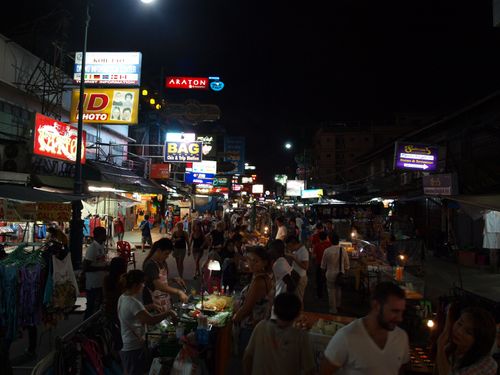
Bangkok’s backpacker carnival: curbside bars, live bands and DJs from 3pm–2am (midnight Sun). Street eats are cheap — pad thai 70–100 THB, mango sticky rice 60–100 THB. Come for wild people-watching; duck into Rambuttri for a calmer beer.
Sukhumvit Suites Hotel
Hotels
A 3-star hotel in Bangkok.
Lampang River Lodge
Hotels
Experience an abundance of unparalleled facilities and features at Lampang River Lodge. Maintain seamless communication using the complimentary Wi-Fi at lodge.
Tha Phae Walking Street
Shops
Yaowarat Chinatown Heritage Center
Attractions
Inside Wat Traimit by Chinatown Gate, this tidy museum charts Yaowarat’s Chinese roots with bilingual displays, period photos and short films. Open Tue–Sun 8:30am–4:30pm; closed Mon. Pair it with the Golden Buddha upstairs.
More Khao San Road Guides
- Bangkok to Chiang Mai by Train: Night Sleeper vs Day Train, Tickets, and What to Expect
- Bangkok to Chiang Mai by Train vs Bus: Which Option Is Better for Your Trip?
- Bangkok to Chiang Mai by Overnight Train: Which Class, Route, and Booking Method Is Best?
- Bangkok to Chiang Mai by Train: Sleeper vs Day Train, Fares, and Booking Tips