
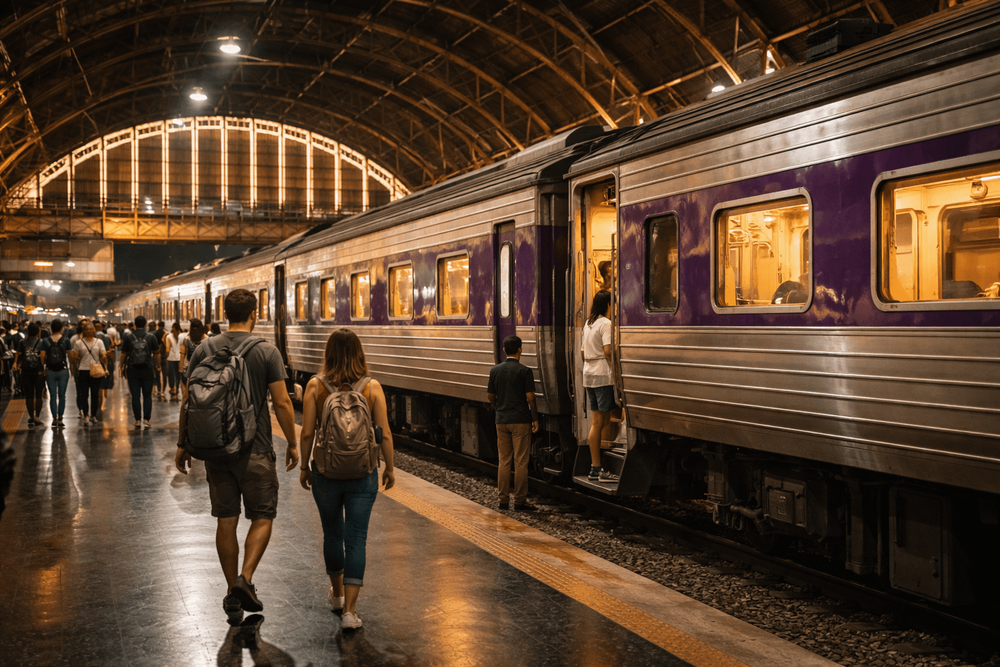
Bangkok to Chiang Mai by Night Train: Sleeper Classes, Booking Tips, and What to Expect
Ride the Bangkok–Chiang Mai night train: classes, prices, booking, schedules, and real onboard tips—so you wake up in the north ready to explore.
We’re shouldering our backpacks on Baan Manee BKK, weaving past a cart fanning moo ping smoke into the humid night, the bass from a Khao San Road bar thumping our ribs. Ten minutes later we’re in a metered taxi, windows fogging as the AC kicks in, rumbling toward Krung Thep Aphiwat Central Terminal—the new mega-station at Bang Sue. This is our favorite way north: the Bangkok to Chiang Mai night train. We trade airports for steel rails, sleeper berths, and sunrise over the north.
If you’re comparing all the ways to make this trip—flight, bus, day train—we’ve got that covered elsewhere. Here, we’re zooming in on the sleeper: how to book it, which berth to choose, what the food’s like, and how to glide into Chiang Mai Old City with minimal faff.
Why take the night train to Chiang Mai?
- Time-smart travel: we cover 700+ km while we sleep and arrive ready to roam Wat Phra Singh Woramahawihan before the heat gets ferocious.
- Sanuk factor: there’s a little romance to it—the clack of tracks past Ayutthaya’s temple silhouettes, midnight station snacks, morning mist around วันดี ไร่เลย์ทราเวล.
- Budget-friendly: second-class sleepers are usually cheaper than flying when you factor luggage and an extra night of accommodation you don’t need.
- Less airport chaos: no baggage scales, no shuffle through security in socked feet. Just show your e-ticket and hop on.
- Greener choice: trains sip energy compared to planes.
If you’re still weighing all options, look at our comparison piece: Bangkok to Chiang Mai by Train, Bus, or Flight: Which Travel Option Is Best?
Bangkok to Chiang Mai night train: the basics
- Departure station (Bangkok): Krung Thep Aphiwat Central Terminal (often called Bang Sue Grand Station). Don’t be the farang who turns up at Hua Lamphong because an old blog said so—check your ticket.
- Arrival station (Chiang Mai): Chiang Mai Railway Station in the Wat Ket area, about 3 km east of the Old City (Tha Phae Gate).
- Journey time: typically 11–13 hours, depending on the service and delays.
- Typical schedule: multiple evening departures between roughly 18:30 and 22:00, arriving from around 06:30 to 09:30. Timetables do shift—always confirm on the State Railway of Thailand (SRT) site or at the station.
Sleeper classes explained
First Class Sleeper (A/C, private): lockable two-berth cabins with a door, two seats by day that convert to upper and lower bunks at night. Reading lights, small table, and room under the seats for bags. You can book solo occupancy (you’ll pay for both berths). Toilets are shared at the end of the carriage. No showers.
Second Class Sleeper A/C (open-plan): the workhorse of this route. Two seats face two seats; at night an attendant flips them into a lower berth and pulls down the upper from the wall. Each berth has a curtain for privacy. Clean sheets, pillow, blanket, and a stiff breeze of AC.
Second Class Sleeper Fan: older coaches on slower services, windows slide down, fans whirl. Cheaper, louder, sweatier—but some folks love the breeze and the station hawkers. Bring earplugs.
Seats only (2nd/3rd class): fine for day services; overnight, they’re a test of character and vertebrae. If you value sleep, get a sleeper.
On some departures there’s a dedicated Ladies & Children second-class sleeper coach. If that’s important to you, book early and check your coach number.
Lower vs upper berth
- Lower: wider, a touch longer, and closer to the window; often 100–150 baht more. Best if you’re tall or want an easier climb.
- Upper: slightly narrower, a bit cheaper; still perfectly decent if you’re under 185 cm.
Schedules and typical timings
The flagship evening services leave Bangkok around early evening so you can settle in, have a hot meal, and crash by 21:00. You’ll rumble through Ayutthaya and Lopburi before midnight, wake near Lampang, and slide into Chiang Mai after sunrise. Slower night trains leave later and roll in mid-morning.
Treat the timetable as guidance, not gospel. A rain-soaked khlong overflowing somewhere down the line or a long freight train ahead can add 30–60 minutes. Build a buffer if you’ve got tours booked the same morning in Chiang Mai.
How to book tickets and what they cost
Where to buy
- Online via SRT’s D-Ticket website/app: create an account, search Bangkok (Krung Thep Aphiwat) to Chiang Mai, pick your berths. You’ll get a QR e-ticket—no printing needed. Have your passport number handy.
- At the station: counters at Krung Thep Aphiwat and Hua Lamphong sell tickets for all lines. Same-day sleepers can sell out, especially Fridays and before/after Thai holidays.
- Via travel agents or your guesthouse: expect a service fee (often 100–250 baht per ticket). Handy if your card balks at the online system.
When do tickets go on sale? SRT typically opens bookings roughly a month ahead (it varies with service and season). For peak periods—Songkran (April), Loy Krathong (Nov), Christmas/New Year—book as soon as you see them drop.
What you’ll pay (approximate)
- 2nd Class Sleeper A/C: 850–1,050 baht (upper cheaper, lower pricier)
- 1st Class Sleeper (per berth): 1,600–2,100 baht; whole private cabin for one person generally costs the price of two berths
- 2nd Class Fan Sleeper: 700–900 baht
- Seats only: 300–500 baht
Add 30–60 baht for linen/berth surcharge on some services—usually baked into the fare you see online. Prices drift over time, but those ranges are what we’ve been paying recently.
Pro tips for getting your preferred berth
- Book early for weekends and holidays—lower berths and ladies-only coaches are first to vanish.
- If traveling as a pair, choose two lowers opposite each other for more headroom, or an upper/lower pair stacked on the same side for cozy chats behind the curtain.
- Tall? Go for a lower. Light sleeper? Request a berth away from the carriage ends (doors thud, toilets flush).
- Keep your passport name format consistent with your ticket to avoid check-in hiccups.
If you’re still deciding whether the sleeper beats a red-eye flight or a VIP bus, our deep-dive guide has the trade-offs: Bangkok to Chiang Mai by Train, Bus, or Flight: Which Travel Option Is Best? and the broader round-up: Bangkok to Chiang Mai: The Best Ways to Travel.
Onboard experience: what it’s really like
Getting settled
Car numbers are posted on electronic boards; your coach is printed on the ticket. Step into a blast of blessed AC and that comforting detergent smell of freshly laundered sheets. Luggage goes on overhead racks or under the seats; big backpacks fit fine. Keep small valuables in a daypack by your pillow.
Around 19:30–21:00 the attendant works coach-by-coach flipping seats into beds with a few deft clanks. It’s a bit of a show. By 22:00, lights dim and the carriage hums—steel wheels, soft snores, the occasional station jolt.
Food and drink
- On many night services staff take food orders at your seat; dishes come from a galley or dining section. Expect Thai staples—fried rice, basil chicken, instant noodles—about 60–150 baht per dish. Nothing fancy, but it hits the spot.
- There may or may not be a dedicated dining car; consider it a bonus if there is.
- Bring snacks and a big bottle of water from 7-Eleven (you’ll pass at least three between your hostel and the platform).
- Alcohol is officially banned on Thai trains since 2014. Save the Chang for Chiang Mai.
- Strong-odor foods (hello, durian) are a no—your carriage mates will thank you.
Comfort and sleep
- The AC runs cold. Pack a light layer even if Bangkok feels like soup. Blankets are provided.
- Earplugs and an eye mask are worth their grams; corridor lights stay on.
- Newer coaches have 220V outlets or USB at many berths; older ones don’t. Carry a power bank.
- There’s no Wi‑Fi. Download shows and playlists before boarding.
- Motion is gentle most of the time, with the odd hard brake into a station. If you’re motion-sensitive, take your remedy of choice before bed.
Toilets and cleanliness
Expect a Western-style and a squat toilet at carriage ends, plus sinks. They start the night clean; by dawn, it’s… well, a train toilet. Bring tissues and hand sanitizer. No showers on these services—face wipes are your friend.
Safety
SRT staff patrol the aisles, and we’ve always felt fine leaving big bags stashed and tethered with a simple cable lock. Keep passports/phones strapped or zipped close while you sleep. If you’re solo and prefer extra peace of mind, aim for the ladies-only coach when available.
Getting to the Bangkok departure station
Krung Thep Aphiwat Central Terminal sits in the Bang Sue area, linked to the MRT Blue Line.
- From Khao San / Soi Rambuttri: taxis or Grab are easiest—plan 25–45 minutes depending on traffic, 150–250 baht on the meter. If you’re feeling ambitious, a short tuk‑tuk hop to the nearest MRT (Sam Yot or Sanam Chai) plus Blue Line to Bang Sue works too; fares 17–42 baht.
- From Sukhumvit/Asok: take MRT Blue Line straight to Bang Sue. Follow the signage to the central terminal via a covered walkway (allow 10–15 minutes from the ticket gates).
- From Don Mueang airport: the SRT Red Line runs to Bang Sue; quick and cheap.
- From Suvarnabhumi airport: Airport Rail Link to Makkasan, walk to Phetchaburi MRT, then Blue Line to Bang Sue. Or just Grab.
Arrive 30–45 minutes early. The station is modern and cavernous—big boards, clear English signage, coffee kiosks, and that icy AC blast you can spot from fifty meters. Platform gates usually open 15–20 minutes before departure; tickets are scanned by staff with a smile and a sawadee.
Waking up in the north: arriving at Chiang Mai
You’ll roll into Chiang Mai Station in bronze morning light, palm fronds backlit, the mountains just a smudge. The station is low-key: a few cafés, ATMs, ticket counters, clean-enough toilets, and a small left-luggage desk if you want to dump your pack for a few hours.
Outside you’ll be mobbed (gently) by red songthaews—rot daeng—plus tuk‑tuks and a taxi or two. Prices are negotiable but predictable:
- Rot daeng (shared pickup): 40–80 baht per person to the Old City, more to Nimman or the bus station.
- Tuk‑tuk: 120–200 baht to most Old City gates if your bargaining game is on point.
- Grab/Bolt: usually 100–180 baht to the Old City depending on surge and time.
If you’re checking in later, aim your ride to a breakfast spot around Tha Phae Gate or a leafy café in Nimman. We often wander the moat road first, grab a bowl of khao soi near Wat Phra Singh, then drop bags at our guesthouse when the desk opens. Old City is best for walkers and temple‑hopping; Nimmanhaemin is for coffee crawls and nightcaps.
When the train isn’t right
Night trains do sell out, and some travelers just sleep better in a hotel bed before a morning flight. If your dates are tight or you’re traveling peak season, have a Plan B. We break down the pros, cons, and prices across all modes here:
- Bangkok to Chiang Mai by Train, Bus, or Flight: Which Travel Option Is Best?
- Bangkok to Chiang Mai: The Best Ways to Travel
Quick checklist for the Bangkok–Chiang Mai night train
- Book early for weekends/holidays; lower berths go first
- Screenshot your e-ticket QR code and bring your passport
- Hoodie or long sleeve—AC gets frosty
- Earplugs, eye mask, face wipes, tissues, hand sanitizer
- Power bank and charging cable
- Big water bottle and snacks (save the durian for later)
- Small cable lock for your bag; keep valuables close
- Be at Krung Thep Aphiwat 30–45 minutes before departure
We’ll be honest: it’s not five-star luxury—sometimes the coffee’s instant and a wheel squeals through Phitsanulok. But there’s nothing like sliding open that curtain at dawn, watching the north wake up, and stepping onto the platform already in Chiang Mai. Grab a rot daeng, drop your bag, and let’s chase that first bowl of khao soi before the crowds.
Related Hotels & Places
Baan Manee BKK
Hotels
Riverside boutique stay and café in a restored 118-year-old family home. Quiet Bang Yi Khan vibes, 10–15 mins from Khao San. Come for river views, iced coffee, and a slow afternoon; stay in character-filled rooms steps from Wat Daowaduengsaram.
Khao San Road
Attractions
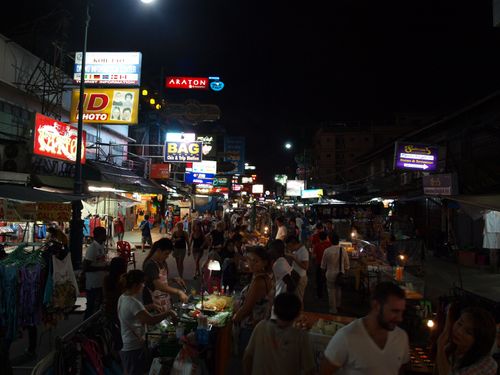
Bangkok’s backpacker carnival: curbside bars, live bands and DJs from 3pm–2am (midnight Sun). Street eats are cheap — pad thai 70–100 THB, mango sticky rice 60–100 THB. Come for wild people-watching; duck into Rambuttri for a calmer beer.
Wat Phra Singh Woramahawihan
Temples
วันดี ไร่เลย์ทราเวล
Services
Local Railay crew for sea tours and private longtail/speedboat charters around Krabi’s limestone coast. Call 096-274-1450 or 098-670-6308 (8am–10pm) to set up a snorkel-and-sunset run or a chilled beach-hop straight from Railay.
Recommended Products
More Khao San Road Guides
- Bangkok to Chiang Mai by Sleeper Train: Classes, Booking Tips, and What to Expect
- Bangkok to Chiang Mai by Train: Sleeper Classes, Timings, and Booking Tips
- Bangkok to Chiang Mai by Train: Night Sleeper vs Day Train, Tickets, and What to Expect
- Bangkok to Chiang Mai by Overnight Train: Which Class, Route, and Booking Method Is Best?