
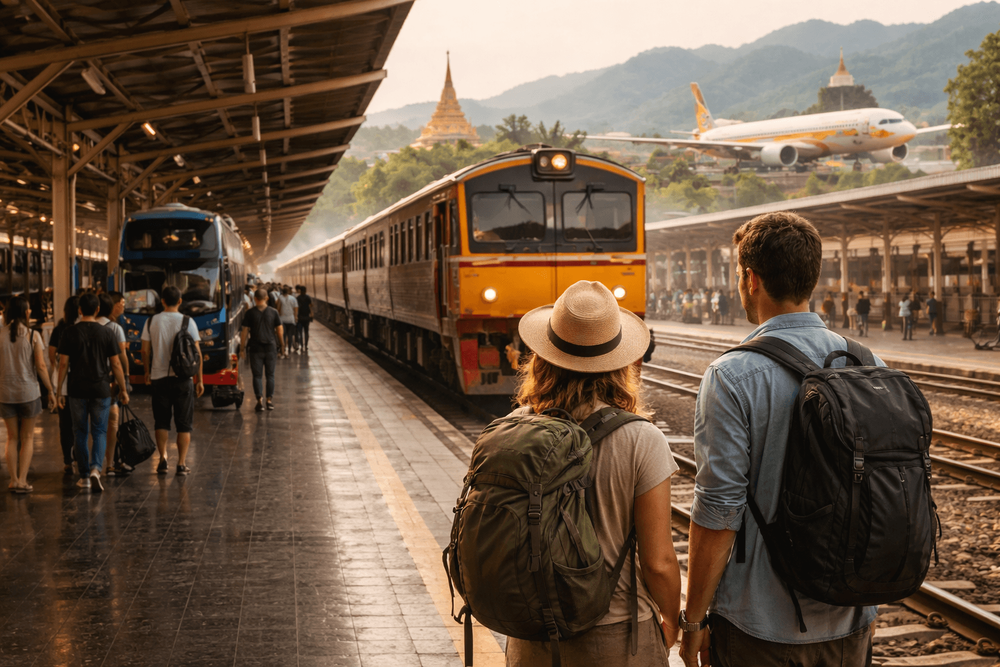
Bangkok to Chiang Mai by Train, Bus, or Flight: Which Travel Option Is Best?
Train, bus, flight, or private car from Bangkok to Chiang Mai? We compare time, cost, comfort, and real-world tips for a smooth trip north.
We’re standing on Soi Rambuttri just after sunset, the air thick with lemongrass smoke from a moo ping grill and the thump of bass leaking from a Khao San Road. A tuk-tuk slows, the driver leans out: “Chiang Mai?” He knows what we’re thinking. The north is calling. This is the classic Bangkok to Chiang Mai run — a rite of passage for farang and Bangkokians alike — and you’ve got choices: the romantic sleeper train, the budget VIP bus, the zippy flight, or a private car and a long, sanuk-spirited road trip.
The Bangkok to Chiang Mai Route: Why We’re All Heading North
Bangkok to Chiang Mai is more than a line on the map — it’s a change in tempo. We trade the sizzle of a wok on Yaowarat for the hiss of a moka pot on Nimmanhaemin. We swap the Chao Phraya Express boat for a borrowed scooter, neon for temple bells. People make this trip to reset: cooler nights, mountain air, and bowls of khao soi that benchmark all future noodle cravings. It’s also a practical hop if you’re weaving a Thailand loop: Bangkok → Ayutthaya → Sukhothai → Chiang Mai → Pai or Chiang Rai.
Distance-wise, we’re talking roughly 700 km. That’s a day’s drift by train, a long night by bus, a one-hour flight, or an 8–9 hour drive depending on traffic and coffee stops along Highway 1.
Bangkok to Chiang Mai: Which Route Fits You?
Here’s the vibe check before we get granular:
- Train: 11–13 hours, wildly atmospheric, best overnight in a sleeper. Suits romantics, light sleepers with earplugs, and anyone who wants their transport to feel like travel, not transit.
- Bus: 9–11 hours overnight, cold AC, decent recline, budget-friendly. Suits frugal travelers who like point-to-point efficiency.
- Flight: 1h10m in the air, 3–4 hours door to door. Suits time-poor, plan-tight, or AC-obsessed travelers.
- Private transfer: 8–9 hours, flexible stops, highest cost. Suits groups, families, photographers, and anyone who loves a road trip playlist.
If you want more nitty-gritty fare classes and schedule patterns, we keep an updated deep dive here: Bangkok to Chiang Mai: The Best Ways to Travel.
Your Options: Train vs Bus vs Flight vs Private Car
Train: The Sleeper Classic
- Time: 11–13 hours (overnight or daytime). The Special Express sleepers tend to be the fastest.
- Cost (approx): 3rd class seat 200–400 THB; 2nd class seat 500–700 THB; 2nd class AC sleeper 900–1,100 THB; 1st class sleeper 1,600–2,100 THB.
- Comfort: Second-class AC sleepers are the sweet spot. At night, staff flip seats into bunks: lower berth is wider and pricier; upper is cozier and a touch bumpier. First-class gets a private lockable cabin.
- Food: Attendants take orders for set meals; there’s usually a dining car. We still pack snacks — grilled pork skewers, sticky rice, maybe a mango from a Khlong Toei run.
- Atmosphere: The train hums, the carriage sways, neon Bangkok gives way to sugarcane fields, then forested hills. Bring a sweater; AC can be arctic. Earplugs help with track clatter.
- Best for: Travelers who see the journey as part of the story, and sleepers who can handle a bit of motion.
Departure point in Bangkok: Krung Thep Aphiwat Central Terminal (the big one at Bang Sue). It’s on the MRT Blue Line, so from the Khao San/Phra Athit area we usually hop a taxi to MRT Sam Yot or Sanam Chai, then ride straight to Bang Sue. Some limited services or shuttles may still touch Hua Lamphong, but long-distance northern trains are centered at Krung Thep Aphiwat.
Arrival in Chiang Mai: Chiang Mai Railway Station sits just east of the Old City on Charoen Muang Road. Red songthaews (shared pickup trucks) wait outside; expect 30–60 THB per person to the Old City, 60–100 THB to Nimmanhaemin, depending on time and mood.
Pros:
- Sleep while you move; wake up in the north
- Generous luggage space; no nickel-and-diming on bags
- A uniquely Thai travel experience
Cons:
- Can sell out around holidays
- Longer than bus/flight
- AC can be aggressive; bring layers
Bus: Overnight Workhorse
- Time: 9–11 hours depending on traffic and rest stops
- Cost (approx): 500–1,000 THB depending on class (Standard, VIP 32-seat, VIP 24-seat)
- Comfort: Reclining seats, blanket, sometimes a light snack and water. Expect a mid-journey rest stop with coupon food — steaming rice, curries, and coffee at 2 AM under fluorescent lights. It’s a vibe.
- Best for: Budget travelers and anyone who wants a straight shot through the night, no stations to figure out.
Departure in Bangkok: Northern buses leave from the massive Mo Chit 2 (Chatuchak) Bus Terminal. MRT Chatuchak Park or BTS Mo Chit gets you close; then a quick taxi or moto to the terminal. Some premium operators depart from their own Bangkok depots.
Arrival in Chiang Mai: Arcade Bus Terminal (Bus Terminal 2/3) northeast of the Old City. Songthaews line up curbside — 30–60 THB per person to the moat area; a bit more to Nimman. Tuk-tuks will quote high; smile and bargain or use Grab/Bolt.
Pros:
- Cheapest way that’s still comfortable
- Plenty of departures in the evening
- Point-to-point simplicity
Cons:
- Cold AC; bring a hoodie and socks
- Less legroom than a sleeper berth
- Luggage is stowed underneath; keep valuables on you
Flight: Fast and Frictionless (Mostly)
- Time: 1h10m in the air, usually 3–4 hours door to door including taxis and check-in
- Cost (approx): 1,200–2,500 THB if booked early on low-cost carriers; 2,500–4,500+ THB for full-service or last-minute
- Baggage: Low-cost tickets often include only a 7 kg cabin bag; add 15–20 kg checked for 400–800 THB when booked ahead (more at the airport)
- Best for: Tight schedules, late planners who missed sleeper berths, or anyone seeking AC, speed, and minimal faff
Departure in Bangkok: Don Mueang (DMK) hosts many low-cost flights; Suvarnabhumi (BKK) handles full-service and some budget routes. Both have airport rail links; from Khao San we usually cab it if we’ve got backpacks and midday heat.
Arrival in Chiang Mai: CNX Airport is absurdly close to town — 10–15 minutes to the Old City or Nimman in light traffic. The airport taxi desk runs fixed fares (typically around 150–200 THB to most central spots). Grab/Bolt can be similar or a little cheaper depending on surge.
Pros:
- Fastest by a mile
- Frequent daily departures
- Predictable comfort
Cons:
- Baggage fees can erase the savings
- Not exactly romantic
- Door-to-door still chews a few hours
Private Car/Driver: Your Northern Road Movie
- Time: 8–9 hours with sensible stops
- Cost (approx): 7,000–12,000 THB for a car/van with driver, more for large groups
- Comfort: Total control — leave when you want, detour to Sukhothai or Lampang’s chicken-bowl kilns, stop for khao kha moo at a roadside shophouse where the pork melts and the auntie calls you handsome
- Best for: Groups splitting costs, families with gear, photographers chasing light, or travelers who love the road
Pros:
- Flexible, scenic, door-to-door
- See places the train and plane skip
Cons:
- Pricey for solos/couples
- You still sit for a full day
How Long, How Much, and Who Should Choose What
- Fastest: Flight. Expect 3–4 hours door to door.
- Best value sleep: 2nd class AC sleeper on the train. Book early for lower berth.
- Cheapest: Standard/VIP bus. Comfort rises with seat class.
- Most flexible: Private car/driver.
Rough budget cheat sheet per person, one-way:
- 500–1,000 THB: VIP bus
- 900–1,100 THB: 2nd class sleeper (upper/lower) on the train
- 1,200–2,500 THB: Flight (hand baggage only; add if checked)
- 2,000–4,000+ THB: 1st class sleeper or flight with bags booked late
- 2,000–4,000 THB each in a group of 3–4 for a private car
If you’re still weighing trade-offs, we track seasonal demand spikes and timetable quirks on this page too: Bangkok to Chiang Mai: The Best Ways to Travel.
Booking, Departure Points, Baggage, and Seasonal Smarts
Booking Tips
- Trains: Book as early as you can for sleepers — 2–4 weeks ahead for weekends and holidays. Use SRT’s official e-ticket site or buy at stations. Agencies around Khao San/Phra Athit can book for you, but there’s usually a markup.
- Buses: Buy at Mo Chit counters or via reputable agents/apps. VIP classes (24–32 seat) sell out on peak nights. Avoid touts in the parking lot.
- Flights: Prices jump late and around festivals. Set alerts and be flexible with DMK vs BKK.
- Private cars: Arrange through your guesthouse or a trusted operator; confirm vehicle type, route, and total price including tolls/fuel.
Departure Logistics in Bangkok
- Krung Thep Aphiwat Central Terminal (Bang Sue): MRT Blue Line straight to Bang Sue. From Soi Rambuttri/Khao San, we cab 20–40 minutes depending on traffic (120–200 THB on the meter; insist on the meter or pre-agree a fair price).
- Mo Chit 2 (Chatuchak) Bus Terminal: BTS Mo Chit or MRT Chatuchak, then a short taxi/moto. Arrive 45–60 minutes early for a calm check-in and snack hunt.
- Airports: DMK for many low-cost flights; BKK for most full-service. Give yourself 90 minutes before departure with no checked bag, 2 hours if you do, more if you’re new to Bangkok traffic.
Baggage Realities
- Train: Big packs are fine. Stash under the lower berth or on overhead racks; keep passports/valuables in a daypack with you.
- Bus: Large bags ride underneath; take a photo of your tag and keep cash/cards on you.
- Flight: Weigh cabin bags — airline staff in Bangkok actually check. Prepay checked luggage to avoid walk-up sticker shock.
Seasonal Considerations
- Songkran (mid-April), Loy Krathong/Yi Peng (Nov), Christmas/New Year: Everything sells out — trains first, then VIP buses, then flights spike. Book early.
- Smoke/Haze Season (roughly Feb–Apr): Northern air quality can be poor. If you’re respiratory-sensitive, consider timing or have a Plan B.
- Rainy Season (May–Oct): Downpours can delay buses; flights usually breeze through. Trains may be a touch slower, but the countryside turns emerald.
Arrival in Chiang Mai: Getting Into Town
From Chiang Mai Railway Station
- Red songthaew share rides into town. Tell the driver your soi and agree on a fare before boarding. Typical: 30–60 THB per person to the Old City, 60–100 THB to Nimman.
- Tuk-tuk: Quicker, pricier — expect 100–150 THB to the Old City. Smile, bargain, keep it friendly.
- Grab/Bolt: Often 80–150 THB depending on time.
From Arcade Bus Terminal (Bus Terminal 2/3)
- Same playbook: songthaews first, tuk-tuks everywhere, Grab/Bolt as a sanity check on pricing. The Old City’s moat glints just 10–15 minutes away.
From Chiang Mai International Airport (CNX)
- Official taxi desk with fixed fares (usually 150–200 THB to central zones). You’ll be checking into your guesthouse in the time it takes to reheat a bowl of boat noodles.
- If you’re bound for Mae Rim, Hang Dong, or a retreat in the hills, pre-arrange a pickup — drivers love the airport loop and it’ll save you haggles.
Where We Usually Stay
- Near the Old City’s northeast corner for quiet lanes and morning market walks
- Around Nimmanhaemin for cafes, night bites on Sirimankalajarn, and quick airport hops
- Riverside (Charoenrat Road) if we’re in a slow mood and want sunset strolls
Check our city primers for neighborhoods, eats, and things to do once you’ve dropped your bag: Bangkok and Chiang Mai.
Insider Moves: Tiny Tweaks, Big Wins
- Pick your berth wisely: On the train, the lower sleeper is wider and more stable; upper is cheaper and a touch cooler under the AC vent.
- Bring a layer: Buses and trains love refrigerator settings. A hoodie beats chattering all night.
- Eat before you board: Grab a bowl of boat noodles on Phra Athit Road or a pad thai on Soi Rambuttri. You can still snack later, but you’ll board happy.
- Cash but not too much: Keep small bills for songthaews and market stalls. ATMs are everywhere, but a 20–50 THB note can smooth a lot of interactions.
- Trust, verify: Buy train/bus tickets from official counters or known agencies. Anyone promising “last 1st-class sleeper tonight!” outside the station is selling theater.
- Time your arrival: Overnight train/bus that lands around sunrise sets you up for early hotel bag drop and a full day of temples. Flights are perfect if you want to be slurping khao soi by lunch.
- Mind the scams-lite: At terminals, some helpful souls steer you to “cousin’s minivan.” Smile, sawadee, keep walking to official desks.
Sample Plays We Love
- The Sleeper-to-Khao-Soi Gambit: Book the Special Express sleeper, tuck into bed after Ayutthaya rolls by, wake to misty hills, arrive around 8–9 AM, stash your bag at an Old City guesthouse, walk to a morning market for coffee and curry puffs, then khao soi for lunch.
- The Flight-and-Nimman Dash: Mid-morning DMK→CNX, 120 THB Grab to Nimman, check in or drop your bag, espresso at a lane-side cafe, sunset at the Old City’s west gate, sticky rice and sai ua on the night market curb.
- The Road-Trip Detour: Private car with a Lampang lunch stop and a quick temple peek. Roll into Chiang Mai by golden hour as monks sweep leaves along the moat.
Getting There: Quick Reference
- Train: 11–13 hours; 900–1,100 THB for 2nd class AC sleeper. Depart: Krung Thep Aphiwat (MRT access). Arrive: Chiang Mai Station (songthaews outside).
- Bus: 9–11 hours; 500–1,000 THB. Depart: Mo Chit 2. Arrive: Arcade Terminal.
- Flight: 1h10m in air; 1,200–2,500 THB if early. Depart: DMK/BKK. Arrive: CNX.
- Private car: 8–9 hours; 7,000–12,000 THB per vehicle.
We’ll see you up north. If we’re not on the sleeper trading mango slices with our carriage neighbors, we’re stepping into the CNX arrivals’ heat, squinting toward Doi Suthep and debating whether our first move is khao soi or a nap. Either way, Chiang Mai’s moat is waiting — and so is your next bowl.
Related Hotels & Places
Khao San Road
Attractions
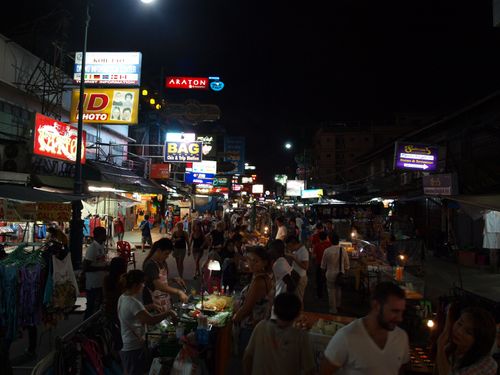
Bangkok’s backpacker carnival: curbside bars, live bands and DJs from 3pm–2am (midnight Sun). Street eats are cheap — pad thai 70–100 THB, mango sticky rice 60–100 THB. Come for wild people-watching; duck into Rambuttri for a calmer beer.
Tha Chang Bangkok
Bars
Bar on Khao San Road.
More Khao San Road Guides
- Bangkok to Chiang Mai by Train vs Plane vs Bus: Which Way Is Best for Your Budget, Time, and Comfort?
- Bangkok to Chiang Mai by Train vs Plane vs Bus: The Best Route for Your Budget and Schedule
- Bangkok to Chiang Mai: Which Transport Option Is Best for Your Budget, Time, and Comfort?
- Bangkok to Chiang Mai by Bus: Day vs Overnight Options, Comfort, and Booking Tips