
Bangkok to Chiang Mai by Sleeper Train: Classes, Booking Tips, and What to Expect
Ride the rails from Bangkok to Chiang Mai in a real bed. Classes, berths, prices, booking tips, schedules, and onboard life—told by people who actually take the train.
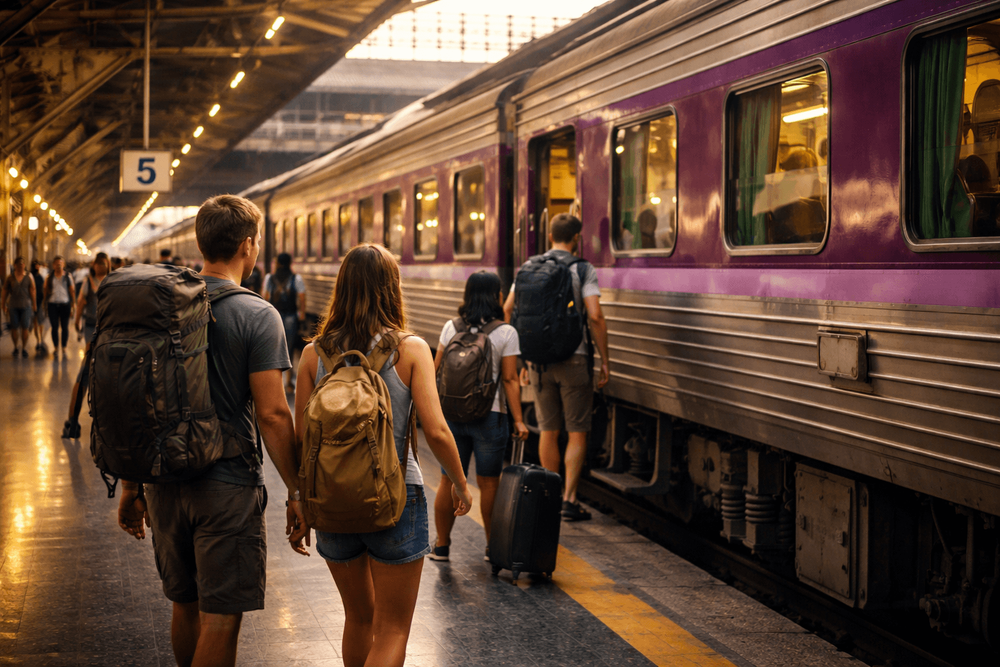
We slip out of Soi Rambuttri with pad thai still buzzing on the tongue, dodge a tuk-tuk on Phra Athit, and hop the river boat to the MRT. That soft Bangkok dusk is sinking as we shoulder our packs at Krung Thep Aphiwat, the new mega-station humming like a beehive. Tonight it’s the Bangkok to Chiang Mai sleeper train—our favorite way to trade the thump of Khao San Road for dawn mist in the north.
Why ride the Bangkok to Chiang Mai sleeper train?
Because it turns transport into a travel day. We eat, we read, we watch palms blur past Ayutthaya, and we wake up as the hills around Lampang catch first light. The Bangkok to Chiang Mai sleeper train folds a night’s accommodation into the ticket price, dodges airport transfers, and lets us arrive a short songthaew ride from the Old City moat.
- It’s scenic: rice paddies, teak forests, temple spires as we roll north.
- It’s social: swap stories in the dining car, or cocoon behind your curtain.
- It’s sane: no 3 a.m. airport alarms, no baggage fees dance.
If you want a deeper comparison of routes and ride styles, we also keep a broader overview here: Bangkok to Chiang Mai: The Best Ways to Travel.
The main train options on the Northern Line
Several night trains run this route. The exact numbers and rolling stock can shift with new timetables, but here’s how the experience shakes out:
- Special Express No. 9/10: The flagship with newer Chinese-built sleepers (A/C, bright, clean, power outlets). 1st- and 2nd-class sleepers, dining car.
- Special Express No. 13/14: Older but comfortable air-con sleepers, usually with both 1st- and 2nd-class options.
- Rapid services: Slower, cheaper, basic. Sometimes fan-cooled sleepers or older A/C cars; fewer onboard frills and longer journey time.
Journey time is typically 11.5–14 hours depending on service and delays.
Sleeper classes, berths, and what they cost
Think of “seat numbers” as placeholders—the attendants flip these into beds after departure. Pricing varies by class, berth (upper vs. lower), and train type. Expect rough ranges below; check current fares when you book.
First Class Sleeper (A/C, private 2-berth cabin)
- Layout: Lockable cabin for two (convertible sofa + fold-down upper). Solo travelers can book solo occupancy.
- Perks: Door you can lock, small table, mirrors, power outlet(s), space for bags, shared or in-cabin sink depending on carriage.
- Price range: roughly 1,800–2,200 THB per berth; 2,500–3,200 THB if you want the whole cabin as a single.
- Who it suits: Couples, light sleepers, anyone craving privacy and a warmer cabin (A/C can still bite; pack a layer).
Second Class Sleeper (A/C, open-plan berths with curtains)
- Layout: Bays with two bunks on one side of the aisle and two on the other; at night each becomes a curtained berth.
- Upper vs. Lower: Lower is wider and a touch pricier; upper is snugger and cheaper. Lower has the window; upper is cave-cozy.
- Price range: upper 900–1,100 THB; lower 1,000–1,300 THB depending on service.
- Ladies-only car: Often available and marked clearly; handy for solo female travelers.
- Who it suits: Budget-conscious travelers who still want a real bed and decent sleep.
Rapid Sleeper (older stock)
- Layout: Older carriages, slower schedule, sometimes fan-cooled sleepers.
- Price range: typically 700–1,000 THB for sleepers when offered.
- Who it suits: Night trains purists chasing the cheapest berth with time to spare.
All sleepers include bedding: a sheeted mattress, pillow, and a thick blanket that does real work once the A/C hits.
How to book: advance, last-minute, and getting the berths you want
Booking windows and channels
- Official online: SRT’s D-Ticket website/app opens seats in advance—usually about 30 days out, and sometimes farther before peak holidays. Create an account, input passport details, and you’ll get a QR e-ticket you can show on board.
- Station counters: Buy in person at Krung Thep Aphiwat (Bangkok) or Chiang Mai station. Staff can help you target exact cars and berths.
- Agencies: Reputable travel agents (including those around Khao San Road) can book for a small fee—useful if your card balks at the SRT site or tickets are tight.
We have an in-depth, rail-only walkthrough here: Bangkok to Chiang Mai by Night Train: Sleeper Classes, Booking Tips, and What to Expect.
Seat maps and smart requests
- Pairs in 2nd class: Ask for one lower + one upper in the same numbered bay (e.g., 15 lower + 15 upper). You’ll face each other by day and stack by night.
- Avoid the ends: Berths near doors or toilets get more footfall and noise. Aim for the middle of the coach.
- Ladies-only: Specifically request the “Ladies” sleeper if that’s your preference; mixed groups can’t share berths in that car.
Last-minute tactics
- Midweek > weekends: Fridays and Sundays sell out first. If you’re flexible, aim for Tuesday or Wednesday.
- Same-day buys: Show up at Krung Thep Aphiwat morning or early afternoon. Cancellations happen, especially for uppers.
- Backup plan: If sleepers are gone, grab a reclining seat on the night train or pivot to the daytime Special Express No. 7 and make a journey of it. Or compare other modes here: Bangkok to Chiang Mai by Train, Bus, or Flight: Which Travel Option Is Best?.
Departure, arrival, and typical schedules
Bangkok departure: Krung Thep Aphiwat Central Terminal
- Getting there: Hop the MRT Blue Line to Bang Sue/KTAC and follow the signs. From Khao San, a taxi or Grab is 20–45 minutes depending on traffic; buses from Democracy Monument can do it too if you’re feeling adventurous.
- Facilities: ATMs, food courts, 7-Eleven (hello, polar-blast A/C), coffee, and plenty of signage in English. Grab snacks and water here; prices are fair.
- Heads-up: A few long-distance services still appear at Hua Lamphong in some seasons, but the Chiang Mai sleepers usually go from Krung Thep Aphiwat. Always check your ticket.
Chiang Mai arrival: Chiang Mai Railway Station
- Location: About 3 km east of the Old City in the Wat Ket area.
- To town: Red songthaews cluster outside—expect 40–60 THB per person shared to Tha Phae Gate. Tuk-tuks run 120–200 THB. Grab is 150–250 THB depending on time and luggage.
- Early check-ins: Most guesthouses will stash your bag if your room isn’t ready; a smile and a sawadee go a long way.
Typical overnight departures and durations
Times shift with timetables, but the pattern is steady:
- Special Express 9: leaves early evening (around 18:30–19:30), arrives Chiang Mai about 06:30–07:30.
- Special Express 13: later evening (around 20:00–21:00), rolls in after 08:00.
Plan for 12–13 hours and the odd delay. The northbound run isn’t a race; it’s unhurried sanuk.
What the overnight ride is like
We settle in as Bangkok’s lights thin past Don Mueang and Ayutthaya’s chedis slip by like shadow puppets. Attendants swing through around 8–9 p.m., flipping seats into berths with practiced speed—the clack of latches, the swish of curtains, a pillow thump, and suddenly the carriage is a moving dorm.
- Lights: Main lights dim, not blackout. Your berth has a reading lamp; bring an eye mask if you’re light-sensitive.
- Temperature: A/C bites. Pack a hoodie or scarf even if you think you run hot.
- Noise: Rails hum, couplers clank, and the tracks sway gently. Earplugs help, but the rhythm is part lullaby, part percussion.
- Toilets: Both Western and squat toilets; cleanliness improves the earlier in the journey you go. Bring tissues and sanitizer.
- Power: Newer cars have outlets; older ones don’t. Assume nothing and carry a power bank.
- Food: There’s usually a dining car and/or seat service. Expect rice sets, curries, instant noodles—120–200 THB per meal—and hot drinks. You can also BYO from 7-Eleven; trash bins are in every coach.
- Alcohol: Prohibited on Thai trains. Save the Chang for Chiang Mai.
Dawn sneaks in near Lampang. We crack the curtain and sip instant coffee while limestone shoulders rise out of mist. By Lamphun it’s lychee orchards and schoolyards, and then: Chiang Mai, slow and steady.
Know before you go: practical tips for comfort and safety
- Clothing: Light layers + socks. The lower berth can get a draft, the upper holds cool air.
- Sleep kit: Eye mask, earplugs, a soft scarf for the A/C, and flip-flops for bathroom runs.
- Luggage: Big bags slide under the lower berth; overhead racks take carry-ons. Use a cable lock for peace of mind and keep passports/phones on you.
- Valuables: Thailand’s rails are generally safe, but petty theft happens anywhere. Zip the curtain and use your head.
- Water: Buy a big bottle before boarding. Carriages have sinks but no potable water.
- Motion: If you’re sway-sensitive, request a berth in the middle of the car and avoid the wheel bogie ends.
- Families: Kids love the top bunk; book an upper + lower in the same bay. Pack bedtime snacks and a new sticker book to win the night.
- Accessibility: Platforms and coach steps can be steep; staff will assist if asked. Allow extra time.
Where to sleep before and after (without naming names)
If we’ve got a late departure, we like to hole up near the MRT for an easy hop to Krung Thep Aphiwat—some places even stash bags after checkout so you can wander to the Golden Mount or graze along Phra Athit Road before rolling out. In Chiang Mai, we aim for the Old City or Tha Phae area after arrival; it’s a short ride from the station, and being within walking distance of boat noodles at Chang Phuak Gate makes that first breakfast sanuk.
The best berths to request
- Second class: One lower + one upper in the same bay (matching numbers). Skip the berths nearest toilets or doors. If you want early light, any lower berth makes a nicer dawn cave.
- First class: Book a cabin mid-car, away from the wheels. If you’re solo and light-sleeping, paying for single occupancy can be worth every baht.
- Ladies-only: Great for solo female travelers; just note your group can’t mix genders in that coach.
Comparing the sleeper train vs flights and buses
Trains
- Pros: Real sleep on a flat bed, city-center to city-center, scenic, social, low carbon, no baggage games.
- Cons: Slow, occasional delays, light sleepers may need earplugs.
- Cost: ~900–3,200 THB depending on class.
Flights
- Pros: Fast (1–1.5 hours air time), frequent from DMK and BKK to CNX.
- Cons: Airport transfers on both ends, early check-ins, potential baggage fees. You miss the landscape.
- Cost: Promo fares can dip to 1,000–2,000 THB, but add luggage and rush-hour taxis and the math evens out.
Buses
- Pros: Cheapest overnighter, VIP seats recline far, lots of departures from Mo Chit.
- Cons: Sleep isn’t horizontal, bathroom stops interrupt, highways at night aren’t everyone’s dream.
- Cost: ~500–900 THB for VIP/Express.
Who’s the Bangkok to Chiang Mai sleeper train best for? Couples who like the romance of rails, families who want a fun sleepover on wheels, solo travelers keen to mingle without sacrificing rest, and anyone happy to trade two hours in the air for an experience that feels like the journey it’s meant to be.
Getting there and away: step-by-step
From Khao San Road to your platform
- Walk Soi Rambuttri to Chakrabongse Road and flag a taxi/Grab straight to Krung Thep Aphiwat (allow 45–60 minutes in late afternoon traffic).
- Or: Chao Phraya Express Boat from Phra Athit to Tha Sathorn, BTS to Asok, MRT Blue Line to Krung Thep Aphiwat. It’s multi-modal Bangkok at its best.
- At the station: Find your platform on the screens, grab snacks from 7-Eleven, and line up 10–15 minutes before departure—Thai trains don’t hang about once the whistle goes.
From Chiang Mai station into town
- Look for the red songthaew stand. Tell the driver “Tha Phae Gate” or your soi. Agree on the fare before you hop on.
- If you’re heading straight to Pai or Chiang Rai, minivans and buses depart from Arcade Bus Station (5–10 minutes from the train station by tuk-tuk).
FAQ: quick hits
- Is the Bangkok to Chiang Mai sleeper train safe? Yes. Common sense applies—lock your bag, keep valuables close—but we sleep soundly every time.
- Can I bring my bike? Some trains allow it for a fee; arrange at the station cargo counter well in advance.
- Do I need to print my ticket? E-tickets on your phone are fine; keep a charged battery and valid ID.
- Is there Wi‑Fi? Don’t count on it. Download playlists and maps.
If you’re torn between modes or want to stack the journey with a day train one way and a sleeper the other, our deep dives help compare routes and timing: Bangkok to Chiang Mai: The Best Ways to Travel.

We’ll be the ones at the window with sticky rice and grilled chicken as the last lights of Bangkok flicker out. See you in the dining car—and again when the sun lifts over Lamphun and Chiang Mai yawns awake.
Related Hotels & Places
Recommended Products
More Khao San Road Guides
- Bangkok to Chiang Mai by Night Train: Sleeper Classes, Booking Tips, and What to Expect
- Bangkok to Chiang Mai by Train: Sleeper Classes, Timings, and Booking Tips
- Bangkok to Chiang Mai by Day Train: Routes, Classes, Travel Time, and What to Expect
- Bangkok to Chiang Mai by Overnight Train: Which Class, Route, and Booking Method Is Best?