
Bangkok to Chiang Mai by Train: Night Train, Day Train, and Seat vs Sleeper Options Compared
Night vs day train from Bangkok to Chiang Mai, seat vs sleeper, classes, booking tips, and station intel—everything you need for the scenic rail ride north.
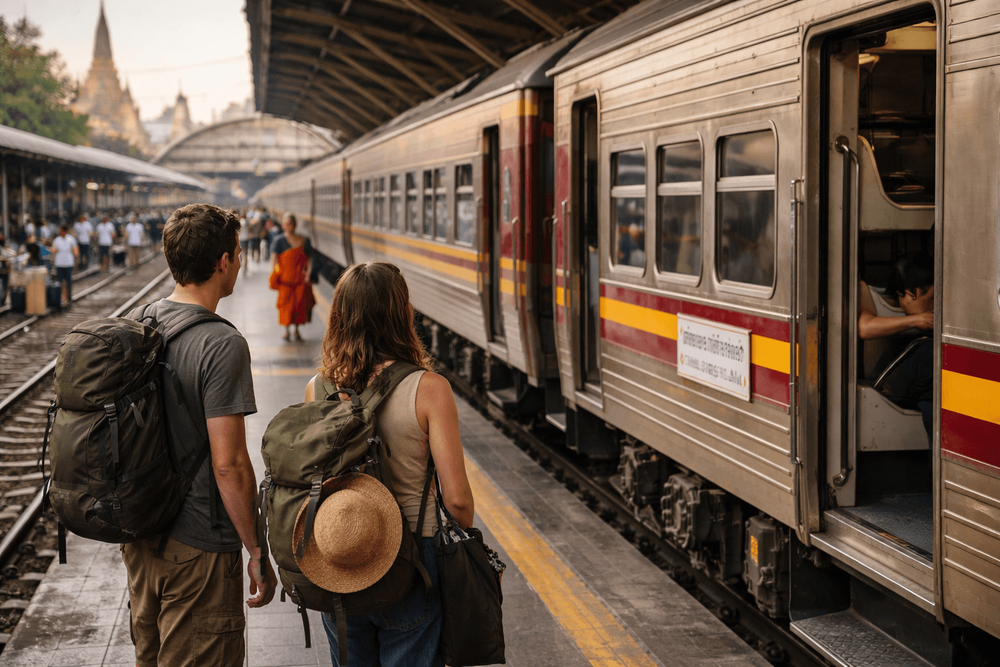
We’re standing under the high ceilings of Krung Thep Aphiwat (Bang Sue Grand Station), that blast of AC wrapping around us as vendors hustle iced coffee and moo ping skewers to travelers with backpacks and roller bags. The tannoy crackles, a Special Express glides in, and the carriage doors hiss open. This is where the bangkok chiang mai train options get real: day train for rice-field scenery and roadside khlongs, or the sleeper that rocks us north overnight so we roll into Chiang Mai with sunrise on the Ping River.
Quick Plan
- Day 0: Bangkok → Krung Thep Aphiwat (MRT Blue Line). Pick up tickets, snack shop recon.
- Day 1 (Option A – Day Train): Bangkok → Chiang Mai (~750 km rail; ~10–12.5 hrs). Key stops: Ayutthaya views, Doi Khun Tan Tunnel. Overnight base: Old City or Nimman.
- Day 1 (Option B – Night Train): Evening departure → sleep on board → Chiang Mai early AM (~10–13 hrs). Key experience: rocking sleeper, sunrise approach. Day 1 in Chiang Mai is wide open. Overnight base: Old City or riverside.
- Day 2: Chiang Mai temples (Wat Phra That Doi Suthep), night bazaar, khao soi crawl.
ASCII route: Bangkok → Ayutthaya → Lopburi → Nakhon Sawan → Lampang → Lamphun → Chiang Mai
Costs at a Glance (THB)
- Train fares (Bangkok–Chiang Mai, one-way, adult):
- 1st-class sleeper (AC, private 2-berth): ~1,500–2,200 (confirm locally; varies by train/date)
- 2nd-class sleeper (AC, open-plan): ~900–1,400 (upper usually cheaper than lower)
- 2nd-class seat (AC/fan): ~450–800
- 3rd-class seat (fan): ~200–350
- Local transfers:
- Bangkok station → Khao San Road/Phra Athit by taxi/Grab: ~120–250 (traffic-dependent; confirm in app)
- Chiang Mai station → Old City by songthaew (shared red truck): ~40–60 per person; tuk-tuk/Grab: ~100–200 per ride (confirm locally)
- Attraction fees near Chiang Mai:
- Wat Phra That Doi Suthep: ~30–50 per adult (confirm locally)
- If you rent a car for a Chiang Mai day trip:
- Fuel price per liter: ~35–45
- Estimated fuel cost per short segment (e.g., Old City ↔ Doi Suthep ↔ Huay Kaew): ~80–150
- Tolls per segment: 0 (no expressway tolls within Chiang Mai city)
- Parking per night (hotel/guesthouse): ~0–100 (confirm with property)
- Last checked: Oct 2026
Booking Pathways
- Compare rental deals at DiscoverCars: https://www.discovercars.com/
- Browse hotel deals at Agoda: https://www.agoda.com/
- Reserve Chiang Mai attraction and tour tickets at Klook: https://www.klook.com/
Verification
- Fares and timetables checked against the State Railway of Thailand (SRT) D-Ticket system and recent aggregator schedules (e.g., 12Go Asia). Use exact departure numbers on your booking for accuracy.
- Local transfer prices cross-checked via Grab fare estimates and posted songthaew rates at Chiang Mai Station; actual fares can vary by time and demand—confirm locally.
- Doi Suthep fee range based on recent traveler reports and Thai-language signage; confirm locally before you go.
Bangkok Chiang Mai train options: what runs this route
There’s one northbound line from Bangkok to Chiang Mai—call it the spine of the country, a 750-ish km run through rice fields, monkey country around Lopburi, the teak house roofs of Lampang, and the long Doi Khun Tan Tunnel before the mountains loosen their shoulders into Lamphun and Chiang Mai. On this corridor, you’ll see a few service types:
- Special Express (fastest, fewer stops): These are the rock stars, including the modern Chinese-built sleeper sets on the famous No. 9 (northbound) and No. 10 (southbound) overnight pair. Daytime Special Express 7/8 are also popular for those chasing scenery.
- Express (a notch slower): Solid value, mixes seats and sleepers depending on the train number, more stops than Special Express.
- Rapid (slowest intercity): Old-school, budget-friendly, often with 3rd-class fan seats and sometimes 2nd-class sleepers; longer runtimes, frequent stops.
Typical travel times hover around 10–13 hours. Day trains roll by in full technicolor; night trains let us swap Bangkok’s thump-thump bass on Khao San for the lullaby clack of rails and wake up in Lanna country.
If you’re still weighing train vs flight vs bus, we’ve broken that down over here too: Bangkok to Chiang Mai by Train vs Flight vs Bus: Which Option Is Best for Budget, Comfort, and Arrival Time?.
Classes and comfort: from plastic fans to private cabins
Bangkok–Chiang Mai gives us the full SRT spectrum. Here’s how it feels on board—nose, toes, and wallet.
1st-class sleeper (AC, private 2-berth)
- The splurge. We get a lockable cabin for two with attendant service. At night, the seats flip into a lower berth; an upper folds down. Fresh sheets, pillow, blanket, reading lights, usually power outlets in the newer sets. It’s the closest Thailand gets to rolling boutique hotel vibes—minus the farang-sized bathroom.
- Best for: light sleepers, couples, travelers who like privacy and a door between them and the world.
2nd-class sleeper (AC, open-plan)
- The people’s choice. Cars are arranged with bays of two seats facing, converting into lower and upper bunks with curtains. The lower is wider and a touch pricier; the upper is cozier and usually cheaper. AC can be arctic—pack a light layer. Sheets and blanket provided, attendants flip beds like origami after departure.
- Women-and-children-only cars are sometimes available on popular night services; they sell out early.
- Best for: social energy with personal cocoon vibes, solo travelers, budget comfort.
2nd-class seat (AC or fan)
- Reclining seats, some with leg rests. AC cars are colder and cleaner; fan cars feel more local—windows down, wind-in-the-hair, street-food aromas sneaking in at station stops.
- Good for day trains if you don’t want to nap horizontal.
3rd-class seat (fan)
- The bare-bones bench or simple padded seat. It’s the sanuk way if you’re chasing stories and saving baht, but for the full 10–13 hours it can be a marathon. Great for shorter segments (Bangkok→Ayutthaya) or the truly hardy.
Food, plugs, and the little things
- Catering varies: some Special Express trains have a dining car or at-seat orders; others rely on station vendors hopping on and off with rice boxes and fried chicken. We usually stash snacks from 7-Eleven (that blissful AC, that siren call of toasties) before boarding.
- Power outlets show up on newer rolling stock more consistently; bring a power bank just in case.
- Toilets are a mix of Western and squat; bring tissues and hand gel.
- Officially no alcohol or smoking on Thai trains—save the Chang for Chiang Mai.
Night train vs day train: what’s the experience?
- Night train: We leave Bangkok after sundown, tuck in to the rhythm of the rails, and wake as mist lifts off the Ping. Rolling hotel room that saves us a night’s accommodation and arrives in time for early khao soi.
- Day train: We see the country peel by in high definition—golden paddies, temple chedis flashing in the heat haze, vendors waving from small stations. It’s long, yes, but it’s the best slow-travel postcard of Thailand you can buy.
If you’re parsing the details, we put night vs day head-to-head here: Bangkok to Chiang Mai by Night Train vs Day Train: Which Rail Option Is Better for Your Trip?.
Ticket booking essentials
We’ve booked this route more times than we can count, from last-minute dashes to Songkran sell-outs. Here’s how to get a spot that actually suits you.
Where to buy
- SRT D-Ticket (official): Book online or via app. You’ll see live availability by class and berth. This is the straightest line, service fees are minimal.
- Station ticket counters: Krung Thep Aphiwat has staffed counters with English-speaking agents; you can choose berths if available. Lines grow before evenings and holidays.
- Reputable agents: If you’re posted up around Rambuttri or Phra Athit and don’t fancy the MRT, agencies can book for a small fee and sometimes deliver tickets. Good for complex needs or if your card fusses with the SRT site.
- Aggregators: Handy for comparing multiple trains and classes on one screen; expect a service fee.
For fare and booking nuance (like which berths to target and when), we’ve got a deeper dive here: Bangkok to Chiang Mai by Train: Sleeper vs Day Train, Fares, and Booking Tips.
How far in advance to book
- Popular sleepers (especially 1st-class and women-only 2nd-class) can sell out days to weeks ahead for weekends and holidays.
- Daytime Special Express seats are more forgiving but still book ahead if you want specific seat orientation.
- Booking windows on the SRT system typically open several weeks in advance; check the current window on D-Ticket. For Loy Krathong/Yi Peng in November and Songkran in April, grab tickets as soon as the window opens.
Peak travel watch-outs
- Thai holidays, Christmas/New Year, and university term breaks spike demand.
- Chiang Mai festival season (Yi Peng lanterns) turns sleeper berths into gold dust. If you strike out, mix modes—day train up, flight back—or nudge your dates.
How to choose the right train for your trip
Let’s match bangkok chiang mai train options to real human needs—yours.
- Budget first: If you’re counting baht, 2nd-class AC seats or 2nd-class upper berths stretch value. 3rd-class is the cheapest, but 10+ hours is a big ask unless you love a challenge.
- Sleep quality: Light sleepers should grab 1st-class or a 2nd-class lower berth. Upper berths sway more and are narrower.
- Scenery vs sleep: Day trains deliver the view; night trains deliver your morning in Chiang Mai. We love the day train north and the night train back.
- Arrival timing: Night trains hit Chiang Mai early—perfect for dropping bags and coffee on Thapae Road before the crowds. Day trains arrive afternoon/evening—no rush, no waiting for check-in.
- Solo female travelers: If available, consider the women-and-children-only sleeper coach for extra peace of mind; it sells fast.
- Families: 1st-class cabins let you close the door; 2nd-class lower+upper opposite each other works too. Bring snacks and card games.
- Motion and comfort: Fan cars are atmospheric but dusty and hot in April. AC is a safer bet year-round.
- Flex planners: If you might hop off (say, to overnight in Lampang with its horse carriages and old teak shophouses), a day Express or Rapid gives easier segmenting.
If you’re still undecided between rail and other modes, our all-in-one breakdown helps: Bangkok to Chiang Mai by Train vs Bus vs Flight: Which Trip Is Best for Your Budget and Schedule?.
Departing Bangkok: stations, platforms, and getting there
Krung Thep Aphiwat Central Terminal (Bang Sue Grand Station)
- The new mothership for long-distance trains. Vast, bright, and blessedly cool. Most Chiang Mai services depart here.
- Getting there: MRT Blue Line to Bang Sue; follow signs up. From Khao San/Phra Athit, a metered taxi or Grab is easiest (budget ~120–250 THB depending on traffic; confirm in app). Buses exist but eat time.
- Eats: Chain cafés, quick Thai bites, convenience stores. We usually grab a pad kra pao to-go and a bag of dried mango for the ride.
Hua Lamphong (Bangkok Station)
- The historic dome still serves some trains. Occasionally, operational changes shuffle services—always check your ticket for the correct origin.
- Getting there: MRT to Hua Lamphong. From here to Soi Rambuttri/Khao San is a short taxi or tuk-tuk hop—agree a fair price or insist on the meter.
Scam radar: Anyone “helpfully” steering you to a different platform or office for a fee—smile, walk on. Official counters are signed and simple.
Arriving Chiang Mai: the last mile to sanuk
- Chiang Mai Station sits a few kilometers east of the Old City near Rot Fai Road. The air smells of grilled chicken and frangipani if you arrive at dawn.
- Songthaews (shared red trucks) queue outside; tell the driver “Tha Phae Gate” or your soi, expect ~40–60 THB per person shared. Tuk-tuks and Grab are also easy: ~100–200 THB per ride depending on time and luggage—confirm locally.
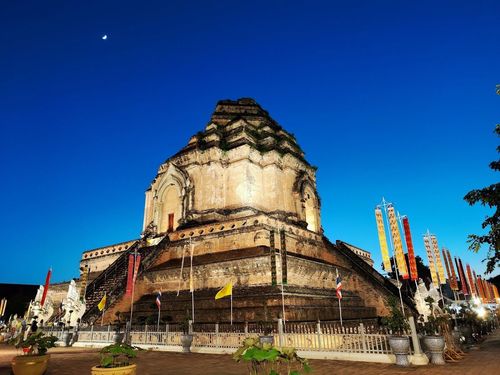
- If you land early off the night train, stash your bag at your guesthouse and go temple-hopping. Wat Chedi Luang in the Old City basks in that soft morning light, and the market near Warorot is already clattering awake.
Know before you go: small tweaks, big comfort
- Pack a layer: AC can be fierce, especially in sleepers. A light hoodie beats shivering at 2 AM.
- Bring earplugs and an eye mask if you’re precious about sleep. Curtains help, but the carriage wakes early.
- Valuables: We keep passports and laptops in a small daypack clipped to the bunk. Big bags go on the rack or under the lower berth.
- Food strategy: Eat before boarding or early after departure; choices thin out late at night. Station vendors selling sticky rice and grilled pork are lifesavers.
- Hydration: Bottled water on board isn’t always reliable; stock up at the station.
- Toilets: Carry tissue and hand gel. Western and squat options vary by car.
- Respect the car: No smoking, no booze. Save it for the riverside bars on Charoenrat Road when we arrive.
Typical timetables and what they mean for your day
While exact times shift, here’s how the day usually plays out:
- Morning/day Special Express: Depart after sunrise, arrive late afternoon/early evening. Great for watching the landscape roll.
- Evening/night Special Express: Depart early evening, arrive early morning. The “sleep and arrive” sweet spot.
- Express/Rapid: Pad in longer runtimes; departure windows are scattered.
We don’t lock ourselves to a single train number because SRT occasionally retimes services. Always check your exact train on D-Ticket when you book.
What about mixed-mode trips?
If your calendar is tight, fly one way and train the other to sample both speed and scenery. We’ve outlined the trade-offs here: Bangkok to Chiang Mai: The Best Ways to Travel.
Roll north with an empty stomach and a curious nose; we’ll grab boat noodles near Chiang Mai Gate before the night markets fire up. And if you catch the copper sunset through the carriage window just past Lampang, that’s Thailand winking that you chose right.
EVAL_DATA
- quick_plan_included: true
- costs_block_included: true
- booking_pathways_included: true
- verification_block_included: true
Related Hotels & Places
Khao San Road
Attractions
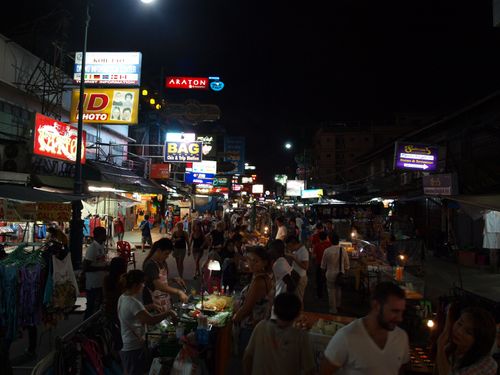
Bangkok’s backpacker carnival: curbside bars, live bands and DJs from 3pm–2am (midnight Sun). Street eats are cheap — pad thai 70–100 THB, mango sticky rice 60–100 THB. Come for wild people-watching; duck into Rambuttri for a calmer beer.
Rambuttri
Markets
Khao San’s calmer cousin: a tree‑shaded lane of VW van cocktail bars, open‑air foot massages, pad thai grills, and easygoing live bands. Best from sunset to 11pm; beers 80–120 THB, cocktails 150–220 THB. One block from the chaos, all the charm.
Wat Chedi Luang
Temples
More Khao San Road Guides
- Bangkok to Chiang Mai by Train: Night Sleeper vs Day Train, Tickets, and What to Expect
- Bangkok to Chiang Mai by Train: Sleeper vs Day Train, Fares, and Booking Tips
- Bangkok to Chiang Mai by Night Train vs Day Train: Which Rail Option Is Better for Your Trip?
- Bangkok to Chiang Mai by Train: Sleeper Classes, Timings, and Booking Tips