
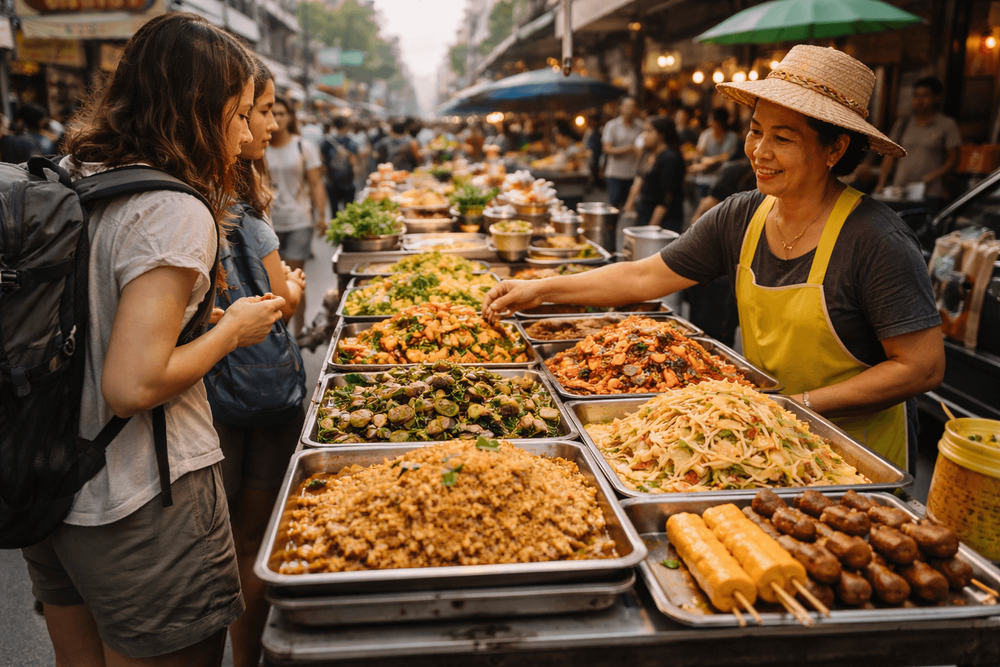
Bangkok Street Food Vegetarian Guide: Best Meat-Free Dishes and Where to Find Them Near Khao San Road
Our Bangkok street food vegetarian guide shares the best meat-free dishes, where to find them near Khao San, and Thai phrases to order like a pro.
The wok hisses, chilies bite the air, and a motorbike kisses your ankle as it squeezes past the stall. We’re shoulder-to-shoulder on Baan Manee BKK, eyes on a mountain of morning glory just about to hit the flames. If you’ve ever wondered how to eat brilliantly as a meat-free traveler in Bangkok, this Bangkok street food vegetarian guide is our playbook — the dishes we trust, the sois we stalk at dinnertime, and the Thai phrases that save us from surprise fish sauce.
Bangkok Street Food Vegetarian Guide: What to Eat Now
Let’s start with what actually works on the street, without needing a five-minute TED Talk with the wok master.
Pad Thai (ask for jay)
Iconic, yes — and easy to make vegetarian. Say “Pad Thai jay” and add tofu (sai tofu). Make it clear: no fish sauce (mai sai nam pla), no dried shrimp (mai sai goong haeng). Expect 60–90 baht near Khao San. We like grabbing a plate on Tanao Thai Massage - ตะนาวนวดไทย (Certified by Ministry of Public Health) where the exhaust mixes with tamarind’s sweetness and crushed peanuts pop under your teeth.
Khao Pad Pak (vegetable fried rice)
Your safe, satisfying fallback. Ask for “khao pad pak, jay,” hold the fish sauce and oyster sauce (mai sai nam pla, mai sai nam man hoi). Chili vinegar on the side if you want tang without mystery stock. 50–80 baht in Banglamphu.
Pad See Ew or Pad Kee Mao (veg versions)
Wide rice noodles fried dark and smoky with Chinese broccoli or mixed veg. Just specify jay and swap in tofu. For Pad Kee Mao (drunken noodles), ask “mai phet” if you’re heat-shy; the basil-and-chili thwack hits hard. 60–100 baht.
Pad Krapao Tofu (holy basil stir-fry)
Normally minced pork heaven, but tofu steals the show when the basil is fresh and the wok is screaming hot. Say “pad krapao tofu, jay, mai sai nam pla, mai sai nam man hoi.” A fried egg crowns it by default; for vegan, say “mai sai khai.” 60–90 baht.
Som Tam Thai (green papaya salad)
Lime, chilies, palm sugar, and crunch. Order it vegetarian by saying “Som tam Thai jay, mai sai nam pla, mai sai goong haeng.” Avoid versions with fermented fish (pla ra). Eat it curbside on Phra Athit Road while the river breeze does its best. 40–70 baht.
Tom Yum Hed or Tom Kha Hed (mushroom soups)
Fragrant, slurpy comfort. Ask for mushroom tom yum or tom kha (coconut milk) “jay,” no animal stock. The lemongrass and galangal hit first, then the chili oil warms you up even in Bangkok’s sauna heat. 60–120 baht a bowl.
Gaeng Keow Wan Jay (green curry, vegetarian)
Curry paste often hides shrimp paste; ask specifically: “gaeng keow wan jay, mai sai kapi, mai sai nam pla.” Tofu and eggplant soak up the coconut gravy. 70–120 baht with rice.
Pak Boong Fai Daeng (stir-fried morning glory)
Garlicky, blistered greens — Bangkok’s street-food side dish we’d happily eat as a main. Request no oyster sauce or fish sauce. Add rice and you’re set. 50–80 baht.
Guay Tiew Jay (noodle soup, vegetarian)
Noodle soups are stock landmines. If a stall lists a jay broth or flies the yellow “เจ” flag (vegan Buddhist), you’re golden. Otherwise ask: “Nam sup jay mai?” If yes, go for rice noodles, mushrooms, tofu, greens. 50–80 baht.
Roti Banana and Sweet Street Crepes (vegetarian, not vegan)
Banana roti slicked with condensed milk is pure post-bar sanuk. Butter is often margarine; condensed milk and egg batter mean not vegan. 40–80 baht.
Mango Sticky Rice
The sweet, coconut-perfumed classic. Vegetarian and widely available around Banglamphu and Wang Lang Market. 60–120 baht depending on mango mood swings.
Khanom Krok (coconut-rice griddle cakes)
Mini, molten, and coconut-ty. Typically vegetarian. Eat them too fast; burn your tongue; no regrets. 30–50 baht a tray.
Grilled Corn, Sweet Potato, and Bananas
Look for chrome carts stacked with yellow corn, foil-wrapped sweet potatoes, or peeled bananas caramelizing over coals (kluay ping). Sprinkle salt, dip in coconut sugar — simple and satisfying. 20–40 baht.
Soy Milk, Herbal Drinks, and Fresh Juices
Late nights call for warm soy milk (nam tao hoo), grass jelly drinks (chao kuai), chrysanthemum tea, or freshly pressed sugarcane. 20–50 baht. Ice clinks, tuk-tuks growl, and we keep walking.
Best Areas for Vegetarian Street Food Near Khao San (and Beyond)
Khao San Road and Soi Rambuttri
- When: Late afternoon to late night. The bass thump sets the pace.
- What: Pad Thai carts, fruit shakes, banana roti, fried rice, and made-to-order woks. On Rambuttri’s shadier loop, you’ll spot the yellow “เจ” flags during the Vegetarian Festival and the occasional year-round jay vendor tucked between tattoo studios.
- Why: Convenience. We roll out of our guesthouse, dodge the flyer hawkers, and are eating within two minutes.
Phra Athit Road and Banglamphu Market
- When: Daytime into early evening.
- What: Som tam carts with mortar-and-pestle symphonies, grilled corn, and curry-over-rice shops that sometimes offer jay trays.
- Why: Mixed local/student crowd and a river breeze near Phra Sumen Fort. Less farang markup than right on Khao San.
Wang Lang Market (across the river)
- Getting there: Chao Phraya Express boat to Wang Lang (N10) from Phra Arthit (N13). 16–20 baht, river spray included.
- When: Best late morning to mid-afternoon.
- What: Endless snacks, veggie stir-fries, tofu-on-rice, herbal drinks, mango sticky rice, and crispy crepes.
- Why: Hospital-adjacent markets feed real Bangkok — quick, cheap, varied.
Tha Prachan and Thammasat University
- Getting there: Boat to Tha Prachan pier or stroll 10–15 minutes from Phra Athit along the river.
- What: Student-priced veg-friendly stir-fries, fruit, soy milk, and salad carts.
- Why: If anyone is going to cook you tofu right, it’s a student vendor on a rush-hour deadline.
Pak Khlong Talat (Flower Market) (Flower Market) and Memorial Bridge Night Vibes
- Getting there: Boat to Yodpiman Riverwalk (N6) or a quick taxi from the Old Town; walk the night market stretch around Saphan Phut.
- What: Late-night snacks — grilled bananas, sweet sticky rice, coconut ice cream — with petals underfoot.
- Why: When Khao San winds down, this stretch keeps humming.
Chatuchak Weekend Market (for variety)
- Getting there: Not exactly Old Town, but worth a Blue Line MRT to Chatuchak Park and an early start.
- What: Clusters of vegetarian/vegan-friendly stalls amid the maze. Hydrate and graze.
- Why: One-stop sampling spree if you’re here Saturday–Sunday.
Pro tip: We often base ourselves a block or two off Rambuttri — easy food access, but quieter rooms and morning shade. Pools help when the heat turns the soi into a skillet.
Spotting Vegetarian, Vegan, and Hidden Non-Veg Ingredients
Thai menus are generous with flavor, less so with transparent labels. Here’s how we decode:
- Jay (เจ): Yellow flag with red Thai letters = vegan Buddhist style. No meat, fish, dairy, or eggs — and usually no garlic/chive/onion. Street stalls flying this are your safest bet.
- Mangsawirat (มังสวิรัติ): Vegetarian. May include eggs or dairy.
- Fish sauce (nam pla), shrimp paste (kapi), and oyster sauce (nam man hoi): The big three to watch. They sneak into stir-fries, salads, and curries.
- Stocks and seasonings: Many soups and “made-to-order” stalls default to pork or chicken stock, plus seasoning powders with seafood extract. Ask for jay stock (nam sup jay) or water (nam) instead.
- Dried shrimp (goong haeng) and fish balls (luk chin pla): Easy to miss in salads and noodle bowls.
- Lard and drippings: Rare these days on wok stations near tourist areas, but still possible at old-school stalls. If in doubt, ask for vegetable oil (nam man phak).
During the annual Vegetarian Festival (Tesagan Gin Jay, usually Sep/Oct), Bangkok goes blissfully yellow-flagged. Chinatown (Yaowarat) becomes a plant-based playground with mock meats, noodles, and sweets. The rest of the year, your best defense is knowing how to order.
For a deeper dive into scanning ingredients and safe picks, we expand on stall-spotting and substitutions here: Bangkok Street Food for Vegetarians and Vegans: What to Order Near Khao San Road.
How to Order, Customize, and Be Understood
You don’t need perfect tones — a smile and a few words go far. We keep these ready:
- “Jay” (เจ) = Vegan/Buddhist vegetarian.
- “Mangsawirat” = Vegetarian (may include egg/dairy).
- “Mai sai nam pla” = No fish sauce.
- “Mai sai kapi” = No shrimp paste.
- “Mai sai nam man hoi” = No oyster sauce.
- “Mai sai goong haeng” = No dried shrimp.
- “Mi nam sup jay mai?” = Do you have vegetarian stock?
- “Sai tofu dai mai?” = Can you add tofu?
- “Mai phet” = Not spicy.
- “Phet nit noi” = A little spicy.
Example orders we actually use:
- “Khao pad pak jay, mai sai nam pla, sai tofu dai mai?” (Vegetable fried rice, vegetarian, no fish sauce, add tofu?)
- “Som tam Thai jay, mai sai goong haeng, mai sai nam pla.” (Papaya salad, vegetarian, no dried shrimp, no fish sauce.)
- “Pad krapao tofu jay, mai sai nam man hoi.” (Holy basil tofu, vegetarian, no oyster sauce.)
Expect to pay 40–100 baht for most street dishes around Khao San/Banglamphu, 30–60 for fresh juices and shakes, and 60–120 for desserts like mango sticky rice. Bring small bills. If a tuk-tuk driver tries to upsell you on a “ping pong show” detour when all you wanted was pad see ew, just laugh it off and walk the last block.
If you’ve got allergies or strict intolerances, it’s worth reading this first: Bangkok Street Food for Travelers with Allergies: What to Order, What to Avoid, and How to Ask for Changes. And if you’re anxious about the cleanliness dance (we get it), keep these checks in mind: Bangkok Street Food Hygiene Guide: How to Spot Clean Stalls and Eat Safely Without Killing the Experience.
Snacks, Desserts, and Drinks We Hunt Down Between Meals
- Khanom krok: Coconut cups, hot off the cast-iron pan. Look for the faintly charred rims and wobbling centers.
- Khanom buang: Thai crepes with sweet coconut or eggy meringue; vegetarian, not vegan.
- Tub tim grob: “Red rubies” — crunchy water chestnuts in coconut milk with shaved ice. Bliss when the asphalt is glowing.
- Lod chong: Pandan noodles in coconut milk and palm sugar syrup. Ask for less ice if you don’t want brain-freeze.
- Bua loy: Sticky rice balls in warm coconut milk; a cooler-night comfort.
- Khao lam: Sticky rice roasted in bamboo, lightly smoky.
- Miang kham: Leaf-wrapped bites with lime, peanuts, coconut, ginger — request no dried shrimp.
- Durian: The sweet rot king. Love it or loathe it, but try it at least once. A few bites under the fairy lights of Rambuttri? Peak Bangkok.
- Drinks: Fresh coconut, sugarcane juice, butterfly pea tea (nam dok anchan), roselle (grajeab), bael fruit (matoom), cha yen (Thai tea, dairy), or nam tao hoo (soy milk) hot or iced.
We graze this way when we’ve already eaten a proper meal but the walk calls for something cold or chewy or coconutty every 200 meters — which in Bangkok, it does.
Know Before You Go: Getting Around and Timing Your Eats
- Getting to Khao San/Banglamphu: From Suvarnabhumi, take the Airport Rail Link to Phaya Thai (45 baht), then a metered taxi (100–150 baht off-peak) or Grab (roughly 200–300 depending on time). From Don Mueang, Grab or a metered taxi (150–300) is simplest.
- River moves: To bounce between Old Town spots without traffic, ride the Chao Phraya Express boat — to Phra Arthit (N13) for Khao San/Phra Athit, to Wang Lang (N10) for market grazing, to Yodpiman (N6) for the flower market. Fares hover 16–20 baht.
- Best eating windows: Breakfast classics pop early (6:30–9:30), student-and-office lunches slam 11:30–13:30, and night markets warm up at dusk. Khao San and Rambuttri run late — you’ll still find roti sizzling at 1–2 AM.
- Heat and hygiene: Midday sun can turn som tam lines into endurance tests. We dart into 7-Eleven for a blast of AC and a 10-baht wet wipe, then re-emerge when the wok mist cools.
- Cash and change: Many carts are cash-only. Keep coins and 20s/50s handy to avoid the stallholder’s exasperated “no change” pantomime.
- Noise and sanuk: Street food comes with scooters skimming your calves, dogs napping under tables, and the thump of bass sneaking in from a Khao San bar. It’s part of the fun — lean into it.
We also like staying on or just off Soi Rambuttri when our plan is “eat everything within a 500-meter radius.” If we’re in curry-quest mode, we’ll push closer to Phra Athit for quieter nights and easy river access. And if we’re spending the day market-hopping across the river, near a pier makes the whole thing feel like a private food ferry.
Putting It All Together: A One-Day Veg Street-Food Crawl
- Morning by the river: Start at Phra Sumen Fort on Phra Athit. Grab soy milk and grilled bananas from a cart waking up with the joggers. Wander to a stir-fry shop that does khao pad pak jay with tofu.
- Late morning market raid: Boat to Wang Lang (N10). Chase khanom krok with mango sticky rice and herbal drinks. If a vendor waves a yellow jay flag, angle for curry-over-rice with tofu and eggplant.
- Afternoon cool-down: Hide in the shade of Soi Rambuttri, fruit shake in hand (watermelon-lime is heat-proof). Nap if you’ve got a pool and the sun is doing its worst.
- Golden hour som tam: Back on Phra Athit, ask for som tam Thai jay, no fish sauce, no dried shrimp. Pair with pak boong fai daeng and rice.
- Nightcap noodles: Loop to Khao San for pad see ew jay or pad krapao tofu jay. Finish with banana roti and a walk where the bass line and incense smoke braid together.
If you want extra confidence before you hit the stalls, bookmark this for backup: Bangkok Street Food for Vegetarians and Vegans: What to Order Near Khao San Road. It’s the pocket version of this playbook, tuned to the exact lanes we’re walking.
We’ll be out there tonight — eyes peeled for that yellow flag, ears tuned to the clack of a cleaver on a scarred board, and pockets jingling with just enough change to say “one more plate” when common sense says stop.
Related Hotels & Places
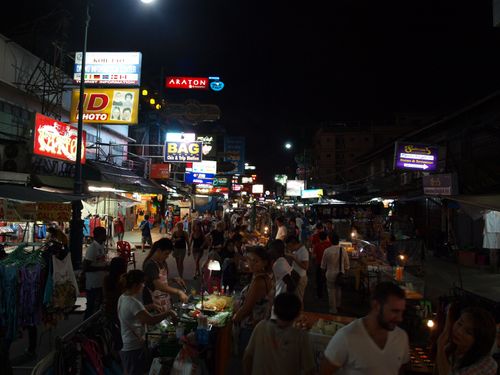
Khao San Road
Attractions
Bangkok’s backpacker carnival: curbside bars, live bands and DJs from 3pm–2am (midnight Sun). Street eats are cheap — pad thai 70–100 THB, mango sticky rice 60–100 THB. Come for wild people-watching; duck into Rambuttri for a calmer beer.

Baan Manee BKK
Hotels
A 118‑year‑old riverside house turned boutique stay and café. Sunset terrace, a small bar and a fire pit on the Chao Phraya. Ten minutes across from Khao San—come for proper coffee by day, drinks after dark, and quiet sleep away from the noise.
Rambuttri
Markets
Khao San’s calmer cousin: a tree‑shaded lane of VW van cocktail bars, open‑air foot massages, pad thai grills, and easygoing live bands. Best from sunset to 11pm; beers 80–120 THB, cocktails 150–220 THB. One block from the chaos, all the charm.
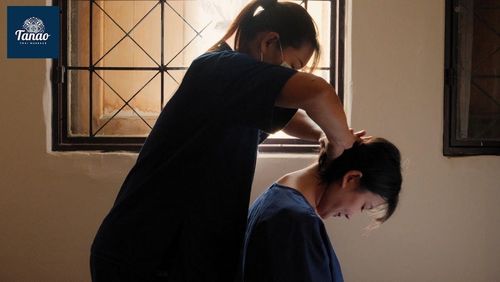
Tanao Thai Massage - ตะนาวนวดไทย (Certified by Ministry of Public Health)
Massage
Thai massage near Khao San.
Phra Sumen Fort
Attractions
1783 riverfront fort on Phra Athit with white battlements, park breezes, and killer sunset views over Rama VIII Bridge. Free entry; best from 5–7pm before the gates close at 9pm.
Yodpiman Riverwalk
Shops
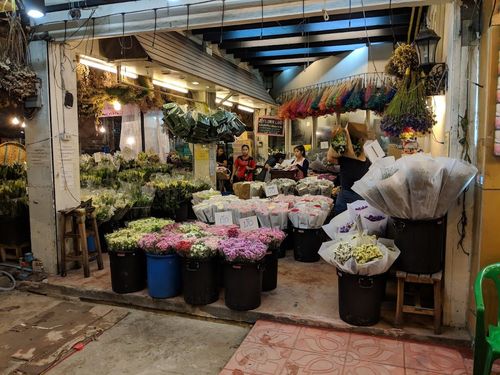
Pak Khlong Talat (Flower Market)
Markets
Bangkok’s 24‑hour flower market by Memorial Bridge. Best after midnight when trucks unload orchids, marigolds, roses and fragrant jasmine garlands. Photogenic, lively, and easy to reach from Khao San for a late‑night wander.
More Khao San Road Guides
- Bangkok Street Food for Vegetarians and Vegans Near Khao San Road: Safe Orders, Hidden Ingredients, and Easy Stall Picks
- Bangkok Street Food for Vegetarians: What to Order Near Khao San Road and the Old Town
- Bangkok Street Food for Vegetarians Near Khao San Road: What to Eat and Where to Find It
- Bangkok Street Food for Different Diets: Vegetarian, Vegan, Halal, and Pork-Free Options Around Khao San Road