
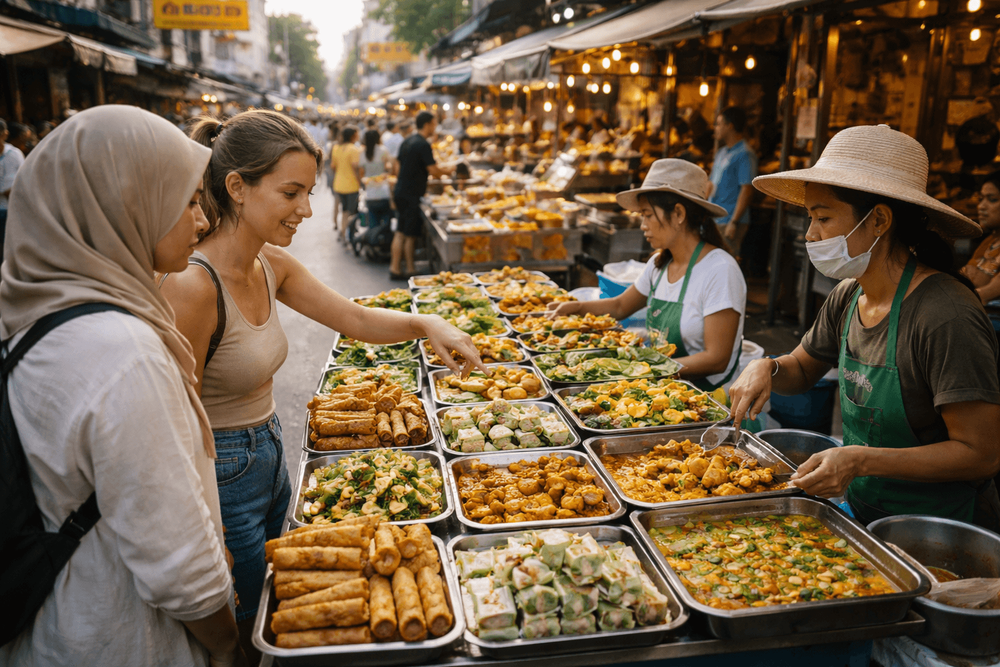
Bangkok Street Food for Different Diets: Vegetarian, Vegan, Halal, and Pork-Free Options Around Khao San Road
Eat vegetarian near Khao San: what to order, Thai phrases, safe stalls, and where to find vegan, halal, and pork-free street food across Bangkok.
We’re shoulder to shoulder on SAii Phi Phi Island Village just after sunset, where woks spit lightning and the air smells like lemongrass, charcoal, and a little bit of sweet durian funk drifting from a cart. Bass thumps from a Khao San Road bar, a monk pads by in saffron, and we duck into 7-Eleven for that blessed AC blast before homing back to the sizzling. This is where Bangkok street food for vegetarians stops being a problem and starts being a game: point, smile, say a few magic Thai words, and eat like a local without the fish sauce surprise.
If you want a deeper dish list and ordering tricks, we’ve also put together guides focused on special diets near Suneta Hostel Khaosan you can browse later: Bangkok Street Food for Dietary Restrictions: Vegetarian, Vegan, Halal, and Gluten-Free Options and Bangkok Street Food Vegetarian Guide: Best Meat-Free Dishes and Where to Find Them Near Khao San Road.
Why Bangkok Works for Plant-Based Travelers
Bangkok is a dream for flexible eaters and still a very workable city for strict vegetarians and vegans if we know what to ask for. Most noodle and stir-fry dishes are cooked to order—your soy sauce vs. fish sauce battle happens right there in the wok. Tofu and mushrooms are everywhere. And the city’s Chinese-Buddhist “jay” (เจ) food culture—strict vegetarian/vegan, typically no eggs, dairy, or pungent alliums—means we’ll often find entirely plant-based stalls if we know the sign to look for.
Yes, default Thai seasoning leans on fish sauce (nam pla), shrimp paste (kapi), and oyster sauce (nam man hoi). But with a few phrases and the right stalls, Bangkok street food for vegetarians becomes less about compromise and more about finding that perfect plate of pad krapao tofu with basil perfuming the steam.
Bangkok Street Food for Vegetarians: What You Can Actually Eat
Here’s what we scan for when we’re hungry around Khao San Road, Phra Athit, and beyond. These are easy wins, or at least easy to customize to vegetarian or vegan with a quick ask.
Noodles and Stir-Fries
- Pad Thai jay: Ask for tofu (tao hoo) and no egg if vegan. Confirm “mai sai nam pla” (no fish sauce) and “mai sai kapi” (no shrimp paste). Expect 60–100 baht on the street.
- Pad see ew tofu: Wide rice noodles charred with Chinese broccoli. Ask for soy sauce (si ew) instead of oyster sauce. 60–90 baht.
- Pad krapao tofu: Holy basil stir-fry—fragrant, fast, addictive. Ask for “jay,” no fish or oyster sauce. Spice levels can be sneaky; say “phet nit noi” (a little spicy) or “mai phet” (not spicy). 60–100 baht with rice.
- Rad na tofu: Silky gravy over wide noodles and greens. Make it vegetarian by requesting “mai sai nam man hoi” (no oyster sauce). 60–90 baht.
Note: Boat noodles aren’t veg-friendly—broth is often fortified with pork or cow blood. Just smile and keep walking to the next wok.
Rice Plates
- Khao pad pak (veg fried rice): Reliable and cheap (50–80 baht). Say “mai sai nam pla/nam man hoi” to dodge fish/oyster sauce. Vegan? Add “mai sai khai” (no egg).
- Thai basil fried rice with tofu: All the pad krapao joy, in fried rice form. Same sauce caveats.
- Jay rice counters: Look for the yellow-red “เจ” flags. Point to two or three dishes—braised tofu, curries made with jay paste, stir-fried greens—over rice. Usually 40–70 baht per plate.
Salads, Soups, and Curries
- Som tam Thai (papaya salad) jay: Ask for no fish sauce (nam pla), no dried shrimp (goong haeng), no fermented fish (pla raa). We usually say: “Som tam jay, mai sai nam pla, mai sai goong haeng.” 50–80 baht.
- Larb hed (mushroom larb): Zesty, minty Isaan-style salad made with mushrooms instead of meat. Confirm it’s made “jay.”
- Tom yum hed or tom kha hed: Mushroom hot-and-sour or coconut soup. Ask for vegetable stock and no fish sauce. 60–120 baht depending on size.
- Curries (gaeng): Many curry pastes include shrimp paste by default. Ask if they have “prik gaeng jay” (vegetarian curry paste). Green, red, and massaman can be done vegetarian; confirm no fish sauce added at the end.
Snacks and Sweets
- Spring rolls (por pia tod): Often vegetarian; confirm no meat or shrimp. 20–40 baht each.
- Fried tofu with sweet chili dip: Simple, satisfying. 30–50 baht.
- Grilled corn, sweet potato, taro: All veg, all day. 20–40 baht.
- Roti: Banana roti is a street legend. Vegetarian with egg; vegan if you ask for banana-only and no condensed milk. 30–60 baht.
- Mango sticky rice (khao niew mamuang): Usually vegan (coconut milk, sugar, salt). 60–120 baht depending on mango season.
- Khanom krok (coconut pancakes): Rice flour and coconut milk, crispy-edged and custardy inside. Vegetarian, commonly vegan. 20–40 baht per set.
- Fresh fruit: Pineapple, watermelon, guava—bagged with a skewer and a little salt-chili-sugar dip if you like. 20–30 baht a bag.
For more meat-free dish ideas close to KSR, bookmark our deep-dive: Bangkok Street Food Vegetarian Guide: Best Meat-Free Dishes and Where to Find Them Near Khao San Road.
How to Spot Safe Veg Stalls (and Order Like You Live Here)
Learn the Two Magic Words
- “Jay” (เจ): Strict vegetarian/vegan in the Chinese-Buddhist tradition—no meat, seafood, egg, dairy, and often no garlic/onion. Look for yellow flags with a red “เจ.”
- “Mangsawirat” (มังสวิรัติ): Vegetarian. Some cooks assume eggs and dairy are fine; clarify as needed.
Phrases That Actually Work
- I eat vegan/strict vegetarian: “Phom/Chan gin jay.” (Male/female)
- I’m vegetarian: “Phom/Chan bpen mangsawirat.”
- No fish sauce: “Mai sai nam pla.”
- No oyster sauce: “Mai sai nam man hoi.”
- No shrimp paste: “Mai sai kapi.”
- No dried shrimp: “Mai sai goong haeng.”
- No egg: “Mai sai khai.”
- Not spicy / a little spicy: “Mai phet” / “Phet nit noi.”
Say it with a smile and point. If the cook hesitates, we take the hint and find another stall.
Ingredient Red Flags at Street Stalls
- Sauces: Fish sauce (nam pla), oyster sauce (nam man hoi), shrimp paste (kapi).
- Stocks: Pork/chicken bone broth—listen for “nam soup gra-dook mhoo” (pork bones) or “nam soup gai” (chicken). Clear veggie broths exist, especially at jay counters.
- Hidden seafood: Dried shrimp (goong haeng), tiny fish in papaya salad (pla raa), fish balls (luk chin pla) sneaking into noodle soups.
- Fats: Some stalls cook with pork fat (nam man mhoo). Ask “chai nam man arai?” (What oil do you use?) and request vegetable oil—“nam man phak.”
For more allergy and ingredient gotchas, we cover cross-contamination and safe orders here: Bangkok Street Food for Dietary Needs: Vegetarian, Vegan, Gluten-Free, and No-Pork Tips.
Where to Find Great Veg Street Food Near Khao San (and Beyond)
Around Khao San, Soi Rambuttri, and Phra Athit
- Soi Rambuttri: Early evening is prime time. Pad Thai carts, fruit stands, banana roti guys flipping dough with a grin. We like to orbit the curve near the temple end and follow our nose.
- Tha Phae Walking Street: Calmer vibe, a student crowd from Thammasat, and a handful of mellow stalls at dusk. Pair a plate with a sunset breeze by the river at Phra Arthit Pier (N13).
- Chakrabongse Road and Banglamphu Market: Mornings bring tofu soups, soy milk (nam tao hoo), and sticky rice snacks—cheap, fast, and friendly.
- Dinso Road and around the Giant Swing (Sao Chingcha): Office-lunch territory with a reliable cluster of jay flags on weekdays. Show up 11:30–13:30 for the best selection.
Chinatown Bangkok (Yaowarat) (Yaowarat)
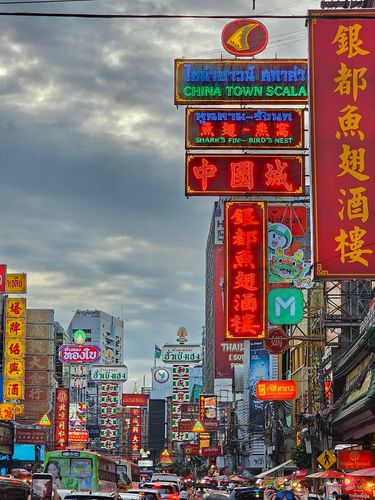
At night Yaowarat Chinatown Heritage Center turns into a conveyor belt of neon and steam. Plenty of veg-able dishes—stir-fried greens, tofu plates, sesame balls, and fruit. During the annual Vegetarian Festival (usually late Sep–Oct), Chinatown explodes with “เจ” banners and pop-up stalls selling everything from mock-duck to curry puffs. It’s noisy, crowded, and glorious—embrace the sanuk (fun).
Riverside and Old Town
- Tha Prachan and Wang Lang: University and hospital zones equal budget eats. Cross-river by ferry and graze—look for curry-over-rice jay counters and papaya salad made your way.
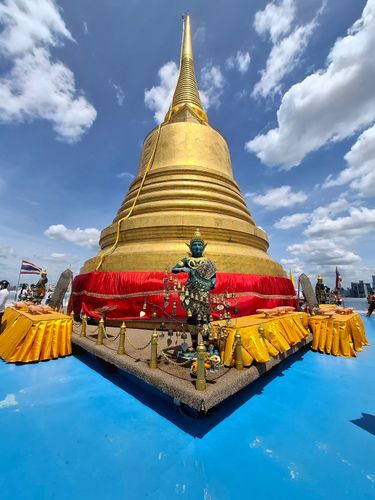
- Near the Wat Saket Ratchawora Mahawihan: Morning markets around Bamrung Muang and Lan Luang reward early risers with veg-friendly soups, sticky rice, and coconut sweets.
Silom and Sathorn
- Silom Soi 20 (morning market): Fast vegetarian rice plates and fruit smoothies before 10:00.
- Soi Convent/Sala Daeng lunch stalls: Office rush means high turnover. Scan for tofu stir-fries and point at what looks green and sizzling.
Ari, Chatuchak, and Or Tor Kor
- Ari (Phahonyothin Soi 7 area): Cafe-rich neighborhood with stalls that don’t blink at tofu requests.
- Chatuchak Weekend Market: Across hundreds of vendors, you’ll score mango sticky rice, coconut ice cream, grilled corn, and a handful of jay lunch spots. Go early before the heat cooks you.
- Or Tor Kor Market: Polished produce heaven next to Chatuchak. Slightly pricier, beautifully clean, with a few stalls that can do vegetarian plates on request.
If you’re specifically hunting vegan options right by KSR, keep this handy: Bangkok Street Food for Vegetarians and Vegans Near Khao San Road.
Halal and Pork-Free Pointers (If You’re Meat-Free, Too, Read This Anyway)
While our focus is Bangkok street food for vegetarians, it’s good to know halal and pork-free pockets:
- Near Haroon Mosque (Charoen Krung area): Halal street eats and curry-over-rice stalls, especially midday. Easy to order veg sides and roti without worry about pork fat.
- Around Phra Sumen Fort and some corners of Banglamphu: You’ll spot halal stickers on chicken-rice vendors; they often have veg soups and fried tofu on the side.
For a broader diet overview that includes halal and gluten-free tips, peek at: Bangkok Street Food for Diets: Vegetarian, Halal, and Gluten-Free Options.
Practical Tips: Ordering, Timing, Hygiene, and Budget
- Go where it’s busy: High turnover equals fresher oil, hotter woks, and less chance of mystery stock.
- Watch the cook: If you see one big pot of brown broth feeding every bowl, it’s likely meat-based. Move on or pivot to a stir-fry stall.
- Ask for swaps: Most vendors are happy to use soy sauce instead of fish/oyster sauce. A quick “chai si ew, mai sai nam pla/nam man hoi” often does it.
- Eggs and dairy: Eggs are common; dairy less so (outside of desserts and milk tea). Vegans, say “mai sai khai.”
- Spice management: Even “mai phet” can come with a kick. We default to “phet nit noi” and upgrade from there. Chili, lime, sugar, fish sauce are table-side at many stalls—ignore the fish sauce.
- Hygiene clues: Clear, hot oil; ingredients covered; tongs not bare hands; dishes washed in running water (not just a single tub). Bring hand gel and tissues.
- Timing: Best street action runs 7:00–10:00 (breakfast markets), 11:00–14:00 (lunch rush), and 17:00–22:00 (evenings). Khao San area often pushes later—post-midnight roti and pad Thai are real.
- Budget: Expect 40–120 baht for most veg street meals; fresh fruit 20–30; smoothies 40–60; soy milk 15–25; sticky rice desserts 30–80.
- Payment: Cash rules, though more vendors accept Thai QR (PromptPay). Keep small bills.
- Takeaway: Everything can be bagged. If we’re staying nearby, we carry a reusable container and skip the plastic.
- Heat survival: Eat early or late. Between noon and 3pm, shade is your best condiment.
- Tuk-tuks and taxis: Negotiate tuk-tuks before you hop in. From the river piers to KSR, 60–120 baht is typical; across the river to Chinatown, 100–180 baht depending on traffic and your bargaining charm. Metered taxis are often cheaper—insist on the meter.
Getting There: Khao San Without the Headache
- Chao Phraya Express Boat: From BTS Saphan Taksin (S6), walk to Sathorn Pier and catch the Orange Flag boat to Phra Arthit Pier (N13). It’s breezy, cheap (16–20 baht), and drops us a five-minute stroll from Phra Athit Road and ten from Khao San.
- Buses: Old-school but useful. Lines like 15 and 47 run to the Old Town from Siam/Silom; fares are pocket change.
- Walkable cluster: Khao San Road, Soi Rambuttri, Phra Athit, and Chakrabongse form a tight square. We graze clockwise and end by the river when the air finally cools.
Finding Fully Vegan (Jay) Stalls
- Hunt the flags: Yellow backgrounds with red “เจ” are our north star. They pop up as dedicated counters in markets and as entire eateries.
- Temple-adjacent: Areas around big temples and the Giant Swing often hide reliable jay shops catering to office workers at lunch.
- Festival season: During the Vegetarian Festival (late Sep–Oct), “เจ” banners multiply across the city. It’s the easiest time to eat vegan everywhere.
If you’re strictly vegan near KSR and want a pre-vetted short list, start here: Bangkok Street Food for Vegetarians and Vegans Near Khao San Road.
Where We Crash (So We Can Eat More)
We like to base ourselves within flip-flop distance of Soi Rambuttri or along Phra Athit Road—quiet enough to sleep, close enough to follow the smell of garlic and chili the second we’re hungry. A pool is a luxury that makes the afternoon heat survivable; we cool off, then head back out when the woks reawaken. If your budget’s tight, look for simple guesthouses on the Rambuttri back lanes; if you prefer calm, Phra Athit’s river-facing spots are our pick.
Final Bite
Bangkok street food for vegetarians isn’t about holding back—it’s about steering the wok. Learn the “jay” sign, practice a couple phrases, and stick to busy stalls. We’ll meet you by the papaya pounder on Phra Athit at dusk; you bring the thirst, we’ll bring the order: som tam jay, pad krapao tofu, and a bag of soy milk to walk it off along the river.
Related Hotels & Places
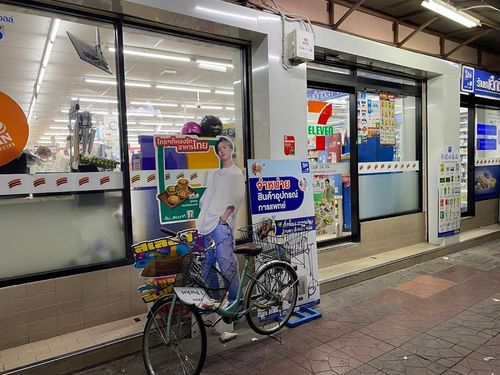
7-Eleven
Shops
Khao San’s 24/7 reset button: ice‑cold A/C, ham‑cheese toasties, All Café iced lattes, water for 7–14 THB, and late‑night supplies from snacks to sunscreen—right by Rikka Inn.
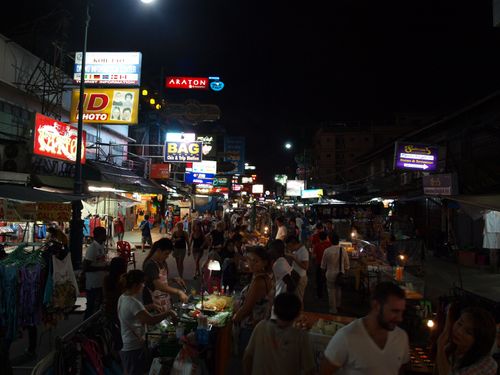
Khao San Road
Attractions
Bangkok’s backpacker carnival: curbside bars, live bands and DJs from 3pm–2am (midnight Sun). Street eats are cheap — pad thai 70–100 THB, mango sticky rice 60–100 THB. Come for wild people-watching; duck into Rambuttri for a calmer beer.
SAii Phi Phi Island Village
Hotels
Suneta Hostel Khaosan
Hotels
Suneta Hostel Khaosan offers top-notch services and amenities, ensuring guests experience utmost comfort.Share your photos and respond to emails at your convenience, thanks to the free Wi-Fi internet access offered by hostel.Should you require transportation to or from the airport, hostel is able to
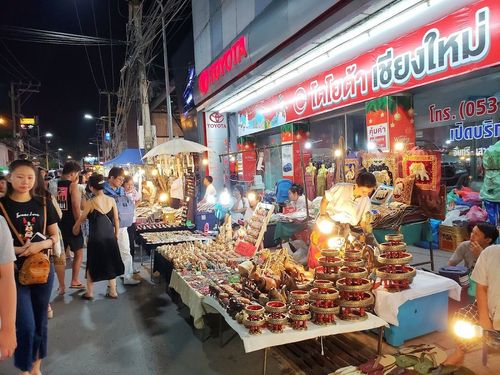
Tha Phae Walking Street
Shops
Chinatown Bangkok (Yaowarat)
Attractions
Neon, woks, and queues: Yaowarat is Bangkok’s street‑food strip. Start at Wat Mangkon MRT, graze T&K Seafood and Nai Ek’s peppery guay jub, snag toasted buns, and finish with mango sago at Sweet Time. Best 6pm–late; ~10‑minute taxi from Khao San.
Yaowarat Chinatown Heritage Center
Attractions
Inside Wat Traimit by Chinatown Gate, this tidy museum charts Yaowarat’s Chinese roots with bilingual displays, period photos and short films. Open Tue–Sun 8:30am–4:30pm; closed Mon. Pair it with the Golden Buddha upstairs.
Wat Saket Ratchawora Mahawihan
Temples
Phra Sumen Fort
Attractions
1783 riverfront fort on Phra Athit with white battlements, park breezes, and killer sunset views over Rama VIII Bridge. Free entry; best from 5–7pm before the gates close at 9pm.
More Khao San Road Guides
- Bangkok Street Food for Special Diets: Vegetarian, Vegan, Halal, and Gluten-Free Options Near Khao San Road
- Bangkok Street Food by Diet: Best Vegan, Vegetarian, Halal, and Pork-Free Dishes to Look For Around Khao San Road
- Bangkok Street Food by Diet: Vegetarian, Halal, and Pork-Free Options Near Khao San Road
- Bangkok Street Food for Vegetarians and Vegans Near Khao San Road: Safe Orders, Hidden Ingredients, and Easy Stall Picks