
Bangkok Street Food for Vegetarians Near Khao San Road: What to Eat and Where to Find It
Eat meat-free near Khao San: what to order, where to find it, Thai phrases to avoid fish sauce, prices, and late-night vegetarian street food wins.
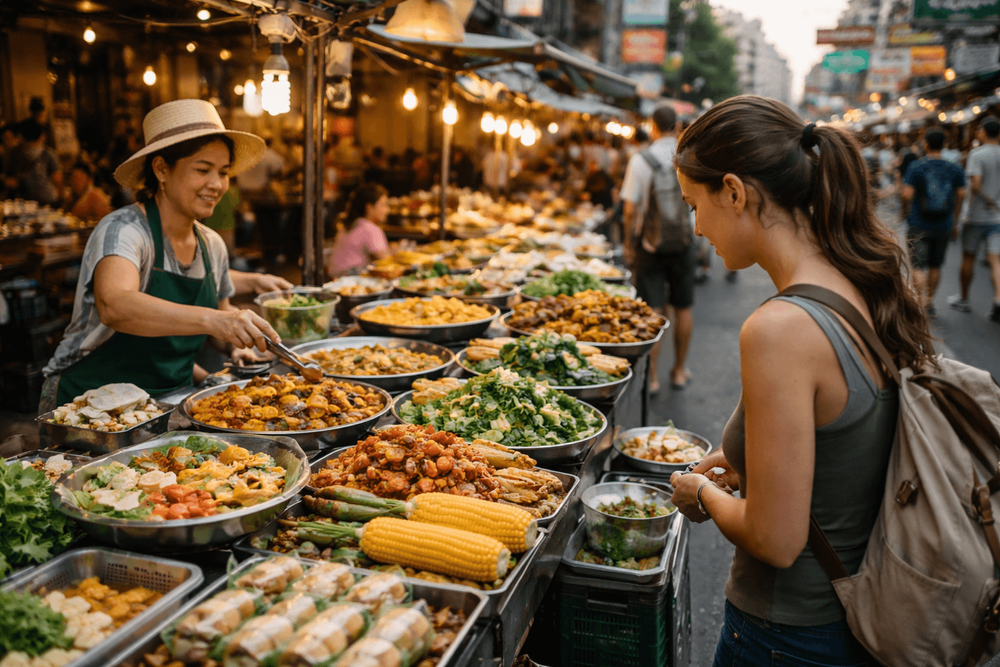
The wok hisses, a halo of steam fogs our glasses, and the smell of garlic, chilies, and lime collides with the sweet rot of durian from a passing cart. A vendor flicks a banana roti until it slaps the hot plate with a clap you feel in your ribs. This is Khao San and Soi Rambuttri at dinnertime—the beating heart of Bangkok vegetarian street food near Khao San Road—where we can eat well and meat-free if we know what to ask for and where to look.
The Vegetarian Staples Around Khao San Road
You don’t need a dedicated veggie stall to eat vegetarian here—most made-to-order places will tweak dishes on the spot if we steer them. Around Khao San, Soi Rambuttri, Chakrabongse Road, and Phra Athit, look for these easy wins:
- Pad Thai Jay (ผัดไทยเจ): Ask for tofu (sai tao-hu) and egg or no egg, and crucially, “mai sai nam pla/nam man hoi” (no fish or oyster sauce). Expect 50–90 baht depending on portion and add-ons.
- Khao Pad Jay (ข้าวผัดเจ) – Vegetable fried rice: Ask for no fish sauce; 40–70 baht. Add tofu or a fried egg on top if you eat eggs.
- Pad See Ew or Pad Kee Mao (ผัดซีอิ๊ว/ผัดขี้เมา): Wide rice noodles with Chinese kale or mixed veg. Specify tofu and “jay” seasoning. 60–100 baht.
- Pad Pak Boong (ผัดผักบุ้งไฟแดง) – Morning glory: Deliciously smoky if the wok’s hot. Say “mai sai nam man hoi” (no oyster sauce). Usually 60–90 baht with rice.
- Basil Stir-Fry (ผัดกะเพรา): Ask for “pad krapow tao-hu hed, jay dai mai?” (tofu + mushrooms, can you make it jay?). It’s a firecracker—say “phet nit noi” (a little spicy) if you don’t want to cry in public. 60–100 baht with rice.
- Som Tam (ส้มตำ) – Papaya salad: Always ask for “mai sai pla ra, mai sai kung haeng, mai sai nam pla” (no fermented fish, no dried shrimp, no fish sauce). Swap in soy sauce and lime. 40–80 baht.
- Khanom Krok (ขนมครก) – Coconut pancakes: Sweet, wobbly, and naturally veg. 20–40 baht a tray.
- Mango Sticky Rice (ข้าวเหนียวมะม่วง): The crowd-pleaser. 60–120 baht depending on mango season.
- Banana Roti (โรตี): Street dessert of banana, egg (optional), condensed milk, sugar. Ask to skip egg and use just banana if you’re vegan. 30–70 baht.
- Grilled Corn or Sweet Potato: Salt, char, and a paper sleeve. 20–50 baht.
- Fresh Fruit and Shakes: Pineapple, watermelon, coconut, or mixed fruit. Many carts will blend without milk if you ask—“mai sai nom, mai sai yogurt.” 30–70 baht.
- Tofu/Mushroom Skewers: Often show up near late-night grills; confirm the marinade doesn’t include oyster/fish sauce.
Curries and soups can be trickier. Many red/green curry pastes contain shrimp paste (kapi). Unless you see a yellow “เจ” (jay) sign or the vendor confirms veg paste, stick to stir-fries, noodles, and salads where you control the seasonings. Noodle soups around Banglamphu often rely on meat stock—even if you load up on tofu, the broth may be pork or chicken. If they have a clear veg stock (nam soup jay), great, but assume otherwise.
For a deeper dive into meat-free staples and where they hide near Old Town, we also like this overview: Bangkok Street Food Vegetarian Guide: Best Meat-Free Dishes and Where to Find Them Near Khao San Road.
Where to Find It: Sois, Stalls, and Late-Night Lifesavers
- Soi Rambuttri (both loops): As the sun drops and the fairy lights flick on around Wat Chana Songkhram Ratchaworamahawihan, carts roll out with pad thai, fried rice, spring rolls, pancakes, fruit, and the occasional grilled-mushroom skewer. It’s our go-to for a soft landing—prices are a hair higher than backstreets but still fair.
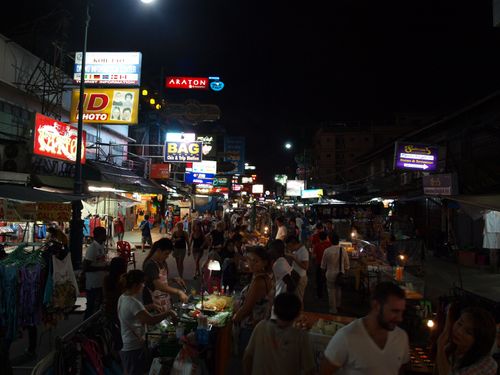
- Khao San Road itself: Touristy, loud, and stacked with vendors who know how to move a line. We swing through for som tam (watch for dried shrimp) and banana roti after a Chang-fueled bar crawl. Best late-night bet when everywhere else has turned in.
- Chakrabongse Road and Tani Road: Spillover streets from Khao San with solid stir-fry stalls and fruit carts. Look for tables set up on the curb by 6 pm—these are fast, cheap, and happy to cook jay.
- Phra Athit Road: If we’re craving a quieter meal, we follow the river breeze toward Phra Sumen Fort. Expect mellow shophouses, cafés with vegetarian-labeled menus, and food carts that feel less rushed. Great for lunch.
- Banglamphu Market (morning): East of Khao San, the daytime market churns with rice-and-curry (khao gaeng) sellers, fruit, and snacks. Identify veg trays by the lack of meat chunks and ask about shrimp paste. Early is best—7–11 am.
- Maha Chai Road (15 minutes on foot): If you spot the orange glow of charcoal woks and a line snaking down the sidewalk, you’ve found one of Bangkok’s classic pad thai institutions. They’ll do tofu and can avoid fish sauce on request. Go early evening to dodge the queue.
Late-night, after the thump of bass shakes Khao San’s neon spine, the vegetarian options narrow but don’t vanish. Banana roti flips until 1–3 am, fruit carts soldier on, and at least one pad thai cart will be hissing under a bare bulb. Worst case, we duck into 7-Eleven for emergency triangle kimbap (check labels), peanuts, and a cold soy milk while we regroup in the blast of AC.
If you want broader inspiration beyond Khao San’s grid, keep this in your pocket: Bangkok Street Food Guide: Khao San Road and Beyond.
How to Identify Truly Vegetarian Food (and the Hidden Gotchas)
Bangkok’s vegetarian landscape revolves around two words:
- Mang-săwírat (มังสวิรัติ): Vegetarian. Often includes eggs/dairy.
- Jay (เจ): Stricter Buddhist vegetarian—no meat, no seafood, no animal fat, and often no pungent alliums (garlic, onion, chives, leeks). Food stalls fly yellow flags with the red “เจ” symbol when they’re cooking jay.
Watch out for these stealth animal products:
- Fish sauce (nam pla) and oyster sauce (nam man hoi) in almost every stir-fry by default
- Shrimp paste (kapi) hidden inside curry pastes and some chili pastes
- Dried shrimp (kung haeng) in som tam
- Meat stock powder added to soups and even rice dishes
- Lard (nam man moo) or pork crackling as a final flourish over noodles
A few red flags quickly surface. If the vendor pre-mixes som tam in a mortar that smells fermented-funky, assume pla ra (fermented fish) is in play unless you explicitly nix it and they use a clean mortar. For curries, if you can’t confirm a veg paste, pivot to stir-fried dishes where soy sauce and salt-lime-sugar can carry the day.
Look for the yellow jay flags during the Vegetarian Festival (usually late Sep/Oct). In that window, side streets around Tanao Road and near the Giant Swing sprout pop-up jay canteens serving tofu bamboo shoots, red curry with veg paste, and mushroom larb—hearty, cheap, and reliably meat-free.
Ordering Like a Local: Our Khao San Playbook
We’ve messed it up enough times to know this routine saves headaches—and accidental fish sauce.
- Find the right stall
- Scan for a busy, clean wok station where ingredients are in separate bins. A laminated menu with pictures helps us point-and-order. If they list “tofu,” you’re golden.
- Say the magic words
- “Jay” or “mang-săwírat” (vegetarian)
- “Mai sai nam pla, mai sai nam man hoi” (no fish sauce, no oyster sauce)
- “Mai sai kung haeng” (no dried shrimp)
- “Mai sai pla ra” (no fermented fish)
- “Sai tao-hu” (add tofu)
- “Mai phet” (not spicy) or “phet nit noi” (slightly spicy)
- If you eat eggs: “Sai khai dai” (egg, okay?) or “mai sai khai” to skip egg
- Watch the wok
- If they just cooked pork, ask them to rinse the wok or use a clean pan—most vendors don’t mind. Point, smile, wai a little. Bangkok rewards sanuk—the spirit of light-hearted fun.
- Confirm the sauce swap
- Many cooks default to fish/oyster sauce for salt and body. Ask for soy sauce (see ew), salt, and a squeeze of lime instead. A pinch of sugar is normal in Thai cooking.
- Pay with small bills
- 20s and 100s keep everyone happy. Ask the price before ordering if there’s no sign. Street plates near Khao San often sit in the 50–100 baht range. Fresh fruit and snacks, 20–60 baht.
- Be flexible
- If a dish traditionally leans on shrimp paste—like some curries or chili jams—don’t push it. Pivot to pad see ew, khao pad, or stir-fried morning glory and you’ll eat better anyway.
If you’re navigating allergies or strict vegan rules, it helps to carry a Thai phrase card on your phone with the lines above. For more plant-pure tactics, skim this handy piece: Bangkok Street Food for Vegetarians and Vegans Near Khao San Road.
Specific Snacks and Meal Ideas (Quick, Cheap, and Close)
- Dinner sprint on Rambuttri: Pad see ew with tofu from a curbside wok (70–90 baht), a side of morning glory (60–80 baht), and mango sticky rice for dessert (80–120 baht). You’ll be full and change-heavy.
- Late-night graze on Khao San: Som tam “mai sai nam pla/pla ra,” banana roti without egg, and a coconut shake “mai sai nom.” 40–70 baht per item, and you can eat it walking.
- Market morning in Banglamphu: Point to veggie trays at a khao gaeng stall—pumpkin curry (ask about paste), stir-fried mixed greens, fried eggplant with basil—and get two items over rice in a bowl for 40–60 baht. When in doubt, ask “krueng kaeng mi kapi mai?” (does the curry paste have shrimp paste?).
- River breeze lunch on Phra Athit: Stir-fried Thai basil with tofu (no fish sauce), a lime soda, and coconut ice cream to cool down. 120–200 baht all-in, plus a view of the slow-bruised Chao Phraya.
If you need more ideas for special diets in this exact neighborhood, this guide is clutch: Bangkok Street Food for Special Diets: Vegetarian, Vegan, Halal, and Gluten-Free Options Near Khao San Road.
Know Before You Go: Heat, Crowds, and the Realities of the Curb
- Heat and timing: The street scene warms up after 5 pm and runs late. Midday is brutally hot—save heavy meals for evening and snack smart. Hydrate like a champ.
- Crowds and noise: Khao San gets feral after 9 pm. If you hate shouting over EDM, eat on Phra Athit or the quieter end of Rambuttri and then wander in for dessert.
- Cleanliness: Follow the locals. High turnover usually means fresher oil and ingredients. If a stall looks sleepy, skip it.
- Spiciness: “Not spicy” is relative. Start with “phet nit noi” and course-correct.
- Cash only: ATMs line Chakrabongse and Tani Road, but fees bite. Carry small bills.
- Cross-contamination: If you’re strict vegan, remind them to clean the wok, use a fresh spatula, and skip the pre-made sauces. If they’re slammed, be patient.
- Seasonal shifts: Mango sticky rice and durian desserts swing with the seasons; prices float accordingly.
Getting There (Khao San Without the Guesswork)
- Boat first, always: From the BTS at Saphan Taksin, hop the orange-flag Chao Phraya Express Boat upriver to Phra Arthit Pier (N13). It’s cheap (roughly 16–20 baht), breezy, and drops us a 10-minute walk from Soi Rambuttri.
- MRT options: Sam Yot or Sanam Chai are the closest MRT stations—still a 20–30 minute walk or a short tuk-tuk. Agree the fare first (expect 80–150 baht depending on time and traffic), or hail a metered taxi.
- Buses: Local buses spool around Democracy Monument and Banglamphu. They’re cheap but slow; great for daytime hops if you’re not in a rush.
- Walking grid: Khao San, Rambuttri, Phra Athit, and Chakrabongse form a tight rectangle. We zigzag at will, following smoke and sizzling sounds.
Nearby Vegetarian Havens and Daytime Jay Canteens
When we want ironclad meat-free meals within walking range of Khao San, we aim for:
- Tanao Road and around the Giant Swing (Sao Chingcha): Lunchtime jay canteens and shophouses often fly the yellow “เจ” flag. Trays of tofu curries, stir-fried bamboo shoots, and mushroom larb sell out early. Bring cash; 40–70 baht per plate.
- Samsen Road (toward Soi 2–4): A quieter residential strip north of Phra Athit with low-key shophouses that cook to order—good for a calm vegetarian stir-fry or fried rice.
- Phra Athit cafés: Menus usually mark vegetarian and vegan options clearly—think brown rice bowls, tofu stir-fries, and fruit shakes done dairy-free on request.
- Temple fairs and pop-ups: Around Wat Chana Songkhram or along Phra Athit during festivals, you’ll stumble on temporary stalls. Jay snacks appear like magic—follow the yellow flags and the scent of sesame oil.
If you want a broad map of what’s possible meat-free, we keep this bookmarked: Bangkok Street Food for Vegetarians and Vegans: What to Order Near Khao San Road.
A Quick Word on Accommodation Near the Action
We usually crash within shouting distance of Rambuttri or along Phra Athit so we can roll out of bed and into a bowl of morning glory by noon. A room with a pool pays for itself the first time Bangkok hits 36°C and we need a siesta between lunch noodles and a late roti run. If you need quiet, pick a guesthouse tucked off a soi north of Phra Athit; if you want to snack-hop until 2 am, Khao San-adjacent is the move. Book close and you’ll eat more, sweat less, and never be far from your next papaya salad.
What We Order Most (So You Don’t Overthink It)
- Pad krapow tofu + mushrooms, no fish/oyster sauce, over rice, fried egg optional
- Som tam “jay”: no fish sauce, no dried shrimp, extra lime and peanuts
- Pad see ew with tofu, plus a side of morning glory
- Mango sticky rice or khanom krok to finish
- Coconut shake “mai sai nom,” or lime soda if we’re sugared out
We’ll be the ones at the plastic table on Soi Rambuttri, chopsticks in one hand and a sweating cup of coconut in the other, plotting our next bite. Meet us there after sunset and we’ll show you how Bangkok vegetarian street food near Khao San Road turns a noisy backpacker strip into your personal meat-free buffet—one hissing wok at a time.
Related Hotels & Places
Khao San Road
Attractions
Bangkok’s backpacker carnival: curbside bars, live bands and DJs from 3pm–2am (midnight Sun). Street eats are cheap — pad thai 70–100 THB, mango sticky rice 60–100 THB. Come for wild people-watching; duck into Rambuttri for a calmer beer.
Wat Chana Songkhram Ratchaworamahawihan
Temples
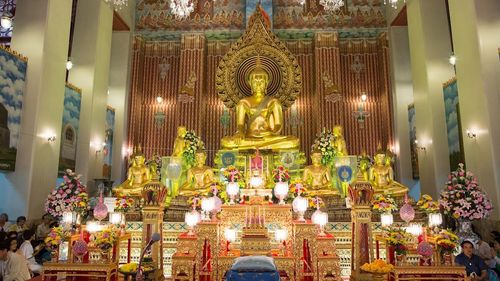
18th‑century royal temple steps from Khao San. Slip into quiet courtyards and an opulent viharn with a gilded Buddha. Opens 7:30am daily (Mon to 6:30pm). Enter on Chakrabongse Rd by Phra Athit; dress modestly.
Phra Sumen Fort
Attractions
1783 riverfront fort on Phra Athit with white battlements, park breezes, and killer sunset views over Rama VIII Bridge. Free entry; best from 5–7pm before the gates close at 9pm.
More Khao San Road Guides
- Bangkok Street Food for Vegetarians: What to Order Near Khao San Road and the Old Town
- Vegetarian and Vegan Street Food in Bangkok: What to Eat Around Khao San Road
- Bangkok Street Food by Diet: Vegetarian, Halal, and Pork-Free Options Near Khao San Road
- Bangkok Street Food by Diet: Best Vegan, Vegetarian, Halal, and Pork-Free Dishes to Look For Around Khao San Road