
Bangkok Street Food by Diet: Best Vegan, Vegetarian, Halal, and Pork-Free Dishes to Look For Around Khao San Road
How to eat a Bangkok street food diet near Khao San—vegan, vegetarian, halal, pork-free, low-spice, and budget-friendly—without missing the street flavor.
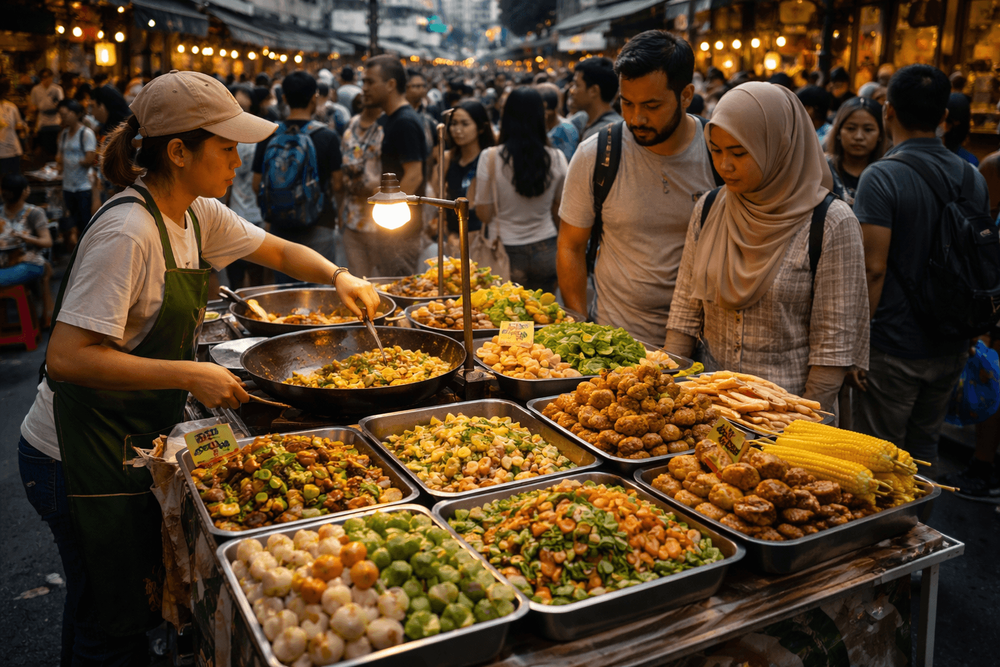
We’re shoulder to shoulder on Soi Rambuttri at sundown, where incense smoke tangles with the sizzle of a wok and the thump of bass leaking from a Khao San bar. The fan on the cart barely fights the heat. A auntie in a flour-dusted apron flicks noodles like neon confetti, and the air smells like garlic, holy basil, and a whisper of fish sauce. This is where a Bangkok street food diet really lives—fast, fragrant, and wildly adaptable. Whether we’re eating vegan, vegetarian, halal, pork-free, low-spice, high-protein, or just “please, not too oily,” there’s a way to do it without missing the sanuk—the fun—of the street.
Bangkok Street Food Diet: What It Looks Like Day to Day
A Bangkok street food diet for travelers and long-stay visitors isn’t a detox plan; it’s a rhythm. Here’s how locals and clued-in farang tend to eat through the day around Khao San Road, Soi Rambuttri, and Phra Athit Road:
- Morning: We sniff out jok (rice porridge) or khao tom (rice soup) with soft ginger heat, scallions, and a just-set egg—gentle on the stomach and about 40–60 baht. Fruit carts roll by with guava (farang, ironically), watermelon, or mango—15–30 baht a bag. If you’re vegan, ask for jok without egg and no fish sauce (mai sai nam pla).
- Lunch: Choose a rice plate—pad kra pao (holy basil stir-fry), pad krapao gai if you’re pork-free, or tofu for veg—served with jasmine rice (khao suay). Most plates run 50–80 baht; add a fried egg (kai dao) for 10–15 baht more if that fits your diet.
- Afternoon: Skewers and snacks. Moo ping (pork skewers) for some, but halal eaters can reach for gai yang (grilled chicken) or chicken satay with peanut sauce. A bag of som tam (papaya salad) with sticky rice fuels a temple climb at the Golden Mount—order som tam Thai, low spice (phet nid noi) if you’re fire-shy.
- Dinner: Noodle soups and stir-fries. Boat noodles with beef, or wide rice noodles in soy sauce (pad see ew) if you want mellow and kid-friendly. Vegetarians can go for stir-fried morning glory (pad pak boong fai daeng) with rice.
- Late night: Roti stands flip banana roti with a slap of dough and a hiss of butter, or try mango sticky rice when in season. Sweet drinks are everywhere; we split one cha yen (Thai iced tea) to keep sugar in check.
You’ll notice meals are modular: a base (rice or noodles), a protein (meat, tofu, egg), and a flavor profile you can dial up or down. That modularity is your best friend for adapting to dietary needs.
How to Choose Filling, Affordable, Balanced Plates
We want food that’s cheap, tasty, and won’t flatten us in the Bangkok heat. Here’s how we build balanced street meals without overthinking it:
- Anchor with protein: tofu, egg, chicken, beef, or fish. Ask for tofu (tao-hu) in stir-fries, or extra meatballs in noodles. Halal eaters can stick to chicken/beef stalls—look for halal signage.
- Add greens on purpose: If your plate looks beige, order a side of stir-fried veggies (pak ruam, mixed veg) or morning glory. Soups like tom jeud (clear, mild broth) sneak in cabbage, tofu, and glass noodles.
- Mind the sauces: Fish sauce and oyster sauce add punch but can conflict with vegetarian, vegan, or halal needs. Ask: “mai sai nam pla, mai sai nam man hoy” (no fish sauce, no oyster sauce).
- Portion your carbs: Rice defaults are generous. We ask for “khao noi” (less rice) or choose noodles in broth instead of fried options on repeat days.
If you want price planning by the baht, we’ve broken down classic meals at 50, 100, and 200 baht here: Bangkok Street Food by Budget: What to Eat for 50, 100, and 200 Baht.
Know Before You Go: Hygiene, Freshness, and Staying Well
Bangkok rewards the bold, but our stomachs like us cautious. We watch for:
- Turnover: Busy stalls = fresher food. If the wok’s roaring and plates are flying, good sign.
- Heat and timing: Food cooked to order is safer than trays sitting in the sun. Daytime markets feel freshest 7–10 am; dinner carts peak 6–10 pm.
- Tools and covers: Stainless tongs, covered pans, clean cutting boards, and vendors handling money with one hand and food with another—these details matter.
- Ice and water: Drinks usually use factory ice (hollow cylinders) that locals trust. We buy bottled water (7–15 baht at 7-Eleven) and carry electrolyte packets for the sauna-walk between stalls.
- First-aid for spice: Say “mai phet” (not spicy) or “phet nid noi” (a little spicy). If something bites back, a spoon of rice or a gulp of soy milk soothes better than water.
- Allergies and cross-contact: Street kitchens are compact. If you’re sensitive to peanuts, shellfish, soy, or gluten, be extra clear and watch the wok. For detailed strategies and Thai phrases to keep you safe, see Bangkok Street Food for Travelers with Allergies: What to Order, What to Avoid, and How to Ask for Changes.
Carry tissues, hand gel, and small bills. And if a tuk-tuk driver offers a “special” food tour that detours past a gem shop, we politely hop out. No hard feelings; no wasted stomach space.
Practical Dietary Adaptations Around Khao San
Whatever you’re avoiding—or chasing—there’s a street workaround within a few sois of Khao San Road.
Vegetarian & Vegan (Jay) Moves
- Language is power: “Jay” signals Buddhist vegan (no meat, fish, egg, dairy, or pungent aromatics like garlic for strict observance). If that’s too strict, say “mangsawirat” (vegetarian) and clarify your boundaries.
- Order plays: pad see ew jay (wide noodles, soy sauce, Chinese kale, tofu), fried rice with tofu and veg (khao pad jay, mai sai nam pla), stir-fried morning glory, and tom jeud with tofu.
- Salads and sides: som tam Thai without dried shrimp/fish sauce (som tam Thai, mai sai goong haeng, mai sai nam pla). Bring your own roasted peanuts if you’re cautious about cross-contact.
- Sweet treats: Fruit shakes “mai wan” (less sugar) or coconut ice cream without condensed milk.
If you’re strict or staying a while, bookmark our deeper dive: Bangkok Street Food for Special Diets: Vegetarian, Vegan, Halal, and Gluten-Free Options Near Khao San Road.
Halal & Pork-Free Eating
- Spot the signs: “Halal” logos, Arabic script, “Bismillah” on stalls, and vendors in hijab are useful cues. Chicken biryani (khao mok gai), beef noodle soup, chicken satay, and roti mataba (stuffed roti) are halal-friendly staples.
- Ask clearly: “Mai sai moo” (no pork), “mai chai nam man moo” (no pork lard). Some woks share sauces; if in doubt, request a fresh pan or choose stalls cooking grilled items to order.
- Protein bowls: Boat noodles with beef, or chicken rice (khao man gai) from chicken-only carts. Many halal stalls cluster around markets—wander Banglamphu’s side sois and follow your nose.
Low-Spice, High-Flavor Picks
- Go for: khao man gai (poached chicken rice), pad see ew, rad na (gravy noodles), tom jeud, chicken satay with cucumber relish, and Hainanese-style soups.
- How to order: “Mai phet” or “phet nid noi,” and ask for chilies on the side (prik nam pla in a tiny dish). Som tam can be made with 0–1 chili—just ask “mai sai prik” (no chilies).
High-Protein Without the Heaviness
- Skewer strategy: gai yang (grilled chicken), beef satay, or if pork-free isn’t your need, moo ping. Pair with a bag of fresh-cut veg or a mild soup instead of a second portion of rice.
- Noodle math: Order boat noodles or clear soups and add extra meatballs or tofu for 10–20 baht.
- Egg upgrades: A fried egg (kai dao) over rice adds 6–8 grams of protein for a small coin. If you avoid fried foods, some vendors will do a soft-boiled egg on request—worth asking.
Calorie-Conscious Without Killing the Joy
- Broth over fry: Pick soups (tom jeud, noodle soups) more often than stir-fries dripping in oil.
- Sauce sense: Ask for less oil (mai ao nam man) and less sugar (mai wan). Many vendors are happy to oblige if the wok isn’t slammed.
- Dessert diplomacy: Share roti or sticky rice, or swap in fresh pomelo or pineapple.
For diet-specific swaps beyond Khao San, this broader guide helps: Bangkok Street Food for Dietary Restrictions: Vegetarian, Vegan, Halal, and Gluten-Free Options.
A Sample Day of Eating Near Khao San (Mix and Match)
- Breakfast (Soi Rambuttri market vibe): jok with tofu and scallions (vegan if you skip egg and fish sauce), plus guava from a fruit cart. 50–70 baht.
- Lunch (Phra Athit Road): khao man gai (poached chicken rice). Pork-free and low-spice by default; ask for sauce on the side. 60–80 baht.
- Afternoon snack (under the shade by the khlong): chicken satay skewers with cucumber relish. 10–15 baht per stick.
- Dinner (Khao San back-soi): pad see ew jay with tofu and Chinese kale, “mai sai nam pla.” 60–80 baht. Add a plate of morning glory to share.
- Late night (Rambuttri roti cart): banana roti—ask for less condensed milk if you’re sugar-watching. 40–60 baht.
On travel days when we need packable bites for bus or boat, we raid stalls for sticky rice with grilled chicken, banana leaf-wrapped curries, and fruit to-go. More grab-and-go ideas here: Bangkok Grab-and-Go Street Food Guide for Transit Days: Snacks, Packable Meals, and Quick Bites.
Getting There and Navigating Khao San’s Street Food
- Chao Phraya Express Boat: Hop off at Phra Arthit Pier (N13). From there it’s a five-minute wander to Phra Athit Road’s calm café stretch and a ten-minute stroll to the chaos of Khao San. We love using the river to dodge traffic.
- On foot: Khao San, Soi Rambuttri, and the lanes around Chakrabongse Road connect like a noodle tangle—walk them at dusk when carts wake up.
- Tuk-tuk and taxis: Fun for short hops, but confirm a price first in tuk-tuks and insist on the meter in taxis. If the driver refuses, we wave the next one.
- Hours: Morning markets hum from 6–10 am; evening carts ramp up 5–11 pm, with some hanging on past midnight Friday–Saturday.
If you’re staying nearby, we usually crash at mid-range spots near Soi Rambuttri or a budget guesthouse off Phra Athit when we want quiet. A pool is a game-changer after a day of wok heat, even more so in hot season.
Eating Well Without Blowing Your Budget or Energy
- Hydration is your secret sauce: Two liters a day minimum in the hot months. Coconut water or electrolyte drinks help when we’re sweating through temples.
- Sugar math: Thai iced tea and milk tea are sugar bombs. We order “mai wan” or split one and chase the rest of our thirst with water.
- Beer budgeting: Big Leos add up—calories and baht. Alternate with soda water and lime (nam manao) if you want the vibe without the bloat.
- Portion control by sharing: Streets are perfect for grazing. Split two mains and a veg dish, then check in with your stomach before dessert.
- Walk it off: Loop Rambuttri to Phra Athit to Phra Sumen Fort and back. The river breeze buys you another skewer, no shame.
Thai Phrases That Actually Help
- Not spicy / a little spicy: “mai phet” / “phet nid noi”
- No chilies: “mai sai prik”
- Vegetarian: “mangsawirat” (sometimes includes egg/dairy)
- Jay vegan (Buddhist vegan): “kin jay”
- No fish sauce / no oyster sauce: “mai sai nam pla” / “mai sai nam man hoy”
- No pork / no pork lard: “mai sai moo” / “mai chai nam man moo”
- Less oil / less sugar: “mai ao nam man” / “mai wan”
- Less rice: “khao noi”
Final Bite
Tonight, let’s do it simple: a bowl of clear broth with tofu, a plate of morning glory, and a slow walk to the river for guava slices while the city glows. Tomorrow we’ll turn the dial—maybe beef boat noodles on Dinso, maybe banana roti at 1 am. That’s the beauty of a Bangkok street food diet around Khao San: we can shape it to our needs and still eat like we’re here to live.
Related Hotels & Places
More Khao San Road Guides
- Bangkok Street Food for Different Diets: Vegetarian, Vegan, Halal, and Pork-Free Options Around Khao San Road
- Bangkok Street Food by Diet: Vegetarian, Halal, and Pork-Free Options Near Khao San Road
- Vegetarian and Vegan Street Food in Bangkok: What to Eat Around Khao San Road
- Bangkok Street Food for Vegetarians and Vegans: Where to Eat Near Khao San Road and the Old City