
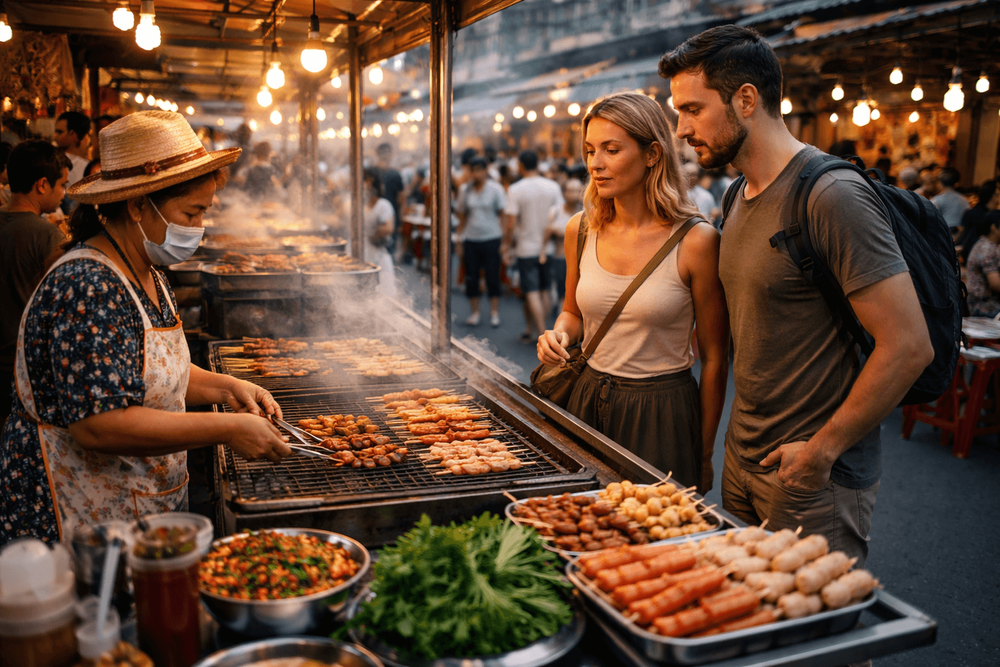
Bangkok Street Food for Newcomers: How to Choose Safe, Busy Stalls and Avoid Common Mistakes
Our no-nonsense Bangkok street food tips: best areas, how to choose safe, busy stalls, what to order, prices, key Thai phrases, and smart hygiene moves.
We’re shoulder-to-shoulder on Yaowarat Chinatown Heritage Center Road, neon bouncing off stainless-steel carts, the hiss of a wok cutting through scooter horns. A woman with forearms like a heavyweight flips morning glory with chilies so fierce we cough just watching. This is where our favorite Bangkok street food tips stop being theory and turn into dinner: follow the sizzle, trust the crowds, and keep it sanuk—fun—even when the heat and the hustle test us.
The Best Areas in Bangkok for Street Food
Bangkok is a sprawl of sois (side streets), khlongs (canals), and food hiding in plain sight. We’ll steer you to reliable, high-turnover pockets where the chance of a great meal is high and the chance of a bad belly is low.
Chinatown Bangkok (Yaowarat) (Yaowarat Road and MRT Wat Mangkon)
- What it feels like: Electric. Red-and-gold signs, crab claws on ice, charcoal grills throwing sparks.
- What to eat: Guay jub (peppery rolled rice noodles), hoy tod (crispy oyster omelette), khanom buang (crisp Thai crepes), pomegranate juice.
- When to go: Evenings, roughly 6 pm onward. Go early to beat tour groups.
- Getting there: MRT Blue Line to Wat Mangkon and follow the crowds.
Wang Lang Market (Tha Wang Lang, Thonburi side)
- What it feels like: Local chaos wedged between Siriraj Hospital and the river. At lunch, impossible to move—and that’s the point.
- What to eat: Moo ping (grilled pork skewers) with sticky rice, khanom krok (coconut pancakes), boat noodles, fried chicken that snaps.
- When to go: Best late morning to mid-afternoon on weekdays.
- Getting there: Cross-river ferry from Tha Chang or Phra Athit piers. The ride is a few baht and pure river breeze.
Victory Monument (Boat Noodles Alley)
- What it feels like: A stubborn holdout of tiny bowls and fast slurping.
- What to eat: Kuai tiao ruea (boat noodles). Start with two bowls; order more like a champ until you’re full.
- When to go: Late morning through afternoon.
- Getting there: BTS Skytrain to Victory Monument; the canalside alleys northwest of the monument are your target.
Banglamphu: Khao San Road, Soi Rambuttri, and Phra Athit
- What it feels like: Backpacker fever—thump of bass from Khao San, lantern-lit calm on Soi Rambuttri, riverside breezes on Phra Athit.
- What to eat: Pad kra pao made to order, mango sticky rice, banana roti, grilled squid, late-night pad thai.
- When to go: All day, but the real show starts after dark. For a breather (and decent coffee), retreat to Phra Athit.
- Getting there: If we’re based near Khao San, we walk. Otherwise, Chao Phraya Express Boat to Phra Arthit Pier and a 5–10-minute stroll.
Phetchaburi Soi 5 and Soi 10 (Ratchathewi/Pratunam side)
- What it feels like: After-work Bangkok—office workers queuing at carts, aromas stacking like traffic.
- What to eat: Som tam (papaya salad), grilled chicken, khao moo daeng (red pork on rice), soups galore.
- When to go: Evenings.
- Getting there: BTS Ratchathewi or Phaya Thai, then a short ride or 10–15-minute walk.
Silom Soi 20 (Morning Market) and Soi Convent (Evenings)
- What it feels like: Office-core by day, snack street by night.
- What to eat: Breakfast porridge (jok), fresh fruit, roast pork over rice in the morning; pad kra pao, noodle soups in the evening.
- Getting there: BTS Sala Daeng or MRT Silom.
Night Markets: Jodd Fairs (Rama 9) and Talad Rot Fai Srinakarin (Train Market)
- Jodd Fairs (Rama 9): Trend-forward stalls—grilled giant squid, tom yum pasta, Thai teas in absurd cups. Open nightly from late afternoon to late evening. MRT Rama 9 puts you at the door.
- Talad Rot Fai Srinakarin: Big weekend market with vintage vibes and a serious food row. Best with friends and an appetite. Taxi/ride-hail from BTS Udom Suk works.
Ari, Suan Phlu, and Ekkamai Pockets
- Ari: Hip without trying too hard. Hunt for moo satay, Isaan salads, and sweet roti stands around Ari BTS.
- Suan Phlu (Sathorn): Neighborhood sois like Suan Phlu Soi 3 pack hawker carts—great for midweek dinners.
- Ekkamai: Late-night skewers near Ekkamai BTS and casual noodle shops tucked off Sukhumvit.
Bangkok Street Food Tips: How to Choose Safe, Fresh, Authentic Stalls
We don’t gamble with our stomachs; we read the street like a menu.
- Follow the line: A steady queue of locals means high turnover. Food that hasn’t been sitting = fewer regrets.
- Watch the heat: Frying to order, soups at a rolling boil, grills with steady flame—heat is your friend.
- Look at hands and surfaces: Tongs for raw/ready-to-eat, separate cutting boards, clean aprons. If someone chops raw chicken then your garnish on the same board, we bounce.
- Check the oil: Fresh frying oil is golden and smells nutty, not burnt. Dark, sludgy oil? Skip the deep-fried.
- See the water/ice: Drinks should use ice from big, clear bags (factory ice). Don’t drink tap water.
- Pre-cooked caveat: Curries in trays can be fantastic at busy lunch spots. We go when the lunch rush hits, not after.
- Fruit stands: Choose vendors who slice to order or keep fruit chilled on clean ice; avoid fruit swarmed by flies.
- Seating and cleanup: A stack of clean plates or bowls, someone bussing tables—signs the operation cares.
For a deeper dive into spotting clean, safe stalls without killing the adventure, we break it all down here: Bangkok Street Food Hygiene Guide: How to Spot Clean Stalls and Eat Safely Without Killing the Experience.
How to Order, What It Costs, and Paying Like a Local
Ordering is half performance, half pointing. We keep it simple, smiley, and specific.
Step-by-step ordering
- Scan the setup: Is it made-to-order (wok, grill) or point-and-pick (curries, fried snacks)?
- Stake your claim: Hover politely until the vendor looks up. A quick sawadee (hello) goes a long way.
- Order clearly: Name the dish, meat, spice level, and rice/noodle preference.
- Watch and wait: Stay out of the wok zone. If there’s a number system, the vendor will signal.
- Pay at the right time: Most carts take payment when food is served; some take pre-payment. Cash is king, but more vendors accept Thai QR.
Handy Thai phrases (phonetic)
- Hello/thanks: Sawadee krap/ka, Khop khun krap/ka
- I want…: Ao … krap/ka
- Not spicy / a little spicy: Mai phet / Phet nit noi
- No chilies/no peanuts: Mai sai prik / Mai sai tua li song
- No fish sauce: Mai sai nam pla
- Takeaway: Sai toong
- Eat here: Gin tee nee
If you want the full playbook—how to point, pay, and navigate condiments—bookmark our starter guide: Bangkok Street Food for First-Time Visitors: A Practical Guide to Ordering, Hygiene, and Must-Try Classics.
What it costs (rough ballparks)
- Moo ping + sticky rice: 10–20 THB per skewer; 10–20 THB for a rice pouch
- Pad kra pao (chicken/pork) + rice: 60–100 THB; add a fried egg for +10–15 THB
- Khao man gai (Hainanese chicken rice): 50–80 THB
- Noodle soups: 50–90 THB per bowl (boat noodles can be 20–30 THB per small bowl; you’ll want several)
- Som tam: 50–80 THB; grilled chicken quarter 60–100 THB
- Mango sticky rice: 100–160 THB depending on mango season and neighborhood
- Fresh Thai tea or lime soda: 25–50 THB
Want to game your appetite to your budget? We break down what to eat for 50, 100, and 200 baht here: Bangkok Street Food by Budget: What to Eat for 50, 100, and 200 Baht.
Paying without drama
- Carry small bills and coins. Vendors appreciate 20s and 50s more than a 1,000 THB note.
- If you’re short on change, it’s fine to round up by 5–10 baht.
- QR payments are increasingly common, but expect cash-only in older markets.
Must-Try Bangkok Street Foods (Without the Tourist Trap Tax)
These are the dishes we hunt first when we hit a new soi.
- Kuai tiao ruea (boat noodles): Intense, herby broth, slurp-sized bowls. Victory Monument is the classic scene. Add pork crackling for crunch.
- Pad kra pao: Holy basil meets minced pork or chicken, wok-breathed with chilies and garlic. Always better with a crispy fried egg.
- Khao man gai: Poached chicken over rice cooked in chicken fat, with gingery sauce that sneaks up on you. Comfort in a plate.
- Moo ping + khao niao: Caramelized pork skewers and a warm sticky rice pouch. Perfect street breakfast or post-bar snack.
- Som tam + gai yang + khao niao: Fiery papaya salad, grilled chicken, sticky rice. Look for mortars (pok-pok!) pounding non-stop.
- Guay jub (Chinatown): Rolled noodles in white-pepper broth. The hit of pepper clears your sinuses in the best way.
- Hoi tod: Crisp, lacy omelette folded around oysters or mussels; a squeeze of chili vinegar wakes it up.
- Pad thai: Ignore the fireworks; chase a humble cart with a roaring wok and chives that smell like a garden. Ask for extra bean sprouts on the side.
- Khanom buang: Mini taco-looking crepes with creamy meringue and shredded coconut or egg floss. A street dessert we always “accidentally” double-order.
- Khanom krok: Hot, wobbly coconut cups with charred edges—snack nirvana.
- Satay: Pork or chicken sticks lacquered in turmeric spice; dunk in peanut sauce and cucumber relish.
- Drinks and sweets: Thai iced tea (cha yen), lime soda (nam manao), sugarcane juice (nam oi), and pomegranate juice in Chinatown. For dessert, try bua loy (taro dumplings in warm coconut milk) if you spot it.
Hygiene, Spice Levels, Allergies, and Avoiding Common Mistakes
Bangkok makes you bold, but we still play smart.
- Time your meals: Breakfast markets hum 6–10 am; lunch peaks 11:30 am–1:30 pm; dinner carts wake up around 5 pm. We avoid food that looks like it’s surviving the lull.
- Don’t fear ice (the right kind): Factory ice from big clear bags is safe. Avoid homemade ice chunked from murky blocks.
- Tap water is a no: Stick to bottled or hot drinks.
- Condiments are power tools: Start slow with the four-tops—chilies in vinegar (sour), sugar (sweet), ground chilies (heat), fish sauce (salty). Taste first, tweak after.
- Spice control: Say mai phet (not spicy) or phet nit noi (a little spicy). Thai “a little” can still warm you—have a drink ready.
- Freshly fried > reheated: If fried snacks look limp, ask for a re-fry. Most vendors are happy to re-crisp.
- Allergies: Many sauces hide fish, shrimp paste, or peanuts. If this matters, tell the vendor up front and stick to made-to-order dishes where you can see every ingredient.
If you have dietary restrictions, this guide will be your safety net: Bangkok Street Food for Travelers with Allergies: What to Order, What to Avoid, and How to Ask for Changes.
Street-smart pitfalls to dodge
- The “all-in-one” stall: If a vendor grills, fries, steams, and does smoothies from a single cutting board, that’s a hard pass.
- The dead display: Shiny trays with no customers and congealed sauces—walk on.
- Over-ordering: Dishes are cheap; your appetite is not infinite. Share, nibble, keep moving.
- The tuk-tuk detour: If a driver insists on a “special restaurant,” we hop out. We pick the stall, not the commission.
- Bag life: Street eats often come in bags. If you’re walking, ask for a spoon/fork and a rubber band handle. Then find a curb with a breeze.
- Heat rage: Bangkok is hot. We plan AC breaks—malls, the blessed 7-Eleven blast—between eating sprees.
- Hands, not heroics: We carry tissues and sanitizer; most carts won’t have napkins.
For more ways to choose clean, fresh stalls like a local, we keep a practical checklist here: Bangkok Street Food Safety Guide: How to Choose Clean, Fresh Stalls Like a Local.
Know Before You Go
- Cash first: 500–800 THB in small bills is enough for a glorious eat-around. ATMs lurk on most main roads.
- Cleaning days: Some neighborhoods have stall-light days when the city tidies up. If a soi looks dead on a random weekday, try the next one over.
- Dress light: Quick-dry clothes and sandals you don’t mind splashing. Bangkok’s heat + fish sauce is a perfume you don’t want trapped in socks.
- Etiquette: Queue loosely, don’t block the cart, and return bowls/trays to the bussing station when you spot one.
- Getting around: BTS/MRT for cross-town hops; the Chao Phraya Express boat for riverside eats (get off at Phra Athit for Banglamphu or Ratchawong for Chinatown); motorbike taxis for short dashes; tuk-tuks for short, fun rides—always agree on the fare first.
- Where we crash: Around Soi Rambuttri or Phra Athit keeps us within sniffing distance of Khao San snacks without sleeping on the dance floor. If we’re market-hopping by MRT, staying near Rama 9 or Sukhumvit shortens those late-night food sprints.
Putting It All Together: Tonight’s Eat-About Plan
- Start riverside on Phra Athit with moo ping and a lime soda.
- Wander to Soi Rambuttri for a made-to-order pad kra pao with a crispy egg. Say “phet nit noi” if you like a tickle.
- Tuk-tuk (or walk) to Chinatown by 7 pm. Hunt guay jub and hoi tod on Yaowarat, then chase it with khanom buang.
- If you’ve got gas in the tank, ride the MRT to Rama 9 and finish at Jodd Fairs with something ridiculous-on-a-stick and a Thai tea.
We’ll be the ones leaning on a cart at midnight, chasing pepper broth with crushed ice and planning tomorrow’s breakfast before we’ve finished tonight’s dessert. Text us when you’re on Phra Athit—we’ll save you a skewer.
Related Hotels & Places
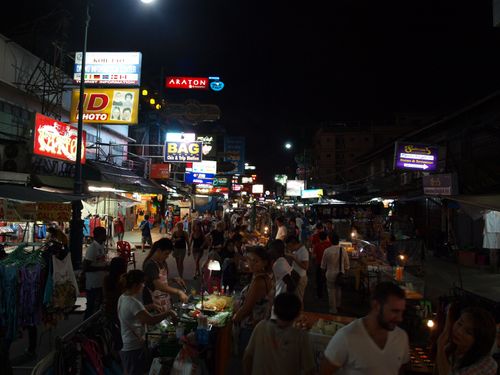
Khao San Road
Attractions
Bangkok’s backpacker carnival: curbside bars, live bands and DJs from 3pm–2am (midnight Sun). Street eats are cheap — pad thai 70–100 THB, mango sticky rice 60–100 THB. Come for wild people-watching; duck into Rambuttri for a calmer beer.
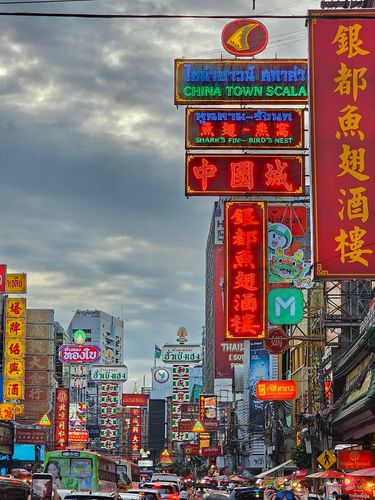
Chinatown Bangkok (Yaowarat)
Attractions
Neon, woks, and queues: Yaowarat is Bangkok’s street‑food strip. Start at Wat Mangkon MRT, graze T&K Seafood and Nai Ek’s peppery guay jub, snag toasted buns, and finish with mango sago at Sweet Time. Best 6pm–late; ~10‑minute taxi from Khao San.
Yaowarat Chinatown Heritage Center
Attractions
Inside Wat Traimit by Chinatown Gate, this tidy museum charts Yaowarat’s Chinese roots with bilingual displays, period photos and short films. Open Tue–Sun 8:30am–4:30pm; closed Mon. Pair it with the Golden Buddha upstairs.
More Khao San Road Guides
- Bangkok Street Food for First-Time Visitors: What to Order, How to Eat, and Where to Go Beyond Khao San Road
- Bangkok Street Food Hygiene Guide: How to Spot Clean Stalls and Eat Safely Without Killing the Experience
- Bangkok Street Food for First-Time Visitors: How to Order, Pay, and Eat Safely
- Bangkok Street Food Safety Guide: How to Choose Clean, Fresh Stalls Like a Local