
Bangkok Street Food for Heat-Safe Eating: The Best Low-Risk Dishes, Freshness Checks, and Stall Rules in Bangkok
Is Bangkok street food safe to eat? Yes—if you follow heat, freshness, and turnover. Our insider guide to safe stalls, low-risk dishes, and red flags.
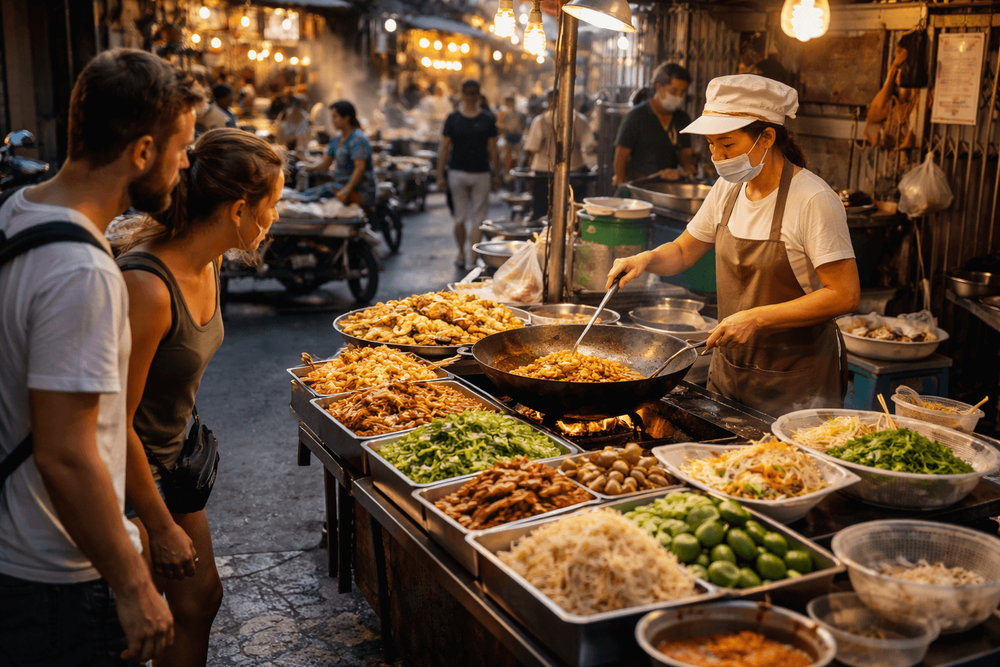
The wok hisses, chili hits the oil, and our eyes water in the best way. We’re shoulder-to-shoulder on Soi Rambuttri, ducking the occasional tuk-tuk and negotiating for the last plastic stool as a line of farang and locals inch toward a cart bathed in fluorescent light. You can smell garlic, fish sauce, and a hint of sweet rot from a durian cart parked down the soi. This is where the question hits hardest: is Bangkok street food safe to eat? Yes—if we play by the heat and freshness rules. We’ll show you exactly how we pick stalls, what we order, and when we walk away.
Is Bangkok Street Food Safe to Eat? The Heat Rule
Short answer: mostly yes, when we use common sense and go for food that’s cooked hot and fresh. Heat is our best friend—rolling-boil soups, sizzling stir-fries, skewers finishing over real flame. If we can watch food go from raw to roaring-hot, the risk drops fast. If it’s been sitting out, lukewarm, and covered in a sticky cloud of flies—sawadee and goodbye.
A few simple ground rules we swear by:
- Hot beats cold. If it’s steaming, we’re smiling.
- Busy beats empty. Turnover keeps ingredients fresh.
- Morning and evening beat the midday scorch. The Bangkok sun is no joke—tepid trays become trouble fast.
- We ask for a reheat if a dish looks like it has been sitting. Most vendors are happy to throw it back on the wok or pop it under the flame.
We’ll repeat this keyword because we know you searched it: when we’re asked “Is Bangkok street food safe to eat?” we point to stalls with heat, hustle, and clean habits. Follow the signs below and you’ll eat like a pro.
Common Signs of a Safe Street Food Stall in Bangkok
1) Clean-ish, organized, and proud
No stall is a hospital. But we want clear signs of care: wiped-down prep boards, covered ingredients, separate tongs for raw and cooked, and the vendor not constantly touching cash with the same hand that tosses noodles. Bonus points for hairnets, aprons, or a small sink/soap setup. If the station looks like a tornado hit a fish market, we bounce.
- Practical tip: Look for vendors who hand off money to a helper or wear a plastic glove on their cash hand. If they switch utensils between raw chicken and cooked chicken, we’re in safe territory.
2) Busy, but not chaotic
A steady queue means fast turnover. Ingredients don’t get time to languish. We love a 5–10 minute wait. If there’s no line at 7 pm on a prime food street, ask yourself why.
- Prices to expect: Pad Thai around Khao San Road/Banglamphu runs 60–100 baht. In local hoods, 50–70 baht is common. Moo ping (grilled pork skewers) go 15–20 baht each. Boat noodles are 30–50 baht for small bowls, 60–80 baht for regular.
3) Ingredients on ice or under cover
Greens and proteins should be either sitting over ice, kept chilled in a cooler, or tucked behind a sneeze guard. We steer clear of raw meats sweating in the sun or chopped herbs browning at the edges.
4) Proper cooking and reheating
Watch a few orders before we commit. If the vendor pushes lukewarm curry with a shrug, skip. If they re-boil soup, re-sear stir-fries, and finish skewers over flame, we’re golden. If the oil smells burnt (acrid, scratchy in the back of the throat), we try another cart.
- Quick reheat phrase: “Chûay ùn hâi nòi dai mái?” (Could you warm it up again?) Most will smile and oblige.
For more nitty-gritty on reading stalls like a local, we lean on this step-by-step breakdown: Bangkok Street Food Hygiene Guide: How to Spot Clean Stalls and Eat Safely Without Killing the Experience.
Safer Choices for First-Time Visitors
When in doubt, choose dishes that hit a high temperature right before they hit your mouth. Here’s what we reach for when we’re eating cautious but still chasing flavor.
Stir-fries made to order
- Pad kra pao (holy basil stir-fry): The wok fire kisses everything at blistering heat. Get it with chicken, pork, or tofu. Ask “phet nit nòi” (a little spicy) if you’re easing in.
- Pad Thai: Classic, fast, and cooked to order. We like ours with shrimp at busy stalls only—otherwise, chicken or tofu.
Soups with rolling-hot broth
- Boat noodles around Victory Monument or along khlong-side shops: Small bowls, bold spice, and the broth hits a rolling boil between every order. Cheap, filling, safe if busy.
- Kuay jap nam sai (peppery rolled rice noodles): Piping-hot and pepper-forward—perfect when we want comforting heat that feels clean.
- Tom yum (clear broth version): Eye it for freshness and ask for the broth boiling.
Grilled meats and seafood
- Moo ping and gai yang (grilled pork and chicken): Grab skewers straight from the grill and ask for a quick reheat if they’ve been in the basket a minute.
- Whole fish (pla pao) crusted in salt and grilled over charcoal: Order from a stall doing steady business; the flesh should be opaque and firm.
Made-to-order snacks
- Som tam Thai (papaya salad without fermented fish or crab): Ask for fresh garlic and lime, and confirm they’re not reusing old salad from the mortar.
- Khanom krok (coconut-rice pancakes): Cooked in dimpled cast-iron pans—the edges crisp, centers molten. We watch a fresh batch come off before ordering.
- Mango sticky rice: Low-risk when mango is peeled fresh and the rice is kept warm.
Breakfast comforts
- Jok or khao tom (rice porridge): Served steaming. Add a soft-boiled egg if you want extra richness—just make sure it’s cooked through if you’re being careful.
If you’re brand new to Bangkok’s food scene and want a simple plan for your first night, bookmark this: Bangkok Street Food for First-Time Visitors: How to Order, Pay, and Eat Safely.
Hygiene and Food-Safety Basics We Actually Use
Water and ice
- Bottled water everywhere: Grab a 600 ml for 10–15 baht at 7-Eleven. Street vendors typically sell sealed bottles too.
- Ice: Tube ice from clear plastic bags (commercial ice) is generally safe. If you’re unsure, say “mâi ao nám khàeng” (no ice). Or ask for a little: “khor nám khàeng nòi.”
Hands and utensils
- We bring hand gel and a pocket pack of tissues. A quick sanitize before finger foods is worth the two seconds.
- Communal utensil buckets: Many stalls soak spoons in room-temp water. We skip those and ask for a disposable spoon/fork, or wipe with a tissue.
Timing beats bravado
- We aim for breakfast (6–10 am) or dinner (5–11 pm) when stalls are busiest and air temps are kinder. Lunch is fine—just stick to made-to-order spots and avoid tepid curry trays baking in the sun.
Spice isn’t a disinfectant
Chili thrills, but it won’t pasteurize your pad kra pao. Heat from cooking does; spice is just delicious backup.
Allergies and dietary needs
- Learn a few “mai sai” (don’t add) lines: “mai sai nam pla” (no fish sauce), “mai sai phong chu-rot” (no MSG), “mangsawirat” (vegetarian). For more on navigating vegetarian, halal, and gluten-free in Bangkok, save this: Bangkok Street Food for Dietary Restrictions: Vegetarian, Vegan, Halal, and Gluten-Free Options.
For a deeper checklist on stall hygiene, give this a look too: Bangkok Street Food Safety Guide: How to Choose Clean, Fresh Stalls Like a Local.
Red Flags and Situations to Avoid
We love Bangkok’s chaos, but some signs mean we thank the vendor and stroll on.
- Undercooked meats: Chicken should be white all the way through; pork opaque and firm; seafood springy. If it looks glossy-raw or translucent in the center, back on the grill it goes—or we pass.
- Unrefrigerated creamy sauces: Mayo-based dressings or mysteriously creamy dips basking at room temp? No thanks—especially in the afternoon heat.
- Questionable seafood far from a crowd: We eat grilled prawns and shellfish at busy night streets like Yaowarat Road (Chinatown) where turnover is insane. A silent stall with a mountain of day-old squid in the sun is asking for trouble.
- Old oil: If the fry station smells burned and bitter, your stomach may taste it later.
- Reheated rice that’s been sitting all day: Starchy foods like rice can cause issues if left out for hours. We ask for a fresh scoop from a closed rice cooker.
- Lukewarm curry trays: Khao gaeng (rice-and-curry) stalls can be perfectly safe if they keep curries simmering. We avoid anything not steaming and ask “ron mái?” (is it hot?). If in doubt, “chûay ùn hâi nòi” (please heat it a bit).
- Dubious ice: Cracked block ice from an open tub can be questionable. We prefer sealed-bag tube ice.
Where to Choose Vendors Near Khao San Road and Other High-Turnover Spots
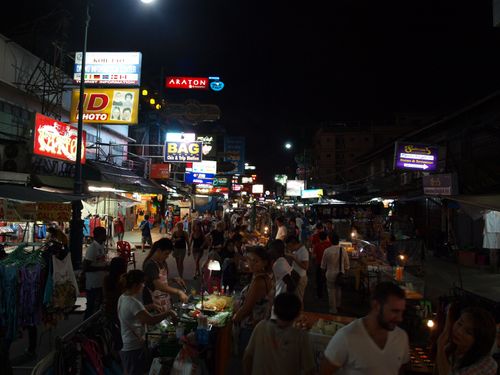
Khao San itself is a circus: bass thumping from bars, neon bucket hawkers, fire twirlers. Fun? Absolutely. The very best eats? Often one soi over.
Around Khao San, Soi Rambuttri, and Phra Athit Road
- Soi Rambuttri: Quieter than Khao San and reliably tasty. We’ve had late-night moo ping that carried us to sunrise—grab skewers fresh off the grill and chase with iced tea.
- Phra Athit Road: Student-heavy, with stalls that feed locals at sane prices. Pad kra pao, fried chicken, and jok stalls pop up around sunset near Santichaiprakan Park.
- Chakrabongse and Tanao Road: Morning markets and snack carts with strong turnover.
Getting there: There’s no BTS to Khao San. We skip the gridlock and take the Chao Phraya Express Boat to Phra Arthit Pier (N13). Fares generally run 16–20 baht depending on the line; from the pier it’s a 5–10 minute walk to Rambuttri/Khao San. Or use Grab/taxi off-peak.
Chinatown (Yaowarat Road)
After 6 pm, Yaowarat becomes a runway of flames and woks. The constant queues mean seafood and noodles fly out fast, which is what we want for safety. We gravitate toward:
- Freshly grilled prawns and salt-crusted fish—pick stalls that cook in waves and keep things on the fire.
- Peppery soups and stir-fries—watch for searing heat and rapid turnover.
Victory Monument and the Boat Noodle Rows
BTS Victory Monument drops us a short walk from canalside shophouses that sling aromatic boat noodles at lightning speed. Small bowls keep broth hot and fresh—order two or three for a full meal. Busy at lunch, calmer mid-afternoon, back again at dinner.
Old Town around the Golden Mount (Wat Saket Ratchawora Mahawihan)
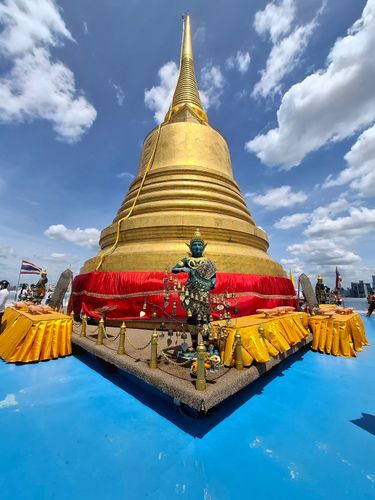
Climb the Golden Mount for that breeze and temple bells, then wander the surrounding sois. We like morning porridge and late-afternoon fried chicken around Bamrung Muang and Lan Luang roads—crowds of office workers keep the food moving.
Street Smarts: Paying, Ordering, and Not Getting Flustered
- Cash is king: Keep small bills (20s, 50s) and coins. A 100-baht note for a 20-baht skewer will get you a look.
- Point-and-smile ordering works: If the queue is moving, we point, say the name, and hold up fingers for quantity. A quick “khop khun krub/ka” (thank you) goes a long way.
- Spice control: “Mai phet” (not spicy), “phet nit nòi” (a little spicy), or “phet mak” (very spicy) to dial it in.
- Sauce strategy: If a condiment bottle looks sunbaked, we skip it. Fresh lime wedges and sealed chili flakes are our go-tos.
If you want a confidence boost before your first night market run, this walkthrough helps: Bangkok Street Food for Newcomers: How to Choose Safe, Busy Stalls and Avoid Common Mistakes.
Know Before You Go: Quick Safety Toolkit
- Hydrate like a champ: Bangkok heat sneaks up on you. We grab electrolyte packets (10–15 baht) from 7-Eleven for long nights.
- Sanitizer + tissues: Two pocket items that convert any curb into a dining room.
- Sun and timing: Eat big in the evening. Daytime? Seek shade and go made-to-order.
- Trust your nose and eyes: If something smells off or looks sad, it probably is.
- Upset stomach plan: Ease up on dairy, sip electrolytes, rest, and if needed pop into a local pharmacy—Thai pharmacists are friendly and used to travelers. Severe symptoms? Don’t be a hero—seek a clinic.
The Honest Bits
Bangkok is loud, hot, and gloriously messy. Stalls move, hours change, sidewalks bloom and shrink. You’ll sweat, you’ll make a couple of wrong calls, and you might eat the best bite of your life off a wobbly table next to a khlong. That’s the sanuk of it all. The trick is to stick to heat, freshness, and turnover, and to choose the sois where locals actually eat.
We love the buzz of Khao San, but when we want our safest, tastiest spread we wander to Soi Rambuttri by 7 pm, grab moo ping straight off the coals, chase it with peppery soup, and finish with coconut-scented khanom krok hot from the pan. If you’re still wondering, “is Bangkok street food safe to eat?”—come walk with us, follow the steam and the line, and we’ll meet you under the neon at the next cart.
Related Hotels & Places
Khao San Road
Attractions
Bangkok’s backpacker carnival: curbside bars, live bands and DJs from 3pm–2am (midnight Sun). Street eats are cheap — pad thai 70–100 THB, mango sticky rice 60–100 THB. Come for wild people-watching; duck into Rambuttri for a calmer beer.
Wat Saket Ratchawora Mahawihan
Temples
More Khao San Road Guides
- Bangkok Street Food Safety Guide: How to Choose Clean, Fresh Stalls Like a Local
- Bangkok Street Food for Solo Travelers: Best Dishes, Stall Strategy, and Safe Eating Around Khao San Road
- Bangkok Street Food Hygiene Guide: How to Spot Clean Stalls and Eat Safely Without Killing the Experience
- Bangkok Street Food by Spice Level: Mild Dishes, Safe Picks, and How to Ask for Less Heat