
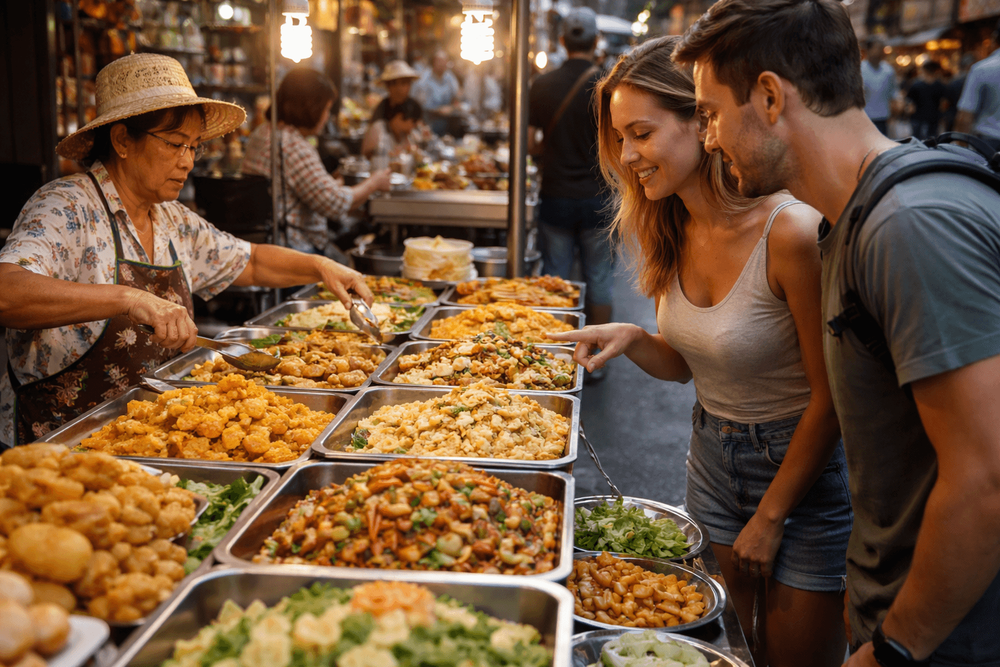
Bangkok Street Food by Spice Level: Mild Dishes, Safe Picks, and How to Ask for Less Heat
Bangkok mild street food you’ll actually enjoy: easy dishes, where to find them, and Thai phrases to order no-spice—without losing the flavor.
We slide off Rambuttri into the glow of a wok station, where garlic hits hot oil with a hiss and the auntie in a pink apron grins at us like we’re already regulars. The thump from a Khao San Road bar down the lane competes with the sputter of pork fat, and the sweet rot of durian wafts by on a passing cart. We’re here for Bangkok mild street food—proof that you can eat like a local without setting your face on fire. We’ll keep the sanuk (fun), skip the tears, and still chase that perfect bowl.
What “Mild” Really Means on Bangkok Streets
“Mild” in Bangkok isn’t a single lane; it’s a spectrum. Some dishes are naturally low on chilies (think soy-and-garlic instead of curry paste). Others are adjustable—built at the cart to your heat level. And yes, there are dishes that normally bring the flames but can be dialed down if we ask nicely.
We break it into three buckets:
- No-chili by default: Meals flavored with garlic, soy, oyster sauce, white pepper, or broth. Simple, comforting, kid-friendly.
- Chili-optional: The vendor seasons to taste. Chilies live in a caddy or sauce; we control the blast.
- Low-heat versions: Classic spicy plates made “mai phet” (not spicy) or “phet nit noi” (a little spicy) without losing their soul.
Remember: Thai heat often hides in sauces—nam jim (dipping sauce), prik nam pla (fish sauce with chilies), or a pre-mixed chili paste. When in doubt, ask for sauces on the side.
The Best Bangkok Mild Street Food We Actually Eat
Bangkok mild street food doesn’t mean bland. It means we let garlic, pepper, palm sugar, and lime do the heavy lifting while chilies take a back seat.
Rice Plates and One-Dish Comforts
- Khao man gai (Hainanese chicken rice): Poached chicken over fragrant rice with a clear broth. Ask: “Mai sai nam jim phet, khor nam jim khao” (no spicy sauce, can I have the mild sauce). Typical price: 50–70 THB.
- Khao moo daeng / moo krob (BBQ red pork / crispy pork on rice): Sweet-savory gravy, slices of pork, maybe a half-egg. Comfort in a saucy heap. 50–80 THB.
- Khao kai jeow (Thai omelet on rice): Fluffy, crisp-edged omelet with fish sauce, scallions, or just eggs. Ask for “mai sai prik” (no chilies). 40–60 THB.
- Fried rice (khao pad): Garlic, egg, and your protein. Say “khao pad gai/khung, mai phet” for chicken/shrimp, not spicy. 50–80 THB.
- Pad see ew: Wok-charred wide rice noodles with soy sauce, Chinese kale, egg—naturally low-heat unless chilies are added later. 50–80 THB.
Noodles (Brothy, Fragrant, and Gentle)
- Kuay tiew moo/gaai/ruam (noodles with pork/chicken/mixed): Clear pork or chicken broth, noodles your way: sen lek (thin rice), sen yai (wide rice), ba mee (egg). The heat lives in the condiment caddy—just don’t add it. 40–70 THB.
- Boat noodles (nam tok): Rich, herbal, often peppery but not necessarily spicy unless the vendor adds chili. Ask “mai sai prik, khrup/ka.” Bowls are small; two or three make a meal. 15–30 THB per bowl at local spots.
- Yen ta fo: Pink fermented tofu broth, tangy-sweet, usually mild unless doused. Ask for less chili if the vendor seasons by default. 50–80 THB.
Grilled, Fried, and Skewer Things
- Moo ping (grilled pork skewers): Caramelized pork on a stick. Heat is usually in the dipping sauce—easy to skip. 10–20 THB per skewer.
- Gai yang (grilled chicken): Smoky and juicy. Pair with sticky rice (khao niao). Ask for “nam jim sai khang” (sauce on the side). 60–100 THB for a quarter chicken.
- Spring rolls (por pia tod): Crisp, cabbage-and-glass-noodle filling. Sweet chili sauce on the side—use sparingly or not at all. 30–50 THB.
Soups and Broths That Soothe
- Jok (rice porridge) or khao tom (rice soup): Breakfast classics with pork balls, ginger, and a soft egg. White pepper brings warmth without the burn. 40–60 THB.
- Tom jued (clear soup): Tofu, minced pork, and cabbage drifting in a gentle broth. 40–70 THB as a side at rice-stall clusters.
Curries and Stir-Fries—How to Make Them Work
- Massaman curry: Often the mildest curry in Thailand—cinnamon, cardamom, potatoes, peanuts. Ask “mai phet” to be safe. 60–100 THB with rice.
- Panang curry: Rich and nutty, can run mild; ask for “mai phet” and “mai sai prik” to avoid added chilies. 60–100 THB.
- Pad kra pao (holy basil stir-fry): Traditionally fiery. If you must, “mai phet” and “mai sai prik” help, but expect some kick from the paste. Swap for pad gra tiam (garlic pepper stir-fry) for a safer bet. 60–90 THB.
Snacks, Sweets, and Drinks
- Khanom krok (coconut pancakes): Custardy middles, crisp rims—no heat, just joy. 20–40 THB per tray.
- Roti: Flaky pan-fried bread, plain, banana, or egg, with sweetened condensed milk. 25–50 THB.
- Fresh fruit: Pineapple, watermelon, guava—vendors will skip the chili-sugar dip if you ask. 20–40 THB per bag.
- Cha yen (Thai iced tea) and nom yen (pink milk): Sweet, milky, cooling. 25–45 THB.
If you want a deeper dive into dish types, our primer on stall styles is a handy browse between bites: Bangkok Street Food by Food Stall Type: Cart Classics, Skewers, Soups, and Grab-and-Go Meals.
Where to Find Mild Street Food Near Khao San—and Across the City
You don’t need a spreadsheet to eat well. Follow the steam, the line of office workers, or the clatter of ladles on steel woks.
Khao San Road, Soi Rambuttri, and Phra Athit
Around Khao San, the late-night scene is a carnival—pad thai flares, shawarma rotisseries turn, and pancake carts knock dough like drums. For gentler flavors, we drift to Soi Rambuttri and Phra Athit Road, where chicken rice vendors, fried rice woks, and moo ping grills keep things mild by default. Early evening (5–8 pm) is prime time, before the beer towers dominate the sidewalks.
We’ve guided spice-shy friends here before—this roundup focuses on easy orders right by the backpacker bubble: Bangkok Street Food Without the Spice: Mild Dishes and Easy Orders for Sensitive Palates Near Khao San Road.
Chinatown (Yaowarat) Without the Flameout
Yaowarat at night is neon and chopsticks, and while pepper crab steals the headlines, there’s a softer side: braised duck rice (khao na pet), wonton noodle soups (ba mee kiao), steamed buns (salapao), and sweet soups (nam keng sai). Arrive at dusk, point, smile. If a vendor reaches for chili oil, we wave them off with “mai sai prik, khop khun khrup/ka.”
Markets with Training Wheels
- Or Tor Kor Market (Chatuchak area): Clean, curated, and not shy about charging a little more for quality. Expect polished versions of jok, massaman, and khao man gai.
- Nang Loeng Market (Dusit): Old-school lunch scene: rice-and-curry shops where you can choose mild trays by sight.
- Weekend haunts: Around the Golden Mount and the canals (khlongs), morning food stalls are mellow—soups, porridge, grilled pork with sticky rice.
Food Courts: Mild on Demand
Bangkok’s mall food courts are the spice-sensitive traveler’s secret weapon. Menus are photographed, prices are set, and sauces are customizable at the counter.
- MBK Food Island (National Stadium BTS): Whole rows of fried rice, chicken rice, and mild noodle soups.
- Terminal 21 Pier 21 (Asok BTS): Legendary value, clear signage, and sample-friendly stalls. We go light at lunch when the heat outside is unforgiving.
If you’re navigating by train or river boat, here’s a useful snack map for transit days: Bangkok Street Food Around Transit Hubs: Easy Eats Near MRT, BTS, and River Ferry Stops.
Quick Orientation for Khao San Newcomers
- Arriving by river: Take the Chao Phraya Express Boat to Phra Arthit (N13), then stroll along Phra Athit Road toward Soi Rambuttri. The breeze off the river beats any tuk-tuk.
- Late-night cravings: Khao San stays open later; Soi Rambuttri is gentler. Fryers start at dusk, and many carts go past midnight on weekends.
- Staying nearby: We usually crash at a simple guesthouse tucked off Soi Rambuttri—close enough to the action, quiet enough to sleep, and dangerously near a khao man gai cart.
How to Order Less Heat Without Killing the Flavor
Ordering is half the adventure. We point, we smile, we mime. A few phrases go a long way.
Thai Phrases That Work
- Mai phet: Not spicy.
- Phet nit noi: A little spicy.
- Mai sai prik: Don’t add chilies.
- Sai nam jim khang: Sauce on the side.
- Mai sai nam pla / mai sai nam man hoy: No fish sauce / no oyster sauce (for dietary needs; flavor will change).
- Mangsawirat / jee: Vegetarian / strict vegan Buddhist style.
- Aroi mai?: Tasty? (You’ll get a grin.)
String it together: “Khao pad gai, mai phet, sai nam jim khang, khrup/ka.” Chicken fried rice, not spicy, sauce on the side, please.
Tactics We Use at the Cart
- Point first: If you can see the wok or trays, point to ingredients you want and say “mai sai prik.” Most vendors are happy to oblige.
- Go sauce-on-the-side: The biggest heat blast comes from nam jim. Keeping it separate lets us taste and control.
- Pick the right pan: Dishes built from scratch (fried rice, pad see ew) are easier to customize than pre-mixed curries.
- Ask for “white pepper only”: If you like warmth without heat, “sai prik thai khao” (white pepper) replaces fresh chilies nicely.
- Embrace the condiment caddy: It’s DIY heat—chilies, fish sauce, vinegar with chilies, sugar, ground chili. Use none or a whisper.
- Eat earlier: Morning and lunch crowds mean faster turnover and gentler menus (soups, porridge, poached chicken).
Safety, Hygiene, and Dietary Comfort
Street eating in Bangkok is a joy, but the weather is relentless and the sidewalks are improvisational. We keep a few rules so the only burns we feel are sunburns.
Heat-Safe Habits
- Follow the line: Busy stalls move food fast. Turnover beats any thermometer.
- Watch the wok: Cook-to-order means less time in the danger zone. Fried rice and pad see ew are great.
- Look for steam and sizzle: Piping hot broth and fresh stir-fries are safer bets than lukewarm curries in the sun.
- Morning markets for proteins: Cooler air and early sales make khao man gai and jok extra dependable.
- Carry small bills and tissues: You’ll pay 40–100 THB per dish; wipes and napkins are not guaranteed.
For a deeper checklist on low-risk choices and stall hygiene, our guide pulls no punches: Bangkok Street Food for Heat-Safe Eating: The Best Low-Risk Dishes, Freshness Checks, and Stall Rules in Bangkok.
Allergies and Dietary Notes
- Fish sauce (nam pla) and oyster sauce (nam man hoy): Common in stir-fries. Say “mai sai nam pla/nam man hoy,” but know some vendors pre-mix; total avoidance can be tough.
- Shrimp paste (kapi): Hides in some curries and chili pastes. If you’re allergic, favor clear soups, omelets, and fried rice made to order.
- Peanuts: Massaman can include peanuts; some sauces may, too. Ask “mi tua li song mai?” (are there peanuts?).
- MSG: If sensitive, “mai sai pong churot” (no seasoning powder). Flavor may be flatter; many vendors use it.
- Vegetarian/vegan: “Mangsawirat” gets you meatless, but eggs and sauces can slip in. “Ahaan jee” is stricter—no animal products, garlic/onion often excluded at some jee shops. Tofu-and-veg pad see ew and vegetable fried rice are your friends.
Comfort in the Chaos
- Hydrate and cool off: Iced tea or pink milk help when the sidewalk is a skillet. The 7-Eleven blast of AC is a legal high.
- Trust your nose: If the oil smells off or the trays look tired, we walk on. Bangkok has another stall 20 meters away.
- Expect street tax: Exhaust fumes, wobbly plastic stools, and the occasional tuk-tuk honk. It’s part of the soundtrack.
Budgeting for Mild Bites
Bangkok mild street food is kind to the wallet:
- Noodle soups: 40–70 THB
- Rice plates: 50–90 THB
- Skewers: 10–20 THB each
- Sweets and drinks: 20–50 THB
If you’re counting coins, this guide lines up great value meals at three easy price points: Bangkok Street Food by Budget: What to Eat for 50, 100, and 200 Baht.
Know Before You Go
- Cash still rules: Many carts take cash; some accept QR. Keep change handy (20s and 50s).
- Peak times: Breakfast (6–9 am), lunch (11:30 am–1:30 pm), and evenings (5–9 pm). Some stalls rest Mondays.
- Getting around: From Khao San, we walk to Phra Athit pier for the Chao Phraya Express boat when traffic chokes the roads. Tuk-tuks are fun but agree on the fare up front.
- Where we sleep: We like small, mid-range spots near Phra Athit for quiet nights and morning porridge runs, or simple rooms off Soi Rambuttri when we’re chasing late-night roti.
A Mild Night Out, Our Way
Here’s our favorite gentle glide: start near Phra Athit with moo ping and sticky rice as the river cools the air, wander toward Soi Rambuttri for pad see ew and a lime soda, then close with warm khanom krok from a cart that smells like toasted coconut. No panic, no chili tears—just Bangkok doing its thing. If you’re game tomorrow, we’ll hunt down a bowl of boat noodles near Victory Monument and see how brave we’re feeling, one sprinkle from the condiment caddy at a time.
Where to stay
Stays we list in Khao San Road and Yaowarat. Each place page includes the Agoda booking link.

Related places
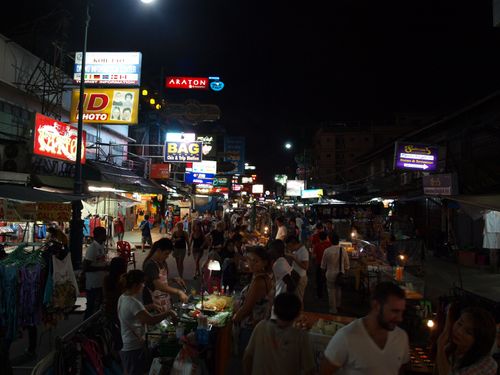
Khao San Road
Attractions
Bangkok’s backpacker carnival: curbside bars, live bands and DJs from 3pm–2am (midnight Sun). Street eats are cheap — pad thai 70–100 THB, mango sticky rice 60–100 THB. Come for wild people-watching; duck into Rambuttri for a calmer beer.
Rambuttri
Markets
Khao San’s calmer cousin: a tree‑shaded lane of VW van cocktail bars, open‑air foot massages, pad thai grills, and easygoing live bands. Best from sunset to 11pm; beers 80–120 THB, cocktails 150–220 THB. One block from the chaos, all the charm.
Staying near Khao San Road? Compare Khao San Road hotels with Expedia booking links.
Flights to Khao San Road
Compare flight options on Expedia.
More Khao San Road Guides
- Bangkok Street Food Guide for Spice-Lovers: How to Order Mild, Medium, or Thai-Hot Near Khao San Road
- Bangkok Street Food for Heat-Safe Eating: The Best Low-Risk Dishes, Freshness Checks, and Stall Rules in Bangkok
- Bangkok Street Food Without the Spice: Mild Dishes and Easy Orders for Sensitive Palates Near Khao San Road
- How to Order Bangkok Street Food: Thai Phrases, Spice Levels, and Stall Etiquette for Khao San Road First-Timers