
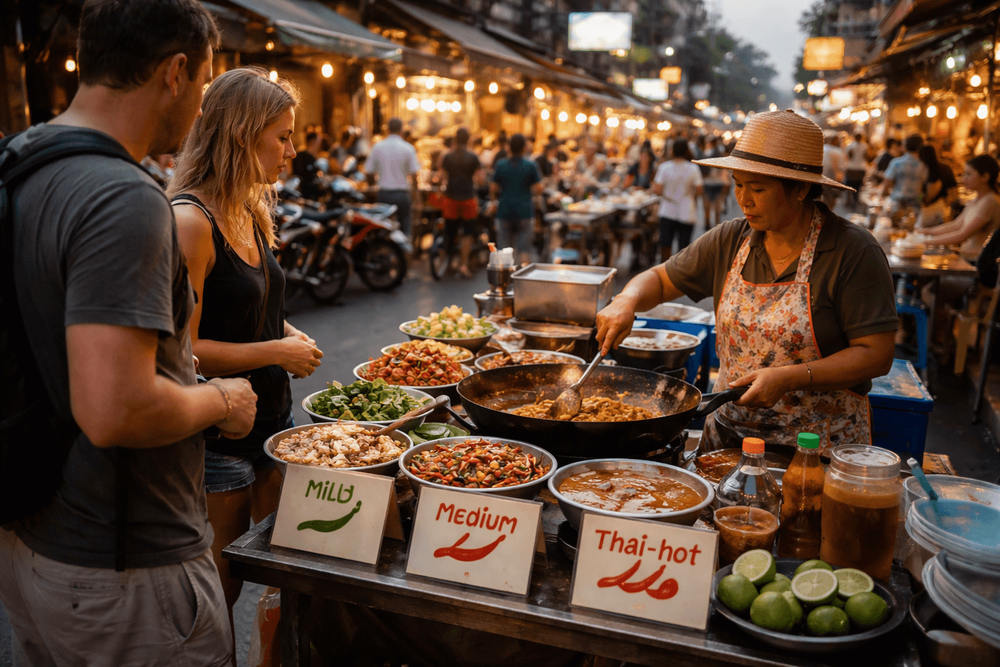
Bangkok Street Food Guide for Spice-Lovers: How to Order Mild, Medium, or Thai-Hot Near Khao San Road
Decode Bangkok street food spice levels near Khao San Road and order mild, medium, or Thai-hot with confidence—phrases, dishes, and street-smart tips inside.
We’re shoulder to shoulder on Rambuttri, the air shimmering with wok heat and clove-scented incense. A mortar thumps papaya to a rhythm, a cook fans charcoal until pork skewers hiss, and somewhere a blender screams over the thump-thump from a Khao San bar. This is where Bangkok street food spice level stops being a vague warning and becomes a choose-your-own adventure. Our mission tonight: navigate mild, medium, and full-on Thai-hot without losing our lips—or our nerve.
Bangkok street food spice level: what mild, medium, and Thai-hot really mean
Bangkok is a mash-up of regional Thai kitchens—Isan grills on Phra Athit Road, southern curry carts lurking near Chakrabongse, central-style noodle stalls tucked into Banglamphu Market. Spice isn’t a single dial; it’s a whole dashboard, and it shifts by dish, stall, and cook.
- By dish: A pad thai can be breezy and sweet—until the vendor spoons on prik pon (chili powder). Som tam (papaya salad) can swing from mild and limey (som tam Thai) to eye-watering, fermented-fishy heat (som tam pla ra). Boat noodles usually arrive mellow, then the table condiments transform them.
- By stall: Some aunties cook for office crowds and go easy; late-night carts on Khao San cater to farang and may default to milder unless you ask for phet (spicy). Others are proud chili-bombers and won’t pull punches unless you beg—politely.
- By region: Isan food (northeast) leans bright, raw, and spicy. Southern Thai can be volcanic with turmeric and fresh bird’s eye chilies. Central Thai leans toward balance—sweet, salty, sour—with spice layered, not shouted.
Tiny choices matter. Fresh chilies bring instant sting; dried chilies give a slower, smoky burn. Chili jam (nam prik pao) is toasty-sweet with a creeping heat. A quick “mai phet” (not spicy) before the ladle drops can change your night.
Reading the room (and the wok)
- Cooking to order? Stir-fries, papaya salad, and most noodle soups are tweakable on the spot.
- Pre-made curries in trays? Heat is baked in. You can choose a milder tray, but the baseline won’t shift much.
- Mixed tables of condiments? You control the afterburner. Add a dab, taste, repeat.
If we’re based near Khao San, we usually start on Soi Rambuttri for gentler flavors, then graduate to the Isan carts around Phra Athit when we’re feeling brave. Sanuk (fun) is the goal; there’s no prize for pain.
Chilies, pastes, and Thai words that signal heat
When you hear the words—and spot the jars—you’ll know what’s coming.
Chili types and heat boosters you’ll see
- Prik kee noo (bird’s eye chili): tiny, nuclear, fresh green or red. A couple slices can set you adrift on the khlong of regret.
- Prik chee faa (long red chili): milder, great for color and aroma in stir-fries.
- Prik daeng haeng (dried red chili): smoky, slow-building burn in noodle soups and stir-fries.
- Prik pon (chili powder): the red dust at noodle stalls—easy to overdo.
- Prik dong (pickled chilies): rings floating in vinegar, bright heat.
- Phrik nam pla: fish sauce with chopped chilies—salty heat rocket fuel.
- Nam prik pao (roasted chili jam): sweet, toasty, umami, a creeping warmth.
- Curry pastes (prik gaeng): red (gaeng daeng), green (khiao wan), sour orange (gaeng som), turmeric-heavy southern (gaeng tai pla, gaeng kua)—each with its own fire.
For a deeper dive on what’s in your bowl, we break down the usual suspects in our Bangkok Street Food Ingredients Guide: Chili, Herbs, Noodles, and Proteins.
Phrases to steer the heat (say these before the cooking starts)
- Mai phet (not spicy)
- Phet nid noi (a little spicy)
- Phet trung trung (medium spicy)
- Phet mak mak (very spicy)
- Mai sai prik (don’t add chilies)
- Sai nam prik nam pla krab/kha? (add chili–fish sauce, please?)
Timing matters: catch the vendor before the spoon hits the wok. If you’re customizing, our step-by-step tips live here: Street Food Ordering Guide: Thai Phrases, Spice Levels, and Customization.
Gentle, medium, and Thai-hot dishes to try near Khao San
We’ll keep it walkable: Khao San Road, Soi Rambuttri, Phra Athit Road, and the Banglamphu Market lanes. Expect most dishes to land well under 100–150 THB at typical stalls—confirm locally, as prices fluctuate by portion and hour.
Mild (safe starters when you’ve just landed)
- Khao man gai (Hainanese chicken rice): silky poached chicken, fragrant rice. Ask for “mai phet” and keep the gingery chili sauce on the side.
- Moo ping + sticky rice: grilled pork skewers lacquered with palm sugar. Pair with cucumber to cool the edges.
- Pad thai: request “mai phet, mai sai prik” and season yourself with lime and peanuts.
- Pad see ew: wide noodles, soy char, Chinese kale. Usually mild unless you add chili flakes.
- Guay jub (rolled rice noodle soup): peppery broth, soft pork belly. Black pepper tingle more than chili burn.
- Tom kha gai: coconut, galangal, lime leaves—aromatic and creamy, spice kept in check.
- Mango sticky rice: dessert as a fire extinguisher. No shame.
Where: Early evenings on Soi Rambuttri are gentle; the carts opposite Wat Chana Songkhram Ratchaworamahawihan often serve milder plates for farang.
Medium (a proper Bangkok hum without a meltdown)
- Pad kra pao (holy basil stir-fry): ask for “phet nid noi.” Pork or chicken is a friendlier start; duck and beef can come spicier.
- Tom yum (clear broth): go “nam sai” and “phet trung trung” for a bright, manageable tang.
- Larb moo (Isan minced pork salad): mint, toasted rice, lime. Request “phet nid noi” and skip raw chilies.
- Som tam Thai: the classic papaya salad with peanuts and dried shrimp. Specify “mai sai prik mak,” then calibrate with the table’s chili–fish sauce if needed.
- Massaman curry: sweet-savory, usually mild-to-medium, rich with peanuts and cinnamon.
Where: Phra Athit Road toward Santichaiprakan Park hosts Isan grills with solid larb and som tam; they’ll dial it down if you’re polite and clear.
Thai-hot (for when we’re ready to sweat and grin)
- Som tam pla ra: fermented fish funky, salty, and hot. Requesting “phet mak mak” here is for the bold.
- Gaeng som: sour orange curry—thin, sharp, and chili-forward; southern-style versions can be ferocious.
- Kua kling: southern dry curry that tastes like beefed-up pepper spray (in the best way).
- Tom yum with nam prik pao and extra fresh chilies: the one-two punch of roasted and raw.
- Nam tok neua: grilled beef salad richer than larb and—at some stalls—meaner with chilies.
Where: Night carts off Chakrabongse Road and around the north end of Phra Athit get bolder as the hour gets later.
If you want a curated chili chase near the backpacker zone, we mapped favorites here: Bangkok Street Food for Spicy Food Lovers Near Khao San Road. Prefer to keep it gentle? Save this: Bangkok Street Food Without the Spice Near Khao San Road.
How to ask for less spicy and customize like a local
Bangkok cooks are wizards at cooking to order, which means you can steer the dish—if you speak up early, smile, and keep it simple.
- For stir-fries (pad kra pao, pad see ew): say “mai phet” or “phet nid noi” before the chilies meet the wok. If you’re very sensitive: “mai sai prik.”
- For som tam: specify the number of chilies—“song met” (two chilis)—or simply “mai phet” and add heat later with phrik nam pla.
- For noodle soups: ask the cook to hold the dried chili; season at the table. Clear broth (nam sai) is gentler than tom yum style.
- For curries in trays (khao rad gaeng): point to milder curries like massaman or panaeng, and skip any with visible red oil and floating chili seeds.
Signal with your hands if needed—pinch fingers for “a little,” palm out for “stop.” A “krab” (male) or “kha” (female) softens every request. You’ll feel the vibe: if the stall is slammed and the wok is a blur, keep the instruction to one short line.
For more phrase practice and tone tips, our full how-to is here: Street Food Ordering Guide: Thai Phrases, Spice Levels, and Customization.
Tips for spice-sensitive eaters (and anyone who hates a capsaicin crisis)
- Start with balance dishes. Coconut soups, soy-sauce noodles, and chicken rice are training wheels.
- Use the condiment tray tactically. A few drops of chili–fish sauce beat a blizzard of chili powder.
- Pair smart. Sticky rice, cucumber, and grilled pork calm the fire. Sugar helps more than water; dairy (ice cream, fresh milk) is your panic button. Beer can feel cooling but often makes the burn linger.
- Watch for hidden heat. Chili seeds in salads, chili oil slicks on curries, or ladles of nam prik pao can sneak up on you.
- Time your tastings. Bangkok heat plus chili heat is a double whammy; we like late afternoon into evening, then retreat to AC when our forehead starts to bead. The blast of 7-Eleven air is practically a public service.
- Eat where the turnover is high. Freshly cooked, busy stalls, hot wok—your best friend for both taste and tummy. If safety’s top of mind, scan our playbook: Heat-Safe Eating: Freshness Checks and Stall Rules.
Getting there and where to wander
There’s no BTS to Khao San. We usually hop the Chao Phraya Express Boat to Chao Phraya Tourist Boat N13 Phra Arthit Pier, then stroll inland past Santichaiprakan Park. Taxis are fine—meter on, window cracked, smile ready—or grab a tuk-tuk for the breeze and the brrrapp. Buses and motorbike taxis crisscross Banglamphu if you’re game; keep small change handy.
Here’s the neighborhood center to orient your spice crawl:
Where to crash? We keep it simple and central: a guesthouse off Soi Rambuttri when we want quiet nights and mango breakfasts, or a mid-range hotel on Phra Athit when a pool day is non-negotiable. Either way, being able to wander out the door at 2 AM for boat noodles is the real luxury.
Quick Plan
- Day 1: Phra Arthit Pier → Soi Rambuttri (1 km, 15 min walk). Key stops: mild starters (khao man gai, pad see ew), practice phrases. Overnight base: Banglamphu/Khao San.
- Day 2: Soi Rambuttri → Phra Athit Road → Chakrabongse Road (2–3 km total, unhurried stroll). Key stops: medium-to-spicy Isan salads, southern curry cart; cool-down with mango sticky rice or coconut ice cream. Overnight base: Banglamphu/Khao San.
ASCII route: Pier (N13) → Park → Soi Rambuttri → Phra Athit → Chakrabongse
Costs at a Glance (THB)
Last checked: Sep 2026
- Fuel (per liter): 35–45 THB for petrol (if you’re self-driving; otherwise not applicable). Confirm locally; city prices fluctuate by brand and day.
- Estimated fuel cost per segment: Walking/boat-based plan—0 THB. If driving to Banglamphu from Suvarnabhumi (~30 km), estimate 100–150 THB fuel depending on traffic; confirm locally.
- Tolls per segment: 0 THB for the walking/boat plan. If using expressways inbound, expect tolls in the 25–80 THB range per plaza; confirm locally.
- National park/attraction fees: Not required for street food. Optional Wat Saket (Golden Mount) may charge a modest entry (often well under 100 THB); confirm locally.
- Parking per night (if bringing a car): 100–300 THB at private lots around Khao San; confirm locally.
- Street food dish benchmarks: Many single-dish plates around Banglamphu remain under 100–150 THB; portion size and location vary—confirm locally.
Booking Pathways
- Car rental: Compare rental deals at DiscoverCars for Bangkok pickups: https://www.discovercars.com/thailand/bangkok
- Hotels: Compare Bangkok hotel deals across budgets on Booking.com: https://www.booking.com/city/th/bangkok.en-gb.html
- Attraction tickets: Browse Bangkok street food tours on Klook: https://www.klook.com/en-US/city/2-bangkok-things-to-do/
Verification
- We avoid quoting exact stall prices and opening hours because they change frequently by vendor and season; where figures appear, we’ve provided conservative ranges and noted “confirm locally.”
- Fuel price ranges and toll ranges are typical city-wide snapshots as of Sep 2026 based on public rate boards and common Bangkok expressway fees; verify in real time via your chosen station or navigation app.
- Transit options (boat to Phra Athit, taxis, tuk-tuks) operate daily, but frequencies and fares can vary; check locally the day you go.
If you’ve got a night left, let’s chase a “phet nid noi” larb on Phra Athit, then slide into sticky rice and a lime soda. Tomorrow we can level up—Thai-hot, just to see if we can still feel our lips.
EVAL_DATA:
- has_quick_plan: true
- has_costs_at_a_glance: true
- has_booking_pathways: true
- has_verification: true
- ascii_map_included: true
- maps_embedded: true
- internal_links_used: 4
- external_links_count: 3
- hotel_inventory_compliant: true
Related Hotels & Places
Khao San Road
Attractions
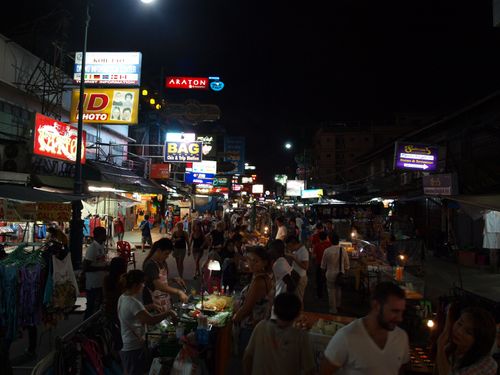
Bangkok’s backpacker carnival: curbside bars, live bands and DJs from 3pm–2am (midnight Sun). Street eats are cheap — pad thai 70–100 THB, mango sticky rice 60–100 THB. Come for wild people-watching; duck into Rambuttri for a calmer beer.
Rambuttri
Markets
Khao San’s calmer cousin: a tree‑shaded lane of VW van cocktail bars, open‑air foot massages, pad thai grills, and easygoing live bands. Best from sunset to 11pm; beers 80–120 THB, cocktails 150–220 THB. One block from the chaos, all the charm.
Wat Chana Songkhram Ratchaworamahawihan
Temples
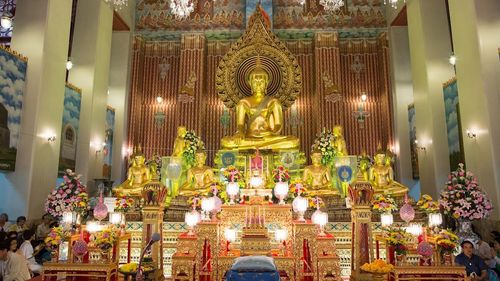
18th‑century royal temple steps from Khao San. Slip into quiet courtyards and an opulent viharn with a gilded Buddha. Opens 7:30am daily (Mon to 6:30pm). Enter on Chakrabongse Rd by Phra Athit; dress modestly.

Chao Phraya Tourist Boat N13 Phra Arthit Pier
Services
Khao San's river gateway. N13 Phra Arthit is the Chao Phraya Tourist Boat stop: grab a day pass and hop to Wat Arun, the Grand Palace and Sathorn. Boats every ~30 mins; last around 7:15pm. The scenic, no-traffic way to get around.
More Khao San Road Guides
- Bangkok Street Food by Spice Level: Mild Dishes, Safe Picks, and How to Ask for Less Heat
- Bangkok Street Food Without the Spice: Mild Dishes and Easy Orders for Sensitive Palates Near Khao San Road
- Bangkok Street Food Guide for First-Time Visitors: What to Order, How to Order, and How to Eat Safely Around Khao San Road
- Bangkok Street Food for Non-Spicy Eaters: What to Order Near Khao San Road