
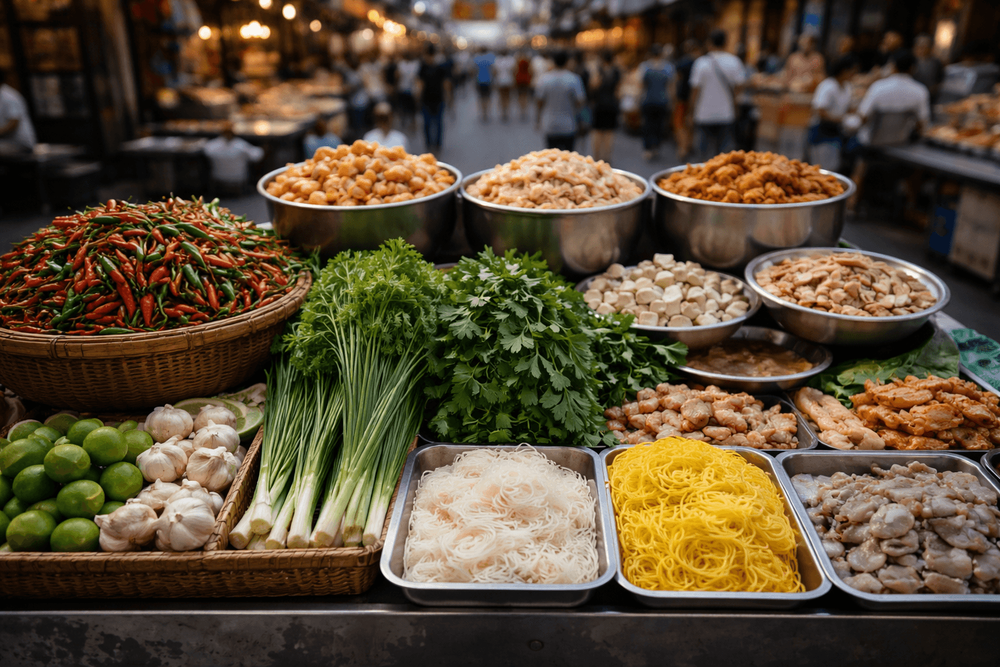
Bangkok Street Food Ingredients Guide: Chili, Herbs, Noodles, and Proteins You’ll See at Khao San Road Stalls
Decode Bangkok street food ingredients—herbs, sauces, noodles, and proteins—plus freshness tips, seasonal picks, and how to order smarter around Khao San.
We’re two steps into Baan Manee BKK and the air already tastes like dinner: garlic hitting hot oil, chilies prickling our sinuses, a sweet whiff of palm sugar caramelizing in a wok the size of a hubcap. If you’ve ever wondered what’s actually going into all this—what the real Bangkok street food ingredients are beneath the smoke and neon—pull up a plastic stool. We’ll walk Khao San Road, dip into Bang Lamphu Market, and decode what’s in your bowl so you can order like a local and tweak flavors to your taste.
Data Freshness + Pricing:
- Prices are approximate and in THB.
- Last checked: July 2026.
- Happy hour and promo details change frequently—confirm locally.
The Bangkok street food ingredients you’ll see everywhere
Bangkok runs on balance—sweet, sour, salty, spicy—and you’ll see that dance in the baskets and bins around every cart. Once we learn to spot the staples, menus start to translate themselves.
Herbs and aromatics
- Thai holy basil (kaphrao): Peppery, clove-like; the soul of pad kaphrao. Wilts fast, so cooks add it right at the end.
- Thai sweet basil (horapha): Anise-y, bright; rides on green curry and stir-fries.
- Kaffir lime leaves (bai makrut): Torn into soups and curries for a citrus perfume.
- Lemongrass (ta-khrai): Smashed for tom yum and grilled marinades.
- Galangal (kha): Ginger’s woodier cousin; slices float in tom kha.
- Coriander/cilantro (pak chee) and coriander root: Leaves for garnish; roots pounded into marinades with garlic and white pepper.
- Shallots and garlic: The Bangkok holy duo, fried into crunchy bits or pounded into pastes.
- Culantro (pak chee farang): Saw-toothed, stronger than cilantro; pops up in Isan salads.
Chilies and spice
- Bird’s eye chilies (prik kee noo): Tiny, nuclear. Crushed in som tam or sliced for table condiments.
- Long red chilies (prik chee fa): Milder; blend into curry pastes for color.
- Roasted chili flakes (prik bon) and chili paste (nam prik pao): Spoons of heat for noodle soups and pad thai.
- White pepper (prik Thai): The background heat in stir-fries and soups.
Noodles and rice
- Rice noodles:
- Sen yai (wide), sen lek (medium), sen mee (thin); choose your slurp for pad see ew, boat noodles, or stir-fries.
- Khanom jeen: Fermented rice vermicelli for curries in the morning.
- Egg noodles (ba mee): Yellow, springy; great with roast duck, wontons, or fish balls.
- Rice:
- Jasmine rice (khao hom mali): Fragrant bed for curries.
- Sticky rice (khao niao): Hand-rolled with grilled meats and som tam.
Proteins and seafood
- Pork (moo): Ubiquitous—grilled (moo ping), crispy belly (moo krob), or minced for basil stir-fries.
- Chicken (gai): Satay, gai yang (grilled), or poached over rice (khao man gai).
- Beef (neua): In boat noodles or grilled; less common than pork/chicken.
- Duck (ped): Roasted or braised, often over egg noodles.
- Offal: Liver, tripe, intestines—especially in soups and street grills.
- Seafood: Prawns, squid, mussels, cockles, and fish balls; river prawns when you’re lucky.
- Tofu and egg: Vegetarian workhorses; tofu puffs soak up sauce like a dream.
Vegetables
- Morning glory (pak boong): Hollow stems, beloved in spicy stir-fries.
- Chinese kale (kailan), cabbage, long beans: Stir-fry staples.
- Thai eggplant and pea eggplant: Bitter pop in curries.
- Green papaya and green mango: Shredded for salads.
- Banana blossom: Shaved for texture; sometimes fried or in salads.
Sauces and seasonings
- Fish sauce (nam pla): Salty, funky backbone of the city.
- Oyster sauce (nam man hoy): Glossy, savory sweetness for wok work.
- Light/dark soy (si-ew khao/si-ew dam) and seasoning sauce: The wok’s paintbox.
- Tamarind pulp: Sour for pad thai and dipping sauces.
- Palm sugar: Round, caramelly sweetness; melts into everything.
- Vinegar (often with pickled chilies), sugar, chili flakes, fish sauce: The four-jar condiment set at noodle stalls—our DIY flavor lab.
Ballpark prices if you’re browsing markets near Banglamphu: a bunch of holy basil is approx. 10–20 THB, limes about 5–8 THB each, a small bottle of fish sauce 25–50 THB, dried chilies 30–60 THB per small bag. On the street, a simple moo ping stick runs approx. 15–25 THB, while a fried noodle plate sits around 60–120 THB depending on protein.
Flavor builders: the Bangkok street food ingredients behind the balance
Bangkok cooking is a see-saw of tastes. When a vendor asks, “Phet mai?” (spicy?), they’re really asking how you want to balance the dish.
- Fish sauce: Liquid umami. Add a splash when a bite feels flat. Some stalls cut with a pinch of sugar to mellow the funk.
- Tamarind: Clean, fruity sour that keeps sweet dishes from cloying—pad thai and grilled meat dips depend on it.
- Lime: Bright sour; squeezed at the finish so the fragrance doesn’t cook off.
- Palm sugar: Deep sweetness that caramelizes without burning too fast.
- Chilies: Heat and aroma; raw for bite, fried for nuttiness, pounded for depth.
- Garlic and shallots: Raw for sting, fried for crunch, pounded for body.
- Fermented condiments: Shrimp paste (kapi) and fermented fish (pla ra) drive certain salads and dips. They sound scary to farang ears but taste like rocket fuel for flavor.
Tip: When a stall sets down the four-jar caddy, we taste first, then fix. If the broth feels sleepy, add chili vinegar for lift; if noodles skew sweet, a dot of fish sauce wakes them up. No shame—it’s expected sanuk to tune your bowl.
Ingredient profiles of Bangkok’s greatest hits
We’ll break down what’s actually in the city’s most-ordered dishes so you can tailor on the fly.
Pad Thai
What you’ll see in the wok: sen lek rice noodles; tamarind, palm sugar, and fish sauce as the base; garlic and shallots sizzling first; dried shrimp and pressed tofu cubes; an egg pushed to the side and scrambled; bean sprouts, garlic chives; crushed peanuts and lime to finish. Optional extras: prawns or chicken. On Khao San Road, expect approx. 60–100 THB for chicken, 80–140 THB for prawn.
How to tweak: Ask for “mai wan” (less sweet) if you’re sugar-shy; “mai sai nam pla” for no fish sauce; “phet noi” for a gentle chili sprinkle.
Som Tam (green papaya salad)
Mortar symphony: shredded green papaya, bird’s eye chilies, garlic, palm sugar, lime, fish sauce. Long beans, tomatoes, dried shrimp, and peanuts tumble in. Regional spins: tam Thai (clean, fish-sauce only), tam pla ra (Isan style with fermented fish), tam pu pla ra (add tiny field crabs). Prices hover around 50–80 THB depending on add-ins.
Watch-outs: Shellfish allergies—dried shrimp and fish sauce are stealthy. Ask for “mai sai kung haeng, mai sai nam pla” if needed.
Boat noodles (kuaitiao ruea)
The dark, soulful broth owes its depth to star anise, cinnamon, white pepper, soy, and a splash of pig’s blood that thickens and rounds bitterness—plus fried garlic, greens (often morning glory), and your pick of pork or beef slices and balls. Noodles are usually sen lek. Order “khua” bowls, tiny but punchy; we stack two or three at approx. 40–80 THB each.
Ask first if blood is used; many stalls can do no-blood versions.
Grilled skewers and Isan grills
- Moo ping: Pork shoulder marinated with palm sugar, fish sauce, coriander root, garlic, and white pepper; kissed by charcoal. Sticky rice on the side (approx. 10–15 THB per bag).
- Gai yang: Chicken marinated in lemongrass, garlic, turmeric, and fish sauce. Dip in jaew—tamarind, fish sauce, lime, and roasted rice powder.
- Sai krok Isan: Fermented pork sausage, garlicky and tangy; comes with chilies and cabbage.
Skewers are usually approx. 15–30 THB each around Khao San; a mixed plate with sticky rice might hit 80–150 THB.
Curries at khao gaeng carts
Curries are where pastes do the heavy lifting. A basic paste pounds together chilies, lemongrass, galangal, kaffir lime peel, coriander root/seeds, cumin, garlic, and shallots. Coconut milk softens edges.
- Green curry (kaeng khiao wan): Green chilies, Thai basil, Thai eggplants; often chicken.
- Red curry (kaeng phet): Red chilies, richer body; pork or duck.
- Massaman: Southern-Muslim lineage—cinnamon, star anise, cardamom, peanuts, potatoes, and beef or chicken.
Rice plus two curries runs approx. 60–120 THB. Look for trays steaming around lunch, then gone by mid-afternoon.
Mango sticky rice (khao niao mamuang)
Simple perfection: sticky rice steamed and folded with coconut cream, sugar, and a whisper of salt; ripe Nam Dok Mai mango; crisp mung beans or sesame on top. Best March–June when mangoes sing. Expect approx. 70–140 THB depending on size and season.
Pro tip: Ask for “khao niao nam kati mai waan mak” if you want the coconut cream less sweet.
Freshness, sourcing, and why markets matter
Before we ever smell charcoal on Khao San, someone has been bargaining at dawn. Most vendors around Banglamphu still shop early, then prep in shophouse kitchens or right on the cart.
Where ingredients come from:
- Banglamphu Market (Chakrabongse Road): Our neighborhood pantry—holy basil, limes, chilies, and pork by mid-morning. Great for seeing what today’s stir-fries will taste like. Herbs are cheapest here—bunches around 10–20 THB.
- Khlong Toei Market: Bangkok’s big, bruising wholesale market. Seafood on ice, sides of pork, mountains of greens. If we’re chasing the city’s freshest cockles or squid, odds are they passed through here first.
- Or Tor Kor Market (near Chatuchak): Pristine produce—the Instagram version of your stir-fry. Prices are higher, quality is stellar.
- Pak Khlong Talat (Flower Market): Officially flowers, unofficially a night owl’s source for limes, chilies, garlic, and herbs when the city cools down.
Seasonal shifts you’ll taste:
- Mango and mangosteen: Peak March–August; prices drop, dessert stalls multiply.
- Durian: April–July—sweet rot perfume in the air, if that’s your jam.
- River prawns: Better availability cool season through early summer, prices fluctuate widely (grilled prawns might be approx. 180–360 THB depending on size).
- Basil, morning glory, and Thai eggplants show up year-round, but storms and heat waves move prices a notch or two.
How we spot the good stuff:
- Greens should be perky, not weepy. If holy basil looks tired, stir-fries will too.
- Seafood on ice, bright-eyed fish, and no ammonia smell. Cockles closed tight are your friends.
- Noodle carts frying to order beat pre-cooked piles. We’ll happily wait an extra minute for wok breath.
If you’re curious but cautious, skim the practical pointers in our Bangkok Street Food Hygiene Guide (/articles/bangkok-street-food-hygiene-guide) before you dive in.
Dietary and ingredient considerations (how to ask, what to avoid)
We love Bangkok’s anything-goes energy, but a few ingredients sneak into everything. Here’s how we navigate.
Vegetarian, vegan, and “jay”
Fish sauce and oyster sauce are default in wok cooking, even when the plate looks meatless. Useful phrases:
- “Jay” (vegetarian Buddhist style—no meat, fish sauce, oyster sauce, or pungent alliums for strict versions). Point and say “kin jay” and vendors will usually get it.
- “Mai sai nam pla” (no fish sauce), “mai sai hoi” (no shellfish), “mai sai kapi” (no shrimp paste).
- Tofu or mushrooms make easy swaps; stir-fried morning glory can be done with soy only.
For more strategies and Thai phrases, see Bangkok Halal Street Food Guide (/articles/bangkok-street-food-dietary-restrictions-vegetarian-vegan-halal-gluten-free).
Halal considerations
Bangkok has plenty of Muslim vendors—look for halal signs near mosques and along Phra Athit Road into the old town. Grilled chicken, beef satay, and roti-mataba stalls are safe bets. Ask “halal mai?” and confirm oils; some non-halal stalls still fry in pork fat. Chicken rice (khao man gai) is widely halal-friendly if the shop is certified.
Shellfish and fish products
Stealth seafood alert:
- Dried shrimp in pad thai and som tam.
- Oyster sauce in most stir-fries.
- Fish balls can include shrimp paste.
- Fish sauce everywhere unless you ask.
Allergy plan: learn to say “paae thua” (peanut allergy) and ask vendors to clean the wok. For a deeper rundown, see Bangkok Street Food for Non-Spicy Eaters (/articles/bangkok-street-food-allergies).
Gluten, soy, peanuts, egg, and MSG
- Soy and seasoning sauces often contain wheat; rice noodle dishes can be made with fish sauce + tamarind instead if you ask.
- Peanuts hit pad thai and satay dips; ask for “mai sai thua.”
- Eggs are optional in many noodle dishes; say “mai sai khai.”
- MSG is common. If sensitive, try “mai sai pong chu rot” (no MSG), though results vary.
If food safety is on your mind, skim the Bangkok Street Food for First-Time Visitors (/articles/bangkok-street-food-safety-guide).
Know before you go: Khao San and beyond
- Timing: Lunch markets fire up 10:30–14:00. Night carts peak 18:00–midnight; some grills hang on till 2 AM when the bass on Khao San thumps hardest.
- Cash and small change: Most carts are cash-only. Keep 20s and 50s handy so you’re not the farang breaking a 1,000 for one skewer.
- Heat management: We snack, then duck into 7-Eleven for that polar blast of AC and a 13–20 THB water. Hydrate, always.
- Getting around: From Khao San, the Chao Phraya Express boat from Phra Arthit Pier zips you to Tha Chang for markets near the Grand Palace, or south to Saphan Taksin for BTS connections.
- Crowds and patience: Good stalls have queues. It’s Bangkok—sanuk comes with a wait and a little sweat.
Where we base ourselves: When we’re eating our way through Banglamphu, we usually crash on a quiet lane off Soi Rambuttri so we can roll out for a 30 THB grilled pork stick at sunrise and be back by noon for a pool cooldown. On curry-heavy weeks, we’ve stayed closer to Phra Athit Road—leafy, breezy, and steps from the river—so late-night noodle runs are a three-minute wander, not a trek.
How to build your own bite at the table
Most stalls hand you Bangkok’s flavor control panel: four jars and a dream. Here’s our quick formula for noodle soups and stir-fries:
- Taste first.
- If it’s flat: a half-spoon fish sauce.
- Too sweet: vinegar with chilies.
- Needs heat: roasted chili flakes.
- Missing zing: a squeeze of lime.
Once you start noticing these Bangkok street food ingredients, ordering gets fun. We’ll be the ones on the corner of Tanao Road and Soi Rambuttri, arguing about whether today’s som tam needs another hit of tamarind—or whether we should just order a second papaya and see where the chilies take us.
Related Hotels & Places
Baan Manee BKK
Hotels
Riverside boutique stay and café in a restored 118-year-old family home. Quiet Bang Yi Khan vibes, 10–15 mins from Khao San. Come for river views, iced coffee, and a slow afternoon; stay in character-filled rooms steps from Wat Daowaduengsaram.
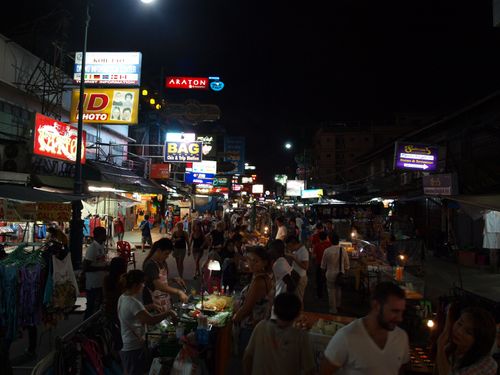
Khao San Road
Attractions
Bangkok’s backpacker carnival: curbside bars, live bands and DJs from 3pm–2am (midnight Sun). Street eats are cheap — pad thai 70–100 THB, mango sticky rice 60–100 THB. Come for wild people-watching; duck into Rambuttri for a calmer beer.
Bang Lamphu Market
Markets
Old-school Banglamphu market just off Khao San for bargain clothes, luggage and the city’s go-to school‑uniform shops. Swing by at dusk when street-food carts fire up and locals shop for dinner. Open Tue–Sun till 10pm; closed Monday.
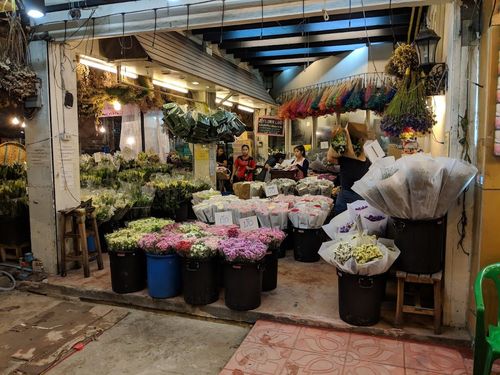
Pak Khlong Talat (Flower Market)
Markets
Bangkok’s 24‑hour flower market by Memorial Bridge. Best after midnight when trucks unload orchids, marigolds, roses and fragrant jasmine garlands. Photogenic, lively, and easy to reach from Khao San for a late‑night wander.
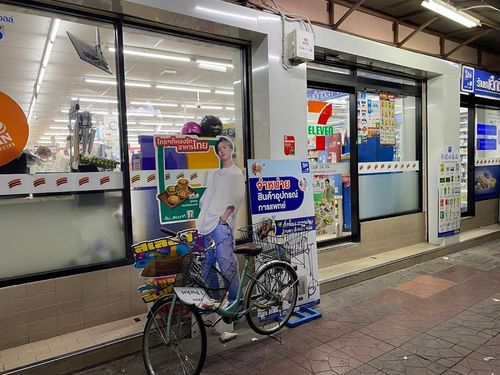
7-Eleven
Shops
Khao San’s 24/7 reset button: ice‑cold A/C, ham‑cheese toasties, All Café iced lattes, water for 7–14 THB, and late‑night supplies from snacks to sunscreen—right by Rikka Inn.
More Khao San Road Guides
- Bangkok Street Food for Non-Spicy Eaters: What to Order Near Khao San Road
- Bangkok Street Food Guide for Spice-Lovers: How to Order Mild, Medium, or Thai-Hot Near Khao San Road
- Bangkok Street Food for First-Timers: Must-Try Dishes Near Khao San Road and How to Spot the Real Version
- Bangkok Street Food Guide to Iconic Dishes: Where to Find Pad Thai, Boat Noodles, and Mango Sticky Rice Near Khao San Road