Bangkok Street Food Without the Spice: Mild Dishes and Easy Orders for Sensitive Palates Near Khao San Road
Sensitive to spice? Our Khao San guide to mild Bangkok street food—what to order, how to ask “no chili,” and where to find the good stuff.
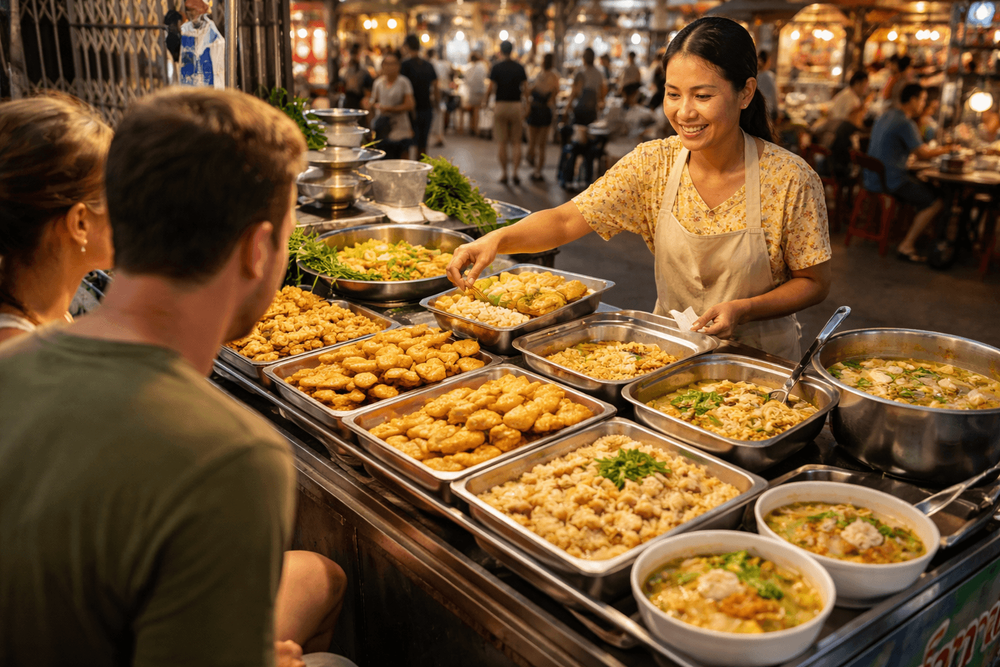
We’re shoulder-to-shoulder on Rambuttri, where the woks hiss like summer rain and the air smells like grilled pork and ripe mango. A pad thai guy fans his charcoal, a roti cart snaps batter on a hot plate, and someone somewhere is pounding chilies like a war drum. But we’re here for something gentler. If you’re hunting for Bangkok Street Food for Non-Spicy Eaters near Khao San Road, Bangkok will meet you halfway—if you know what to ask for and where to look.
What “mild” really means in Bangkok
Mild in Bangkok doesn’t mean bland. It means leaning into the city’s other loves—salty, sweet, sour, umami—without the fire. Think soy and oyster sauce caramelizing on noodles; coconut milk softening the edges of soups; grilled meats lacquered in palm sugar and fish sauce; broths that taste like they’ve been simmering since sunrise.
Here’s what we look for when we want flavor without the burn:
- Clear broths and coconut-based soups instead of chili-laced tom yum
- Stir-fries cooked to order (you can say “no chili” before the first sizzle)
- Grilled meats and steamed dishes that come with dipping sauces you can skip or control
- Rice plates with sweet-savory braises (pork leg, red pork) and cucumbers on the side
- Desserts—Thailand’s late-night mercy: sticky, creamy, icy, fruity, never spicy
Heads-up on hidden heat: street stalls often add prik bon (roasted chili flakes), prik nam pla (fish sauce with sliced chilies), or nam prik pao (chili jam) by default. That’s why the magic words matter (we’ll get to those) and why we scan the counter before ordering for bowls of red or green suspiciousness.
Bangkok Street Food Mild Dishes: our easy-order shortlist
You don’t have to negotiate with your tongue. These are the bangkok street food mild dishes we order around Khao San Road and beyond, broken down by style.
Soups and rice porridges (gentle bowls)
- Jok (rice porridge): Creamy, comforting, like a Thai congee hug. Usually with minced pork, ginger, scallion, and a soft egg. Ask “mai sai prik” (no chilies) and you’re golden. 35–60 baht.
- Khao tom gai/pla (rice soup with chicken or fish): Clear, soothing broth with rice grains floating, scented with garlic and coriander root. Keep the chili-vinegar on the table. 40–60 baht.
- Guay jub nam sai (rolled rice noodles in clear broth): Peppery from white pepper, not chili heat. If you’re super sensitive, say “mai sai prik thai yer” (easy on the pepper) or just “phet nit noi.” 60–90 baht.
- Kuay tiew nam sai (clear noodle soup): Choose sen lek (thin rice noodles) or ba mee (egg noodles) with pork balls or red pork. Season to your own taste—no chili required. 50–80 baht.
Tip: Breakfast carts along Soi Rambuttri and Chakrabongse Road set up early; slurp your bowl while the city is still yawning.
Grilled and roasted (control your own sauce)
- Moo ping (grilled pork skewers): Sweet, smoky, crowd-pleasing. Grab 2–3 sticks and a packet of sticky rice (khao niao). Skip the spicy jim jaew dip. 10–15 baht per skewer; sticky rice 10–15 baht.
- Gai yang (grilled chicken): Often marinated with lemongrass and garlic. Ask for “mai ao nam jim” (no dipping sauce) or “nam jim noy” (just a little). Quarter piece 40–70 baht; half bird 120–180 baht.
- Pla pao (salt-crusted grilled fish): Moist, herby, stuffed with lemongrass. The green seafood sauce is dynamite—taste first, then decide. 180–280 baht per fish, good for two.
Rice plates (simple, satisfying)
- Khao man gai (Hainanese chicken rice): Gentle by design. Tender chicken, fragrant rice, a mild broth. Ask for the gingery-chili sauce “on the side” or “nam jim noy.” 50–70 baht.
- Khao moo daeng (red pork on rice): Sliced char siu with sweet gravy, maybe a hard-boiled egg. Very low risk for heat. 50–70 baht.
- Khao kha moo (braised pork leg on rice): Star anise and cinnamon do the heavy lifting. Comfort food, Bangkok edition. 60–80 baht.
- Khao khai jiao (Thai omelette over rice): Fluffy, oily, deeply satisfying. Ask for no chili in the egg. 40–60 baht.
Stir-fried noodles and rice (cooked to order = your rules)
- Pad see ew: Wide rice noodles seared with dark soy, Chinese broccoli, and egg. Say “mai sai prik” and ride the smoky wok breath (khua). 50–80 baht.
- Rad na: Slippery rice noodles in a glossy gravy with pork or seafood and greens. Mild unless you add table condiments. 60–90 baht.
- Ba mee moo daeng: Egg noodles with red pork and wontons, dry (haeng) or with soup. Reliable and kid-friendly. 50–80 baht.
- Khao pad (fried rice): The Swiss Army knife of mild orders—add chicken, shrimp, or crab; tell them “mai phet.” 50–90 baht.
- Pad thai: Usually mild unless finished with chili flakes. Ask them to leave off the red dusting and adjust with lime and peanuts. 60–100 baht around Khao San.
Avoid pad kee mao (drunken noodles) and basil stir-fry (krapao) unless you’re ready to negotiate hard; both are built on chilies.
Snacks and desserts (spice-free joy)
- Khanom krok: Coconut-rice pancakes, crisped on the edges, custardy in the middle. 20–40 baht for a tray.
- Roti: Flaky Muslim-style pancakes stuffed with banana, egg, or just sugar and condensed milk. 25–50 baht.
- Mango sticky rice: Sweet coconut cream, ripe mango, a little salty-sweet chew. 80–120 baht depending on season.
- Tub tim krob (red rubies): Water chestnut jellies in iced coconut milk—Bangkok’s edible air-con. 40–60 baht.
- Grass jelly (chao kuay) or lod chong: Slurpable, cool, and herbally sweet. 30–50 baht.
How to order like a spice-averse pro
Smile, wai if you feel it, and keep it simple. Most vendors around Khao San understand a bit of English, but Thai keywords help a lot. Add “khráp” (if you present as male) or “khâ” (if you present as female) at the end to be polite.
- “Mai phet” — not spicy
- “Phet nit noi” — a little spicy
- “Mai sai prik” — don’t add chilies
- “Mai ao nam jim” — no dipping sauce
- “Nam jim noy” — just a little dipping sauce
- “Mai sai prik pon” — don’t add chili flakes
- Point to condiments and say “mai ao” (don’t want) or tap your plate and say “noy” (a little) while the vendor is seasoning
If the wok is already flaming, it’s too late to negotiate. Catch the cook’s eye before anything hits the pan. For noodle soups, tell them your heat preference when you choose the noodle type and meat.
Where to find mild-friendly street food near Khao San Road
You don’t need a tuk-tuk safari to eat gently. These spots around Banglamphu reward the soft-spice seeker.
Soi Rambuttri and Khao San (evenings into late night)
When the sun drops, the mild hits the street. Look for:
- Roti carts flipping banana-and-egg roti with a lashing of condensed milk
- Moo ping stands by the curb, plus sticky rice in small plastic bags
- Pad thai woks happy to leave off the chili flakes if you ask
We like staying within a few minutes’ walk of Soi Rambuttri—quiet enough to sleep, close enough to grab jok at dawn and roti at midnight without planning a mission.
Phra Athit Road and the riverfront (mornings to lunch)
Walk five minutes from Khao San toward Phra Athit Road; you’ll hear the Chao Phraya before you see it. Around midday, you’ll find:
- Chicken rice (khao man gai) shops with steaming stockpots and poached birds hanging in the window
- Egg noodles with red pork (ba mee moo daeng) and wontons
- Clear-broth noodle stalls that let you season your own bowl
Tha Phra Athit pier is our escape hatch—boat breeze, zero tuk-tuk negotiation, and a snack at the end.
Banglamphu Market and Tanao Road (mornings)
On the Khao San backside, Banglamphu Market wakes up early. Hunt for:
- Jok pots with the smell of fried garlic floating over them
- Khao tom carts ladling out steaming rice soup
- Gai yang grills perfuming the air with lemongrass
Wander down Tanao Road toward the Giant Swing and you’ll pass old-school rice plate shops where the sauces live on the counter—easy to skip.
Wang Lang Market (late morning to afternoon)
Across the river from the Grand Palace side, Wang Lang Market stacks the odds in your favor with desserts, grilled bits, and fried chicken cutlets that won’t torch your tongue.
- Getting there from Khao San: Walk to Tha Phra Athit pier and ride the Orange Flag boat downstream to Wang Lang (Siriraj) Pier; fares are usually around 16–20 baht. Markets hum from late morning into mid-afternoon—come hungry and bring small bills.
Chinatown (Yaowarat) for dessert runs (evenings)
If you can handle a short ride, Yaowarat Road is Bangkok’s after-dinner dessert alley. Think pa tong go (golden fried dough sticks), grass jelly on ice, and mango sticky rice under neon. From Khao San, hop the Chao Phraya Express to Ratchawong Pier, then walk in.
Hidden heat: how to dodge it without losing flavor
- Watch the condiment caddies: The four kings—chili flakes, chili-vinegar, sugar, and fish sauce—are meant for DIY heat. Skip the first two, splash soy or fish sauce if you want salt, and add a squeeze of lime.
- Dipping sauces are the danger zone: Seafood sauce (green, garlicky, nuclear), jim jaew (spicy tamarind dip), and suki sauce (chili-garlic) are stealthy. Ask for “nam jim noy,” taste with the tip of a spoon, then commit.
- Chili by default: Som tam (papaya salad), larb, nam tok, krapao, and pad kee mao are heat-forward. If you really want som tam, order “som tam Thai mai sai prik” (Thai-style papaya salad, no chilies) and watch the mortar.
- Tell them early, and smile: Vendors are quick; we wave lightly and say “mai phet” before any seasoning starts. You’ll often get a grin back and a gentler hand on the spice.
For more stall smarts—like spotting fresh oil and hot woks—our safety-first walkthrough is here: Bangkok Street Food for Heat-Safe Eating: The Best Low-Risk Dishes, Freshness Checks, and Stall Rules in Bangkok.
Prices, portions, and when to go
- Breakfast (6:00–10:00): Jok and khao tom shine in the cool of the morning. 35–60 baht gets you fed and kind to your stomach.
- Lunch (11:00–14:00): Chicken rice, red pork, and noodle soups. Expect 50–90 baht.
- Evenings (17:00–late): Stir-fries and grills wake up. 50–120 baht for noodles or rice plates; skewers 10–15 baht each.
If you’re counting coins, we break down what to eat at 50, 100, and 200 baht here: Bangkok Street Food by Budget: What to Eat for 50, 100, and 200 Baht.
Know your stall type (so you can steer the spice)
The stall itself is a clue:
- Made-to-order woks: Best for saying “mai phet” on stir-fries and fried rice.
- Soup carts with stockpots: Easy to keep mild—avoid the chili caddy.
- Grills: Control sauce; the meat itself is usually sweet-savory.
- Pre-made curry rice (khao rad gaeng): Tricky for spice control—ask “phet mai?” (is it spicy?) and point. Coconut curries (panang, massaman) are often mellower but can hide heat.
Want a quick primer on the classic cart types and what each does best? Dive into this handy explainer: Bangkok Street Food by Food Stall Type: Cart Classics, Skewers, Soups, and Grab-and-Go Meals.
Staying nearby makes it easier
If we’re planning a mellow-eating week, we base ourselves within walking distance of Soi Rambuttri or Phra Athit Road. It keeps those sunrise jok runs and late-night roti cravings frictionless, and you can always retreat to a pool or a fan room when the afternoon heat slaps. Plenty of midrange guesthouses hide on the small sois—quiet by day, near the action by night.
Heat, humidity, and eating comfortably
Bangkok’s steam-bath weather can make mild food taste even better—but it can also tire you out. We time big meals for breakfast or after sunset, chase spicy sauces with iced water or herbal drinks, and duck into 7-Eleven for that life-saving AC blast between stalls. If you’re strategizing around the season or the day’s heat curve, bookmark this: Bangkok Street Food for Heat and Humidity: What to Order, When to Go, and How to Eat Comfortably.
Getting there without the drama
- From Khao San to Phra Athit Road: 8–10 minutes on foot; follow the river breeze.
- Chao Phraya Express Boat: Orange Flag boats run all day and cost roughly 16–20 baht per ride. From Tha Phra Athit, you can hop to Wang Lang (Siriraj), Tha Chang (for the Grand Palace area), or Ratchawong (for Chinatown).
- Taxis and tuk-tuks: Good for short hops; agree on a price first for tuk-tuks or insist on the meter in taxis. If a driver offers a “special shop,” we smile and keep walking.
Quick pocket Thai for the spice-shy
- “Aroy, mai phet” — Delicious, not spicy (the dream)
- “Mai sai prik/mai ao prik” — Don’t add chilies/I don’t want chilies
- “Nam jim noy/mai ao nam jim” — Just a little sauce/no sauce
- “Phet nit noi dai mai?” — Can you make it a little spicy?
- “Khap/Khâ” — Polite particles to end every sentence
Bangkok will always have a chili in its back pocket, but it also has room for us mild mortals. Tonight, let’s walk Phra Athit toward the river, grab chicken rice with sauce on the side, and finish with khanom krok still steaming in their little cups. We’ll save the fire for another day.
Related Hotels & Places
Khao San Road
Attractions
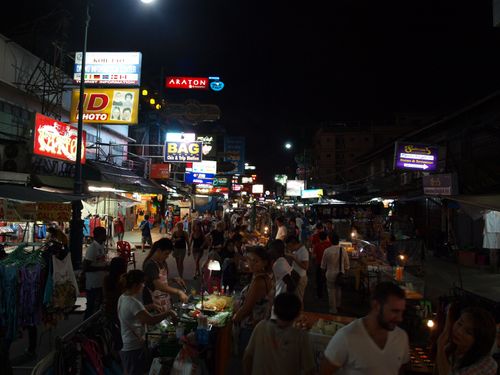
Bangkok’s backpacker carnival: curbside bars, live bands and DJs from 3pm–2am (midnight Sun). Street eats are cheap — pad thai 70–100 THB, mango sticky rice 60–100 THB. Come for wild people-watching; duck into Rambuttri for a calmer beer.
Rambuttri
Markets
Khao San’s calmer cousin: a tree‑shaded lane of VW van cocktail bars, open‑air foot massages, pad thai grills, and easygoing live bands. Best from sunset to 11pm; beers 80–120 THB, cocktails 150–220 THB. One block from the chaos, all the charm.
7-Eleven
Shops
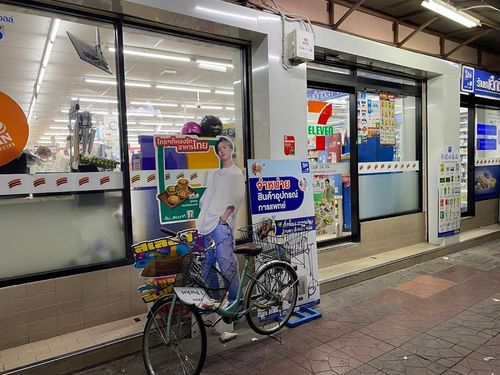
Khao San’s 24/7 reset button: ice‑cold A/C, ham‑cheese toasties, All Café iced lattes, water for 7–14 THB, and late‑night supplies from snacks to sunscreen—right by Rikka Inn.
More Khao San Road Guides
- Bangkok Street Food Guide for Spice-Lovers: How to Order Mild, Medium, or Thai-Hot Near Khao San Road
- Bangkok Street Food for Non-Spicy Eaters: What to Order Near Khao San Road
- Bangkok Street Food by Spice Level: Mild Dishes, Safe Picks, and How to Ask for Less Heat
- Bangkok Street Food for First-Timers: Must-Try Dishes Near Khao San Road and How to Spot the Real Version